


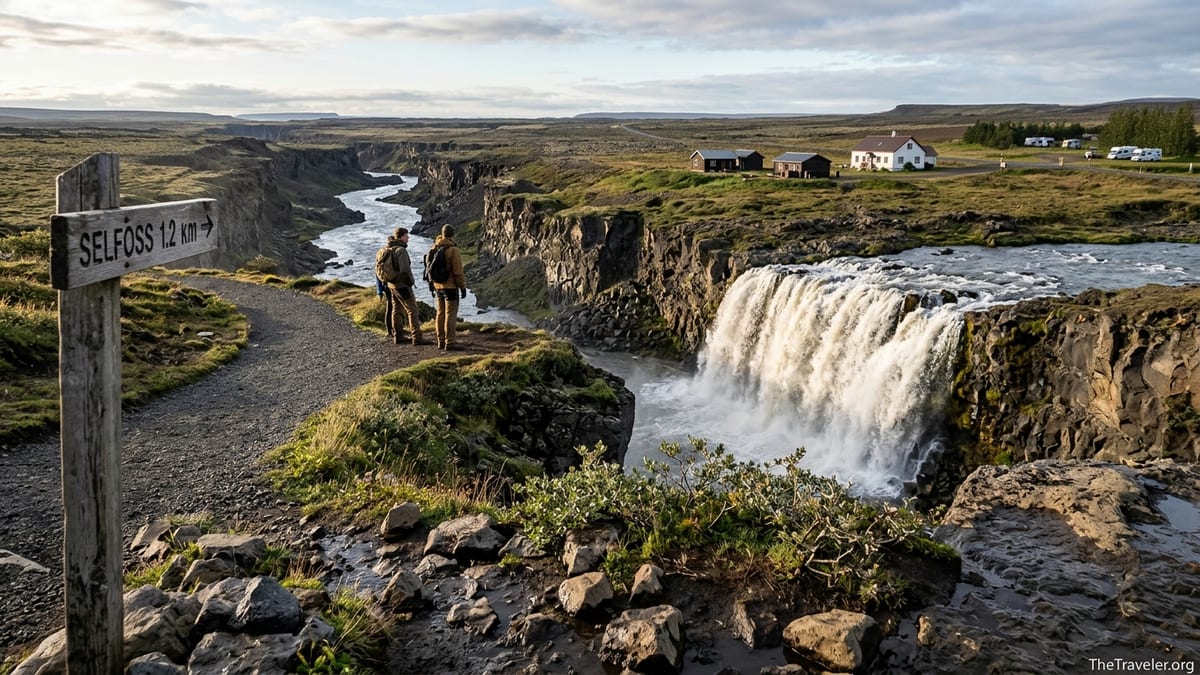
Selfoss waterfall in Jökulsárgljúfur, just upstream from the mighty Dettifoss, sits inside Vatnajökull National Park with no lodging at the falls themselves. Every visitor must base in nearby settlements or rural properties and drive to the trailheads, typically on Route 862 (west) or 864 (east). Accommodation options range from simple campsites and farm guesthouses to full‑service hotels in larger towns, but availability is highly seasonal and summer dates often sell out well in advance. Choosing the right base is one of the most important decisions in planning a North Iceland itinerary that includes Selfoss and Dettifoss.
Get the latest updates straight to your inbox!
Understanding the Jökulsárgljúfur Area and Access to Selfoss
Selfoss, Dettifoss and Hafragilsfoss lie along the Jökulsá á Fjöllum river in the Jökulsárgljúfur section of Vatnajökull National Park. The falls are reached from parking areas off Route 862 on the west side, usually recommended for most rental vehicles in summer because it is paved for the main access, and Route 864 on the east side, which is longer, rougher gravel and generally more weather dependent. There are marked trails from the Dettifoss car parks to viewpoints of Selfoss, with walking times that are typically under one hour return for straightforward visits in good conditions.
There are no official campgrounds, cabins or guesthouses directly at the Selfoss or Dettifoss parking lots. Park authorities state that overnight camping is only allowed in designated campsites, which means that any campervan or tent stays need to be at official sites in or near the Jökulsárgljúfur area rather than on roadside pullouts. Wild camping near the waterfalls is not permitted, and vehicles cannot remain overnight at the trailhead parking areas except during day visits.
For planning purposes it is useful to think of the region in three layers. Closest to the canyon are rural farm stays and national park campsites that give the shortest pre‑dawn or late‑evening drive to the trailheads. Around 45 to 60 minutes away are Lake Mývatn and the small village of Reykjahlíð, which offer the broadest selection of beds and services in the immediate inland region. Further out, coastal Húsavík and the regional hub Akureyri have more urban amenities but involve a longer day trip to the falls.
Most travelers combine these waterfalls with other North Iceland highlights such as Mývatn geothermal sites, whale watching from Húsavík or the so‑called Diamond Circle. Your ideal base depends on how much you prioritize minimizing driving in darkness or bad weather versus having restaurants, supermarkets and tour options at your doorstep.
Staying Close: Rural Farms and Guesthouses Near Jökulsárgljúfur
For photographers and keen hikers who want to be at Selfoss and Dettifoss during the quietest early or late hours, the most practical bases are the rural farms and simple guesthouses scattered along the highland edge north and south of the canyon. One of the best known clusters is around Grímsstaðir á Fjöllum, a small settlement east of the Jökulsá á Fjöllum that historically served as a farm and crossroads in the interior. Several properties here operate as guesthouses and cottages and specifically advertise to travelers visiting Dettifoss and the northeast highlands.
These rural guesthouses typically fall into the budget to lower mid‑range price band, with shared or private bathrooms, self‑catering kitchens or breakfast rooms, and simple but warm rooms. In many cases bed linen is included in the rate, but some still offer a lower sleeping‑bag accommodation option, so it is essential to confirm whether bedding and breakfast are part of your booking. Many operate mainly from late spring into early autumn, with limited or no availability in the coldest months, and some open only on request in shoulder seasons.
Facilities at countryside properties close to the canyon are usually more limited than in towns. You can generally expect heating, hot showers and electricity in the rooms, but not always a full restaurant, on‑site shop or 24‑hour reception. Guests are often encouraged to use shared kitchens for cooking, and quiet hours are common so that everyone can rest before early starts. Vehicle access is normally fine for regular rental cars in summer, although gravel driveways are standard, and in winter you should check in advance whether roads are ploughed and whether the property is open at all.
The main advantages of these rural bases are proximity and atmosphere. Depending on the exact location, you may be able to reach the Dettifoss or Selfoss trailhead in 30 to 45 minutes, which reduces driving in marginal weather and allows for flexible return trips during a single day. The trade‑off is that services are sparse, there are no supermarkets nearby, and you will need to plan meals and fuel around your wider route. Travelers who value quiet nights, dark skies for potential aurora, and immediate access to open landscapes often find this compromise worthwhile.
Ásbyrgi and the Northern End of Jökulsárgljúfur
At the northern end of Jökulsárgljúfur, Ásbyrgi Canyon forms a dramatic horseshoe‑shaped cliff amphitheater with its own trail network and a national park visitor center. This area is part of Vatnajökull National Park and lies within the same broader protected landscape as Selfoss and Dettifoss, but it functions as a distinct base with its own campground and a small cluster of nearby guesthouses along the coastal Route 85. Many visitors include Ásbyrgi on the same trip as the waterfalls and use it as a camping hub.
The Ásbyrgi campsite is an official national park campground located in sheltered woodland near the canyon floor. Recent park information indicates that its main season typically runs from around late May to the end of October, with exact opening and closing dates confirmed each year by the park and its online booking partner. Winter camping options in this area are more limited and can change year to year, so anyone planning an off‑season visit should check closer to travel whether any facilities remain open.
Facilities at the Ásbyrgi campground are relatively well developed by Icelandic national park standards. Campers can expect toilets, hot showers for a small additional fee, dishwashing facilities, and marked pitches with some access to electricity, although not every space offers power. There are usually designated quiet hours to keep noise low overnight, and rules against open fires outside designated equipment. Kitchen shelters are basic, so most people rely on camping stoves and campervan facilities for cooking. Advance reservations in peak summer are increasingly recommended because this is a popular stop on the Diamond Circle route.
Just outside the park, simple guesthouses and farm stays serve visitors to Ásbyrgi and the canyon more broadly. These tend to offer budget to mid‑range rooms, shared or private bathrooms, and breakfast arrangements rather than full hotel‑style restaurants. The drive from Ásbyrgi to the Dettifoss and Selfoss access roads normally takes around one hour to 90 minutes depending on which side you choose and road conditions, so this base works best for travelers who want to combine canyon hiking, coastal exploration and a single focused day at the waterfalls rather than multiple dawn and dusk visits.
Lake Mývatn and Reykjahlíð: The Most Versatile Base
Lake Mývatn and the small village of Reykjahlíð form the main inland hub of North Iceland’s geothermal region. Located roughly 50 to 70 kilometers from the Dettifoss trailheads depending on route choice, this area usually offers a driving time of about 45 to 60 minutes each way in summer conditions. For many visitors this is the best all‑round base, balancing reasonable proximity to Selfoss and Dettifoss with a wide selection of accommodations, restaurants, a fuel station and small supermarkets.
On the camping side, Vogar or Hlíð campgrounds on the northern shore of Mývatn are representative of what to expect. These services combine a campground with associated guesthouse or hostel and are designed for both tent campers and campervans. Facilities typically include toilets and hot showers, indoor common rooms, basic kitchens or dishwashing areas, power hookups for a portion of pitches, and options to pay on arrival. Some accept or have accepted Icelandic camping cards in the past, though policies can change, so it is important to check for your specific travel year. In high season they can be busy, and while some sites operate without strict pitch reservations, arriving earlier in the evening is wise.
In the mid‑range hotel category, properties along the lake or near Reykjahlíð usually offer private en‑suite rooms, breakfast buffets and lounges, sometimes with lake views or proximity to attractions like the Mývatn Nature Baths. Typical price bands for these hotels fall into the mid‑range to higher‑end category for North Iceland, with rates that are significantly above basic guesthouses but generally below luxury lodges elsewhere in the country. Many hotels operate year‑round or close to it, attracting winter visitors who come for snow, lava fields and potential aurora, but some may reduce services or close parts of their capacity outside summer.
Guesthouses in the Mývatn area fill an important middle ground. Many offer private rooms with shared bathrooms, kitchen access and the option to add breakfast, placing them in the budget to mid‑range band depending on season. They are popular with self‑drivers who plan to cook some meals and spend days exploring local volcanic craters, lava formations and geothermal sites, then devote one day to a return trip to Dettifoss and Selfoss. Compared with the rural farms closer to the canyon, Mývatn offers more dining choices, guided tour options and a more social small‑town atmosphere, at the cost of a longer drive to the falls.
Húsavík: Coastal Amenities Paired With Day Trips to the Falls
Húsavík, on the northern coast of Iceland, is known primarily as a whale‑watching capital. It also serves as a comfortable coastal base for travelers who want a mix of marine excursions, museums and a single dedicated day trip inland to Jökulsárgljúfur. Driving from Húsavík to Ásbyrgi usually takes around 45 minutes to an hour, and continuing south from Ásbyrgi toward the Dettifoss access roads adds further time, so a full round trip that includes both Selfoss and Dettifoss often becomes a long but manageable summer day.
The town offers a range of accommodations from simple guesthouses and small hotels to apartments and a campground on the edge of town. These options span budget through mid‑range and into higher‑end boutique stays. Facilities often include private or shared bathrooms, breakfast options, and for apartments or some guesthouses, full kitchens. The Húsavík campsite typically operates over the main summer season and provides toilets, showers and electricity points, with the town’s restaurants, bakeries and harbor an easy walk away.
Húsavík is particularly well suited to travelers who want variety in their itinerary. You might schedule a whale‑watching or puffin boat tour, visit local museums and geothermal pools, and reserve one flexible day for the inland waterfalls, adjusting departure time based on weather. For those less focused on being at Selfoss and Dettifoss at sunrise or sunset, the extra driving is balanced by a richer choice of food and activities and a lively harbor atmosphere in the evenings.
Because Húsavík is popular in summer, especially when cruise calls and domestic holidays overlap, accommodations can sell out. Booking well ahead for July and August is strongly recommended, and winter openings are more limited, with some guesthouses and hotels closing or reducing capacity outside the main season. As always, confirm which services are included in your rate, particularly breakfast and linen for more basic guesthouses or hostel‑style stays.
Akureyri: Regional Hub With Full Services
Akureyri, often described as the capital of North Iceland, is the largest urban center in the region and the northern anchor of the Ring Road. It sits significantly farther from Selfoss and Dettifoss than Mývatn or Húsavík, and a round trip to the waterfalls typically involves several hours of driving, especially once you factor in slower speeds on side roads. In practice this makes Akureyri best for travelers who want to integrate the waterfalls into a broader North Iceland stay rather than focus heavily on repeated visits to the canyon.
The city’s main advantages are choice and backup. Akureyri has by far the greatest range of hotels, guesthouses, hostels and apartments in North Iceland, from budget dorm beds and basic guesthouses through solid mid‑range hotels and some higher‑end design properties. Many operate year‑round, including over Christmas and into mid‑winter, with restaurants, supermarkets, pools, medical services and tour operators all located in town. If you value urban conveniences, public pools and a variety of dining and nightlife more than immediate proximity to Selfoss, Akureyri can be a comfortable base.
For drivers on the Ring Road, Akureyri often fits naturally as a multi‑night stop between the West and the Mývatn region. A common pattern is to spend a night or two in the city, then move closer to the canyon for one night at Mývatn or in a rural guesthouse before continuing east. This staggered approach reduces the length of any single driving day while still allowing you to enjoy the waterfalls without rushing. Families may appreciate being able to restock supplies and give children a break in a town with playgrounds and pools before or after more remote nights.
Because the drive from Akureyri to the Dettifoss trailheads is long, it is important to watch weather forecasts and daylight hours carefully, especially outside high summer. In late autumn, winter and early spring you will likely depart and return in low light, which increases the value of staying at least one night closer to the canyon if road conditions are uncertain.
Choosing Between Bases: Who Each Area Suits Best
Each potential base around Jökulsárgljúfur meets a different set of priorities. Campers and photographers who are primarily interested in early and late‑light visits to Selfoss and Dettifoss, and who are comfortable with basic facilities and limited dining choices, generally benefit from staying either in rural farms and guesthouses near the canyon or at the Ásbyrgi campsite. This keeps driving times to a minimum, makes it easier to adjust around changing clouds and light, and offers darker skies at night for aurora viewing in the darker months of the year when access roads are safe.
Travelers who want a balance between proximity, comfort and variety often find Lake Mývatn and Reykjahlíð the ideal compromise. Here you can camp with showers and kitchens, stay in a guesthouse with shared facilities, or opt for a mid‑range hotel with breakfast and perhaps a restaurant, all while keeping the waterfalls within a reasonable day trip. The geothermal baths, volcanic landscapes and small cluster of services give you more ways to fill cloudy hours when photography conditions are not ideal, and the Ring Road location simplifies logistics for those continuing clockwise or counterclockwise around Iceland.
Húsavík and Akureyri are best for visitors who treat Selfoss and Dettifoss as one highlight among many rather than the central focus. In Húsavík the draw is the combination of marine wildlife tours and inland canyons, plus a compact town atmosphere. In Akureyri it is the comfort of a full regional city and the ability to join organized tours if you prefer not to drive to the falls yourself. These locations involve more time on the road to reach Jökulsárgljúfur, but they reward you with greater dining choice, cultural attractions and backup options on days when weather makes canyon hiking less appealing.
Whichever base you choose, consider your tolerance for gravel roads, your flexibility around weather, and the interests of everyone in your group. Families with children may prioritize access to playgrounds, pools and restaurant menus, nudging them toward Mývatn, Húsavík or Akureyri. Solo travelers or photography‑focused visitors may accept simpler amenities in exchange for solitude and fast access to the trailheads. For tight Ring Road schedules, the most logical overnight is usually whichever town fits naturally between your previous and next major stops, even if that means only one dedicated half‑day at the waterfalls.
Seasonality, Reservations and Practical Details
Seasonality is crucial in the Jökulsárgljúfur area. Many campsites and rural guesthouses operate primarily from late spring through early autumn, with some explicitly listing opening periods from around May or June to September or October. Ásbyrgi’s main campsite, for example, is generally open over the core summer and early autumn months, with shoulder‑season and winter options more variable and sometimes closed entirely for parts of the coldest season. Properties may adjust dates each year based on demand and maintenance needs, so you should always verify current operating seasons for your travel year.
In July and August, and increasingly in June, it is wise to book accommodation as early as you reasonably can, especially for weekends and the most popular campsites and guesthouses near Mývatn and within the national park. While some campgrounds accept walk‑ins, capacity can feel stretched on peak nights, and online prepayment or reservations are becoming more common for national park sites. For guesthouses, hotels and apartments, last‑minute options in this region can be limited and more expensive, particularly for family rooms.
Always read the fine print of your booking and, if camping, the rules of each site. Check whether your nightly rate includes bed linen or assumes sleeping bags, whether breakfast is part of the price, and if bathrooms are private or shared. Campers should confirm if hot showers require separate tokens or fees, whether electricity is available at all pitches or only in limited sections, and if there are any vehicle size restrictions for larger motorhomes. Quiet hours, waste‑sorting requirements and gray‑water disposal rules are common and help protect the fragile local environment.
From a safety perspective, staying closer to the falls reduces your time driving in potential fog, wind or icy conditions and may allow more flexibility around short weather windows. On the other hand, basing in towns such as Mývatn, Húsavík or Akureyri gives you backup accommodation and services if conditions deteriorate. In winter and shoulder seasons, always check road status reports and weather forecasts before committing to the drive out to the canyon, and consider guided tours from larger towns if you are not comfortable with potentially slippery or unpaved roads.
Summary: Matching Your Base to Your Priorities
To decide where to stay for Selfoss and Dettifoss, weigh three main factors. First is driving time to the trailheads, which is shortest from rural farms and Ásbyrgi, moderate from Mývatn and Reykjahlíð, and longest from Húsavík and Akureyri. Second is atmosphere, ranging from quiet, dark and very rural near the canyon to lively small‑town life around Mývatn and Húsavík and full city amenities in Akureyri. Third is the overall shape of your North Iceland itinerary: whether you are on a tight Ring Road schedule or have several days to explore the region in depth.
As a quick guide, rural guesthouses and national park campgrounds close to Jökulsárgljúfur suit photographers, campers and independent travelers who prioritize proximity and do not mind simple facilities. Lake Mývatn and Reykjahlíð are the most versatile bases, ideal for most visitors who want reasonable access to the waterfalls plus geothermal baths, restaurants and a range of accommodations from campsites to mid‑range hotels and guesthouses. Húsavík works best for those combining whale watching and coastal exploration with a single inland waterfall day, while Akureyri is the right choice if you prefer a larger town with year‑round services and are happy to treat Selfoss and Dettifoss as one of several long day trips.
By thinking clearly about these trade‑offs and confirming up‑to‑date opening seasons, facilities and inclusion details before you book, you can choose a base that fits your style, your schedule and the North Iceland landscapes you are most excited to experience.