


On most Slovenia itineraries, Lake Bled gets top billing. Photos of its tiny church-topped island and hilltop castle have long sold the dream of a perfect Alpine escape. But travelers who venture just 30 minutes farther into the Julian Alps discover Lake Bohinj, a larger, wilder and far quieter lake at the heart of Triglav National Park. For many, it ends up being the place that delivers the Slovenia they were really hoping for: mountains that feel close enough to touch, clear water without a crowd of rental boats, and small villages where life still follows local rhythms instead of bus-tour timetables.
Get the latest updates straight to your inbox!
A Tale of Two Lakes: Postcard Star vs Quiet Neighbor
Lake Bled and Lake Bohinj sit in the same corner of northwestern Slovenia, yet the experience on their shores can feel worlds apart. Bled is compact and highly curated, wrapped by a promenade lined with hotels, cafes and dessert shops selling slices of the famous Bled cream cake. In peak summer, its 6-kilometer shoreline can feel like a continuous stream of tour groups, wedding photo shoots and day-trippers rushing to hire a pletna boat or queue for the castle.
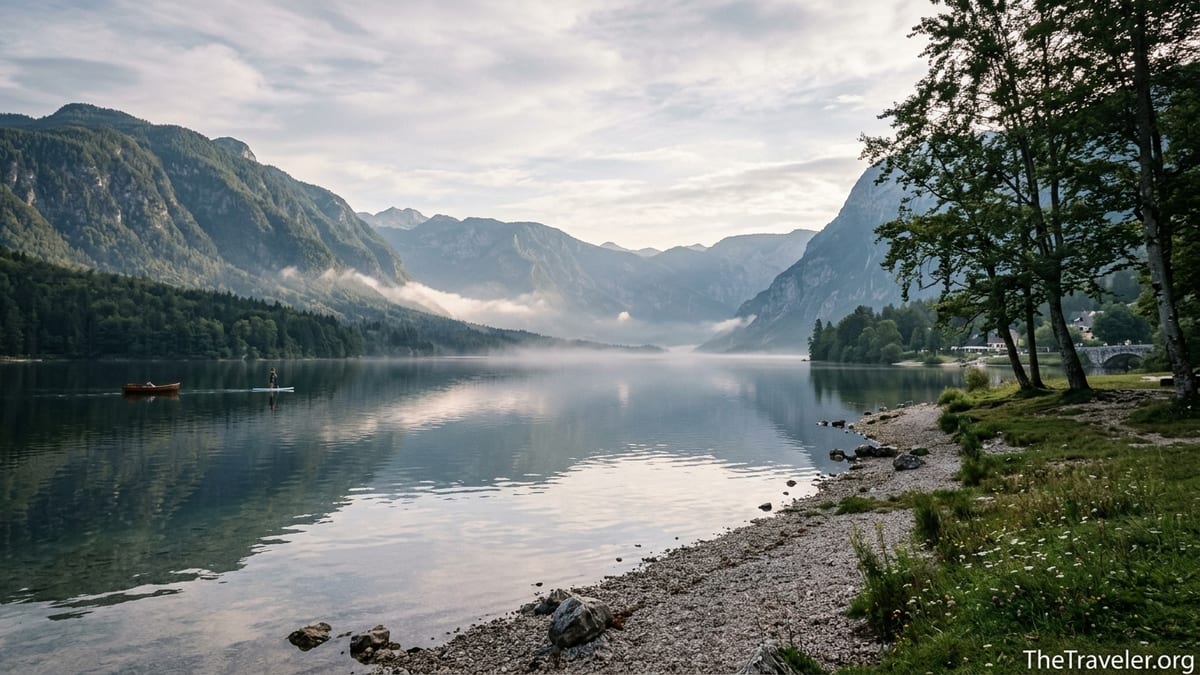
Lake Bohinj, by contrast, is Slovenia’s largest permanent natural lake, stretching roughly 4 kilometers in length inside the protected boundaries of Triglav National Park. Here, the lakeshore is mostly forest, meadows and a few low-key settlements such as Ribčev Laz and Ukanc rather than a ring of commercial development. You are more likely to hear cowbells on the slopes or the splash of a swimmer than the buzz of traffic. A simple stone bridge and the small St John the Baptist church mark the eastern end of the lake, and beyond that the landscape quickly becomes farmland and mountain valley rather than resort town.
That difference in setting shapes everything else. Bled excels at iconic views and easy-access attractions: a boat ride to its island church, a short but steep walk to the castle, and polished lakeside hotels with spas. Bohinj is better suited to travelers who prefer unpaved trails to promenades, picnic lunches to sit-down dining, and a sense that nature, not tourism, is in charge. Many visitors now split their time between the two, staying in Bohinj for a few nights and taking a single day trip to Bled rather than the other way around.
The Sound of Silence: Crowds, Space and Pace
What most people notice first at Lake Bohinj is the quiet. Even in July and August, when Slovenia’s school holidays and European road trips converge, there are long stretches of shoreline where you can sit with only birdsong, distant voices and the rustle of wind in the trees. At Bled, by comparison, summer weekends bring a steady stream of tour buses from Ljubljana and the coast, which often translates into busy lakeside paths, queuing for boats and full restaurant terraces well into the evening.
The difference becomes most obvious at classic viewpoints. Around Bled, popular Instagram spots such as the Mala Osojnica viewpoint involve a short, steep hike where you may find a small crowd waiting to take turns at the lookout. Above Bohinj, you can ride the Vogel cable car to more than 1,500 meters and find that within a few minutes of walking away from the top station you have a mountain trail almost to yourself. Even low-level walks along the north shore toward the Mostnica Gorge can feel uncrowded outside of mid-day peaks.
Travelers report the same contrast in the villages. In Bled town, you will find multiple souvenir shops, cocktail bars and international menus. Stara Fužina, one of the main villages near Lake Bohinj, feels more like a traditional alpine community where working farms, small guesthouses and a couple of local restaurants share the narrow streets. In the evening, instead of live music and bar scenes, you are more likely to see families strolling to the lake, hikers rinsing off their boots at guesthouse taps and stars bright enough to make you notice how dark the sky is.
Wild Water and Simple Pleasures on the Shore
Part of Bohinj’s appeal lies in how easy it is to enjoy the lake without much structure or expense. The lake itself is free to access, and most of the shoreline is open meadow, pebble beach or forest edge where you can spread out a towel and slip into the clear water. In summer, you will see paddleboards launched straight from the grass, children building small stone cairns at the waterline and local teenagers biking down for an after-dinner swim.
At Bled, lakeside access is more fragmented by private hotels, manicured lawns and sections where sun loungers and beach clubs charge for entry. Bohinj has a few designated bathing areas and boat rental points, but these feel low-key: think simple rental kiosks for kayaks and stand-up paddleboards, with prices that are often a little lower than around Bled. A two-hour kayak rental on Bohinj typically costs less than a similar experience at Bled, partly because there are fewer high-end operators and less packaged pressure to “do everything.”
Water quality and atmosphere also differ. Lake Bohinj sits directly within Triglav National Park and is surrounded by steep, largely forested slopes, which helps limit nearby development. The water feels colder and wilder, better suited to strong swimmers and early-morning plunges than all-day bobbing on floaties. Bled’s shallower, more enclosed basin warms up sooner in the season and attracts more casual bathers, inflatable unicorns and lakeside bars playing music. Many Slovenians themselves recommend Bohinj to visitors who prioritize nature, cleaner-feeling water and a more tranquil swim.
Hiking, Cable Cars and Gorges: Nature First, Not Souvenirs
If Lake Bled is about a handful of must-see sights, Lake Bohinj is about having a small mountain playground at your doorstep. From the bus stop at Ukanc, you can walk 20 minutes to the bottom station of the Vogel cable car and in a few more minutes be gliding up a near-vertical slope to sweeping views across Bohinj and the Julian Alps. Return tickets for adults are typically in the high twenties in euros, roughly comparable to a visit to Bled Castle, but what you get at the top is open terrain: easy ridge walks, alpine pastures and a couple of mountain huts serving hearty stews instead of curated museum exhibits and gift shops.
Closer to the water, footpaths follow almost the entire circumference of the lake. Many visitors choose to walk one direction along the quieter north shore, picnic at Ukanc and return on the small panoramic boat that crosses the lake several times a day. Tickets for the boat are modestly priced and the experience feels more like a gentle shuttle through a protected landscape than a formal sightseeing cruise with commentary.
Beyond the lake itself, Bohinj offers quick access to natural attractions that still feel relatively under-commercialized. The Mostnica Gorge, a short drive or bus ride from Stara Fužina, is reached by an easy trail that winds along emerald pools and rock formations. The Savica Waterfall, which feeds the lake from above, involves a climb of several hundred stone steps from the parking area and a small entry fee at the trailhead, but the infrastructure remains simple: a lodge, ticket kiosk and viewing platform rather than a full visitor complex. Compared to Bled’s souvenir stalls and horse-drawn carriages, these experiences keep the focus firmly on the landscape.
Getting There Without Losing the Calm
Despite its quieter feel, Lake Bohinj is not particularly remote. Travelers coming from Ljubljana usually first pass through Bled by bus or train, then continue about 30 minutes farther up the valley. Regular buses link the capital with Bohinj’s main villages in around two hours, and from early summer to early autumn additional seasonal services connect the lake with popular trailheads and Pokljuka plateau. Trains on the scenic Bohinj line stop at Bohinjska Bistrica, a small town a short bus or taxi ride from the lake.
Public authorities and local tourism boards around Bohinj have leaned into this accessibility as a way to reduce car traffic. In recent years they have expanded park-and-ride systems, seasonal shuttle buses and guest mobility cards that offer discounted or free local transport to visitors staying in partner accommodation. The message is clear: you do not need a car to enjoy Bohinj, and in peak season you may be happier without one. Parking near the lake can be limited and increasingly regulated, especially on sunny weekends when both Slovenians and international visitors head for the water.
By contrast, many visitors experience Lake Bled as a convenient day trip by rental car. That convenience has a cost: more traffic, pressure on limited parking and short visits concentrated into the same midday window. Bohinj’s layout, with villages slightly set back from the water and a stronger emphasis on shuttles and walking routes, naturally spreads people out over time and space, helping preserve the quieter atmosphere that draws travelers there in the first place.
Staying by the Lake: Guesthouses Over Grand Hotels
Accommodation choices are another way the two lakes diverge. Bled has long positioned itself as a resort town, with mid-range and upscale hotels circling the lake, several with spas, pools and in-house restaurants. Room rates in high season can climb accordingly, especially for properties directly on the promenade with lake or castle views. Package deals that combine Bled with other European city-break destinations often funnel short-stay visitors into these hotels, reinforcing a sense that Bled is part of a broader tourist circuit.
Around Lake Bohinj, lodging tends to be more dispersed and modest in scale. Many visitors stay in family-run guesthouses, apartments in traditional houses or small boutique hotels in villages like Ribčev Laz, Stara Fužina and Ukanc. Rooms here can often be a little cheaper than Bled equivalents in peak months, particularly if you are willing to stay a short walk or bike ride from the shore. Rather than a line of uniform hotel terraces, you might have breakfast in a kitchen overlooking a garden, with hosts offering tips on where to find wildflower meadows or which valley will be quieter on a Sunday.
Dining follows the same pattern. Bled offers a broader range of restaurants, including fine-dining options and hotel bars with cocktail lists. At Bohinj, expect a smaller selection of inns and pizzerias, mountain huts serving stews and žganci, and cafes where the day’s main treat might be a slice of apple strudel rather than elaborate patisserie. For many travelers, that simplicity complements the setting: evenings are for planning hikes, watching the light fade over the lake or sharing a bottle of local wine on a balcony, not ticking off a list of must-visit bars.
Sustainability, Park Rules and Local Expectations
Lake Bohinj’s quieter feel is not just an accident of geography. Being fully within Triglav National Park means the area is governed by stricter environmental regulations than Bled, which sits outside the park boundary. You will see more signage reminding visitors to stay on marked trails, respect wildlife, limit noise and avoid camping or lighting fires by the lakeshore. Rangers and local officials increasingly enforce rules on where you can park, how close you can drive to the water and what kinds of activities are allowed on the lake and rivers feeding it.
Local authorities in Bohinj have also adopted explicit sustainability goals. In public information materials, they emphasize that what attracts visitors in the first place is precisely what they are trying to protect: unspoiled nature, peace and quiet, and the chance to experience the Alps without unnecessary stress. Measures such as shuttle buses to remote trailheads, efforts to encourage longer stays rather than quick day trips, and campaigns urging visitors to bring reusable water bottles and reduce litter are all part of this approach.
For travelers, this translates into a few practical differences from Bled. You may find that certain activities are limited to specific areas or times, that wild camping is not tolerated, and that police or park rangers occasionally check for parking tickets and compliance with swimming or boating rules. On the water, motorized boats are heavily restricted and organized excursions are relatively few, helping keep engine noise low. In return, the reward is a landscape that still feels remarkably intact, with clear views of reflected peaks on calm mornings and a sense that both wildlife and residents have space to breathe.
The Takeaway
Lake Bled deserves its fame. Its small island church, medieval castle and tidy promenade form one of Europe’s most photogenic lakeside ensembles, and for many visitors a brief stop there is a highlight of Slovenia. Yet for travelers who value stillness over spectacle, Lake Bohinj often feels closer to the heart of what makes the country special. Its larger scale, wilder surroundings and low-key villages offer room to slow down, walk without a crowd and feel part of the landscape rather than simply looking at it.
Choosing between the two is less about which is “better” and more about what kind of trip you want. If your dream is a classic postcard view, easy access from Ljubljana and a full menu of tourist services, Bled delivers. If you imagine early swims in cold, clear water, long hikes starting from your doorstep and evenings where the loudest sound is the river below your window, Bohinj is likely to suit you more. Many travelers now treat Bohinj not as Bled’s consolation prize but as their base, visiting Bled for an afternoon and returning to the quieter lake to sleep.
In the end, what sets Lake Bohinj apart is the feeling that the Alps are still in charge. Paths peter out into forest, clouds catch on jagged ridges above the water, and a simple wooden bench under a beech tree can be as memorable as any castle tower. For those willing to go a little farther and stay a little longer, Bohinj offers Slovenia’s famous Alpine beauty at a gentler volume.
FAQ
Q1. Is Lake Bohinj really less crowded than Lake Bled?
Yes, in general Lake Bohinj feels noticeably less crowded than Bled, especially in the mornings, evenings and outside of peak summer weekends, though popular spots can still be busy in high season.
Q2. Can I visit both lakes in one day from Ljubljana?
It is possible to see both in one long day, but you will only get a quick taste of each. Many travelers now base themselves at Bohinj for a night or two and visit Bled as a shorter side trip instead.
Q3. Do I need a car to enjoy Lake Bohinj?
No. Regular buses from Ljubljana and Bled reach the villages around the lake, and in summer additional local shuttles connect Bohinj with trailheads, cable cars and nearby plateaus, making a car helpful but not essential.
Q4. Is the water at Lake Bohinj too cold for swimming?
The water is colder than at Bled, especially early in the season, but many people swim from late spring to early autumn. Strong swimmers and those comfortable with brisk mountain lakes enjoy it most.
Q5. What are the must-do activities at Lake Bohinj?
Popular choices include walking part or all of the lakeshore path, riding the Vogel cable car for Alpine views, visiting Savica Waterfall, and renting a kayak or paddleboard for an hour or two on the water.
Q6. How long should I stay at Lake Bohinj?
A full day trip is enough for a basic overview, but two or three nights allow time for hikes, boat rides, slow mornings by the water and a more relaxed feel for the valley.
Q7. Are there good places to eat around Lake Bohinj?
Yes. While the dining scene is smaller than Bled’s, villages like Ribčev Laz and Stara Fužina have inns, cafes and pizzerias serving local dishes, simple grills and baked desserts suitable for most tastes.
Q8. Is Lake Bohinj suitable for families with children?
Very much so. The gently shelving shore in some areas, short walks, boat rides, easy cable car access and open meadows make Bohinj appealing for families, though parents should watch young children closely near deeper water.
Q9. What is the best time of year to visit Lake Bohinj?
Late spring and early autumn offer a good balance of milder weather, open hiking trails and fewer visitors. July and August are livelier and warmer for swimming but also busier and more expensive.
Q10. Why choose Lake Bohinj over staying at Lake Bled?
Choose Bohinj if you prefer a quieter base within Triglav National Park, easier access to hiking and a more local, low-key atmosphere, while still being close enough to visit Bled on a short trip.