


The sand at Marriott Vacation Club Khao Lak Beach Resort is exactly what you fly to southern Thailand for: pale gold, warm underfoot, shelving gently into the Andaman Sea. Yet after a week on this quiet stretch of Khao Lak coastline, it was not the beach that I found myself missing most on the flight home. What stayed with me were the things that happened away from the shoreline: drifting along a seemingly endless lagoon pool at dusk, wandering over to the co-located JW Marriott Khao Lak Resort & Spa for street-food style dinners, watching children squeal their way through an aqua play zone, and slipping out for sunrise excursions into the mangroves. The resort’s beachfront is lovely, but it is the layers of experiences wrapped around it that make this one of Marriott Vacation Club’s most compelling Asia-Pacific openings to date.
Get the latest updates straight to your inbox!
A Newcomer on a Famous Stretch of Thai Coast
Marriott Vacation Club Khao Lak Beach Resort sits in Thailand’s Phang Nga province, in the broader Khao Lak area north of Phuket, a region long known for laid-back beaches and access to national parks and offshore islands. The vacation club is part of a larger integrated resort campus anchored by JW Marriott Khao Lak Resort & Spa, sharing the same sweeping beachfront and much of the infrastructure, from pools and restaurants to spa and kids’ facilities. That means guests staying on the Vacation Club side tap into a full-scale resort ecosystem rather than a standalone timeshare complex.
The property is one of the newest additions to the Marriott Vacation Club portfolio in Asia Pacific, created by reconfiguring and expanding accommodation within the JW Marriott campus into apartment-style units. It caters primarily to families and longer-stay guests who want more residential comforts, such as separate bedrooms and living areas, without giving up full resort services. Compared with more urban vacation club sites in places like Bangkok or Shanghai, this is a distinctly beach-and-nature experience, but with international-brand polish and English-speaking staff, which eases the learning curve for first-time visitors to Thailand.
The immediate neighborhood remains relatively low-rise and relaxed compared with Patong or Kata in Phuket. You are a 15 to 20 minute taxi ride from Khao Lak’s main clusters of shops and restaurants, but most days you could easily stay within the resort complex and feel you have plenty to see and do. That balance of seclusion and access is one of the reasons repeat guests highlight the Khao Lak campus as a long-stay favorite.
The Lagoon Pool That Steals the Show
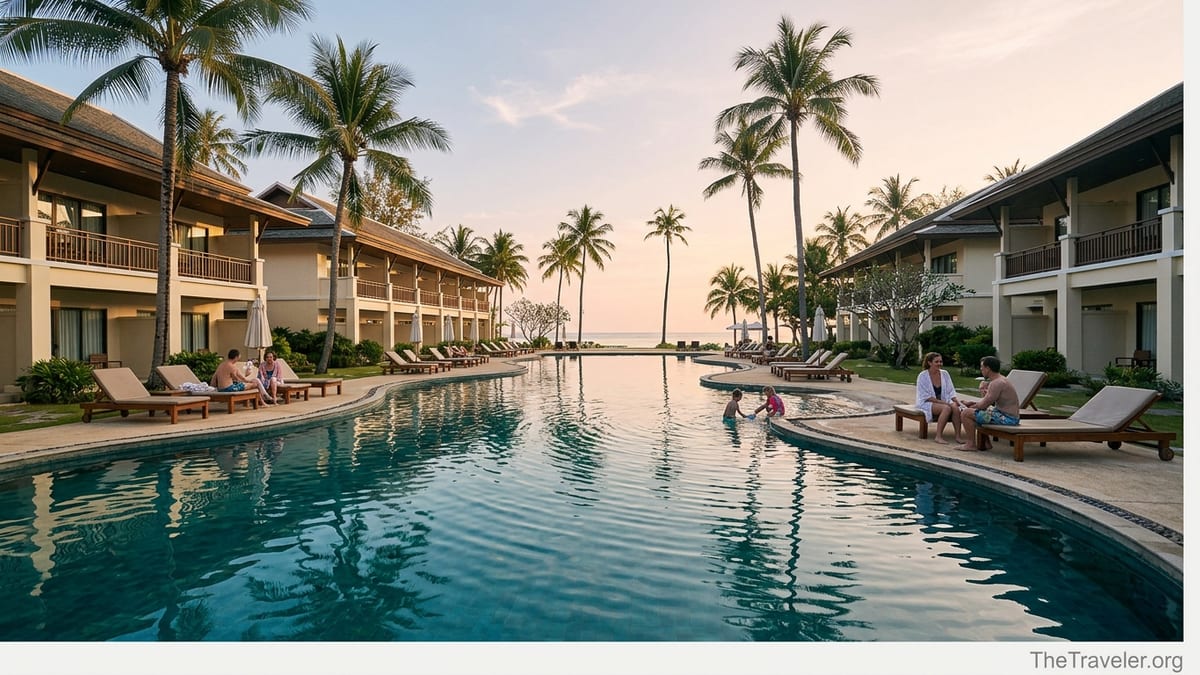
The beach may have top billing in the resort’s name, but the runaway star of this property is the water that winds inland. The campus is wrapped around an expansive lagoon-style swimming pool system measured at roughly 2.4 kilometers end to end, marketed as one of the longest pools in Southeast Asia. In practice, it feels like a network of canals, with sections that are lively and social, and other stretches that are hushed and almost private, especially in the early morning.
Many of the Vacation Club apartments offer direct pool access. From a ground-floor terrace you can step straight into the water and, if you feel energetic, float or paddle past palm-shaded bridges and landscaped islands all the way over to the JW side. Families often treat it like a lazy river, drifting between the quieter residential sections and the more energetic Aqua Play Zone, where children race down small slides, dodge splash buckets, and tangle with water cannons. For parents, the appeal is clear: the kids burn off energy within sight of a sun lounger and an iced coffee.
Because of the pool’s linear layout, it almost never feels crowded, even when the resort is near capacity in peak season. Guests trade tips about favorite corners: a calm bend near the tennis courts that catches the afternoon light, a tucked-away alcove where frangipani petals collect on the surface, a spot near the swim-up bar where you can order a fresh coconut or a Chang beer without leaving the water. If you visit in shoulder season, when late-afternoon tropical showers are common, a swim in light rain becomes one of those quietly memorable holiday moments that rival any time on the sand.
Apartment-Style Comfort With Resort Convenience
As a Marriott Vacation Club property, the accommodation has been designed for longer stays and multi-generational groups. Typical layouts are two-bedroom family apartments, many with kitchenettes or full kitchens, dining tables, and living areas that feel much more like a contemporary condominium than a traditional hotel room. This gives you the option to cook a simple breakfast with local fruit and eggs from the supermarket in town, heat up snacks for children, or manage dietary needs without relying on room service three times a day.
These residential conveniences are layered on top of full-service resort features. Daily housekeeping, in-room Wi-Fi, digital request tools, and on-site laundry options mean you are not sacrificing the “holiday from chores” aspect of travel. Parents with small children often point to small but meaningful touches: blackout curtains that actually darken the room for midday naps, sliding doors that allow you to watch a movie in the living area while a toddler sleeps, and balconies deep enough to sit outside and read after bedtime without feeling as if you are whispering in the dark.
For couples or friends traveling together, the apartment layout offers privacy without forcing anyone into a separate booking. Shared living spaces become default gathering spots for pre-dinner drinks or late-night card games, while individual bedrooms still feel like personal retreats. When you factor in the ability to stock a fridge with cold drinks from a nearby convenience store or pre-cut mango and pineapple from Khao Lak’s markets, the experience can feel less like a hotel stay and more like borrowing a very well-serviced seaside apartment.
Beyond the Beach: Shared JW Facilities and Daily Life
What truly distinguishes this Vacation Club from many stand-alone timeshare resorts is the access to JW Marriott Khao Lak Resort & Spa’s full suite of amenities. Guests can move freely between the two, so a morning might start with coffee on your apartment balcony, shift to a yoga class or weights session in the shared fitness center, then continue with a late-morning walk along the beach before retreating to the quieter Vacation Club pool section for the afternoon. You have the scale and variety of a flagship resort married with the home-like feel of a club property.
The Quan Spa on the JW side, a fully-fledged treatment complex rather than a token spa room, becomes an easy indulgence. A typical one-hour Thai massage here is priced in line with other high-end resort spas in southern Thailand, more than a basic roadside option in town but still good value compared with treatments at similar beachfront properties in places like Hawaii or the Caribbean. After a day of snorkeling or hiking in Khao Lak-Lam Ru National Park, a post-excursion aromatherapy massage or herbal compress treatment can be the perfect reset.
For children, the shared kids’ club and game rooms can be as memorable as the beach itself. Supervised craft sessions, Thai-themed activities, and movie zones give parents windows of quiet time, and older kids gravitate toward table tennis tables and console games when the afternoon heat peaks. There is even a small bamboo shark nursery and conservation area on the wider campus, where staff help explain local marine life and efforts to rehabilitate vulnerable species. For many families, this blend of fun and soft education becomes one of the highlights of the trip.
Dining That Ranges From Rooftop Pub Nights to Barefoot Tacos
The culinary side of the resort is another area where the experience extends far beyond a typical beach club. Within the integrated campus you have access to around 10 or 11 different dining venues and bars at last count, though exact numbers can shift as concepts are refreshed. On the Vacation Club side and across the JW, the main anchors are Waterfront, Olive, and Drift Beach Bar & Grill, supplemented by pop-up style experiences and a casual rooftop venue.
Waterfront, overlooking the beach and Andaman Sea, is the heartbeat of the breakfast scene. Mornings here are a mix of Thai and international offerings: made-to-order omelets, rice congee with pickles, fresh tropical fruit, European-style pastries, and local dishes such as pad see ew or spicy fried rice if you want to start the day the way many Thai guests do. For dinner, Waterfront shifts to an a la carte menu that might pair grilled fish with lime and chili dressing or slow-braised beef cheeks with a Thai-inspired jus.
Olive brings an Italian focus to the beachfront, serving wood-fired pizzas, fresh pasta, and a compact but carefully chosen wine list. Watching the sun set over the Andaman while sharing a thin-crust margherita and a glass of chilled white wine, with children darting in and out of the sand in front of the restaurant, is a scene you will see replayed night after night. Drift Beach Bar & Grill, closer to the sand and more casual, leans into Western comfort food and seafood: prawn skewers, grilled squid, burgers, salads, and tacos, alongside cocktails and Thai beers. Service here is deliberately relaxed; this is where people stroll in straight from the pool or beach, often still in swimsuits and cover-ups.
On certain evenings, the resort sets up street-food style stalls or themed buffets, especially in peak season and around holidays. You might find a station doing made-to-order som tam papaya salad, another grilling satay skewers, and a dessert corner with mango sticky rice and coconut ice cream. For a change of scene, there is a lively rooftop pub-style venue in the complex where a live band plays covers and simple bar food is the draw. Guests who want to keep costs down often mix resort meals with inexpensive lunches in Khao Lak town, where small local restaurants serve pad Thai or green curry for a fraction of resort prices, then return for one special dinner at Olive or a seafood night at Drift.
Nature, Culture, and Day Trips That Outshine Sunbathing
What ultimately made the beach feel like only part of the story at this resort was the ease with which you can step beyond it. The experiences desk can arrange trips to Khao Lak-Lam Ru National Park, where short coastal trails lead through jungle to rocky viewpoints and small, less-visited coves. A half-day excursion here gives you a sense of the region’s topography and biodiversity, from hornbills in the canopy to crabs skittering across tide pools, and is suitable for reasonably active families with primary-school-age children or older.
Another popular day out is a visit to the Lampi or Chong Fah waterfalls, typically combined with a stop at a local roadside restaurant for simple dishes such as stir-fried morning glory or whole fried fish with garlic. In the cooler months, when water levels are higher, it is possible to swim in some of the pools beneath the falls. For guests staying a week or more, a speedboat trip to the Similan Islands or a longtail boat journey into Phang Nga Bay’s mangroves and limestone karsts adds a dose of classic Thai postcard scenery. These are long but rewarding days, and returning to the calm of the lagoon pool in the late afternoon often feels more restorative than collapsing on the sand.
Closer to the resort, the Khao Lak area is home to sea turtle conservation centers and small, community-run elephant sanctuaries that emphasize observation and gentle interaction over shows or rides. While offerings and standards vary, the resort can point you toward more responsible operators. Evening visits to Bang Niang Market on designated days give a window into local life: stallholders selling grilled chicken and sticky rice, vendors piling up fresh herbs and chilies, and small stands offering clothes and handicrafts. Many guests use these outings to pick up snacks and fruit to take back to their apartments, or to enjoy an inexpensive dinner of steamed fish, curry, and a cold beer for the price of a single cocktail at the resort bar.
Even without organized excursions, simple routines become unexpectedly satisfying: a pre-breakfast walk along the shore as fishing boats head out, watching a storm cloud roll in from the comfort of a covered terrace, or cycling on quiet local roads if you arrange bike rental through the resort. By the time you check out, it is often these rhythms, rather than hours spent lying on a lounger, that you recall most vividly.
Who This Resort Is Really For
Because the property is structured as a vacation club, it is particularly well suited to guests who value space and predictability. Families traveling with young children or teenagers, multi-generational groups, and couples planning longer winter escapes are the core audience. If you like the idea of a self-contained environment where you can alternate between cooking simple meals and dining out, with a breadth of pools and activities on your doorstep, Marriott Vacation Club Khao Lak Beach Resort fits the brief neatly.
Travelers who prefer a boutique feel or walk-out access to a town center may find the campus-style layout less compelling. You are not steps away from rows of independent coffee shops and bars; instead, you have a curated selection of on-site venues and the option of arranging taxis or rideshares into Khao Lak’s hubs. The trade-off is a strong sense of safety and ease, especially for families, and the ability to let older children explore large portions of the grounds with a degree of independence.
Conscientious travelers will also appreciate that the wider resort has embraced some sustainability-minded practices, such as the bamboo shark nursery, organic produce sourced from the on-site JW Garden, and typical large-brand measures like reduced single-use plastics in rooms. These initiatives are not transformative on their own, but they nudge the experience in a more responsible direction than purely consumption-focused beach holidays.
The Takeaway
Marriott Vacation Club Khao Lak Beach Resort sells itself on its beachfront location, and that shoreline delivers exactly what most travelers hope for: soft sand, clean water, and sunsets that fade from apricot to indigo behind silhouettes of longtail boats. Yet the aspects that quietly elevate a stay here sit inland: the meandering lagoon pool that becomes a daily ritual, the apartment-style living that makes long stays comfortable, the access to JW Marriott’s facilities, and the web of day trips that pull you into the surrounding landscapes and communities.
If you are choosing between a simple beachfront hotel and this integrated vacation club campus, consider how you like to spend your days. If you are happiest on a sun lounger from morning to dusk, any good stretch of sand might suffice. But if your ideal holiday mixes lazy swims with outings to waterfalls and markets, family time with solo spa visits, and home-cooked breakfasts with rooftop pub nights, then Marriott Vacation Club Khao Lak Beach Resort offers far more than its beachfront name suggests. For many guests, the beach is where the day begins and ends, but everything that happens in between is what makes this place worth returning to.
FAQ
Q1. Where exactly is Marriott Vacation Club Khao Lak Beach Resort located?
The resort is in the Khao Lak area of Phang Nga province in southern Thailand, north of Phuket, sharing a beachfront campus with JW Marriott Khao Lak Resort & Spa and set a short drive from Khao Lak’s main town areas.
Q2. Is the beach at the resort suitable for swimming year-round?
The beach generally offers calm, swimmable conditions in the drier months, especially from roughly November to April, while the monsoon season can bring stronger waves, currents, and occasional red-flag days when swimming is discouraged.
Q3. Do guests at the Vacation Club have access to JW Marriott’s facilities?
Yes, one of the key advantages of staying here is shared access to many of the JW Marriott Khao Lak facilities, including the extensive lagoon pool system, Quan Spa, kids’ club areas, fitness center, and most dining venues.
Q4. What types of rooms are available on the Vacation Club side?
The accommodation is largely made up of apartment-style units, often with two bedrooms, separate living and dining areas, and kitchenettes or kitchens, designed for families and longer stays rather than traditional single hotel rooms.
Q5. Is this resort a good choice for families with young children?
Yes, families are a core focus here, with multi-bedroom apartments, an Aqua Play Zone, kids’ club activities, shallow sections of the lagoon pool, and easy access to casual dining, all within a walkable and secure campus.
Q6. How easy is it to explore Khao Lak and nearby attractions from the resort?
The experiences desk can arrange trips to national parks, waterfalls, markets, elephant and turtle centers, and offshore islands, while taxis or transfers into Khao Lak town for independent dining and shopping are straightforward to organize.
Q7. Are there affordable dining options, or is it mostly resort-priced food?
On-site restaurants are priced in line with other international beach resorts, but many guests keep costs balanced by combining resort meals with inexpensive local food in Khao Lak town and snacks or fruit purchased at markets to enjoy in their apartments.
Q8. What is the atmosphere like compared with busier Thai beach destinations?
The overall feel is quieter and more relaxed than Phuket’s busiest beaches, with a focus on families, couples, and longer-stay guests who value space, extensive pool areas, and nature excursions over nightlife.
Q9. Is the resort suitable for couples or solo travelers, or mainly for families?
While families make up a significant portion of guests, couples and solo travelers who enjoy large resort facilities, spa treatments, and nature-focused day trips also find it a comfortable base, especially outside peak school holiday periods.
Q10. How far in advance should I book, and when is the best time to visit?
For peak season stays between December and February, it is wise to book several months ahead, while shoulder seasons around October to November and March to early May often offer a good balance of availability, price, and weather.