


At airport gates in Lisbon, brunch cafes in Mexico City, and riads in Marrakech, a growing number of solo Black American women are quietly rewriting the story of who gets to see the world. Social media feeds filled with brown-skinned women hiking in Costa Rica, riding the Tokyo metro, or working remotely from Accra are not just aspirational images. They reflect a real shift: more Black American women are choosing to travel alone, even as many of their peers remain hesitant, held back by fears about safety, money, and belonging.
Get the latest updates straight to your inbox!
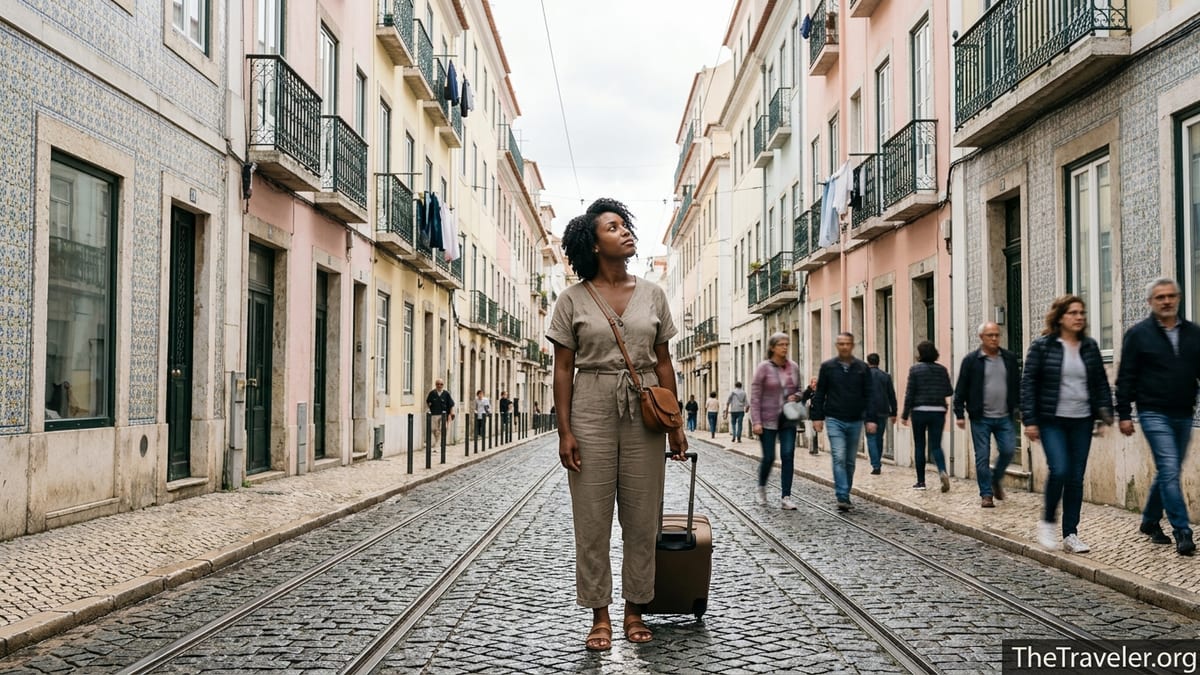
The Rise of the Black American Woman Solo Traveler
Over the last decade, the sight of a Black American woman wheeling a carry-on through an international terminal alone has gone from rare to increasingly common. Travel organizations that track solo travel trends, including education-focused brands that serve older travelers, report that women now make up a large majority of solo travelers globally, and anecdotal evidence suggests that Black American women are a fast-growing slice of that group. On Instagram and TikTok, hashtags like "blackgirlstravel" and "blackwomentravel" collect millions of posts, many of them from women who booked a flight alone for the first time in the last few years.
Community-led brands have helped fuel this shift. In 2016, Atlanta-based traveler Cole Banks launched a Facebook group called Sisters Traveling Solo after reading a comment that Black women should not travel alone. The online community quickly grew into a dedicated travel company for Black women who want to experience the world on their own terms, whether that means going completely solo or joining a small group of strangers who look like them. Within a few years it had become a seven-figure business built almost entirely on the desires of Black women who were ready to leave the United States, many for the first time, even if no one in their immediate circle could come along.
Other communities tell a similar story. Nomadness Travel Tribe, founded by Evita Robinson, reports a membership base that is overwhelmingly female and majority Black, and regularly sells out trips to destinations as varied as Panama, Indonesia, and South Africa. Niche groups such as Black Girls Travel Too and BlackGirlTravel (now Globalnista) organize curated itineraries in places like Portugal, Japan, and Kenya, but just as importantly, they normalize the idea that a Black woman with a passport can show up anywhere in the world without needing a companion for legitimacy or protection.
On the ground, this shift looks like a 32-year-old project manager from Chicago spending two weeks in Medellín, Colombia, working remotely from a coworking space. It looks like a 45-year-old empty nester from Houston booking a solo wellness retreat in Tulum, or a recent college graduate from Atlanta teaching English in South Korea and using long weekends to hop to Thailand or Vietnam alone. The shared thread is that these women are no longer waiting for friends, partners, or family members to be ready to travel. They are choosing to go anyway.
Why Solo Travel Feels So Powerful for Black American Women
For many Black American women, solo travel represents more than a vacation. It is often a rare space where they are not carrying the usual expectations of caretaking, code-switching, or workplace performance. A week wandering the streets of Paris or exploring food stalls in Mexico City can be the first time in years that a woman is making every decision based solely on her own curiosity and comfort, not a partner’s preferences or a family member’s needs.
Some travelers describe solo trips as a reset from the specific pressures of being a Black woman in the United States. Research on Black well-being shows that Black women report lower feelings of safety in their own neighborhoods compared to the general population, even as those numbers have improved modestly in recent years. Day to day, many navigate a mix of racial profiling, workplace bias, and social expectations to be strong and self-sacrificing. In contrast, a solo week in Copenhagen or Tokyo, two cities regularly rated highly for safety and walkability, can feel surprisingly easeful. Several Black women who have shared their experiences publicly mention the shock of walking home at midnight in Reykjavik or Kyoto and realizing they feel less on edge than they do in their own American cities.
There is also a financial and professional dimension. As more Black women have advanced in their careers, often becoming the primary earners in their households, discretionary income is increasingly being channeled into travel. A corporate attorney in Washington, D.C., might decide that a solo trip to Cape Town every January is her non-negotiable reward for surviving another intense year at work. A nurse who picks up extra shifts may put that money aside for a two-week solo tour of Bali, booking mid-range guesthouses rather than luxury hotels but still prioritizing experiences like private cooking classes or guided snorkeling in Amed.
Psychologically, solo travel gives Black American women a chance to see themselves outside of U.S. narratives about race. A woman who is read primarily as "the only Black woman in the room" at work might arrive in Accra, Lagos, or Dakar and suddenly blend into the majority, experiencing a kind of cultural relief that is hard to describe until it is felt. In other destinations, like Brazil or the Dominican Republic, Black travelers may encounter complicated local color hierarchies, but they also often find vibrant Black cultures that expand their understanding of the African diaspora. Even in largely white destinations such as Iceland or Slovenia, the act of walking through the world as a solo Black woman can be a powerful reminder of agency and belonging.
The Role of Digital Communities, Representation, and Storytelling
Even a decade ago, a Black American woman considering a solo trip to, say, Croatia or Vietnam would have struggled to find firsthand stories from travelers who looked like her. Today, a quick search pulls up vlogs, TikTok day-in-the-life clips, and blog posts specifically about being a Black woman navigating those countries alone. This visibility matters. Surveys of Black travelers indicate that seeing Black people represented in travel advertising and media makes them more likely to choose a destination. That effect multiplies when the representation is coming from peers rather than polished tourism boards.
Digital communities have stepped into a gap left by mainstream travel media. Private Facebook groups such as Sisters Traveling Solo, Nomadness Travel Tribe, Travel Divas, and Black Travelers International act as living archives of experience. A woman debating a solo birthday trip to Greece might post a question about Santorini and receive dozens of responses within hours, including which islands felt most welcoming, where to find Black hairstylists in Athens, and whether to expect stares or microaggressions in smaller towns. On Reddit, dedicated spaces for Black women discuss everything from how to handle hair care on the road to which European cities feel safe for late-night solo walks.
These spaces also provide practical scaffolding. Many Black women who are curious about solo travel start by booking a group trip run by a Black-owned company. They fly to destinations like Ghana, Morocco, or Thailand, but once on the ground they have an experienced guide, a vetted itinerary, and a circle of other Black women to lean on. This hybrid model offers the best of both worlds: the empowerment of traveling without friends or family, plus the safety and community of a structured group. After one or two of these experiences, some women feel confident booking their own fully independent solo trips, using the knowledge and contacts they gained to navigate new countries with less hand-holding.
Storytelling also helps counter persistent myths. Media narratives often highlight worst-case scenarios for solo female travelers, especially women of color, giving families ammunition to argue that traveling alone is reckless. By contrast, the steady stream of everyday stories shared online paints a more nuanced picture: a woman who spent a quiet month working remotely from Lisbon, another who befriended local women in Medellín’s dance studios, a retiree who finally saw the pyramids in Giza at 65. These narratives do not erase real risks, but they demonstrate that solo travel can be ordinary, joyful, and safe enough when approached with preparation and care.
What Holds Many Black American Women Back from Going Solo
For every Black American woman posting beach photos from Zanzibar or cafe shots from Paris, there are many more who scroll with a mix of admiration and skepticism, wondering how those trips are possible. The barriers that hold women back from solo travel are not unique to Black women, but they often show up more intensely because of layered realities of race, gender, and class in the United States.
Cost is one of the most immediate obstacles. Structural wealth gaps mean the average Black household in the United States holds far less wealth than the average white household, even when incomes are similar. That reality shows up in smaller emergency cushions, higher student loan burdens, and more family financial obligations. For a 28-year-old teacher supporting younger siblings, the idea of spending 1,200 dollars on a flight to South Africa plus another 1,500 dollars on lodging and tours can feel irresponsible, even if she longs to go. Many Black women earn enough to travel but feel pressure to prioritize helping family, paying down debt, or saving for a home instead.
Safety concerns are another major brake. Global surveys of solo female travelers consistently list personal safety and the fear that something bad might happen as top reasons women avoid traveling alone. For Black women, those concerns often include race-specific anxieties: Will I be targeted by police in this country because of my skin color? How will locals treat me if I wear my natural hair? Are there neighborhoods where anti-Black sentiment is strong enough that I should avoid them entirely? Stories of discrimination or harassment in certain destinations, sometimes shared in detail in travel forums, can loom large in the imagination, especially for first-time solo travelers.
Then there is the weight of social expectations. Many Black American women grow up hearing that travel is a luxury, not a necessity, and that going anywhere alone is inherently unsafe or selfish. Elders who came of age during eras of explicit segregation or economic scarcity may see international travel as risky or frivolous. When a woman announces she is going to Bali or Barcelona alone, she may be met with worried phone calls, questions about whether she is "running away" from responsibilities, or comments that suggest she is showing off. For some, the emotional labor of pushing back against these narratives is enough to make the idea of solo travel feel exhausting before it even begins.
Practical knowledge gaps also play a role. If no one in a woman’s circle holds a passport, she may not know how to apply for one, how far in advance to book flights, or what travel insurance is for. She might not realize that a carefully planned two-week trip to Portugal can sometimes cost less than a weeklong resort stay in Florida, especially outside peak summer dates. Without this information, international solo travel feels like a mysterious, elite activity reserved for influencers and the very wealthy, not for someone working a regular job with two weeks of vacation a year.
Intersectional Barriers: Money, Time, Care, and Health
Money is only one piece of a bigger puzzle. Time is just as scarce. Black women in the United States are more likely to work in roles with limited paid leave and unpredictable schedules, such as healthcare support, retail, or hospitality. Even those in salaried positions often shoulder invisible labor at home, from caring for aging parents to managing childcare. When you are the backbone of multiple households, disappearing to Italy for ten days can seem impossible, no matter how affordable the ticket.
Care responsibilities are particularly heavy. A 40-year-old mother in Detroit might be providing daily support for her children, her disabled aunt, and a younger cousin living with her temporarily. Even if she could find a low-cost round-trip flight to Lisbon for 650 dollars in the shoulder season, she would still need to arrange and often pay for substitute caregiving while she is away. Travel-centric companies and blogs often celebrate "drop everything and go" stories without acknowledging that many Black women are the people others rely on to keep everything running.
Health concerns can be a quieter barrier. Black American women face higher rates of certain chronic conditions, including hypertension and diabetes, which can make long-haul flights or demanding itineraries feel risky. Navigating foreign healthcare systems as a solo Black woman, especially in countries where English is not widely spoken, can add another layer of anxiety. Some travelers work around this by choosing destinations known for high-quality medical infrastructure, such as Spain or Singapore, and by purchasing robust travel insurance that covers medical emergencies, but the learning curve can be steep for first-timers.
Finally, documentation and bureaucracy can slow things down. Passport ownership in the United States is still lower among lower-income and nonwhite households. For women who grew up without frequent flyers in the family, the process of getting a passport, understanding visa rules, and learning about entry requirements such as proof of onward travel can feel intimidating. Add the reality that many Black women are juggling multiple jobs or side hustles, and it is easy to see why months or years can pass between the desire to travel solo and the first actual booking.
How Black Women Are Navigating Safety, Racism, and Belonging Abroad
Safety is never a trivial concern, and Black American women who do travel solo typically invest heavily in preparation. Many start with destinations that are consistently rated as safe and manageable for first-time solo travelers, such as Canada, Portugal, Japan, and Costa Rica. They may book centrally located accommodations near public transit, choose daytime arrivals, and arrange airport transfers in advance rather than negotiating taxis late at night. In big cities, they might stick to well-lit neighborhoods and use ride-hailing apps instead of walking alone for long distances after dark.
Racism abroad is a real but uneven risk. In some places, Black women report overt harassment, hostile stares, or intrusive behavior, such as strangers trying to touch their hair without consent. In others, they experience little more than benign curiosity or even warm welcome. Online forums for Black travelers contain detailed destination-specific discussions: some warn that certain parts of Italy or Eastern Europe can feel uncomfortable, while others share smooth experiences in those same places. In practice, many Black women use this information to tailor their itineraries, allocating more time to destinations where others have felt safe and respected, or traveling with groups in locations that feel higher risk.
At the same time, many Black American women find expansive belonging overseas. Trips to African and Caribbean countries can be particularly profound. A woman whose family has lived in the U.S. South for generations might step off a plane in Accra and burst into tears, overwhelmed by the sense of homecoming in a place she has never been. Black-owned tour companies that focus on heritage travel to Ghana, Senegal, and Benin design itineraries that include visits to slave forts, conversations with local historians, and meals in family homes. These experiences can be emotionally intense, but for many women they are also healing, reframing their relationship to history and identity.
In other destinations, belonging shows up in quieter ways. A solo traveler in Mexico City might be greeted by a Mexican woman who comments on her braids and shares the name of a local salon. A barista in Lisbon might ask where she is from and, upon hearing "Atlanta," light up because he follows Black American culture online. In Seoul, a Black woman might find herself pulled into a circle of young Koreans eager to practice English and talk about hip-hop. These micro-moments can balance out the times when she is hypervisible or misunderstood, reminding her that the world is not monolithic in its view of Black womanhood.
Making Solo Travel More Accessible: Practical Pathways Forward
While structural barriers will not disappear overnight, there are concrete ways Black American women are making solo travel more achievable. Financially, many use a combination of flight deal tracking, credit card points, and shoulder-season travel to bring costs down. Instead of booking a last-minute summer trip to Europe, a woman might subscribe to fare alert newsletters, jump on a 400 dollar off-peak deal from New York to Lisbon in November, and stay in well-reviewed guesthouses that average 80 dollars a night rather than full-service hotels. Over ten days, that can bring the total cost of a European solo trip closer to what many Americans spend on a week at a domestic beach resort.
Some women start small, testing solo travel within the United States before going abroad. A three-night stay in New Orleans, Chicago, or Seattle can be a low-stakes way to practice navigating a new city alone, eating solo in restaurants, and managing safety routines like sharing real-time locations with friends. From there, international destinations with direct flights and minimal language barriers, such as Jamaica, the Bahamas, London, or Toronto, can feel like natural next steps.
Education is another key tool. Black travel content creators increasingly offer detailed guides tailored to Black women, covering everything from packing hair products within airline liquid limits to choosing countries that recognize U.S.-issued prescriptions. Some host webinars that walk participants through passport applications, Global Entry or TSA PreCheck enrollment, and how to read fare calendars on airline websites. Others publish honest destination reviews that go beyond "Instagrammable" spots to address racism, colorism, and political tensions.
Collective approaches also help. Savings circles within friend groups or sororities allow several women to contribute modest amounts monthly toward a shared trip fund, with the understanding that each member will eventually use the pool for her own journey. Employers are slowly recognizing the mental health benefits of extended breaks, with a small but growing number of companies offering sabbatical policies that make longer solo trips possible every few years. Faith communities and professional networks are organizing wellness-focused retreats that include solo exploration days, introducing women who might never have considered traveling alone to the idea in a structured, supported way.
The Takeaway
The rise of solo travel among Black American women is not a trend in the trivial sense. It is a quiet, widespread negotiation with history, safety, and self-worth. On one side are the familiar constraints: income gaps, heavy caregiving loads, and valid fears about racism and gender-based violence. On the other are passports, digital communities, and a growing conviction that rest, joy, and global curiosity are not luxuries reserved for others.
For women who do not yet see a clear path to solo travel, it can help to think in steps rather than leaps. A first solo brunch in one’s own city. A weekend in a nearby state. A group trip run by Black women to a country that has long been a dream. Along the way, information and community are protective tools. Asking specific questions in Black women travel groups, reading candid trip reports, and being honest about budget and comfort levels can dramatically reduce the risk of unpleasant surprises.
Ultimately, the question is not whether Black American women will keep traveling alone. They already are, in growing numbers, leaving a trail of photos, stories, and friendships across the globe. The more urgent question is how families, workplaces, and the travel industry itself will respond. Destinations that invest in real safety, inclusive marketing, and partnerships with Black-led travel organizations are not just doing the right thing; they are preparing for a future in which the sight of a Black woman rolling her suitcase through their lobby alone is unremarkable.
Whether your first solo trip is a bus ride to a nearby town or a long-haul flight to another continent, it begins in the same place: with the belief that you deserve to take up space in the world, unaccompanied and unafraid, at least for a little while.
FAQ
Q1. Is solo international travel realistic if I earn a modest income?
Yes, especially with advance planning. Many Black American women on teacher, nonprofit, or entry-level salaries travel by watching for flight deals, choosing affordable regions like parts of Mexico, Portugal, or Colombia, staying in guesthouses or hostels with private rooms, and traveling in the shoulder season instead of peak summer.
Q2. What are some good first international destinations for a Black American woman traveling alone?
Many first-time solo travelers choose places known for safety, walkability, and tourist infrastructure, such as Lisbon or Porto in Portugal, Mexico City or Mérida in Mexico, Montego Bay in Jamaica, or cities in Canada like Toronto and Montreal. Japan is also popular for its low violent crime rates and efficient public transit, though it is farther and often more expensive to reach.
Q3. How can I address family fears that solo travel is dangerous or selfish?
Sharing specific plans often helps. Show relatives your flight details, hotel bookings, and daily itinerary, explain your safety steps like travel insurance and check-in routines, and start with shorter or domestic trips so they can see you travel and return safely. Over time, many families become more comfortable as they watch your experiences.
Q4. Are Black women more likely to experience racism when traveling alone?
Experiences vary widely by destination, neighborhood, and even individual encounters. Some travelers report only curiosity or kindness, while others describe microaggressions or overt racism. Researching country-specific experiences in Black women travel communities, choosing accommodations in diverse or tourist-friendly areas, and having backup plans for uncomfortable situations can reduce risk and stress.
Q5. How do Black women handle hair and skin care needs on the road?
Many plan styles and products around the trip. Protective styles like braids, twists, or wigs reduce daily maintenance, and travelers often decant favorite products into travel-size containers. In larger cities abroad, some women seek out Black-owned salons or beauty supply shops recommended in online groups, especially in destinations with sizable African or Caribbean communities.
Q6. What if I feel lonely or awkward eating alone while traveling?
Feeling awkward is common at first and usually fades. Practical tactics include sitting at bar counters where conversation is more natural, joining walking tours or cooking classes to meet people during the day, bringing a book or journal to restaurants, and scheduling video calls with friends. Many solo travelers find that by day three or four, solo meals feel like a luxury rather than a burden.
Q7. How can I vet group trips and travel companies that market to Black women?
Look for transparent pricing, clear itineraries, and policies on refunds or cancellations. Search for independent reviews in social media groups or forums where travelers share both positive and negative experiences. Established Black-owned companies that have been running trips for several years and are active in online communities often provide more reliable structure and support.
Q8. Are there ways to travel solo if I have significant caregiving responsibilities?
Yes, though it requires more coordination. Some women start with very short getaways, such as a two-night trip within driving distance, and arrange care through trusted relatives, paid caregivers, or rotating support within their community. Others synchronize solo trips with school breaks, family visits, or respite care programs to minimize disruption for dependents.
Q9. How important is travel insurance for solo trips?
Travel insurance is strongly recommended, especially for international trips. Policies can cover unexpected medical needs, trip cancellations, or lost luggage, which is particularly important when you are the only one responsible for your logistics. Reading policy details carefully and choosing coverage that includes medical care and emergency evacuation offers additional peace of mind.
Q10. What small steps can I take this year if a big solo trip still feels out of reach?
Start building comfort and capacity. Apply for or renew your passport, take a solo day trip to a nearby city, open a separate savings account for travel, and join at least one online community for Black women travelers. Each step makes the idea of a larger solo journey more concrete and less intimidating over time.