


On paper, the Nagorno Karabakh conflict appears to be over. Azerbaijan reasserted full control over the territory after a short but decisive offensive in September 2023, followed by the dissolution of the self proclaimed Republic of Artsakh and the near total exodus of its Armenian population to Armenia. In June 2024, Russian peacekeepers, once seen as guarantors of a fragile post 2020 truce, completed their withdrawal. Yet for travelers, observers, and the region’s own citizens, Nagorno Karabakh still matters deeply. It continues to shape security calculations, border formalities, infrastructure, and the emotional landscape of both Armenia and Azerbaijan, influencing how people move, where they feel safe, and what stories they tell about the South Caucasus.
Get the latest updates straight to your inbox!
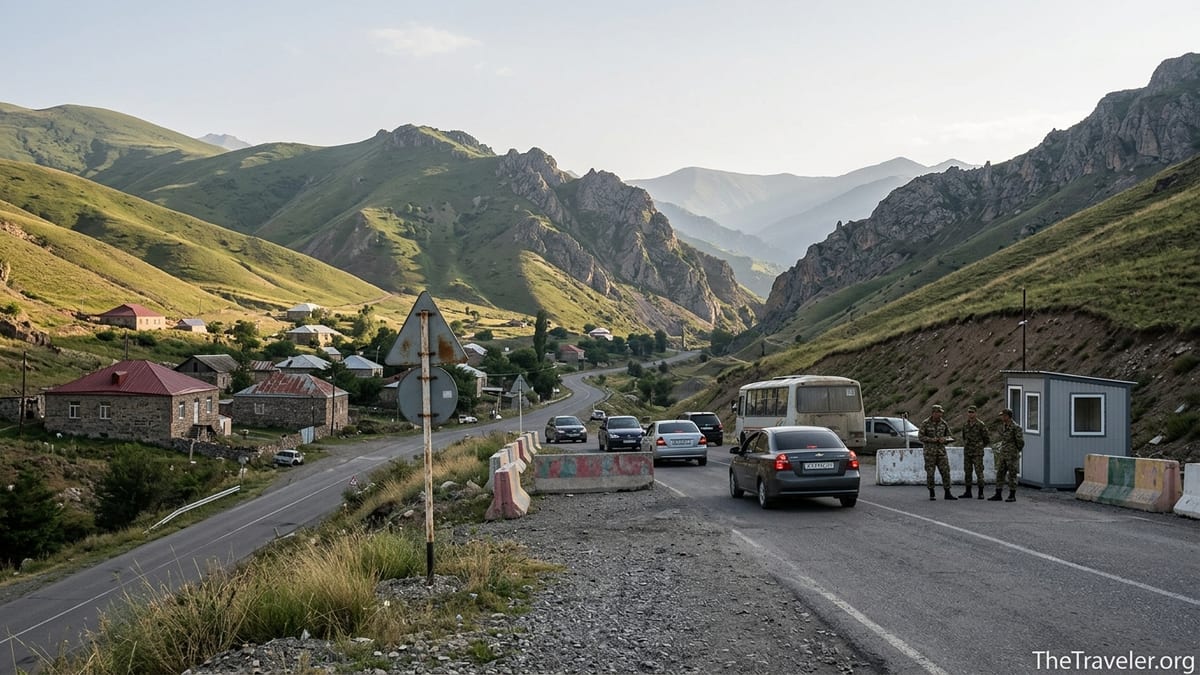
From “frozen conflict” to forced exodus
For three decades after the Soviet collapse, Nagorno Karabakh was shorthand for a “frozen conflict” in the South Caucasus. Armenian forces controlled the mountainous enclave and surrounding districts, although the area was internationally recognized as part of Azerbaijan. The frontline, stretching from the ruined cityscapes near Aghdam to the mountain passes above Lachin, formed one of Eurasia’s most heavily militarized fault lines. Travelers felt the impact even if they never went near the front: Armenian and Azerbaijani passport stamps could complicate entry, certain borders were sealed, and foreign journalists needed special permits to visit the separatist region.
This uneasy status quo shattered in two stages. In 2020, Azerbaijan retook large swathes of territory in a six week war, relying heavily on drones and artillery. A Russian brokered ceasefire left a reduced Armenian administered area of Nagorno Karabakh connected to Armenia by the narrow Lachin corridor, patrolled by Russian peacekeepers. Then, after months of blockade of that corridor and mounting humanitarian concern, Azerbaijan launched a rapid offensive on 19 September 2023. Within a day, the Karabakh Armenian authorities capitulated. In the following weeks, almost the entire Armenian population, widely estimated at more than one hundred thousand people, fled along the single mountain road toward the Armenian town of Goris, creating scenes of continuous convoys, ad hoc roadside food stations, and overwhelmed fuel depots.
By the end of September 2023, Armenian officials said that virtually all ethnic Armenians had left Nagorno Karabakh. The de facto authorities announced they would dissolve their institutions by the end of the year. When Russian peacekeepers completed their withdrawal in June 2024, Azerbaijani control was unambiguous, and maps were updated accordingly. Nonetheless, the human and political shock of that exodus still reverberates in Yerevan, Baku and beyond, and remains essential context for anyone seeking to understand the region today.
A strategic crossroads between powers
Nagorno Karabakh’s location helps explain why it continues to matter long after the shooting stopped. The enclave and its surrounding districts sit at the meeting point of Armenia, Azerbaijan and Iran, not far from Georgia’s transit corridors. This is where North South and East West routes intersect: energy pipelines linking the Caspian Sea to Turkey and Europe, potential rail links between Russia and the Middle East, and roads that could connect Turkey to the Azerbaijani exclave of Nakhchivan and on to Baku. Even as frontline trenches are dismantled, planners in Moscow, Ankara, Brussels and Tehran watch this area closely because changes on the ground can redirect trade and influence across the broader region.
For example, as of 2026, travelers driving the popular route from Tbilisi to Baku pass not far from former frontline areas that are being rebuilt as part of Azerbaijan’s “liberated territories” program. Highways and a new airport near Fuzuli signal Baku’s intention to integrate these lands fully and use them as gateways for tourism and logistics. Meanwhile, in Armenia, new interest has turned to alternative corridors, such as upgraded roads from Yerevan through southern Syunik province toward Iran, where truck traffic has grown as Armenia seeks to reduce vulnerability to Azerbaijani pressure.
The Russian factor also shows why Nagorno Karabakh still matters strategically. The 2020 ceasefire had given Moscow a formal peacekeeping role in the region. Their early withdrawal in 2024, well before the agreement’s original 2025 horizon, signaled a shift in Russia’s influence in the South Caucasus, already strained by its focus on the war in Ukraine. In response, Armenia has edged closer to the European Union and other partners, inviting an EU monitoring mission along parts of its border. For visitors, this translates into more visible EU flagged vehicles on Armenian roads near conflict sensitive areas, and a slightly different diplomatic tone in Yerevan than one might have encountered a decade ago.
Security, borders and what travelers actually see
After 2023, the most intense fighting around Nagorno Karabakh stopped, but security questions did not. The Armenia Azerbaijan state border, particularly in the northern Tavush region and the southern Syunik corridor, remains sensitive. There are periodic reports of small arms fire, accusations of incursions, and complex negotiations over border demarcation. For travelers in Armenia, this can mean occasional police checkpoints, military convoys on main roads like the Yerevan Goris highway, and advice from local guesthouse owners to avoid specific village approach roads if tensions have recently flared.
For now, foreign visitors cannot simply drive into Nagorno Karabakh as a tourist destination. The Armenian controlled entry point through the Lachin corridor no longer exists, and Azerbaijan manages access as part of its domestic territory. The region is heavily securitized and largely closed to independent travel. International journalists and humanitarian workers have entered only on tightly controlled visits. In practice, a traveler coming to the South Caucasus in 2026 experiences Nagorno Karabakh not as a place to visit, but as an absence: a blank space on the Armenian itinerary compared with pre 2020 guidebooks, and a cluster of newly opened zones on the Azerbaijani side that are still being reconstructed.
On the Azerbaijani side, Baku has invested in symbolic reconstruction projects in the formerly Armenian controlled districts. Places like Shusha, a hilltop city that Azerbaijan highlights as a cultural capital, are gradually reopening with new roads, hotels and restored mosques. Tours marketed in Baku sometimes include day visits for domestic travelers or organized foreign delegations to see these “revitalized territories.” Yet large swathes remain off limits due to mine clearance work, destroyed infrastructure, and tight security. Travelers who do receive permission often describe a landscape of half demolished villages, fresh asphalt, and billboards promoting return and development, with almost no civilian life in between.
Displacement, memory and everyday life in Armenia
While Nagorno Karabakh may vanish from many maps, its people have not. Tens of thousands of ethnic Armenians from the region have resettled in Armenia proper, especially around Yerevan and in towns like Goris and Vayk. Walking through central Yerevan in 2026, you can meet families who arrived in September 2023 with only a few bags in their cars. Many now rent small apartments in Soviet era tower blocks on the city’s outskirts, share rooms in cheaper guesthouses, or occupy newly converted dormitories. For travelers staying in budget hotels, it is common to encounter staff or fellow guests who identify as from Stepanakert or villages now under Azerbaijani control.
This influx has reshaped parts of Armenia’s economy and social fabric. Rents have risen sharply in Yerevan, which visitors notice when searching for short term apartments. Cafes near Republic Square employ young people who once studied in Karabakh’s universities. In provincial towns, former Karabakh farmers now work in construction or small scale trade, selling homemade preserves or fruit along highways frequented by tourists heading to Tatev Monastery or the wine region around Areni. For many hosts, the stories they tell guests over breakfast about their lost homes, abandoned orchards, and the difficult drive along the Lachin corridor in September 2023 are as much a part of their identity as the views from their balconies.
These personal narratives keep Nagorno Karabakh central in Armenian public life. Memorials to soldiers from both the 1990s war and the 2020 fighting stand in many towns, with fresh portraits added for those who died in 2023. Travelers who attend a church service in Yerevan’s central cathedral or smaller churches across the country may hear priests include prayers for displaced families or missing soldiers. Museum exhibits, from the 1915 genocide memorial complex to smaller regional history displays, increasingly weave the story of Karabakh’s loss into a broader discourse of national trauma and survival.
Azerbaijan’s “liberated territories” and controlled opening
In Azerbaijan, the same places carry a radically different meaning. Officials frame the 2020 and 2023 operations as restoring sovereignty over lands long recognized as Azerbaijani by international law. The term “liberated territories” appears in speeches, school textbooks and domestic tourism campaigns. Even before the area is fully opened, its image is visible across the country: posters at Baku’s Heydar Aliyev International Airport announce flights to new airports in Fuzuli and Zangilan, while television segments showcase plans for model villages, smart agriculture and restored cultural monuments.
For travelers, this narrative shapes the experience of exploring modern Azerbaijan. Guided city tours in Baku often include stops at memorials to soldiers killed in the “patriotic war,” and museums that display captured equipment from Armenian forces. Some agencies advertise tightly managed excursions to Shusha, combining visits to renovated mosques, alleys lined with new stonework, and lookouts over deep forested valleys. Security remains heavy, and foreign journalists note that visits generally occur in the company of official minders, reflecting the political sensitivity of the area and ongoing concerns about landmines and unexploded ordnance.
Conversely, the absence of Armenians from Nagorno Karabakh and surrounding districts has created a social vacuum. Villages that once had mixed or Armenian populations now await new residents from other parts of Azerbaijan. For now, the vast majority of foreign travelers encounter the conflict through conversations in Baku’s tea houses or the coastal promenade, where war veterans and their families share stories very different from those heard in Armenia. Understanding these parallel narratives is crucial for anyone seeking to appreciate why the issue remains emotionally charged on both sides.
Regional diplomacy, peace prospects and uncertainty
Even after the territorial question appears settled, Nagorno Karabakh continues to drive diplomacy. Armenia and Azerbaijan have engaged in on and off negotiations over a broader peace treaty that would address issues such as border delimitation, prisoner exchanges and transportation corridors. International mediators, including the European Union and the United States, have hosted talks, while Russia attempts to retain a role despite its diminishing on the ground presence after the peacekeepers’ withdrawal.
One key point of contention is the future of transit links. Azerbaijan has long advocated for a land route connecting the mainland to its Nakhchivan exclave across Armenia’s southern Syunik province. Armenian officials, wary of losing control over their own territory, insist that any corridor must remain under Armenian sovereignty and standard border procedures. For travelers, the outcome could be significant. A fully operational route would create new overland travel options between Turkey, Nakhchivan, Armenia and Azerbaijan, potentially altering how people move around the South Caucasus. For now, however, such cross border journeys remain constrained, and many visitors continue to fly between Baku and Yerevan via third countries such as Tbilisi or Istanbul.
Another unresolved issue is justice and accountability for wartime abuses and the treatment of civilians. Armenian and Azerbaijani groups, along with international human rights organizations, document cases ranging from shelling of residential areas to alleged mistreatment of prisoners. Legal campaigns and debates over whether the 2023 exodus constitutes ethnic cleansing or forced displacement keep Nagorno Karabakh in international headlines and policy forums. This legal and moral dimension influences how foreign governments frame their relations with both Baku and Yerevan, which in turn affects visas, aid programs and the level of diplomatic presence that travelers observe in each capital.
How Nagorno Karabakh shapes travel choices today
For visitors planning a South Caucasus itinerary in 2026, Nagorno Karabakh matters less as a destination than as a factor shaping routes, expectations and conversations. Most travelers still combine Georgia with either Armenia or Azerbaijan, or visit all three. The Armenia Azerbaijan land border remains closed, so itineraries typically loop through Tbilisi as a neutral hub. This separation reflects lingering distrust but also creates a particular rhythm: a traveler may spend a week exploring Yerevan’s cafes and monasteries, then take an overnight train or budget flight to Baku and encounter a different narrative about the same conflict only days later.
Practical details carry political weight. Armenian border officials can be sensitive to signs of travel to Azerbaijan, and vice versa, although policies and enforcement vary over time. Travelers who previously visited Nagorno Karabakh on old trips, when it was accessible via Armenia, may find that such stamps or visas can complicate entry to Azerbaijan. Many experienced visitors now advise using a second passport if they plan to travel widely in the region, or at minimum being prepared to answer detailed questions about past visits.
At the same time, both countries view tourism as an important economic sector and have incentives to maintain a sense of normalcy for foreign guests. In Yerevan, the main impacts of the Nagorno Karabakh conflict on a visitor’s daily experience may be subtle: a taxi driver who points out a Karabakh flag sticker on the dashboard, or a wine bar that hosts a fundraising evening for displaced families. In Baku, it might be the prominent billboards celebrating victory and a museum that dedicates an entire floor to the 2020 war and 2023 offensive. Recognizing these signals can help travelers engage more thoughtfully and respectfully with local perspectives.
The Takeaway
Although the self proclaimed Republic of Artsakh has dissolved and Azerbaijani control over Nagorno Karabakh is firmly established, the region’s legacy is deeply embedded in the South Caucasus. It shapes how Armenia and Azerbaijan define their security needs, how major powers like Russia, Turkey and the European Union approach the region, and how borders and infrastructure are planned. For the people who once lived in Nagorno Karabakh and now build new lives elsewhere, it remains a personal loss that colors their view of the future.
For travelers, understanding Nagorno Karabakh’s continuing importance does not mean avoiding the South Caucasus. Instead, it invites a more informed and empathetic journey. Visiting Armenia and Azerbaijan today offers a chance to hear different stories about the same mountains and valleys, to see how cities and villages adapt to post conflict realities, and to appreciate how a seemingly remote enclave can influence regional politics, energy routes and everyday life. In that sense, Nagorno Karabakh still matters, both for those who call the region home and for anyone seeking to grasp the complex tapestry of the modern South Caucasus.
FAQ
Q1. Can I visit Nagorno Karabakh as a tourist in 2026?
At present, independent tourism to Nagorno Karabakh is not realistically possible. The former Armenian controlled route via the Lachin corridor is closed, and Azerbaijan treats the area as a sensitive part of its national territory with heavy security and restricted access. A few highly managed visits for officials, journalists or organized groups may occur, but casual travelers should not plan on entering the region.
Q2. Is it safe to travel to Armenia and Azerbaijan after the 2023 offensive?
Both Armenia and Azerbaijan remain generally calm away from border areas, and their capitals, Yerevan and Baku, continue to host large numbers of visitors, business travelers and diplomats. However, tensions can flare along the state border, especially in regions like Syunik or Tavush in Armenia and adjacent districts in Azerbaijan. Travelers should check current advisories, avoid military zones, and follow local guidance if passing near frontier areas.
Q3. How does the Nagorno Karabakh conflict affect border crossings?
The Armenia Azerbaijan land border remains closed, meaning travelers must transit via a third country such as Georgia if they wish to visit both states in a single trip. Within each country, internal checkpoints may appear near sensitive border stretches. Passport stamps indicating previous travel to Nagorno Karabakh on Armenian documentation can complicate entry to Azerbaijan, so visitors should be prepared for questioning or, in some cases, refusal of entry.
Q4. Are there visible signs of the conflict that travelers will notice?
Yes. In Armenia, visitors see memorials to soldiers, Karabakh flags, and fundraising events for displaced families. In Azerbaijan, museums, victory monuments and media coverage emphasize the recovery of “liberated territories.” In some frontier districts, travelers may spot damaged buildings, mine warning signs and military posts. These visible markers serve as reminders that the conflict’s legacy is recent and unresolved at a human level.
Q5. How have former residents of Nagorno Karabakh integrated into Armenian society?
Many displaced people from Nagorno Karabakh now live in Yerevan and other Armenian towns, working in services, construction, agriculture or small businesses. Integration has been uneven, as housing shortages and economic pressures persist, but over time more families have found jobs, enrolled children in local schools and opened new enterprises. Travelers may meet former Karabakh residents running guesthouses, cafes or market stalls, sharing their stories with visitors.
Q6. What role do Russia, Turkey and the EU now play in the region?
Russia’s direct role diminished after its peacekeepers withdrew from Nagorno Karabakh in 2024, though it still has ties with both Baku and Yerevan. Turkey strongly supports Azerbaijan and seeks expanded trade and transport links. The European Union has increased its diplomatic profile, including deploying a civilian monitoring mission along parts of Armenia’s borders. These shifting roles mean the region’s balance of power is more fluid than in previous decades.
Q7. Could the situation around Nagorno Karabakh flare up again?
Large scale fighting around Nagorno Karabakh is less likely in the near term because Azerbaijan controls the territory and has substantially strengthened its position. However, the broader Armenia Azerbaijan border remains tense, and unresolved issues such as border demarcation, prisoners and transit routes could spark localized clashes. For now, most risks are confined to specific frontier areas rather than major cities or main tourist sites.
Q8. How has the conflict influenced tourism development in the South Caucasus?
The conflict has redirected tourism rather than halted it altogether. Armenia promotes cultural and nature tourism deeper inside the country, while Azerbaijan is investing in infrastructure in its regained districts and expanding offerings in Baku and along the Caspian coast. Georgia continues to serve as a convenient bridge between the two, with many visitors using Tbilisi as a regional hub. Over time, if relations stabilize, new cross border routes could emerge.
Q9. What should travelers keep in mind when discussing Nagorno Karabakh locally?
Conversations about Nagorno Karabakh are often emotional and personal. It is wise to listen more than speak, avoid making sweeping political judgments, and recognize that Armenians and Azerbaijanis carry very different historical narratives. Expressing empathy for ordinary people affected on all sides, and asking open ended questions rather than arguing, usually leads to more meaningful and respectful exchanges.
Q10. Why does Nagorno Karabakh still matter if its status seems decided?
Nagorno Karabakh still matters because its legacy shapes regional security, diplomacy, infrastructure plans and personal identities. The displacement of its population, the reconfiguration of borders, and the shifting roles of Russia, Turkey and the EU all stem from what happened there. For anyone traveling in or studying the South Caucasus, understanding Nagorno Karabakh is essential to understanding the region as a whole.