


In a region where glamorous beach clubs and private coves dominate the postcards, it is surprisingly easy to overlook a small crescent of sand tucked right under Antibes’ medieval walls. Plage de la Gravette, hidden between Port Vauban and the old town ramparts, is not the most famous beach on the French Riviera. Yet for many locals and repeat visitors, skipping this modest, city-center cove would mean missing one of Antibes’ most enjoyable and characterful beaches.
Get the latest updates straight to your inbox!
A Hidden Curve of Sand Beneath Antibes’ Ramparts
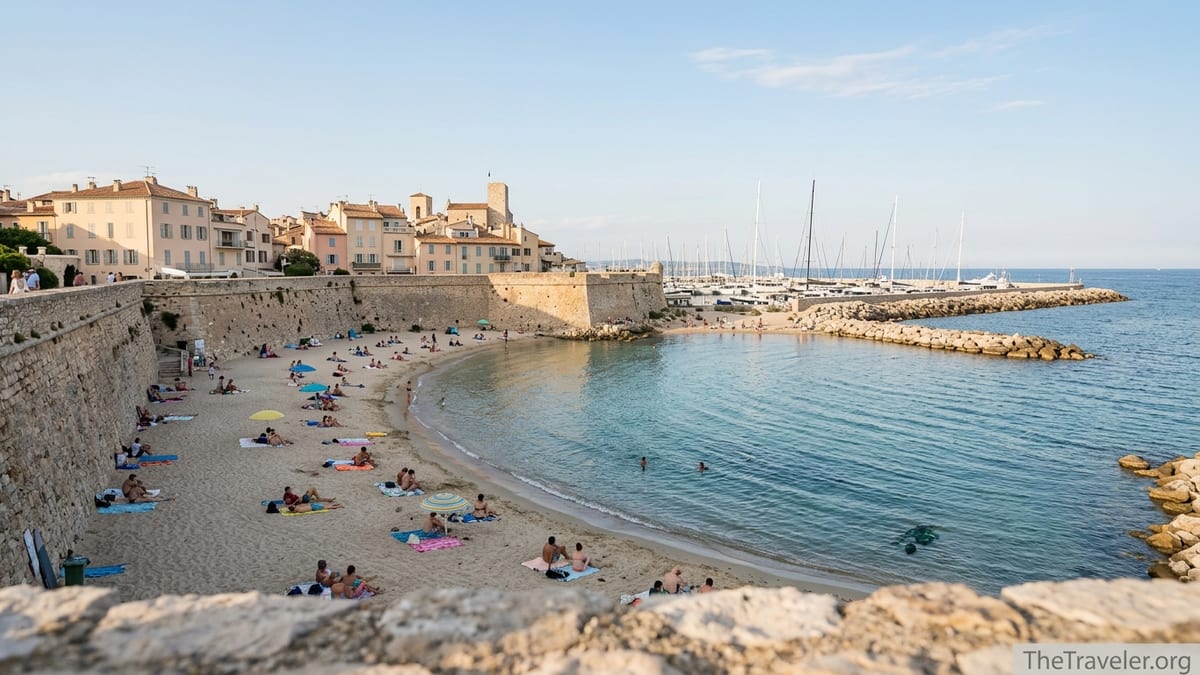
Plage de la Gravette sits in a natural horseshoe-shaped cove just outside the fortified old town, shielded from open sea swells by a stone breakwater and the high ramparts above. From the sand, you look up at the golden walls of Vieil Antibes, with pastel shutters, terracotta tiles, and church towers rising behind. Turn the other way and you see the entrance to Port Vauban, often with sleek yachts anchored nearby. It is a compact scene, but unmistakably Mediterranean.
Reaching the beach feels almost cinematic in its simplicity. From Cours Masséna and the Provençal market, it is roughly a five-minute walk through shaded lanes and along Quai Henri Rambaud. One moment you are browsing cheese and olives, the next you slip through an opening in the ramparts and step straight onto soft sand. For travelers staying in or near the old town, this convenience is hard to beat: no taxis, no long bus rides, no planning required.
Because the cove is so well protected, the sea here is usually calm, with only small, languid waves reaching the shore. Families often describe Gravette as feeling like a giant saltwater pool rather than an exposed Riviera beach. On typical summer mornings you will see toddlers paddling in ankle-deep water at the shoreline while older kids practice snorkeling further out over the rocky edge of the bay.
Practical details reinforce its role as a city beach rather than a resort strip. The sand is mostly fine, with some small pebbles closer to the waterline, and the town has installed fresh-water showers at the back of the beach, plus public toilets built into the rampart wall. There are no fixed sun loungers or private sections: the sand is entirely public, and you simply bring a towel and claim a patch.
Public and Free in a Region of Pricey Beach Clubs
On much of the Côte d’Azur, the best slices of shoreline are carved up by private beach clubs charging from around 25 to 45 euros per day for a lounger and umbrella in high season, with additional minimum spends in some places. Along nearby Cap d’Antibes, at beaches like Garoupe or the chic clubs in Juan-les-Pins, two people can easily spend well over 100 euros on a relaxed day by the sea once food and drinks are added.
Plage de la Gravette offers a counterpoint to that model. The entire bay is public and free to access. You lay your own towel, bring your own umbrella, and if you want a cold drink or a snack, you head either to the seasonal snack kiosk at the back of the sand or back into the old town where bakeries and cafés sell takeaway panini, fresh fruit, and pastries at regular city prices. A couple visiting in July might spend under 20 euros total on a picnic lunch from the Provençal market instead of committing to a full-service beach club.
This openness shapes the atmosphere. Gravette attracts a cross-section of Antibes life: teenagers from the surrounding neighborhoods, local families with cool boxes, visiting cruise passengers who have just discovered the beach on a quick shore excursion, and tourists staying in nearby apartments who come down every morning with their coffee. You will also see office workers from the old town dropping by for a brisk lunchtime swim before heading back to work, wet hair and all.
For travelers trying to balance budgets on a French Riviera itinerary, Gravette can be a strategic choice. You might splurge on one “big” day at a premium club on Plage de la Garoupe or in Juan-les-Pins, then use Gravette as your go-to for spontaneous dips and relaxed afternoons without additional cost. Over a week-long stay, that can mean several hundred euros saved compared with relying solely on private beaches.
Why Gravette Works So Well for Families and Casual Swimmers
The beach’s sheltered, shallow profile is one of the main reasons many parents rank Plage de la Gravette among the best family-friendly beaches in Antibes. The sandy bottom slopes gradually, so young children can wade out several meters while still standing comfortably, and the breakwater significantly reduces wave action on most days. From mid-June to around mid-September, the town typically stations lifeguards here, adding another layer of reassurance for parents watching kids explore the water.
In practice this means a very relaxed rhythm. On a typical August morning, you might see a local parent set up under a lightweight pop-up tent near the back wall while toddlers potter in the sand with buckets. Older children often practice swimming just beyond the first sandbar, close enough for adults to reach them in a few steps. Teenagers and confident swimmers drift farther out toward the rocks, where the water becomes deep enough for short laps or snorkeling.
The layout is also manageable for those with limited mobility or pushing strollers. From the promenade by the port, you pass through a wide gate and down a gentle ramp directly onto the sand, without stairs. While the surface is still soft sand and not fully accessible in a wheelchair, the short distance from paved walkway to waterline is a real advantage compared with more remote coves that require steep paths or uneven rock steps.
For casual swimmers and adults who simply want a quick dip, Gravette’s predictability is part of the appeal. Hotel guests staying near Place Nationale, for instance, often mention ducking down to the beach for a 20-minute swim before breakfast or after dinner. Because the beach is gated and typically closed in the evening, usually around 8 pm outside high summer, it also tends to feel safer after dark than open, unsupervised stretches, even if you cannot swim at night.
How Plage de la Gravette Compares to Other Antibes Beaches
Antibes offers a varied coastline, from long shingle stretches east of town to postcard-perfect Cap d’Antibes coves and the lively sands of Juan-les-Pins. Within that mix, Plage de la Gravette fills a specific niche as the old town’s neighborhood beach, trading expansive horizons for atmosphere and convenience.
Compared with Plage de la Salis and Plage du Ponteil, both a 15 to 20-minute waterfront walk to the south, Gravette is smaller and more enclosed, with fewer views of the Alps and open bay. Salis and Ponteil feel more like classic seaside promenades, with pine trees and broader sand, while Gravette feels almost like a secret courtyard pool beneath the ramparts. Visitors staying closer to Cap d’Antibes often favor Salis for its wider space, but those based in the medieval center often use Gravette daily and only occasionally venture farther.
Against the iconic Plage de la Garoupe on Cap d’Antibes, Gravette is less dramatic but more democratic. Garoupe has legendary water clarity and a mix of high-end beach clubs and a small public section, making it a favorite for travelers seeking a special-occasion day at the sea. Yet reaching Garoupe usually requires a bus or car ride of around 15 to 20 minutes from the old town, and costs mount quickly once you rent loungers and order lunch. Gravette, by contrast, is five minutes on foot and free, which is why many visitors report alternating: a “treat” day at Garoupe, then several relaxed, budget-friendly sessions at Gravette.
Juan-les-Pins, on the western side of the peninsula, offers long, sunny beaches lined with private clubs, cocktail bars, and late-night music. If you want an all-day sunbed with waiter service, or you are planning a celebratory dinner with your feet almost in the sand, Juan-les-Pins may be the better choice. But if your priority is combining sightseeing in Antibes’ old town with an easy swim, Gravette is arguably unmatched. You can tour the Picasso museum in the morning, eat socca and local cheese at the market, then be floating in the sea ten minutes later without ever boarding a bus.
Seasonality, Crowds, and Water Quality
For all its strengths, Plage de la Gravette is not perfect, and recognizing its limits helps you time your visit well. In July and August, particularly from late morning through mid-afternoon, the small cove fills quickly. Towels are laid almost edge-to-edge on busy days, and finding a sizeable patch of sand for a group of four after 11 am can be challenging. Many regulars aim to arrive before 9:30 or 10 am in high season, or they come after 5 pm when families begin to pack up and the light softens.
Like many urban beaches, Gravette can occasionally experience dips in water quality, especially after heavy storms or peak tourist weekends. Local authorities monitor conditions and sometimes post advisories or temporary no-swim notices if results fall outside desired standards. These episodes are usually short, but if swimming is a priority, it is wise to glance at beach information boards near the entrance or ask your hotel reception for the latest updates before planning a full day there.
Outside the peak summer window, the mood shifts dramatically. In late September or early October, when the sea remains relatively warm but schools have resumed, the cove can feel almost private on weekday mornings. Locals treat it as an outdoor lounge: retired residents sit on the stone ledge below the ramparts reading newspapers, and a few hardy swimmers keep up year-round routines, even on clear winter days when the water is brisk but the low sun still warms the sand.
Winter and shoulder seasons also highlight Gravette’s microclimate. The tall ramparts can shield the beach from northerly winds, turning it into a suntrap when the rest of the promenade feels chilly. On a calm, sunny day in January, you might see a handful of people sunbathing in T-shirts with bare feet in the sand while wearing jackets everywhere else in town.
Planning a Visit: Logistics and Real-World Tips
If you are arriving in Antibes by train, Plage de la Gravette is roughly one kilometer from the station. Many visitors simply walk: it takes around 10 to 15 minutes along avenues leading to the old town, then through the covered market area and down to the port. For those carrying heavier bags or beach gear, the town bus system runs routes that stop close to the port, reducing the walk to a few minutes from the stop, though exact lines and timetables shift from season to season.
Driving visitors typically use the large underground Parking Vauban near Port Vauban. From there, it is only a short walk across the harborfront to the beach entrance. In high summer the car park can become busy late in the morning, so arriving before 10 am helps secure a spot and avoid queuing at the barriers. Street parking in the immediate old town area is limited and often restricted to residents.
Food planning is simple. Many travelers spend the morning browsing the Provençal market, which usually runs in the old town on most days from roughly 7 or 8 am to early afternoon, buying sliced saucisson, fresh bread, tomatoes, olives, and local fruit to build a generous picnic for under 15 to 20 euros per person. Others opt for takeaway socca from a small stand on the market square or grab pan bagnat sandwiches stuffed with tuna, olives, and vegetables from neighborhood bakeries. With your bag assembled, a short walk delivers you to the sand where you can spread a towel against the rampart wall and eat with a view of the water.
There are some practical rules to note. Municipal signs at the entrance usually prohibit dogs during the busy summer period, and beach gates are normally locked at night for safety and cleaning. Alcohol consumption is technically restricted, although in practice small amounts of wine or beer discreetly consumed with a picnic during the day rarely draw attention, provided behavior remains respectful and there is no glass left on the sand. As on all French public beaches, topless sunbathing is generally tolerated, but visitors should observe local norms and maintain sensitivity to families nearby.
Making Gravette Part of a Wider Antibes Stay
What makes skipping Plage de la Gravette a real loss is not simply the quality of the sand or the convenience of its location. It is how seamlessly it can be woven into an Antibes stay. For travelers renting an apartment near Place du Safranier or the cathedral, Gravette can function as an extended living room: you might shop in the morning, work or explore museums in the early afternoon, then drift down for a late swim as the sun slides behind the rooftops.
Short-stay visitors also benefit. Cruise passengers docking in nearby ports often have only a few hours in Antibes. Choosing Gravette means they can walk the old streets, tour the Picasso Museum inside the former Château Grimaldi, pick up a quick lunch at the market, and still enjoy an hour’s swim before needing to return to their ship. Very few Mediterranean ports offer such an easy combination of culture, history, and beach so close together.
Gravette can also serve as a gentle introduction to the Mediterranean for travelers more used to Atlantic or northern waters. First-time visitors who find the pebbles of Nice uncomfortable often comment on how pleasant it feels to step straight onto sand here, without needing water shoes. The enclosed bay, with its blend of townscape and harbor views, helps some less confident swimmers feel at ease, especially when they know lifeguards are usually on duty in high season.
For couples on a romantic break, the beach’s intimacy and golden-hour light are a quiet highlight. An evening routine might involve an early dinner in one of the small bistros on Rue Sade or around Place Nationale, followed by a slow stroll along the ramparts. Looking down into the now-quiet cove, with only a few lingering silhouettes on the sand and lights shimmering off the port waters, it is clear why many repeat visitors consider Gravette part of Antibes’ essential charm.
The Takeaway
Plage de la Gravette will not replace every other beach in Antibes. It is not the place for a full-scale, serviced beach club day, nor does it offer the sweeping open-sea vistas of Cap d’Antibes’ more exposed coves. What it does offer, in a remarkably compact space, is a rare blend of practicality, atmosphere, and authenticity.
Skip Gravette and you may well spend your time shuttling between bus stops and pricey loungers, never experiencing the simple pleasure of wandering down from a medieval street directly into warm, protected water. Include it, and Antibes becomes not just a pretty old town overlooking the sea, but a place where history, daily life, and the beach genuinely meet.
For many travelers, that easy, unpretentious connection is precisely what they remember most when the trip is over. In a destination famed for spectacle and exclusivity, Plage de la Gravette is a reminder that one of Antibes’ best beaches is also one of its most accessible.
FAQ
Q1. Where exactly is Plage de la Gravette in Antibes?
Plage de la Gravette sits just outside the ramparts of Antibes’ old town, between Port Vauban and the fortified walls, about a 10 to 15-minute walk from the train station.
Q2. Is Plage de la Gravette free to use?
Yes. The entire beach is public and free, with no private club section or mandatory lounger rental. You simply bring your own towel and any shade you need.
Q3. Is the beach suitable for children and non-swimmers?
Generally yes. The cove is sheltered, the water is usually calm and shallow near the shore, and in summer there are typically lifeguards on duty, making it popular with families.
Q4. How crowded does Plage de la Gravette get in summer?
In July and August it can become very busy from late morning to mid-afternoon. Arriving before 10 am or after around 5 pm usually offers more space and a calmer feel.
Q5. Are there showers and toilets at the beach?
Yes. There are fresh-water beach showers along the sand and public toilets built into the rampart wall just outside the main entrance area.
Q6. What should I bring if I plan to spend a few hours there?
Bring towels, sunscreen, drinking water, and if possible a small umbrella or pop-up shade. Many visitors also bring picnic supplies bought from the nearby Provençal market.
Q7. Can I buy food and drinks near Plage de la Gravette?
Yes. In season there is usually a kiosk at the back of the beach selling snacks and cold drinks, and the old town’s cafés, bakeries, and market are just a few minutes’ walk away.
Q8. Is Plage de la Gravette open in the evening?
The beach is generally accessible during daylight hours, but gates are normally locked at night for safety and cleaning. Exact closing times can vary by season, so check local signs.
Q9. How does Gravette compare to beaches like Garoupe or Juan-les-Pins?
Gravette is smaller, fully public, and right by the old town, ideal for quick swims and families. Garoupe and Juan-les-Pins offer more beach clubs and services but involve higher costs and travel time.
Q10. Are there any rules I should be aware of?
Standard French beach rules apply: no dogs in high season, keep glass off the sand, avoid loud music, and take all rubbish with you. Swimming may be temporarily restricted if water quality tests require it.