


Straddling the Arctic Circle in Finnish Lapland, Rovaniemi has quietly transformed from a remote logging town into one of Europe’s most magical Arctic destinations. Today it is marketed as the official hometown of Santa Claus, a Northern Lights hotspot and a gateway to vast boreal forests, yet the city still feels small enough that you can walk from a design hotel to a frozen riverbank in minutes. That blend of easy access, polished visitor infrastructure and genuinely wild Arctic nature is what draws hundreds of thousands of travellers each year to this once-overlooked corner of the north.
Get the latest updates straight to your inbox!
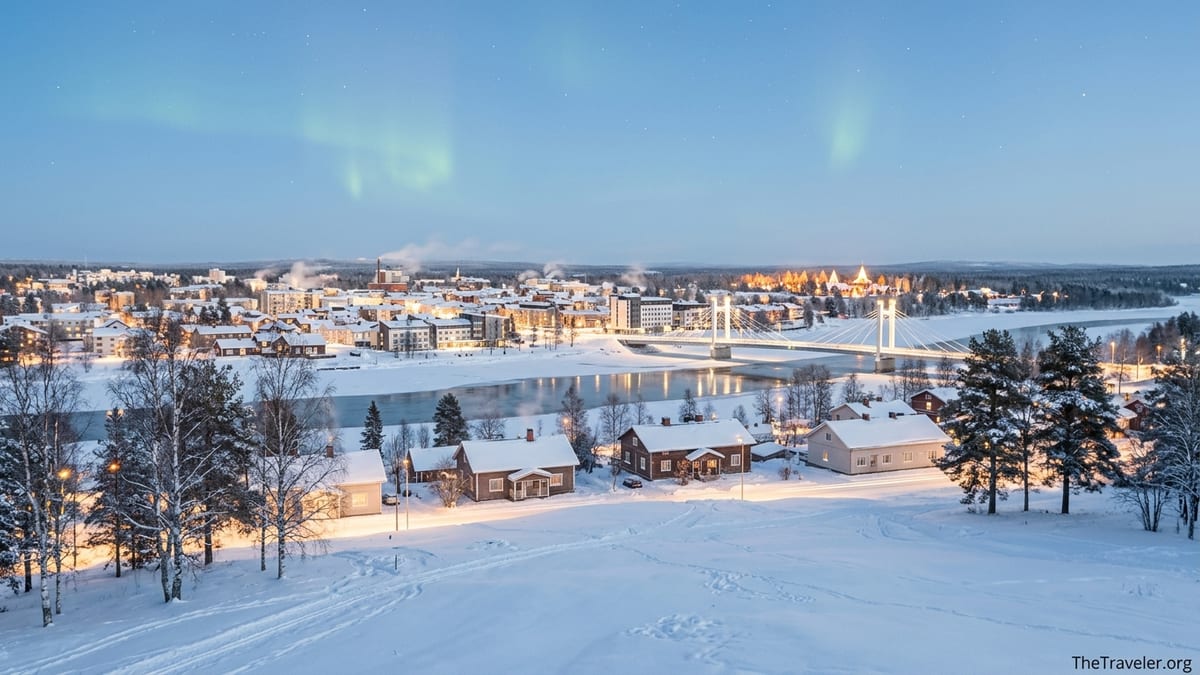
From War‑Scarred Outpost to Storybook Arctic Capital
Rovaniemi’s rise as an Arctic icon is tied directly to its history. The city was almost completely destroyed during the Second World War, and after 1945 it was rebuilt following a reindeer antler–shaped plan designed with input from Finnish architect Alvar Aalto. The rebuilt city became the administrative capital of Lapland, but for decades it was better known for timber and industry than tourism. Its location, on the Arctic Circle at roughly 66.5 degrees north, would eventually prove to be its greatest asset as interest in polar travel, the Northern Lights and wilderness experiences surged across Europe.
Tourism development started modestly in the 1950s when a cabin was built to welcome visitors, including Eleanor Roosevelt, curious about life in the far north. Over the following decades Rovaniemi invested in infrastructure that made Arctic experiences comfortable for ordinary travellers rather than just explorers. By the early 2000s, the city was seeing steady growth in winter visitors as budget airlines expanded routes into Lapland and travel media began spotlighting the region as an accessible alternative to more remote Arctic destinations in Greenland or northern Canada.
Today, Rovaniemi is one of Finland’s most important destinations for foreign tourism, ranking alongside Helsinki in international overnight stays. Local tourism statistics published for the 2023–24 winter season report that visitor numbers around Christmas grew significantly compared with previous years, and roughly half a million people now visit the Arctic Circle and Santa Claus Village annually. That scale would overwhelm many small Arctic communities, but in Rovaniemi it has allowed a full ecosystem of hotels, guides, restaurants and transport links to flourish, which in turn makes the city feel surprisingly cosmopolitan for a place surrounded by taiga forest.
At street level, the transformation is obvious. Lordi’s Square in the compact city centre hosts winter markets and concerts; design‑driven hotels like Arctic Light Hotel and HAAWE serve Nordic tasting menus and Lapland reinterpretations of classics such as reindeer fillet; and just a short walk away, the glass‑roofed Arktikum museum glows beside the frozen Ounasjoki river. The result is a city that still looks and feels northern, but offers comforts and cultural experiences that rival much larger European destinations.
How Santa Claus Turned a Remote City into a Global Pilgrimage Site
Rovaniemi’s most famous calling card is Christmas. Since the late 20th century the city has actively promoted itself as the official hometown of Santa Claus, building a cluster of attractions around the Arctic Circle line just north of the airport. Santa Claus Village is now an open‑air Christmas destination with wooden cabins, fairy lights and fir trees, where families can meet Santa, visit his post office and step across a clearly marked Arctic Circle line. Entry to the village itself is free, which makes it an easy day out even for budget travellers staying in town.
For many visitors the details are what make the experience feel magical rather than purely commercial. Children can hand over letters at Santa’s Main Post Office and see piles of mail addressed simply to “Santa, Finland,” while adults browse shops selling hand‑knitted mittens, local chocolate or knives crafted from curly birch. Reindeer stand ready to pull short sleigh rides near the central square, and in the darker hours the snow reflects the warm yellow glow of string lights. Parents from London or Madrid who might normally dread theme parks often report that their children’s reactions, particularly on seeing Santa in his timber‑lined office, make the trip worthwhile.
Accommodation built around the Christmas theme has amplified Rovaniemi’s appeal. Santa Claus Holiday Village, a resort within the village area, offers private cabins, family suites and glass‑roofed igloos that allow guests to step outside and be at Santa’s office in minutes. Prices fluctuate widely: basic cabins can be surprisingly competitive in shoulder seasons like November or March, but glass igloos in peak Christmas weeks often climb into the high hundreds of euros per night and can reach around 1,000 US dollars for the most sought‑after units. Even so, demand remains strong, particularly from multi‑generation family groups treating the trip as a once‑in‑a‑lifetime celebration.
The city has had to learn to manage the intense seasonality that comes with Christmas tourism. Visitor counts spike sharply in December and early January, causing crowding on popular days. In response, local authorities and the Santa Claus Village operators have introduced visitor counting systems and data‑based planning to spread tour groups across different times and activities. Travellers see the benefits in practical ways, such as extended opening hours in December, better signposted walking routes between attractions and clear information on when queues for Santa are longest, allowing families to plan early‑morning or late‑evening visits for a calmer experience.
World‑Class Arctic Experiences Within Easy Reach
Beyond the Christmas branding, what truly anchors Rovaniemi as a magical Arctic destination is the range of wilderness experiences available within an hour of the city. Tour operators based in the centre and at Santa Claus Village offer husky safaris, reindeer farm visits, snowmobile expeditions, snowshoe treks and ice‑fishing trips that take guests into forests and onto frozen lakes with minimal travel time. For many European visitors this is their first encounter with a husky sled or a silent, snow‑covered bog lit only by headlamps and moonlight.
Husky experiences are among the most popular. At Apukka Resort, a lakeside property north of the city, winter guests can book short 5 to 10 kilometre runs suitable for children or longer half‑day adventures where they learn to drive their own sled team through birch and spruce forest. Typical rates for group tours hover in the low to mid‑hundreds of euros per adult, including winter overalls, boots and transport from city hotels. On clear days temperatures can drop well below zero, but organisers supply thick mittens and balaclavas so even first‑time visitors from southern Europe can enjoy the ride without specialist gear.
Reindeer safaris offer a slower, more traditional alternative. At family‑run farms within easy reach of Rovaniemi, visitors sit under blankets in wooden sleighs while a reindeer trots along narrow forest paths. Some tours, especially those marketed through Santa Claus Holiday Village and local safari companies, combine a daytime sleigh ride with a visit to the reindeer paddocks, a talk on herding traditions and the chance to sip hot berry juice around an open fire in a kota, a Lappish teepee‑style hut. These experiences are particularly popular with families and older travellers who prefer a gentler pace than husky sledding or snowmobiling.
The range of winter activities continues to expand. Multi‑activity day packages bundle snowmobiling, short husky rides, reindeer encounters and a visit to Santa Claus Village into one itinerary, which can be appealing for visitors with only two or three days in town. For independent travellers, ski rentals, e‑fatbike tours and self‑guided snowshoe routes around Ounasvaara Hill make it easy to craft their own adventures. In practice this means a couple staying in a mid‑range city hotel could spend one day at Santa Claus Village, one day on a husky safari with an evening Northern Lights chase, and a third day exploring museums and riverside trails, all without needing a car.
Chasing the Northern Lights Above a Small Arctic City
Rovaniemi’s latitude and relatively clear winter skies have helped cement its reputation as one of Europe’s most accessible Northern Lights destinations. While more northerly villages in Lapland can offer slightly higher odds of aurora sightings, few match Rovaniemi’s combination of direct international flights, varied accommodation and guided tours. Between late August and early April, when nights are dark enough, local companies run nightly aurora chases by minibus, snowmobile and even husky sled.
For travellers, one of the most tangible advantages is choice. Budget‑conscious visitors can book small‑group minibus tours that drive out of the city light dome to lakes and forest clearings for roughly a hundred euros per person, often including warm drinks and tripod rental. Those seeking comfort might opt for a glass‑roofed suite at a resort such as Apukka or an Arctic snow hotel excursion that combines a saunalike ice sauna, dinner in a wooden restaurant and the option to retreat indoors if clouds roll in. Some of the high‑end glass igloo properties in the region now command nightly rates close to 1,000 US dollars in peak season, reflecting strong global demand for bucket‑list aurora experiences.
Modern forecasting tools have made aurora hunting more predictable, and many Rovaniemi‑based guides rely on real‑time data and flexible routing to maximise guests’ chances. A typical winter itinerary might see a group picked up from city hotels in early evening, driven 30 to 60 minutes into darker countryside and then moving between a few vantage points as conditions change. Even when the lights fail to appear, guests often describe the experience of standing on the creaking ice of a frozen lake under a canopy of stars, with only the crunch of snow and the hiss of hot berry juice being poured, as deeply memorable.
Importantly, Rovaniemi acknowledges that no one can guarantee the Northern Lights. Local tourism bodies and major operators frame aurora tours as nature experiences with a chance of a show rather than guaranteed spectacles. Many companies now emphasise photography coaching, campfire cooking or snowshoe walks as part of their itineraries so guests feel they have had good value even if the sky stays quiet. This realistic messaging helps temper expectations and preserves some of the magic when a green ribbon finally does flicker to life over the city’s distant glow.
Arctic Culture, Science and Everyday Life in Lapland
Rovaniemi’s magic is not only outdoors. The city has invested heavily in cultural institutions that interpret Arctic nature and northern life for visitors. Foremost among these is Arktikum, a museum and science centre housed partly beneath a long glass arch overlooking the Ounasjoki river. Inside, permanent exhibitions explain how Arctic animals survive extreme cold, how Sámi cultures have adapted to seasonal cycles and how climate change is reshaping the north. Temporary exhibitions delve into topics such as ice research or contemporary Sámi art, giving travellers intellectual context for the snowy landscapes they explore by sled and snowshoe.
Art lovers gravitate to Korundi House of Culture, a former post bus depot that now hosts the Rovaniemi Art Museum and the Lapland Chamber Orchestra. Exhibitions highlight northern artists and themes, while evening concerts draw both locals and visitors. For travellers used to thinking of the Arctic as empty wilderness, sitting in a modern concert hall listening to a Nordic string quartet before stepping out into crunchy snow can be an eye‑opening juxtaposition.
Everyday urban life also softens Rovaniemi’s Arctic edges. Cafes in the compact downtown pour locally roasted coffee and serve karjalanpiirakka, traditional Karelian pies, alongside vegan pastries for international guests. On winter evenings students from the University of Lapland share tables with tour guides finishing shifts and families out shopping for wool socks. Supermarkets stock reindeer sausages next to plant‑based alternatives, and sports shops sell both high‑end merino base layers and budget snow pants, a practical safety net for visitors who arrive without adequate clothing.
For many travellers, these small urban details matter as much as the headline attractions. A parent might spend a morning building snowmen with children outside their apartment‑style hotel, grab a lunch of salmon soup at a no‑frills restaurant popular with bus drivers, then hop onto the Santa Express bus for an afternoon at the village. Couples might pair a snowmobile safari with a dinner of Arctic char and cloudberry dessert at a candlelit Nordic bistro. This blend of everyday Lapland with curated Arctic experiences is part of what keeps Rovaniemi feeling grounded rather than purely touristic.
Seasons of Light: From Polar Night to Midnight Sun
Although images of Rovaniemi typically show thick snow and aurora‑lit skies, the region’s appeal stretches beyond winter. Because the city sits on the Arctic Circle, it experiences both polar night in midwinter and midnight sun in early summer. Visitors who arrive outside the peak Christmas season quickly discover a different, often more tranquil kind of magic, whether that means blue‑hour walks on frozen rivers in February or late‑night hikes in June when the sun barely dips below the horizon.
In late winter and early spring, usually from February to April, days grow longer while snow conditions remain excellent. This is prime time for cross‑country skiing on groomed tracks around Ounasvaara Hill or for snowshoeing to local lean‑to shelters where families grill sausages over open fires. Prices for accommodation and tours tend to soften compared with Christmas week, and popular activities like husky safaris often feel less crowded. Photographers appreciate the low sun angle that casts long shadows across the snow, creating subtle pastel colours at sunrise and sunset.
Summer brings another personality shift. As river ice breaks and birch leaves unfurl, Rovaniemi turns into a base for hiking, canoeing and road trips deeper into Lapland. Local operators run midnight sun excursions that might include gentle rafting on the Ounasjoki, evening hikes to panoramic viewpoints or visits to the Korouoma Canyon, a dramatic fracture valley a couple of hours away known for its cliffs and, in winter, frozen waterfalls. City hotels that feel fully booked in December can be pleasantly quiet in July, making this an attractive time for travellers who prefer mild temperatures, green forests and long days.
Autumn, from September into early October, is perhaps Rovaniemi’s most underrated season. Lapland’s forests turn shades of gold and crimson, cloudberries and lingonberries appear in local dishes, and the first frosts bring a crispness to the air. Northern Lights tours resume as nights darken, but snow has yet to fall in earnest, which means hikers can still explore trails without snowshoes. Prices for flights and accommodation often undercut winter peaks, and popular attractions like Arktikum and Santa Claus Village feel notably calmer while still operating regular hours.
Accessibility, Infrastructure and the Challenge of Overtourism
One of the clearest reasons Rovaniemi has emerged as a leading Arctic destination is straightforward accessibility. The city’s airport lies around 10 minutes’ drive from the centre, with frequent winter flights from Helsinki and seasonal connections from major European hubs such as London, Frankfurt and Amsterdam. Many visitors arrive on these direct routes with only a short connection in Helsinki, making a long weekend in the Arctic Circle feasible even from southern Europe or the United Kingdom. The overnight Santa Claus Express train from Helsinki remains a romantic alternative for those who prefer rail travel, delivering passengers within walking distance of downtown hotels.
Once in Rovaniemi, visitors find a compact city that is easy to navigate without a car. Regular buses shuttle between the centre, the airport and Santa Claus Village, while most major tour operators include hotel pick‑ups in their packages. The concentration of services means travellers can land in the morning, check into a city hotel, rent winter clothing, and join a husky or aurora tour that same evening. This convenience has helped Rovaniemi stand out against more remote Lapland villages where reaching the lodge alone can take the better part of a day.
However, success brings challenges. In high season, especially during the Christmas period, Rovaniemi can feel crowded. Visitors report queues for Santa meetings, busy breakfast buffets and high prices for last‑minute tours. Local authorities and tourism boards have responded by encouraging longer stays that extend beyond the Christmas peak, promoting shoulder seasons and lesser‑known activities such as autumn hiking or summer river cruises. They also work with tour operators to distribute visitors to different sites and time slots to reduce pressure on the most popular spots around Santa Claus Village.
Travellers can contribute to keeping Rovaniemi magical by planning carefully. Booking key experiences like husky safaris, Santa visits with photo packages and glass‑igloo nights several months ahead is wise for December arrivals. Choosing locally owned operators where possible supports the regional economy, while off‑peak travel, public transport use and respect for fragile ecosystems help ensure Lapland’s forests and rivers stay pristine for future visitors. Many tour companies now highlight sustainability measures, such as limiting group sizes, reducing snowmobile emissions or partnering with reindeer herders, which environmentally minded travellers increasingly look for when choosing where to book.
The Takeaway
Rovaniemi’s transformation into one of Europe’s most magical Arctic destinations did not happen by accident. The city leveraged its location on the Arctic Circle, rebuilt itself with ambitious architecture and invested in both culture and adventure infrastructure. The result is a rare combination: a place where you can spend the morning discussing climate research at Arktikum, the afternoon meeting Santa at his village and the night watching the Northern Lights flicker above a frozen lake, all within an easy radius of a small but lively Nordic city.
For travellers, the appeal lies in this balance between fantasy and reality. Christmas villages, husky rides and glass igloos deliver the storybook Arctic promised in glossy brochures, while museums, local cafes and everyday Lapland life ground the experience in a specific culture and landscape. Whether you arrive in December for Santa, in March for bright‑snow adventures or in July for the midnight sun, Rovaniemi offers an accessible gateway into the wider north that still feels consistently, distinctively Arctic.
FAQ
Q1. When is the best time of year to visit Rovaniemi?
The best time depends on your priorities. December has peak Christmas atmosphere and high prices, February to March offers great snow and longer days, while September to early April gives the darkness needed for Northern Lights. Summer, from June to August, is ideal for midnight sun and hiking rather than snow activities.
Q2. How likely am I to see the Northern Lights in Rovaniemi?
Rovaniemi sits on the edge of the main aurora zone, so on clear, dark nights from roughly September to early April your chances over several nights are reasonable. However, sightings are never guaranteed, so many travellers stay at least three or four nights and book one or two guided aurora hunts to improve their odds.
Q3. Is Santa Claus Village worth visiting for adults without children?
Yes, particularly if you enjoy Christmas traditions or want the experience of crossing the Arctic Circle. While the village is designed with families in mind, adults often appreciate the festive lights, shops selling local handicrafts, cafes and the novelty of sending postcards with a special Arctic Circle postmark, especially outside the busiest holiday weeks.
Q4. Do I need to rent a car in Rovaniemi?
Most visitors do not. The city centre is walkable, regular buses connect to Santa Claus Village and many tours include hotel pick‑up and drop‑off. Renting a car can be helpful if you want to explore independently beyond standard tour routes or visit more remote hiking areas, but winter driving requires confidence on snow and ice.
Q5. How expensive is Rovaniemi compared with other European destinations?
Rovaniemi is generally more expensive than many southern European cities but comparable to other Nordic destinations. Simple lunches might cost a little over ten euros, while mid‑range dinners with drinks can run several dozen euros per person. Activities such as husky or snowmobile safaris often cost in the low to mid‑hundreds of euros per adult, and glass‑igloo stays in peak season can reach high‑end luxury prices.
Q6. What should I pack for a winter trip to Rovaniemi?
Plan on multiple warm layers rather than one heavy coat: thermal base layers, a fleece or wool mid‑layer and a windproof, insulated outer jacket. Waterproof winter boots, warm socks, gloves or mittens, a hat and a scarf or balaclava are essential. Many tour companies provide outer overalls and boots for activities, but having your own solid base layers will keep you more comfortable.
Q7. Are husky and reindeer tours ethical?
Standards vary, but many operators in Rovaniemi work closely with animal welfare guidelines and welcome questions. Look for companies that limit group sizes, allow rest periods for animals, are transparent about how dogs and reindeer are housed and trained and encourage interaction that is calm and supervised. Reading recent reviews and asking about welfare policies before booking can help you choose responsible experiences.
Q8. Can I visit Rovaniemi on a budget?
While Rovaniemi can be pricey, budget‑minded travellers can save by visiting in shoulder seasons, staying in hostels or simple apartments, cooking some meals and choosing one or two key paid activities. Public buses make it possible to reach Santa Claus Village inexpensively, and free or low‑cost experiences include walking riverside trails, visiting viewpoints on Ounasvaara Hill and enjoying city events and markets.
Q9. Is Rovaniemi suitable for young children?
Yes, Rovaniemi is very family‑friendly. Santa Claus Village, gentle reindeer rides, short husky safaris and easily accessible sledding hills are all popular with young children. Many hotels offer family rooms or cabins, and tour companies usually provide child‑sized winter clothing. Parents should still be mindful of cold temperatures and plan indoor breaks at cafes, museums or play areas.
Q10. How far in advance should I book accommodation and activities?
For travel around Christmas and New Year it is wise to book flights, accommodation and headline activities such as husky safaris and Santa experiences several months in advance, as popular options often sell out. For February, March and autumn aurora trips, booking a few months ahead still gives good choice, while summer visitors can usually be more flexible, though early booking is still helpful for specific lodges or glass‑roofed rooms.