


Perched just below the Arctic Circle, Rovaniemi has transformed from a modest Lapland town into one of Europe’s most sought after winter destinations. Visitors arrive for Santa Claus, reindeer and Northern Lights, but quickly discover a wider mix of culture, Arctic nature and small city comforts. This guide brings together the latest on Rovaniemi attractions, tour options, typical prices and practical visitor information so you can plan a realistic, rewarding stay in Finland’s unofficial Christmas capital.
Get the latest updates straight to your inbox!
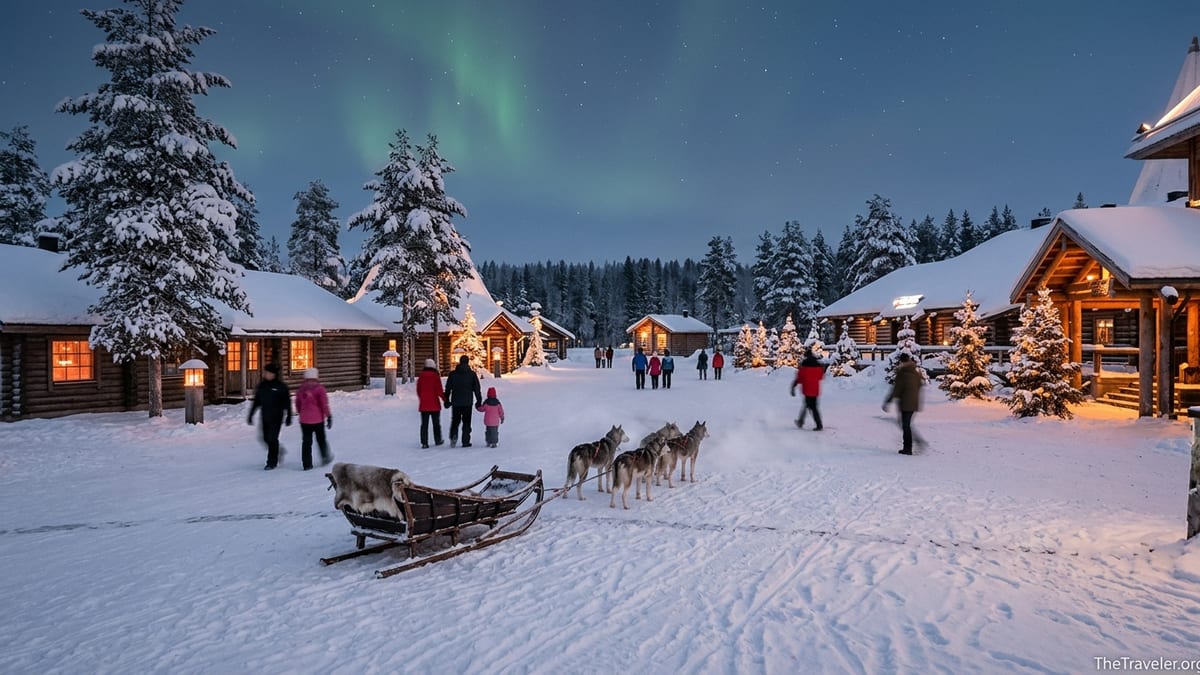
Getting Oriented: Rovaniemi and the Arctic Circle
Rovaniemi is the capital of Finnish Lapland, located at the confluence of the Kemijoki and Ounasjoki rivers, about six kilometres south of the Arctic Circle. The compact city centre is where you will find most hotels, restaurants and supermarkets, while the main visitor attractions stretch north toward the airport and Santa Claus Village, and east toward the Ounasvaara hill and outdoor area.
For most international visitors, Rovaniemi Airport will be the entry point. It is about a 10 minute drive from Santa Claus Village and around 15 to 20 minutes from downtown in normal winter conditions. Regular airport buses and taxis meet flights, and many tour companies include airport transfers in package stays. Rovaniemi railway station links the city with overnight trains from Helsinki, which can be a budget friendly and atmospheric way to arrive.
Winters here are long and snowy, with the core tourist season running from roughly late November to early April. December and early January are the busiest weeks, especially around Christmas and New Year, when tour availability tightens and prices rise. If you want slightly lower prices and more space at attractions, many operators suggest visiting in late January, February or early March, when days are a little longer but snow conditions are still reliable.
Because darkness dominates midwinter, plan your days in blocks: daylight hours for outdoor scenery, early evening for saunas and dinner, and late night for Northern Lights hunting if the sky is clear. Rovaniemi’s layout makes it easy to combine independent exploring in town with half day or full day guided tours into the surrounding forests and lakes.
Santa Claus Village and Family Favorite Attractions
Santa Claus Village is Rovaniemi’s most famous attraction and the place many families build their Lapland trip around. Located directly on the Arctic Circle line north of the city, it is an open air cluster of wooden buildings, souvenir shops, restaurants and activity providers anchored by Santa’s official office. Entry to the village itself is free, and you pay only for specific experiences such as meeting Santa, visiting the post office or taking short reindeer and husky rides.
Most visitors set aside at least half a day for Santa Claus Village. Common paid experiences include a photo session with Santa inside his office, sending postcards stamped with the special Arctic Circle postmark from Santa’s Post Office, and crossing the clearly marked Arctic Circle line for the obligatory family photo. Short reindeer sleigh loops and mini husky rides are staged in fenced areas near the central square and are designed for young children and those with limited time.
Just down the road, SantaPark is an indoor Christmas theme park built into a hill, which can be a useful backup plan on very cold or stormy days. Inside you will find elf shows, small rides, an ice gallery and a second opportunity to meet Santa. Tickets are typically sold per day and can be good value for families who want several hours of weatherproof entertainment in one place.
Back in the city centre, cultural attractions round out the picture of Lapland beyond Santa. Arktikum, a combined museum and science centre housed under a striking glass corridor along the riverbank, explores Arctic nature, Sami culture and the history of Rovaniemi. Nearby, Korundi House of Culture hosts changing art exhibitions and concerts, while the Pilke Science Centre focuses on Finland’s forests. All three are within walking distance of most downtown hotels, and combined tickets are often available on site at modest prices compared with guided excursions.
Iconic Lapland Tours: Huskies, Reindeer and Snowmobiles
Animal and snowmobile excursions are the backbone of Rovaniemi’s winter tourism, and for many visitors they are the main reason for coming. A typical first time itinerary might include one husky safari, one reindeer experience and one snowmobile tour, plus a dedicated Northern Lights outing. Each comes in multiple versions that vary by length, location and price, so it pays to understand the basic categories before booking.
Husky safaris are usually offered either as short passenger rides close to Santa Claus Village or as longer self drive experiences at kennels located 20 to 40 minutes outside town. Recent price checks for the 2025 to 2026 season show that a short two to three kilometre passenger ride at the Village often costs around 60 to 65 euros per adult, with less than 15 minutes actually in the sled. In contrast, a standard six to ten kilometre self driven safari at a wilderness kennel commonly runs between about 145 and 200 euros per adult, including transfers, thermal clothing and hot drinks, and gives 30 to 50 minutes on the sled plus time to visit the dogs.
Reindeer experiences range from simple farm visits with a short sleigh loop to longer, more immersive safaris into the forest. A basic farm visit and sleigh ride often starts from roughly 120 to 150 euros per adult, depending on length, while premium half day or evening aurora safaris with reindeer can reach 200 euros or more. Combination tours where you visit a reindeer farm and a husky kennel in one day, sometimes with lunch included, are a popular way to experience both animals without duplicating transport costs.
Snowmobile tours add a faster paced option. Short two to three hour snowmobile safaris exploring the forests and frozen rivers around Rovaniemi usually cost in the range of 130 to 200 euros per adult, with two people sharing each snowmobile and the option to pay a supplement for solo driving. Full day snowmobile adventures, sometimes including ice fishing or a visit to a reindeer farm, can reach 250 euros or more. All reputable operators require a valid driving licence for snowmobile drivers and provide thermal suits, boots, gloves and helmets as part of the package.
Chasing the Northern Lights from Rovaniemi
The Northern Lights are never guaranteed, but Rovaniemi’s location just below the Arctic Circle means that on clear, dark winter nights there is a reasonable chance of seeing them, especially from late August to early April. Many visitors choose to join an organised aurora tour at least once, both for the local expertise in reading forecasts and for the comfort of heated transport and campfires out in the wilderness.
Current pricing for Northern Lights tours around Rovaniemi covers a wide span. Budget group tours, often using a larger bus or minibus and visiting a single camp near town, typically start around 75 to 100 euros per person for three to four hours, including grilled sausages or a simple barbecue. Small group car based aurora hunts that follow the clearest skies, sometimes driving deep into the countryside or even crossing into Sweden, tend to cost between about 90 and 160 euros per person for four to eight hours, with group sizes capped at roughly eight people.
At the upper end, private aurora chasing experiences for couples or families, with flexible routing and more personalised photography guidance, can run to 200 to 250 euros or more per person. Some high end companies bundle an aurora search with extras such as a glass roofed cabin stay, professional portraits under the lights or a full three course Lappish dinner in a remote kota hut. When comparing options, look closely at group size, how far the operators are willing to drive for clear skies, and the policies on cancellations and money back guarantees if the lights do not appear.
It is worth remembering that you do not always need a tour to glimpse the aurora. If the solar activity forecast is promising and clouds are thin, you may see the lights from the riverbank near Arktikum or from the top of Ounasvaara hill just outside town, especially in late autumn and early spring when snow reflects less ambient light. However, a guided outing remains the more reliable way to give yourself a strong chance on a short visit, particularly in midwinter when local drivers are used to navigating icy roads in the dark.
Independent Exploring: Ounasvaara, City Walks and Free Sights
While tours dominate many itineraries, Rovaniemi also offers low cost or free ways to experience Lapland’s landscapes. Ounasvaara, the wooded hill rising east of the city, is the most accessible slice of nature. In winter, ski slopes and cross country tracks operate on its flanks, while marked trails lead to viewpoints over the city and rivers. You can walk up from town or take a short taxi ride to the ski resort base, then explore signed winter walking routes that do not require skis.
In the city itself, a simple loop along the riverfront, across the Jätkänkynttilä bridge and back through residential streets gives a feel for everyday life far from the souvenir shops. Rovaniemi Church, with its tall spire and striking altar fresco, offers another glimpse of local culture, and often hosts evening concerts. Many visitors also take time to browse Finnish design and outdoor clothing stores in the compact centre, where you can find practical wool layers and quality knives alongside Lapland themed souvenirs.
Families looking for a quieter day between headline excursions can make use of public playgrounds, swimming pools and indoor activity centres spread around town. Local tourism staff often recommend combining a morning visit to Arktikum or Pilke with a relaxed afternoon in a cafe, followed by a simple self guided walk along the frozen river in daylight hours. In milder months, cycling and hiking trails expand the options further, with picnic spots dotted along both riverbanks.
For travellers on tighter budgets, these independent activities can significantly reduce overall trip costs. With animal safaris and snowmobile tours easily adding up to several hundred euros per person over a week, swapping one or two paid excursions for self guided days in and around Rovaniemi can keep spending under control without feeling like you are missing the essence of Lapland.
Practical Visitor Information: Costs, Transport and Booking
Rovaniemi is not a cheap destination, and being realistic about costs before you arrive will help avoid unpleasant surprises. Recent breakdowns from local tour specialists suggest that many visitors end up spending between roughly 700 and 1,000 euros per person on activities alone during a typical five to seven day winter stay, especially if they book multiple husky, reindeer, snowmobile and Northern Lights tours. Accommodation and flights come on top, and restaurant meals in Finland are generally priced similar to or slightly higher than in other Nordic countries.
Public transport within Rovaniemi is straightforward but limited compared with larger cities. Local buses connect the city centre with Santa Claus Village, SantaPark and the airport, and some routes run out toward Ounasvaara and residential districts. However, services thin out in the late evening, and many visitors rely on pre arranged tour pickups, taxis or occasional car rental for flexibility. Renting a car in winter requires confidence driving on icy roads and an understanding of local rules, but can be cost effective for families planning to visit multiple attractions in one day on their own schedule.
When it comes to booking tours, operators increasingly recommend arranging key experiences in advance, particularly for travel between late November and early January. Husky safaris and popular Northern Lights tours can sell out weeks or even months ahead for peak dates. That said, for shoulder season visits in February or March, you may find space on group tours with just a few days’ notice, and some smaller providers accept bookings on arrival for less busy departures.
Tour descriptions can vary widely between websites, so read inclusions carefully. Reputable companies clearly list group size limits, the approximate sled or snowmobile driving time, the distance covered, what clothing and gear are included, and whether hotel pickup is part of the price. Check for Sustainable Travel Finland or similar environmental certifications if ethical wildlife tourism is important to you, and consider paying a little more for operators that limit group sizes and give animals regular rest rather than running them continuously on short loops.
Seasonality, Weather and What to Expect on the Ground
Conditions in Rovaniemi shift dramatically over the year, and the experience in mid December is very different from a March or summer visit. In the heart of winter, daytime highs commonly sit well below freezing, and it is not unusual to face temperatures of minus 15 degrees Celsius or colder, especially in January. Combine this with only a few hours of blueish daylight, and you will understand why effective layering and pacing are crucial.
Tour operators generally provide heavy overalls, winter boots, mittens and sometimes balaclavas for husky, reindeer and snowmobile activities. Underneath, you will still need your own thermal base layers, mid layers such as fleece or wool sweaters, and warm socks. A thin liner glove inside the provided mittens can make it easier to handle camera buttons in the cold. For children, local advice is to dress them as if for skiing, with particular attention to keeping hands, feet and faces covered from wind.
Short December days mean that many tours depart in semi darkness, which can be magical but also disorienting if you are expecting bright daytime scenery. If you want to see the white forests in full daylight, consider booking at least one daytime excursion, such as a morning husky safari or early afternoon snowmobile run, and leaving aurora hunting for later at night. By contrast, in March, the sun sits higher, days are longer and temperatures often moderate, creating a more relaxed atmosphere while snow conditions still support most winter activities.
Outside the core winter season, Rovaniemi offers a quieter but still interesting experience. In late spring, snow melts on the riverbanks and hiking trails open up on Ounasvaara. Summer brings the midnight sun, river cruises and canoe trips, while early autumn can be a beautiful time for photography as leaves turn orange and aurora season starts again. Tour menus change accordingly, with animal safaris reducing in frequency and nature hikes, berry picking and cultural tours taking their place.
The Takeaway
Rovaniemi’s appeal lies in its mix of storybook Christmas imagery and very real Arctic landscapes. Santa Claus Village and SantaPark deliver the festive experiences that children dream about, while Arktikum and other city museums put Lapland’s culture and environment into context. Beyond the town, husky safaris, reindeer farms, snowmobile runs and Northern Lights excursions turn the surrounding forests and frozen lakes into your playground.
To get the most out of a visit, it helps to be clear eyed about costs, book key tours early in the busy winter months, and balance organised excursions with quieter, self guided time in and around the city. Paying slightly more for reputable, small group operators often yields a better experience, from less waiting around to more time on the sled or under the night sky. With realistic expectations and a flexible attitude toward weather, Rovaniemi can be far more than a simple Christmas stop, offering a rounded introduction to life at the edge of the Arctic.
FAQ
Q1. When is the best time of year to visit Rovaniemi?
The main winter season runs from late November to early April, with guaranteed snow most likely from December through March. December and New Year are the busiest and most expensive weeks, while late January, February and early March often offer a good balance of snow, daylight and tour availability.
Q2. How many days should I plan for Rovaniemi?
A minimum of three full days allows time for Santa Claus Village, one or two animal or snowmobile tours and a Northern Lights outing. Many travellers choose four to five nights to build in rest days and increase their chances of seeing the aurora, especially in midwinter when weather can be unpredictable.
Q3. Do I need to book tours in advance?
For travel between late November and early January, it is strongly recommended to book popular experiences such as husky safaris and small group Northern Lights tours well in advance, sometimes months ahead. Outside peak holiday weeks, you may find availability closer to the date, but pre booking at least your top two or three activities is still sensible.
Q4. Is Rovaniemi suitable for young children?
Yes, Rovaniemi is very family friendly, and many tours are designed with children in mind. Santa Claus Village, SantaPark, short reindeer rides and gentle husky passenger rides are all popular with younger kids. For longer husky safaris and snowmobile tours, check minimum age and height requirements with the operator before booking.
Q5. How expensive are tours and activities?
As of the 2025 to 2026 season, a standard husky safari often costs around 150 to 200 euros per adult, reindeer experiences typically range from about 120 to 200 euros, snowmobile tours from roughly 130 to 250 euros, and Northern Lights outings from around 75 to over 200 euros depending on group size and duration. Children’s prices are usually lower, but activities can still form the largest part of your overall budget.
Q6. Can I see the Northern Lights without a tour?
It is possible to see the Northern Lights independently from darker spots around Rovaniemi if the sky is clear and solar activity is strong. Riverbanks, quiet parks and the top of Ounasvaara hill can all work on good nights. However, guided tours remain the most reliable option on short trips because local guides know where to find clearer skies and are comfortable driving long distances on icy roads.
Q7. What should I wear for winter activities?
Plan to dress in layers: a thermal base layer, a warm mid layer such as fleece or wool, and a windproof and waterproof outer layer. Most tour operators provide heavy overalls, winter boots and mittens, but you will still need warm socks, hats and possibly a thin pair of gloves under the provided mittens. For children, bring clothing similar to what you would use for skiing, with an emphasis on keeping extremities warm.
Q8. Is it easy to get around without a car?
Yes, many visitors manage without renting a car. Local buses connect the city centre with Santa Claus Village and SantaPark, and most tour companies offer hotel pickups for their excursions. Taxis are readily available but can be expensive for longer journeys, so it is worth checking whether transfers are included in your tour prices.
Q9. Are husky and reindeer tours ethical?
Standards vary, but many operators in Rovaniemi work hard to provide good welfare for their animals, limiting group sizes and giving dogs and reindeer regular rest days. Look for companies that are transparent about how they care for their animals, cap the number of guests per tour and hold recognised sustainability certifications. Do not hesitate to ask questions before booking if animal welfare is a priority for you.
Q10. Do attractions and tours operate outside winter?
Santa Claus Village is open year round, and you can meet Santa and visit the Arctic Circle in every season. In summer and autumn, the focus shifts to hiking, river cruises, canoeing, fishing and cultural experiences rather than snow based activities. While full husky and reindeer sleigh rides are limited when there is no snow, you may still be able to visit kennels and farms for educational experiences and shorter encounters with the animals.