


Far above the Arctic Circle, where birch forests thin into open tundra and reindeer trails outnumber roads, Urho Kekkonen National Park offers one of Europe’s most compelling wilderness experiences. For travelers who dream of vast spaces, northern lights and the quiet crunch of snow under skis, this corner of Finnish Lapland feels less like a park and more like an entire Arctic world.
Get the latest updates straight to your inbox!
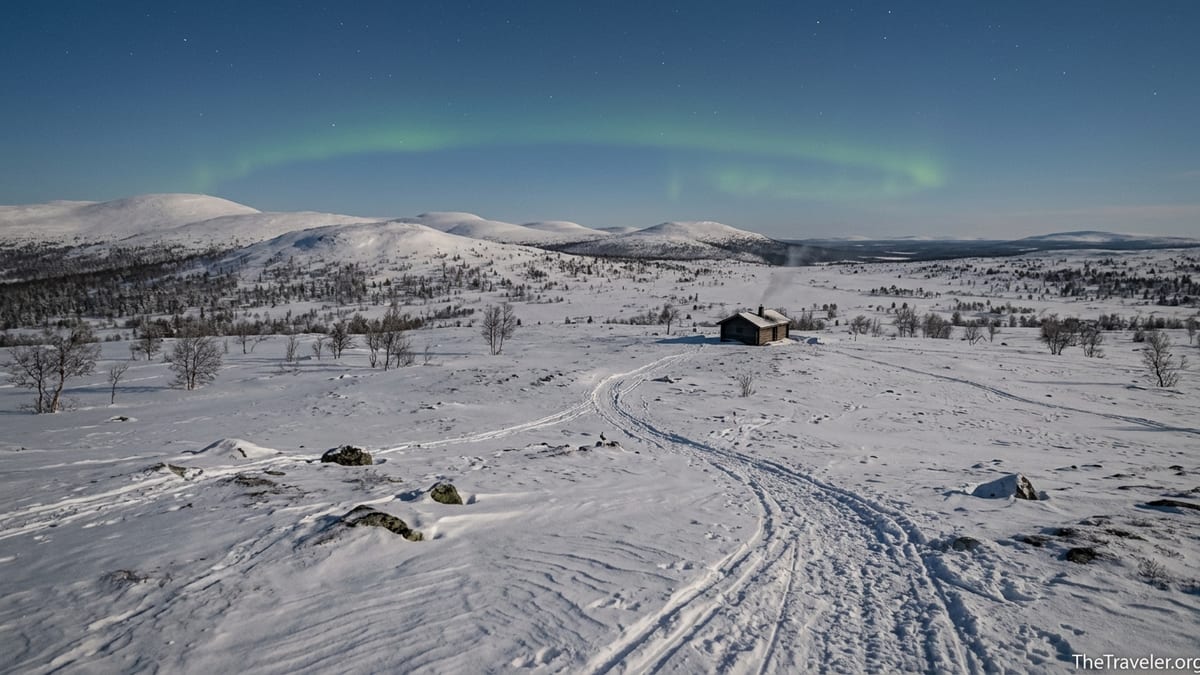
An Arctic Wilderness on a Grand Scale
Urho Kekkonen National Park stretches across the municipalities of Savukoski, Sodankylä and Inari in northeastern Lapland and is one of Finland’s largest protected areas by land area. It reaches almost to the Russian border, covering a mosaic of rounded fells, river valleys, old spruce and pine forests and wide mires. The scale is what first wins over wilderness lovers. Once you leave the last ski track or summer trail, you can travel for days and see little more than reindeer, ptarmigan and your own footprints in the snow.
Despite its remoteness, the park is surprisingly accessible. The resort village of Saariselkä lies partly inside the park boundary, and the Fell Centre Kiilopää and Kakslauttanen area sit just outside the western edge, giving visitors a practical base with supermarkets, gear rental shops and accommodation ranging from simple hostels to glass igloo resorts. From Saariselkä’s main street, it is only a few minutes’ walk to the official park gateway and the first winter or summer trails, a rare combination of deep wilderness and easy access that appeals to experienced trekkers who do not want a full-blown expedition just to reach the starting point.
Geographically, Urho Kekkonen belongs to the Koilliskaira region, a classic Finnish term for a frontier-like forest and fell wilderness. In practice that means rounded fells topping out around 500 to 700 meters, with Sokosti, the highest peak in the park, standing just over that range. While not high in alpine terms, these fells sit well above treeline, so the views on a clear autumn day can stretch for tens of kilometers across gold-colored birch slopes and dark green spruce valleys.
For nature-focused travelers, the park’s size also means real ecological continuity. Large predators such as wolverine and occasionally brown bear roam the more remote eastern valleys, though sightings are rare. More commonly, hikers share the landscape with semi-domesticated reindeer, managed by local Sámi and Finnish herders. The feeling is of entering a living Arctic cultural landscape as much as a nature reserve.
Light, Seasons and the Magic of the Arctic Sky
Arctic wilderness travel is as much about light as it is about landscape, and Urho Kekkonen offers some of the most dramatic seasonal shifts anywhere in Europe. In midwinter, around late December and early January, the sun never rises above the horizon. Instead, a few hours of blue twilight and soft pastel glow light the snow-covered fells. For visitors staying in cabins around Kiilopää or Saariselkä, this “polar night” period creates an otherworldly atmosphere where a short daytime snowshoe on the Aurorapolku (Aurora Trail) can feel almost like walking under permanent sunset.
As nights lengthen again from late August through March, the park becomes a prime stage for northern lights. The location well inside the Auroral Oval and the limited light pollution around the park mean that on clear nights it is common to see bands or arcs of green shifting above the fells. Many travelers base themselves at glass igloo resorts near the park boundary or in simple rental cabins such as those around the Kiilopää area, then walk a short distance into the park after dinner to watch the aurora reflecting off frozen mires or snowy trees.
Summer brings the opposite extreme. From early June to mid-July the sun stays above the horizon, bathing the fells in continuous daylight. Long-distance hikers use these weeks to cover demanding hut-to-hut routes like the classic Luirojärvi loop, walking late into the “night” without needing a headlamp. Practical details still matter in this dreamlike light: a good eye mask for sleeping, and a flexible schedule that allows for late starts when you inevitably stay up watching the midnight sun glowing above the fell ridges.
For many wilderness lovers, the most rewarding time is the short autumn “ruska” season, usually in early to mid-September, when dwarf birch and low shrubs turn brilliant red and orange. Daytime temperatures are cool but often stable, most mosquitoes have disappeared, and evenings are already dark enough for aurora. Trail runners and backpackers staying in Saariselkä might do a long one-way fell crossing from Kiilopää back to the village, descending as the tundra colors fire up under the slanting September light.
Trail Systems From Easy Fell Walks to Multi-Day Expeditions
One reason Urho Kekkonen is beloved among serious hikers is the clear division between well-marked day routes and a largely unmarked wilderness interior. Around Saariselkä, Kiilopää and Kakslauttanen, visitors find a network of signposted summer trails and groomed winter ski tracks known locally as “Out onto the Fell” routes. Examples include the Aurorapolku Trail near the Saariselkä village center, a roughly one-kilometer loop that climbs gently onto open ground specifically chosen for its northern lights views, and family-friendly circuits like the Kiirunapolku trail near the Kiilopää fell centre.
These short routes are ideal for travelers who want an Arctic wilderness taste without committing to a multi-day trek. Families can rent snowshoes or backcountry skis from sports shops in Saariselkä, take a bus or even walk directly to the park gate, and within half an hour be standing on a fell plateau looking across untouched snowfields. The terrain is real Arctic country but with the safety net of regular trail markers, day-use huts and phone coverage along the main corridors.
Beyond this outer ring of infrastructure lies what locals call the “Out into the Wilderness” zone. Here, classic multi-day routes like the Kiilopää–Luirojärvi trail or longer traverses toward the remote eastern fells demand full backcountry competence. Trails are only intermittently marked, river crossings can be icy and high in the spring snowmelt, and in winter there may be no set ski track at all after fresh snowfall. Many hikers plan six to eight day trips, starting from Kiilopää or Kemihaara, traveling hut to hut and finishing at roadheads near the Russian border such as Raja-Jooseppi, arranging a pre-booked taxi pick-up for the return.
For visitors used to crowded alpine routes elsewhere in Europe, the experience can be strikingly solitary. It is common to hike all day in the remote eastern valleys and see only a couple of other parties, often Finns hauling pulkas loaded with food and firewood behind them. Navigation relies on traditional map and compass, often backed up by GPS devices and topographic apps, but the skill lies in reading the land: choosing the firmest lines across wetlands, safe side valleys in avalanche-prone winter conditions, and sheltered campsites out of the wind on treeline benches.
Huts, Fireplaces and the Culture of Self-Reliant Comfort
For many Arctic wilderness lovers, the hut system is what transforms Urho Kekkonen from a demanding destination into a dream one. Finland’s public land manager maintains an extensive network of open wilderness huts, reservable huts and rental cabins throughout the park. In practice this means that even on a week-long ski tour you can often sleep under a solid roof most nights, yet still feel completely off-grid.
Open wilderness huts such as Naltio or Suomujoki are simple wooden shelters available free of charge for one or two nights, on a first-come first-served basis. You bring your own sleeping bag and stove-cooking gear, but there is usually a wood-burning stove, bunks or sleeping platforms and a nearby water source that you treat or boil. Etiquette is built around fairness and self-reliance. Hikers restock chopped firewood, sweep floors and make space for late arrivals, knowing that in a blizzard that open door might literally save a stranger’s life.
Reservable huts and rental cabins, including larger fell huts near popular areas such as Luirojärvi, can be booked in advance through Finnish park services or local operators. These usually cost the equivalent of a modest hotel stay in a Finnish city, but divided between a small group they become an affordable base for aurora photography or day tours onto nearby fells. For example, a group of four might split a cabin fee, combine it with groceries from the Saariselkä market and spend several nights exploring surrounding valleys with only daypacks.
Even travelers who do not venture far into the backcountry can experience this culture of shared comfort. Day-use huts and kota-style campfire shelters near the park edges offer a warm break on short winter hikes. It is normal to see a mix of local families grilling sausages at the fire ring, international hikers drying gloves by the stove and ski tourers reading a paper map at the table, all sharing the same small space while the wind blows outside.
Year-Round Activities for Serious Nature Lovers
Urho Kekkonen is not a theme park. There are no gondola lifts or roadside viewpoints choked with cars. Instead, its appeal lies in simple, nature-driven activities that shift with the seasons. In winter, cross-country and backcountry skiing reign. Classic ski routes connect Saariselkä, Kiilopää and farther huts like Lankojärvi or Tuiskukuru, with prepared tracks on some corridors and pure trail-breaking on others. Guided ski tours ranging from half-day outings to multi-day expeditions are offered by local companies in Saariselkä, often including rental of waxable skis, pulkas and safety gear.
Snowshoeing is another popular way to experience the fells for those less comfortable on skis. The short Aurora Trail from Saariselkä’s national park gateway, or steeper slopes near Kaunispää fell, provide accessible introductions. Hikers typically rent snowshoes and poles for a day or two from sports shops in the village at prices comparable to ski rentals, then follow marked winter routes to open summits where the only sound is wind and the soft crunch of snow.
As the snow melts, mountain biking and trail running come into their own. Designated summer routes around Saariselkä and Kiilopää allow fatbikes and regular mountain bikes, with wooden duckboards crossing wet sections and occasional rocky climbs that demand good technical skills. Long-distance trail runners use these same fell paths for multi-hour outings, linking loops that start and finish at accommodation in the villages. The combination of soft tundra surfaces, cool summer temperatures and big views make this one of the more underrated trail running destinations in the Nordics.
Fishing, packrafting and simple wild swimming appeal to more patient wilderness travelers. Small lakes and clear rivers like the Lutto and Suomujoki require appropriate fishing permits, which can be purchased online or from visitor centers. In summer it is not unusual to meet backpackers carrying lightweight packrafts, planning to float portions of their route back toward the road network. Others keep it minimal, ending a long summer day with a cold plunge in Luirojärvi or another backcountry lake before cooking on a hut porch under the midnight sun.
Access, Safety and Practical Planning
Reaching this Arctic wilderness is more straightforward than many first-time visitors expect. Most international travelers fly into Helsinki and connect to Ivalo Airport, the main air gateway for northern Lapland. From Ivalo, scheduled buses and private transfers run the approximately 30-minute journey to Saariselkä, Kiilopää and Kakslauttanen. Those with more time often take an overnight train from southern Finland to Rovaniemi and continue by bus to the Saariselkä region, turning the journey north into part of the adventure.
Once in the area, visitors can rely on a mix of walking, local buses and occasional taxis to access trailheads. From central Saariselkä, for instance, it is realistic to walk directly to the Urho Kekkonen park gate in less than half an hour, making spontaneous evening aurora walks very practical. In winter, many hotels and guesthouses coordinate with local guides who offer pick-up and drop-off for snowshoeing, skiing or husky-sledding excursions that enter the park or skirt its edges.
However, travelers dreaming of solitude need to match their ambitions with serious safety planning. Weather can change rapidly, especially on the fells, with temperatures in March or April dropping far below freezing when the wind rises. Day hikers should carry layered clothing, spare gloves, map, compass and a fully charged phone, even on short marked routes like Aurorapolku. Multi-day parties heading into the remote zone add stove fuel, a repair kit, emergency shelter and often a satellite communicator or personal locator beacon, especially in winter when hours of daylight are limited.
Rules inside the park are designed to preserve its wilderness character. Short-term camping is allowed in designated recreational zones and more freely in remote zones, with specific sensitive areas off-limits to camping. Campfires are permitted only at maintained fire sites in the more visited sections, while in the remote zone regulations emphasize using fallen wood and respecting seasonal fire restrictions. The broader principle is simple: leave no trace. Visitors carry out all rubbish, use dry toilets at huts and shelters where available and avoid disturbing reindeer herding activities or fragile fell vegetation.
Cultural Context: Sámi Heritage and Local Life
What sets Urho Kekkonen apart from many other northern parks is the living culture around it. The wider region is part of Sámi homeland, and reindeer herding remains an important livelihood. Traveling through the park, especially in late winter and early spring, visitors may see herders moving animals across snowfields by snowmobile or monitoring them from distant slopes. While these scenes can be photographically irresistible, responsible travelers keep a respectful distance and avoid interfering with work.
The park also carries the name of Urho Kekkonen, Finland’s long-serving president who held office from the 1950s into the early 1980s and was known for his close relationship with Lapland and outdoor life. The choice of name reflects a national appreciation of the north as a kind of symbolic heartland. Visitor centers and local museums in Saariselkä and nearby towns often feature exhibits on both the natural environment and the human history of the region, from ancient Sámi dwellings to the gold rush era along rivers like the Ivalojoki just west of the park.
For travelers who value understanding the places they visit, weaving some cultural stops into a wilderness-focused trip adds depth. A practical itinerary might include several days of hut-to-hut trekking inside Urho Kekkonen, followed by a night or two in Inari, which lies a couple of hours away by bus and hosts institutions dedicated to Sámi culture. Alternatively, visitors who base themselves in Saariselkä for northern lights and day hikes can still encounter local traditions through handicraft shops, reindeer farm visits and seasonal events in the village.
Importantly, tourism here remains more subdued than in some of Lapland’s best-known resort towns. Outside the busiest Christmas and March ski weeks, it is still possible to walk through Saariselkä’s small center and feel you are in a quiet northern village rather than a theme destination. That understated atmosphere, where grocery store aisles might hold as many locals in work jackets as visitors in rental snowsuits, reinforces the sense that Urho Kekkonen belongs first and foremost to the north itself.
The Takeaway
For Arctic wilderness lovers, Urho Kekkonen National Park strikes a rare balance. It combines genuine remoteness and expansive landscapes with a practical network of huts, shelters and gateways that make multi-day journeys achievable without heavy logistics. Travelers can wake in a simple log hut heated by a wood stove, ski across untracked snowfields under a pale winter sun, then watch the northern lights ripple above the fells before turning in for the night.
Whether you come for a single evening walk up the Aurora Trail from Saariselkä or a week-long hut-to-hut traverse toward the Russian border, the park rewards those who respect its conditions and culture. Arrive prepared, move thoughtfully and give the land time to work on you. In a world where wildness can feel increasingly theoretical, Urho Kekkonen offers the real thing: a vast, living Arctic landscape you can step into on your own two feet.
FAQ
Q1. Where is Urho Kekkonen National Park and how do I get there?
The park is in northeastern Finnish Lapland, near the resort village of Saariselkä. Most visitors fly to Ivalo Airport from Helsinki, then continue about half an hour by bus or transfer to Saariselkä, Kiilopää or Kakslauttanen, which all serve as gateways to the park.
Q2. When is the best time to visit for northern lights?
Northern lights are visible roughly from late August to early April, with particularly good conditions in the darker months of October to March. Clear, cold nights away from village lights, for example on fell tops near Saariselkä or along the Aurora Trail, offer the best chances.
Q3. Do I need to be an expert hiker to enjoy the park?
No. Around Saariselkä and Kiilopää there are clearly marked day trails and winter routes suitable for beginners and families. However, multi-day treks into the remote interior require solid backcountry skills, navigation ability and appropriate gear for Arctic conditions.
Q4. Can I stay in huts without a reservation?
Open wilderness huts are generally free and do not require reservations, but space is first-come first-served and stays are limited to short periods. Reservable huts and rental cabins must be booked in advance, especially during busy holiday weeks and the spring ski season.
Q5. Is it possible to visit without a car?
Yes. Public transport links are good by Arctic standards. You can reach the region by plane to Ivalo or by train to Rovaniemi and bus onward. From Saariselkä village it is a short walk to the park gateway, and local transport or guided tours can reach more distant trailheads.
Q6. What special equipment do I need in winter?
In winter you should have proper insulated boots, layered clothing, windproof outerwear, hat and gloves, plus additional warm layers in your pack. For longer trips, backcountry skis or snowshoes, a suitable sleeping bag, stove and safety gear such as a headlamp and navigation tools are essential.
Q7. Are there guided tours available inside the park?
Yes. Local companies based in Saariselkä, Kiilopää and nearby resorts offer guided activities such as snowshoeing, cross-country skiing, husky safaris and summer hiking that enter or border the park. These are good options if you are new to Arctic conditions or prefer not to navigate on your own.
Q8. How do I respect local Sámi culture when visiting?
Show consideration around reindeer herds and herding activities, keeping a respectful distance and avoiding loud noise or drones near animals. Support local businesses and cultural centers when possible, ask permission before photographing people and follow guidance from visitor centers about sensitive areas.
Q9. Can I camp anywhere inside the park?
Short-term camping is widely allowed but subject to zoning and local regulations. Near popular areas you are expected to camp close to designated sites, huts or shelters, while in more remote zones camping is freer but still subject to specific exclusions and leave-no-trace principles.
Q10. Is Urho Kekkonen suitable for families with children?
Yes, provided you choose routes appropriate to your children’s age and experience. Short marked trails, easy winter outings from Saariselkä or Kiilopää and visits to day-use huts work well. Longer wilderness trips are best reserved for families with older children who are used to hiking and cold weather.