


Perched high above Capri town, Anacapri offers a quieter, more residential side of the famous island. For many travelers planning a Capri itinerary, the question is not whether to visit the island at all, but whether to devote precious hours or even a night to climbing the hill to Anacapri. The answer depends largely on what you value most in a Mediterranean escape: designer boutiques and buzzy piazzas, or sweeping sea views, slow village rhythms, and cliffside walks. This guide looks at exactly what Anacapri offers in 2026, how it compares to Capri town, and when it is worth carving out the time to go.
Get the latest updates straight to your inbox!
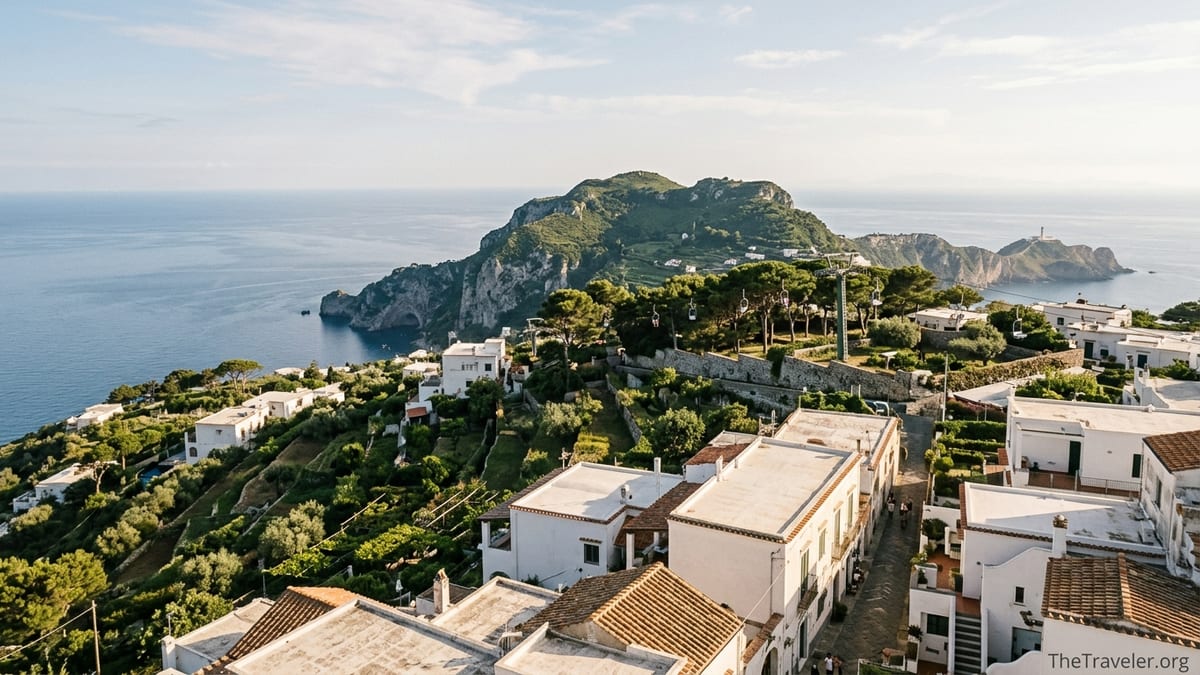
Capri vs Anacapri: Two Very Different Atmospheres
Although they share the same small island, Capri town and Anacapri feel like two separate destinations. Capri town stretches around the famous Piazzetta and the lanes leading toward Via Camerelle and the Gardens of Augustus, known for high-end boutiques, polished hotels, and a distinctly glamorous evening scene. Anacapri, by contrast, sits higher on the slopes of Monte Solaro and feels more like a lived-in village. Its main streets around Piazza Vittoria and Via Giuseppe Orlandi are lined with local cafes, ceramic shops, sandal makers, and small family-run hotels rather than flagship fashion houses.
This difference in atmosphere is one of the main reasons many repeat visitors now base themselves in Anacapri instead of Capri town. In peak months like June and September, when cruise excursions and day trippers crowd the Piazzetta, Anacapri’s lanes still feel busy but not overwhelmed. You are more likely to find a table at a bar on the main street, or walk down a quiet side alley and hear locals talking on their balconies rather than tour groups following a flag. If your idea of Capri revolves around aperitivo in the Piazzetta and window-shopping at big-name brands, Capri town still makes more sense. If you value a slower pace and more space, Anacapri is often the better fit.
Price is another point of contrast. While Capri is never truly “budget,” you will typically pay a bit less in Anacapri for everything from espresso to accommodation. A cappuccino at a simple bar off Piazza Vittoria can cost around 2 to 3 euros, broadly similar to the mainland, while beach clubs and bars closer to Capri town often charge more. Hotel rates follow the same pattern: characterful guesthouses and three-star hotels in Anacapri can be noticeably cheaper than equally well-reviewed options closer to the Piazzetta, especially in shoulder season.
In practice, many visitors combine both experiences. A common strategy is to stay in Anacapri for the calmer nights and wider views, then drop down to Capri town in the late afternoon or evening for a stroll, a drink overlooking the Faraglioni, and a different slice of island life. Because the bus ride between the two towns only takes around 15 minutes, you are not forced to choose one or the other entirely.
Getting To and Around Anacapri
Every trip to Anacapri starts at Marina Grande, Capri’s only port. Ferries connect the island year-round with Naples and Sorrento, and seasonally with ports along the Amalfi Coast. From the dock, you have several ways to reach Anacapri. Public buses are the most common: minibuses depart regularly from Marina Grande toward both Capri town and Anacapri, with a one-way ticket costing about 2.40 euros in 2025–2026 when bought at the ticket office. In high season, queues for the direct Marina Grande–Anacapri bus can become long, so many travelers instead ride the funicular up to Capri town and change to the Capri–Anacapri bus there. The combined travel time is similar but lines are usually shorter.
The bus climb to Anacapri follows a steep, winding road with dramatic views over the harbor and sea. Even though the journey only lasts around 20 to 25 minutes from Marina Grande to Piazza Vittoria, traffic and boarding can add to the elapsed time, especially between mid-morning and mid-afternoon when day trippers arrive. If you prefer comfort over cost, open-top island taxis wait at the port. A ride up to Anacapri typically costs around 20 to 25 euros per car, which can be reasonable if you are sharing with others and carrying luggage.
Once in Anacapri, getting around is straightforward on foot. The old town lanes are compact and mostly pedestrian, with short distances between key points like Piazza Vittoria, the chairlift station to Monte Solaro, the Church of San Michele, and the start of Via Giuseppe Orlandi. To reach sights further away, such as the Blue Grotto or the lighthouse at Punta Carena, local buses leave from the Anacapri bus terminal near Piazza della Pace. Single tickets cost the same as elsewhere on the island, and the routes fan out toward the western coastline. For example, you can ride a bus to the Blue Grotto stop, then walk a portion of the coastal Sentiero dei Fortini path, or take a separate bus from central Anacapri directly to Faro di Punta Carena for swimming and sunset.
The road between Capri and Anacapri is not especially pleasant for walking because it is narrow, busy, and without continuous sidewalks. There are, however, historic steps connecting the two: the Phoenician Steps drop from Anacapri down toward the marina area. These are a strenuous option suitable mainly for fit hikers, better used as a downhill route rather than climbing in the midday sun. For most visitors, buses, taxis and the occasional hotel shuttle will cover almost all movement to and from Anacapri.
Top Sights That Make Anacapri Worth the Detour
Visitors who only know Capri town’s busy streets are often surprised by how many of the island’s classic experiences are actually based in or around Anacapri. The most famous of these is the chairlift to Monte Solaro, Capri’s highest point. The single-seat chairlift starts just off Piazza Vittoria and glides above terraced gardens and pine trees to the summit in about 12 minutes. A round-trip ticket is usually around 12 euros per person. On clear days, you can see the Faraglioni rocks, the Sorrento Peninsula, and the Amalfi Coast laid out like a map beneath you, as well as distant views across the Bay of Naples.
Villa San Michele is another Anacapri highlight that many travelers list as a trip favorite. Created by Swedish physician and writer Axel Munthe, the villa sits at around 300 meters above sea level and combines Mediterranean gardens, Roman and Egyptian artifacts, and broad terraces facing the sea. Typical entry fees are in the range of 10 to 15 euros, and a visit usually takes about an hour to 90 minutes if you include time to linger on the main terrace. For travelers interested in art, architecture, or simply peaceful views away from the busiest streets, Villa San Michele alone can justify the trip up to Anacapri.
Within the town itself, the Church of San Michele Arcangelo is a smaller but memorable stop. Behind its plain exterior is an 18th-century majolica tile floor depicting the story of the Garden of Eden in vivid detail. Visitors generally observe the floor from a raised platform that runs around the nave. Combined with a gelato on nearby Via Giuseppe Orlandi or a glass of local white wine on a shaded terrace, it makes for a pleasant cultural pause in the middle of the day.
For walkers, Anacapri also serves as the gateway to some of Capri’s quieter trails. The Sentiero dei Fortini, a coastal path linking restored Napoleonic-era forts between the Blue Grotto and Punta Carena, starts and ends on the western side of the municipality. Sections of this route can be tackled as a half-day hike, with bus stops at both ends making it easy to shorten or lengthen your walk. The path offers rocky coves, low Mediterranean scrub, and long views over the open sea, often with far fewer people than the better-known Via Krupp near Capri town.
Beaches, Swimming Spots and Sunset Views Around Anacapri
If you are looking for sandy beaches, Capri generally is not the right island. What Anacapri offers instead are rocky swimming platforms, deep clear water and dramatic cliff-top views. The most famous coastal spot linked to Anacapri is the Blue Grotto, or Grotta Azzurra, which lies at the base of the cliffs northwest of town. Visitors typically reach the area by bus or taxi from Anacapri, then transfer to small rowboats that enter the cave. Ticket and boat prices are variable and can be relatively high; queues on calm summer days sometimes last an hour or more. Many travelers choose instead to admire the coastline by taking an island boat tour from Marina Grande, which passes by the grotto opening.
For a more relaxed swimming experience, Punta Carena on the southwestern tip of the island is closely associated with Anacapri and reachable by bus from the town center. Here, a tall lighthouse stands above concrete platforms and pebbly inlets where locals spread towels and rent sunbeds during the season. The water is deep, clean and ideal for confident swimmers. There is no sand, but the advantage is immediate deep water and a wilder feel compared with more built-up clubs near Capri town. Small cafes and beach bars behind the rocks serve simple lunches, cold beer and aperitivo, often at prices slightly lower than equivalent options on the other side of the island.
Punta Carena is also widely considered one of Capri’s best sunset spots. Because it faces west into open sea, the sun sets directly into the water with nothing to block the view. An early evening strategy many visitors enjoy is to spend a few late-afternoon hours swimming and sunbathing, then stay for aperitivo as the sky turns orange and pink. Buses back to Anacapri run into the evening, but you should check current schedules locally, especially in shoulder season when frequencies can drop.
Even if you do not plan to swim, the coastline around Anacapri is worth visiting for the viewpoints alone. Terraces at Villa San Michele, the summit of Monte Solaro, and the path near Fortino di Bruto all offer high, unobstructed perspectives of the sea and cliffs. Photographers in particular often find that combining a mid-morning chairlift ride with a late-afternoon visit to Punta Carena provides enough varied light and angles for a full day of shooting without ever setting foot in the center of Capri town.
Where to Stay and Eat in Anacapri
For travelers wondering whether it is better to sleep in Capri town or Anacapri, the answer hinges on what you want your evenings to feel like. Anacapri’s accommodation scene leans toward small hotels, B&Bs and villa-style properties, many family-run and set among lemon trees or gardens just off the main lanes. Typical examples include three-star hotels with pool terraces overlooking the sea or countryside, mid-range guesthouses tucked into quiet alleys, and a few higher-end boutique hotels that trade proximity to the Piazzetta for extra space and calmer surroundings.
Staying in Anacapri often suits couples and families who are happy with simple evenings: a drink on the terrace, a walk through the village, and a relaxed dinner. Several well-known local restaurants specialize in island staples such as spaghetti alle vongole, ravioli capresi stuffed with caciotta cheese and marjoram, and grilled fresh fish. Many offer free shuttles from central Anacapri in the evening, especially those located along rural lanes toward Monte Solaro or Punta Carena. This setup lets you enjoy views and quieter settings without needing to navigate dark lanes on foot after dinner.
By contrast, travelers who want to be in the heart of Capri’s nightlife might prefer basing themselves closer to the Piazzetta and coming up to Anacapri for day trips. From Capri town you can stroll to many bars, late-opening gelaterie, and more formal fine-dining restaurants within a compact area. The trade-off is denser crowds, especially during events or weekends, and generally higher room rates for the same category of hotel.
Lunch in Anacapri can be very straightforward and good value, which matters if you are spending a long day sightseeing. Simple trattorias near Piazza Vittoria serve pasta plates in the 12 to 18 euro range, carafes of local white wine, and fresh salads. At Punta Carena or along the lanes toward the Blue Grotto, basic beach bars sell panini, fried seafood cones and drinks that you can bring back to your sunbed. While these prices are higher than many mainland towns, they usually remain a step below the island’s most exclusive venues around the Faraglioni.
Who Will Love Anacapri, and Who Might Skip It
Anacapri is most rewarding for travelers who have at least a full day on Capri and are interested in more than a quick lap of the Piazzetta. If you like walking, viewpoints, low-key local streets and historical villas, it is hard to argue against making the trip up. Photographers, hikers and couples on a slower-paced escape often find that their favorite memories of Capri center on Anacapri moments: dangling feet from the Monte Solaro chairlift, sipping coffee in a quiet side square, or watching the sun sink behind Punta Carena lighthouse.
Families can also find Anacapri a good base, especially if they want space and hotel pools rather than simply being close to shops. Children often enjoy the novelty of the chairlift and the freedom to wander largely traffic-free alleys near the center. However, parents should bear in mind that most swimming spots are rocky and without shallow sandy shallows, so they may need to supervise closely or choose hotel pools over wild coves.
On the other hand, not every itinerary benefits equally from including Anacapri. If you are visiting Capri only for a few rushed hours on a busy day trip, for instance as part of a cruise excursion with strict return times, you may be better off concentrating your time in and around Capri town and the harbor. The combined time needed for queues, the bus ride up, sightseeing and the bus back can easily eat several hours on a peak-season day. In such a scenario, a short wander through Capri town and a boat tour around the island from Marina Grande might offer more variety.
Travelers whose primary interest is luxury shopping and late-night people-watching may also decide that staying in Capri town and only visiting Anacapri briefly is sufficient. They might ride the bus up, take the chairlift, stroll through Villa San Michele, and head back down in time for sunset cocktails overlooking the Faraglioni. In short, Anacapri is most worthwhile when you can give it enough time to enjoy its slower rhythm; if you are rushing to squeeze it into a very tight schedule focused on other priorities, it risks feeling like an extra hill to climb rather than an experience in itself.
The Takeaway
So, is Anacapri worth visiting during a trip to Capri? For most travelers who spend at least one full day on the island, the answer is yes. Anacapri concentrates many of Capri’s most rewarding experiences in one compact area: the summit views from Monte Solaro, the serene terraces of Villa San Michele, the local rhythm of its village streets, and the wild coastline and sunsets around Punta Carena. It offers a counterbalance to the polished energy of Capri town, giving you a fuller picture of the island’s character.
However, whether you devote just an afternoon or several nights to Anacapri should reflect your travel style and schedule. If you thrive on quiet lanes, cliff walks and long views, staying in Anacapri and dipping into Capri town as needed will likely suit you best. If your time is short and your interests lie more in fashion boutiques and buzzy piazzas, a shorter visit focused on one or two key sights may be enough.
In practical terms, reaching Anacapri by bus or taxi from Marina Grande is simple, and the town is well connected by additional bus routes to the Blue Grotto and Punta Carena. Realistically, you do not need to choose between Capri and Anacapri: with smart timing, you can enjoy an espresso in the Piazzetta in the morning, lunch in a shady Anacapri courtyard, and sunset by the lighthouse, all in a single well-planned day. For those willing to climb the hill, Anacapri often ends up being the part of Capri they remember most clearly once the trip is over.
FAQ
Q1. Is Anacapri worth visiting on a same-day trip to Capri?
Anacapri is worth including if you have at least six to eight hours in total on Capri. You can realistically fit in the chairlift to Monte Solaro and a walk through the village, but with tighter schedules it is usually better to stay closer to the port and Capri town.
Q2. How long do I need to see the main sights in Anacapri?
Allow at least half a day to visit Monte Solaro and Villa San Michele at a relaxed pace. A full day gives you time to add the Church of San Michele and a swim or sunset at Punta Carena without rushing.
Q3. What is the easiest way to get from Capri town to Anacapri?
The public bus from the Capri bus terminal near the Piazzetta is the most straightforward option and takes about 15 minutes. In high season, buying a ticket in advance and traveling early in the day helps you avoid the longest lines.
Q4. Is the Monte Solaro chairlift scary or suitable for children?
The chairlift uses single open seats and moves gently at a moderate height above the ground. Most people find it more scenic than frightening, but those with a strong fear of heights may prefer to skip it. Children who can sit still and follow instructions generally ride without problems, though parents should judge individually.
Q5. Are there beaches in Anacapri?
Anacapri does not have sandy beaches, but it is the access point for rocky swimming spots like Punta Carena. There you will find concrete platforms, ladders into deep water, and seasonal sunbed rentals, rather than traditional sand.
Q6. Is it cheaper to stay in Anacapri than in Capri town?
In general, mid-range hotels and guesthouses in Anacapri are priced slightly lower than comparable properties around the Piazzetta. You may also find better value in everyday costs such as casual meals and drinks, although Capri as a whole remains a premium destination.
Q7. Can I walk from Anacapri to the Blue Grotto?
It is possible to walk, but most visitors take the bus from central Anacapri to the Blue Grotto stop to save time and energy. From there, you can explore the area on foot or continue along parts of the coastal path if you enjoy hiking.
Q8. Is Anacapri a good base for exploring the rest of Capri?
Yes. Regular buses connect Anacapri with Capri town, Marina Grande and key coastal spots. Many travelers base themselves in Anacapri for the quieter evenings and use buses or occasional taxis to reach other parts of the island during the day.
Q9. What should I wear for a day in Anacapri?
Comfortable walking shoes are important, as streets are paved, often sloping, and sometimes cobbled. In summer, light breathable clothes, a hat and sunscreen are essential, especially if you plan to hike coastal paths or queue in the sun for the chairlift or buses.
Q10. Is Anacapri suitable for travelers with limited mobility?
The central area around Piazza Vittoria is relatively flat, but many side streets, viewpoints and historic sites involve steps or uneven surfaces. Taxis can help reduce walking distances, and some hotels offer shuttles, but travelers with limited mobility should research specific accommodations and attractions in advance.