


The New Jersey most outsiders picture is a blur of turnpike overpasses, chemical plants, and Sopranos references. Spend a few days in South Jersey, though, and that mental image melts away. From the quiet forests of the Pine Barrens to the family boardwalks of Ocean City and the Victorian streets of Cape May, the lower half of the state feels less like a punchline and more like a surprisingly varied, deeply local world of its own.
Get the latest updates straight to your inbox!
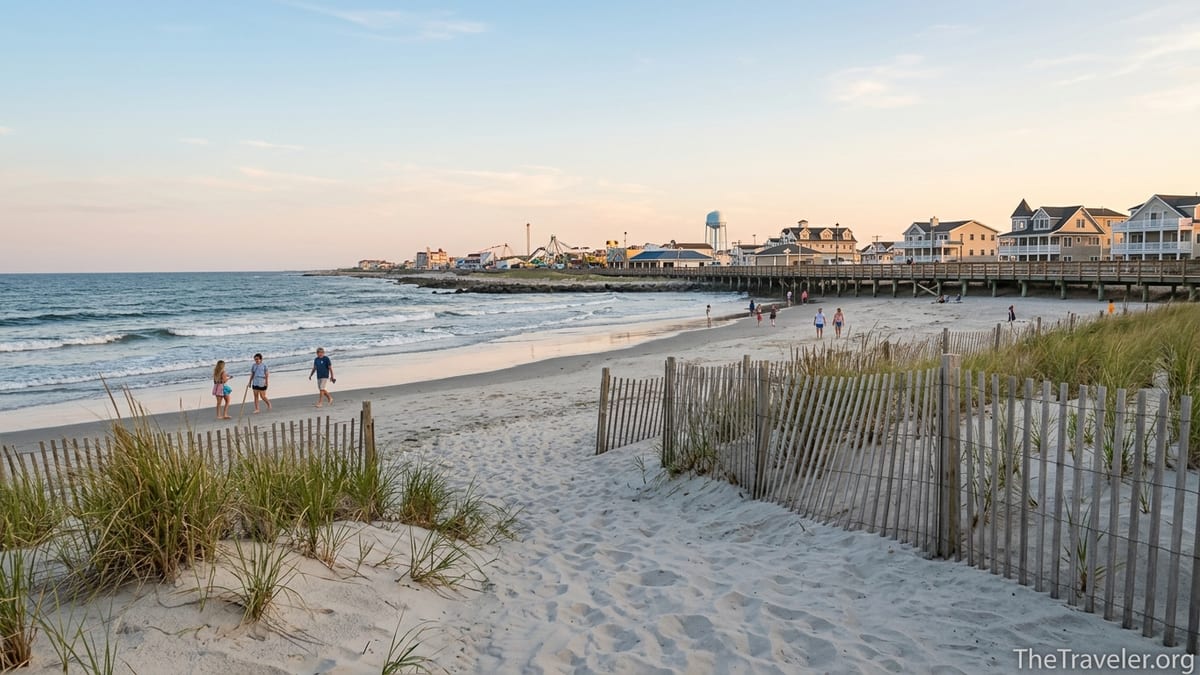
A Different New Jersey Begins South of the Expressway
The moment many visitors realize South Jersey is not the state they expected often comes somewhere along the Atlantic City Expressway. One minute you are cruising past the mall sprawl of suburban Camden County, the next you are surrounded by endless pitch pines and sandy soil. This is the fringe of the New Jersey Pinelands National Reserve, a protected landscape of more than a million acres that covers much of the southern part of the state and feels worlds away from the refineries that loom over the northern Turnpike.
South of this forested spine, the land opens into flat farm fields, marshes and bays, before ending in a necklace of barrier islands from Longport down to Cape May. To the west, older small towns trace the Delaware River, oriented culturally toward Philadelphia rather than New York. That simple geographic fact shapes everything from the food people eat to the teams they cheer for. Where North Jersey leans Yankees and bagels, South Jersey leans Phillies, hoagies, and a quieter, more small-town pace.
For travelers used to treating New Jersey as a corridor between New York and Philadelphia, this shift is disorienting in the best way. Exit the highways and you find roadside farm markets selling late-summer peaches, sleepy colonial-era towns with brick sidewalks, and two-lane roads that pass cranberry bogs and blueberry fields instead of industrial parks. The Garden State nickname, which can feel ironic in the north, suddenly makes perfect sense here.
The Pine Barrens: A Wild, Surprising Heartland
Nothing challenges the stereotypical image of New Jersey more than the Pine Barrens. This vast, flat forest of scrub pines and sandy soil stretches across multiple South Jersey counties and has been protected as the Pinelands National Reserve. Its size and emptiness are startling in a state best known for suburban density. Drive the back roads near towns like Chatsworth or Hammonton and you can go miles seeing nothing but pitch pines, cranberry bogs, and the occasional fire tower rising above the canopy.
For visitors, the Pine Barrens are about quiet adventure rather than dramatic scenery. Canoe outfitters offer day trips on narrow, tea-colored rivers like the Mullica and Batsto, where the water is stained a rich brown by tannins from pine needles. Paddling under low branches, you might spot turtles sunning on logs or hear only the scrape of your boat on the sandy bottom. Hiking routes follow old sand roads to ghost towns and ruins of 18th and 19th century ironworks and glassworks, reminders that this now-remote region once powered early American industry.
Small settlements at the edge of the forest add texture. Hammonton, often billed as a blueberry capital, sits within the Pinelands and is surrounded by fields that flush green and blue each summer. In season, travelers can stop at farm markets for fresh berries, blueberry pies, and locally bottled wines using hybrid grape varieties that tolerate the sandy soils. It is a deeply agricultural, low-key side of New Jersey that rarely makes it into pop culture but leaves a strong impression on anyone who takes a day to wander the byways.
Shore Towns With Distinct Personalities, Not Just a Generic “Jersey Shore”
Popular culture has flattened the Jersey Shore into one rowdy image, but South Jersey’s barrier islands reveal a much more nuanced reality. Atlantic City remains the most famous name, its long historic boardwalk lined with casinos, arcades and beach bars. Walk the planks on a summer evening and you still get the high-energy, neon-lit side of New Jersey many people expect: thumping music spilling from casino facades, families lugging oversized stuffed animals from prize stands, and late-night revelers drifting from table games to the sand.
Yet just a short drive away the vibe changes completely. North of Atlantic City, Brigantine offers broad, usually less crowded beaches and a residential, laid-back feel that appeals to families and repeat summer renters who want easy access to Atlantic City’s restaurants and shows without sleeping next to the action. South of the casinos, Ventnor and Margate transition the mood from resort town to comfortable shore suburbia, with low-rise condo buildings, corner bakeries, and stretches of beach that feel more local than touristy.
Farther south, the contrast grows even sharper. Ocean City brands itself as a classic family destination with a dry, alcohol-free town policy and a boardwalk focused on amusement rides, mini-golf, ice cream stands and bike rentals. In summer mornings, the boards fill with joggers, strollers and grandparents pushing kids in surreys. Keep driving and you reach the Wildwoods, where a long, wide beach meets a boardwalk crowded with water parks and neon-lit motels in a retro 1950s “Doo Wop” style. Beyond that, Cape May closes the chain of islands with painted Victorian houses, B&Bs, and a grown-up, walkable downtown built around wine bars, boutiques and birding tours.
Spending a few days hopping between these towns drives home how far South Jersey’s reality diverges from the stereotype. The shore here is not one monolithic party strip but a set of distinct cultures, from Brigantine’s relaxed rental streets to Cape May’s candlelit porches, all stitched together by salt marshes and causeway bridges.
Small-Town Main Streets and a Softer Urban Edge
South Jersey’s inland towns surprise visitors who expect strip malls and big-box sameness. Collingswood and Haddonfield, just across the river from Philadelphia, anchor lively main streets that feel more like New England than the industrial Jersey of imagination. Haddon Avenue in Collingswood is lined with independent restaurants, coffee shops and vintage stores; on summer weekends, outdoor tables spill onto the sidewalk as locals gather over small-plate dinners or late-morning brunch. A short drive away, Haddonfield’s tree-lined downtown mixes boutiques and cafes with colonial-era buildings and churches that nod to the town’s 18th-century roots.
Farther out, towns like Pitman, Moorestown, and Hammonton offer their own twist on the small-town pattern: a central street with a theater or brewery, brick-fronted shops, and a modest but proud local arts or music scene. Travelers passing through on their way to the shore are often surprised to stumble upon summer concert nights, car shows, or street festivals that transform otherwise quiet business districts into casual block parties. The scale is approachable: you can park your car, walk the few main blocks in twenty minutes, and still feel you have seen the heart of the town.
Even the region’s “cities” feel different in character from North Jersey’s dense urban centers. Camden and Atlantic City certainly struggle with poverty and disinvestment, but they also sit on prime waterfront and oceanfront real estate that is slowly being reimagined. Camden’s riverfront has added a modern aquarium, an arena, and a growing campus presence, while Atlantic City’s redevelopment ebbs and flows around its casinos. For travelers, the key is to approach these places with awareness and realistic expectations: enjoy the boardwalk views or riverfront attractions, but choose lodging and late-night plans with the same common sense you would in any mid-sized American city.
Culture, Food and Identity: More Philly Than New York
One of the most immediate signs that you are in a different New Jersey is the language of the deli counter. In North Jersey, customers debate the best “Taylor ham” sandwiches; in South Jersey, the same breakfast meat is called “pork roll,” and the lunchtime order is more likely to be a hoagie on a long roll than something called a sub. The accent softens, the sports talk shifts to the Eagles and Phillies, and convenience store devotion centers on Wawa, the regional chain that serves as both gas station and unofficial community hub.
Food reflects the agricultural landscape as much as the cultural one. In summer and early fall, roadside stands advertise sweet corn, tomatoes and peaches straight from nearby fields. In Hammonton and the surrounding Pinelands, blueberries are a point of pride, finding their way into pancakes, festival desserts and limited-release beers and wines. Along the Delaware bayshore and barrier islands, menus tilt toward local seafood: crab cakes, fried clam strips, and platters built around fluke, scallops or seasonal blue crabs.
There is also a quieter, deeply local bar and brewery culture threaded through South Jersey’s towns. Converted warehouses near old rail lines house taprooms pouring IPAs named for Pine Barrens fire towers or shore jetties. Small music venues and brewery stages book local bands rather than big-ticket touring acts. Visitors who take a night away from the casinos and boardwalk arcades often find themselves at a neighborhood spot where the bartender knows most of the patrons by name, and where the seasonal special might be a blueberry wheat beer brewed just a few miles from the fields.
How to Experience South Jersey Like a Local Traveler
To really feel how different South Jersey is from the rest of the state, it helps to design your trip around contrasts. One popular approach is a long weekend that links a shore town, a Pine Barrens day trip, and at least one inland main street. For example, you might base yourself in Ocean City or Brigantine, where rentals and smaller motels cluster within walking distance of the sand. Spend a full day enjoying the beach and boardwalk, then dedicate another to driving inland along two-lane roads that cut through the Pinelands and connect to towns like Hammonton or Batsto Village.
On a Pine Barrens day, you could start with a short hike around a state forest lake or a guided paddle on a cedar-colored river, then stop at a roadside farm market or winery tasting room on the way back. Pack a cooler and you can assemble a picnic from local blueberries, tomatoes, cheeses and bakery bread, finding a shaded picnic grove along the route. The key is to keep your schedule loose: South Jersey is best appreciated at a slower pace, where you can pull over for a hand-painted “fresh corn” sign or detour into an unexpected historic site without worrying about packed big-city itineraries.
On another day, set aside time for an inland town. Park once and wander a main street like Haddon Avenue in Collingswood or Kings Highway in Haddonfield, popping into coffee shops, used book stores and small galleries. Plan your visit around a farmers market day or an evening event if possible. Many of these towns host seasonal festivals, from blueberry-focused celebrations in Hammonton to arts and music nights in the closer-in suburbs. The combination of a morning on the boardwalk, an afternoon in the pines and an evening on a brick-lined main street captures the essence of South Jersey’s variety.
The Takeaway
South Jersey upends the shorthand most people carry in their heads about New Jersey. Instead of a continuous wall of industry and suburbia, the region reveals miles of protected forest, working farms, small towns and shore communities that each carry their own mood. The pop-culture Jersey of mob dramas and reality TV still exists in certain pockets, but it is only one thread in a much richer tapestry.
For travelers willing to look beyond the turnpike exits, South Jersey rewards curiosity with quiet rivers you can paddle without seeing another boat, boardwalks that range from neon frenzy to nostalgic family strolling, and main streets where the evening’s big event might be a local band setting up under string lights. It feels like a different world not because it rejects New Jersey’s identity, but because it expresses another, more grounded side of it: one rooted in soil, sand and community rather than stereotype.
FAQ
Q1. Is South Jersey really that different from North Jersey for visitors?
Yes, the experience is noticeably different. South Jersey feels more rural and small-town, with pine forests, farms and varied shore towns, while North Jersey is more urban, densely suburban and oriented toward New York City.
Q2. What are the best shore towns in South Jersey for families?
Ocean City is a top choice thanks to its family-focused, alcohol-free boardwalk and wide beaches. Brigantine, Sea Isle City and the Wildwoods also offer plenty of family-friendly rentals, rides and activities.
Q3. Where can I experience the Pine Barrens as a first-time visitor?
Look for state parks and forests that offer marked trails and river access, or book a canoe or kayak trip with a local outfitter on rivers like the Mullica or Batsto. These options provide an easy introduction without needing deep backcountry skills.
Q4. Is Atlantic City safe to visit for a weekend?
Atlantic City attracts many weekend visitors for casinos, shows and the boardwalk. As in any small city, it is wise to stay in well-reviewed hotels, stick to busy areas at night, and use normal big-city awareness when walking or using rideshares.
Q5. Do I need a car to explore South Jersey?
A car gives you much more flexibility, especially for reaching the Pine Barrens and smaller inland towns. Some shore areas and inner-ring suburbs are walkable or accessible by train or bus, but the most rewarding itineraries usually involve driving.
Q6. When is the best time of year to visit South Jersey?
Summer offers warm ocean water, full boardwalk operations and beach life, but it is also the most crowded and expensive. Late spring and early fall bring milder weather, fewer crowds and good conditions for hiking and paddling in the Pinelands.
Q7. What local foods should I try in South Jersey?
Seek out hoagies and pork roll sandwiches at local delis, fresh blueberries and peaches from roadside stands in season, and seafood like crab cakes or fluke at shore-town restaurants. Many towns also have small breweries pouring regionally inspired beers.
Q8. How long should I plan for a South Jersey trip?
A long weekend of three to four days is enough to combine a shore town stay with a Pine Barrens day trip and time in at least one inland main-street town. A full week lets you sample multiple islands and spend more time relaxing.
Q9. Are South Jersey beaches very crowded?
Crowds depend on the town, time of day and season. Major boardwalk resorts like Wildwood and Ocean City get busy on summer weekends, while beaches in Brigantine, parts of Cape May County and some bayside spots can feel much quieter, especially on weekdays.
Q10. How does South Jersey compare in price to other East Coast beach destinations?
Prices vary by town and season, but South Jersey generally sits in the middle of the East Coast scale. Peak-summer rentals in prime shore towns can be pricey, while shoulder-season stays, smaller motels and inland lodging are often more affordable than major resort areas.