


Say “South Jersey” and most travelers picture exactly three things: summer traffic barreling to the shore, casino towers in Atlantic City, and the Benjamin Franklin Bridge back to Philadelphia. Yet just inland from the Garden State Parkway and outside the glow of slot machines is a very different South Jersey. It is a region of a million-acre pine forest, serious farm-to-table cooking, birding meccas, historic mill towns and walkable arts districts where the pace drops and the personality sharpens. For travelers willing to look beyond the beach badge, South Jersey offers a deeper, quieter and often more surprising experience.
Get the latest updates straight to your inbox!
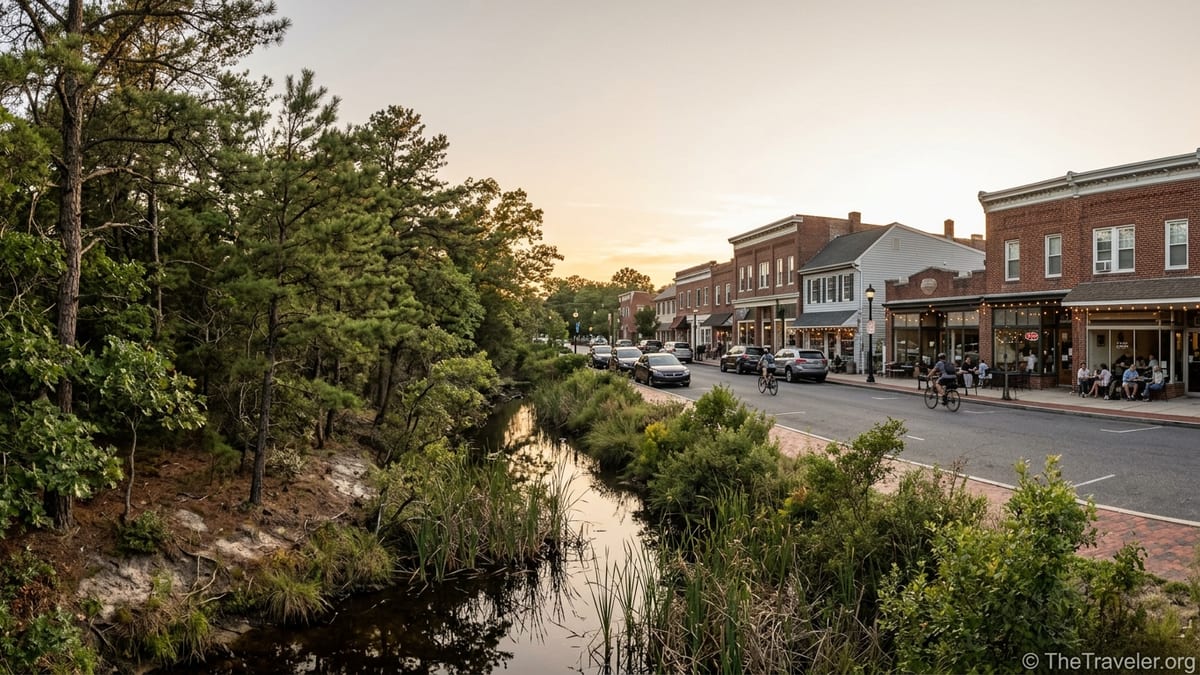
The Surprising Wild Heart: Pinelands and Pine Barrens
Long before sneaker outlets and boardwalks, South Jersey’s defining feature was its forest. Today that legacy survives in the Pinelands National Reserve, a patchwork of pine woods, bogs, hamlets and farms spanning more than a million acres across seven counties, including much of Atlantic, Burlington and Cumberland. Created in 1978 as the first national reserve in the United States, it protects what is effectively the largest open space between Boston and Richmond. To drive Route 206 through the interior is to realize just how quickly traffic circles and strip malls give way to pitch pine, sandy roads and quiet blackwater streams.
For travelers, that scale translates into real choices. Wharton State Forest, one of the largest chunks of the Pinelands, offers miles of sand roads and trails for hiking and gravel biking, from day strolls near Atsion Lake to full-day slogs out to Batsto Village, a restored 18th and 19th century ironmaking town. Paddlers can rent a canoe on the Batsto or Mullica Rivers for a slow, tea-colored float beneath cedar and pine, passing turtles sunning on half-submerged logs and the occasional osprey hunting overhead. Outfitters typically offer half-day trips suitable for beginners, with shuttle services so your car is waiting at the other end.
The ecology is as interesting as the scenery. The sandy, acidic soils that early settlers once dismissed as “barrens” now shelter rare orchids, carnivorous plants like pitcher plants and sundews, and several threatened species of birds and reptiles. The Kirkwood-Cohansey aquifer under the Pinelands holds trillions of gallons of fresh water, filtering it through sand and bogs before it reaches wells and streams. Even a short walk on a signed nature trail, such as those near Batsto or at Brendan T. Byrne State Forest, reveals how quickly you leave the suburban Northeast behind and step into something closer to a coastal wilderness.
Crucially, this wilderness is accessible. From downtown Philadelphia, the drive to trailheads near Atsion or Chatsworth is often under an hour in light traffic, much the same time many visitors spend inching down the Atlantic City Expressway. For travelers accustomed to thinking of South Jersey as nothing but shore points, spending a day on the Batona Trail or walking the fire roads off Quaker Bridge Road can be a complete reframing of what this part of the state looks and feels like.
Beyond Boardwalk Food: Small-Town Dining Destinations
South Jersey’s restaurant reputation used to begin and end with hoagies, tomato pies and boardwalk pizza. In the past decade, however, a series of inland towns have quietly assembled dining scenes that attract food-obsessed locals and visiting Philadelphians, often without the high prices and formality of Center City. Collingswood in Camden County is the best-known example, a once-sleepy streetcar suburb whose main drag along Haddon Avenue is now a dense run of independent kitchens. Statewide food magazines routinely rank it among New Jersey’s top dining neighborhoods, praising everything from polished Sicilian tasting menus to casual Middle Eastern cafes.
The twist is that Collingswood is a dry town, which has nudged it in a direction many travelers appreciate: serious BYO dining. At a place like Hearthside, a contemporary American restaurant built around an open wood-fired hearth, guests can often enjoy a multicourse dinner built on seasonal ingredients, then pour their own wine from a favorite Pennsylvania or New Jersey producer without worrying about a markup. Nearby, acclaimed spots such as Zeppoli focus on rustic Sicilian cooking in cozy rooms that book out for weekends well in advance. Around them, a cluster of brunch and lunch cafes, including a popular outpost of a Philadelphia brunch institution, keep sidewalks busy through the day.
Collingswood is not alone. A few miles away, Haddonfield layers its Revolutionary-era streetscape with modern bistros and a well-regarded culinary market, while Cherry Hill hides chef-driven spots in unassuming strip malls that locals guard jealously. Prices, while not cheap, are often gentler than similar meals in Philadelphia, particularly when you factor in the ability to bring your own wine. For travelers basing themselves at the shore or in the city, a 25 to 35 minute drive inland can yield a completely different evening out: walkable streets, low-rise architecture and a steady flow of people carrying bottles in discreet tote bags to their favorite BYO.
For visitors, using these towns as hubs changes how South Jersey feels. Instead of defaulting to casino buffets or beachfront pubs, you might spend a Saturday hiking the Pinelands, then detour to Collingswood for a late dinner and stroll past indie shops and ice cream stands. In practice, it turns the region into a triangle of experiences: wild forest, old river towns and modern food streets, all within a short drive of one another.
Arts, History and Walkable Downtowns
Another misconception about South Jersey is that its culture begins at the Atlantic City boardwalk and ends at the Cape May lighthouse. Inland, a string of small towns and former industrial hubs offer more low-key, locally focused arts and history. Collingswood, beyond its restaurants, supports two theater companies that stage community and Shakespeare productions through the year, drawing audiences from neighboring suburbs. Seasonal events like arts and crafts fairs and a lively farmers market on summer Saturdays animate the main streets and give visitors reasons to linger beyond a single meal.
Head south and you find a different mood along the Delaware Bay shore. Towns like Bridgeton and Millville reflect South Jersey’s long glassmaking and agricultural heritage, with converted factories housing arts centers and galleries. The Glasstown Arts District in Millville, for example, has become a small but persistent hub for studios and performance spaces, a reminder that this part of the state has been making and exporting goods far longer than it has been laying down beach towels. These towns are not polished resort destinations, but that is part of their appeal. Exploring them means stepping into working communities rather than curated seaside districts.
Historic interpretation is woven into the landscape in other ways. Batsto Village, deep in Wharton State Forest, preserves workers’ houses, a mansion and industrial ruins from the iron and glass era, complete with interpretive signs and a visitor center. At Whitesbog, a historic cranberry farm in Burlington County, volunteers maintain buildings and trails that tell the story of New Jersey’s cranberry and blueberry industries in a setting that still feels embedded in the pines. Travelers who time their visits with seasonal events, such as spring blueberry celebrations or autumn harvest weekends, can combine gentle walks with low-key festivals featuring local craft vendors and food stalls.
For urban-minded travelers used to hopping from museum to museum in big cities, South Jersey’s cultural draw is more modest and dispersed. Yet that very dispersion allows you to design days that mix nature and culture without long drives. A morning at an artists’ co-op or local theater performance can be followed by a short hop to a riverfront park or wildlife refuge, with dinner in a walkable downtown as the reward.
Birding, Nature and Quiet Coasts Beyond the Casinos
The casino skyline of Atlantic City dominates most mental images of the South Jersey coast, but drive an hour south or west and the mood shifts dramatically. Cape May County, at the southern tip of the state, is regarded by birders and naturalists as one of North America’s major migration hotspots, with hundreds of species recorded over the seasons. State and county tourism offices actively promote the area as a birding destination, pointing visitors toward the Cape May Bird Observatory, marsh boardwalks and bayfront refuges where you are more likely to hear the call of a warbler than a slot machine.
Cape May Point State Park is one of the most approachable gateways into this world. The park combines a historic lighthouse, remnants of World War II coastal defenses and a network of short trails, including a raised boardwalk through freshwater wetlands. In migration seasons, particularly in fall, visitors can stand on the observation platforms and watch streams of hawks, falcons and songbirds funnel past the point. Casual travelers may not arrive with binoculars, but even an unplanned hour in the park can reveal herons stalking the shallows, monarch butterflies resting in goldenrod or flocks of shorebirds wheeling over the surf.
Elsewhere along the Delaware Bay side of South Jersey, small wildlife areas and beaches remain almost entirely unknown to shore-focused visitors. In late spring, some of these bay beaches host the spectacle of horseshoe crabs spawning, an ancient ritual that in turn attracts thousands of migrating shorebirds fattening up for the flight to the Arctic. Even when the birds have moved on, the bayfront retains a sleepy, introverted character, with low-slung houses, tidal marshes and broad skies. Compared with the Atlantic side, prices for simple bayside rentals are often lower, and last-minute availability can be better, which makes these communities attractive bases for travelers who prioritize nature and quiet over nightlife.
These nature-driven experiences also pair well with South Jersey’s growing interest in ecotourism. Outfitters offer guided bird walks, kayak tours of salt marshes and photography workshops keyed to migration peaks or sunrise over the back bays. For visitors who have already done the standard Atlantic City weekend or Cape May beach week, building in a day or two of birding, bayfront wandering and marsh paddling can reveal a completely different coast, one defined more by tides and feathers than neon.
Farms, Wineries and the Taste of the Interior
South Jersey’s sand and sun not only shape its forests, they underpin an agricultural economy that still leaves a strong mark on the landscape. Drive inland from the barrier islands and you quickly encounter farm stands, fields of corn and soy, and expanses of cranberries and blueberries in low-lying bogs. Burlington and Atlantic counties, in particular, have long been associated with commercial blueberry and cranberry production, with harvest seasons that define local calendars and school field trips. For travelers, these crops translate into roadside pints of just-picked berries in early summer and cranberry-themed baked goods and preserves in autumn.
Over the past two decades, wineries have become a notable part of this interior landscape as well. South Jersey sits within the Outer Coastal Plain American Viticultural Area, where sandy soils and a relatively mild climate have encouraged a cluster of vineyards and tasting rooms. Many of these wineries are a short drive from shore towns or inland communities like Hammonton, allowing travelers to combine an afternoon of tasting with nearby hiking or small-town strolling. Because liquor laws in many South Jersey towns remain strict, some BYO restaurants partner informally with local wineries, allowing guests to pick up a bottle of regional chardonnay or cabernet franc on the way into town.
Locally focused markets and restaurants knit these pieces together. In towns such as Collingswood, Haddonfield and Medford, small groceries and bakeries stock regional specialties, from cranberry chutneys produced near the Pinelands to breads made with New Jersey-grown wheat. Farm-to-table restaurants often highlight suppliers by name on their menus, turning a plate of roasted vegetables or a cheese board into an informal map of the region’s farms. For travelers who think of New Jersey only in terms of highway rest stops and diners, sitting down to a meal built on ingredients grown within an hour’s drive can be an eye-opener.
Seasonal rhythms matter here. A July visit might revolve around berry picking near the pines and outdoor concerts at wineries, while an October weekend could focus on harvest festivals, hayrides and early-season fires in winery courtyards. Even in colder months, many tasting rooms remain open with indoor seating, live music and small plates, making them appealing waypoints on a winter road trip through the interior.
Easy Logistics and Slower Travel
One of the strongest arguments for exploring this broader South Jersey is practical rather than poetic: it is easy. The region sits within a dense web of highways and local roads, yet many of its quieter corners remain lightly trafficked, especially outside peak summer weekends. Travelers based in Philadelphia can reach Pinelands trailheads, Collingswood’s restaurant row or Delaware Bay wildlife areas in roughly the same time it takes to cross the city. Visitors already staying in shore towns can often carve out a Pinelands day trip with less than an hour’s drive inland, trading beach umbrellas for pitch pines and cranberry bogs.
Lodging options mirror this variety. Alongside traditional shore motels and casino hotels, you will find bed-and-breakfasts in older towns, simple motels along two-lane roads, and short-term rentals in bayside communities where porches and bird feeders replace nightlife. Prices vary widely by season, with summer weekends along the ocean commanding the highest rates. Travelers willing to stay a bit inland, in places like Hammonton, Vineland or small Pinelands-edge towns, can often find more budget-friendly rooms while still being within a manageable drive of both forest and beach.
Public transit remains strongest along the corridor between Philadelphia and the western edge of South Jersey, thanks in part to the PATCO Speedline and regional buses. That makes it reasonably straightforward to pair a train ride from the city with an evening in Collingswood or Haddonfield, even without a car. Reaching the interior Pinelands or the Delaware Bay shore, however, is easier with your own vehicle. For many travelers, that tradeoff is acceptable, especially when weighed against the flexibility to detour toward an intriguing farm stand, antique shop or dirt road leading into a state forest.
Ultimately, the logistics favor a slower style of travel. Rather than racing from boardwalk to casino to outlet mall, you can design itineraries that linger: a morning paddle followed by a picnic at a cranberry bog overlook, an afternoon browsing an arts district, a long dinner in a BYO dining room where the check arrives without an urban-size wine markup. South Jersey, seen at this pace, feels less like an extension of Philadelphia and more like a region with its own textures and tempos.
The Takeaway
South Jersey’s reputation as a land of beaches, casinos and quick Philly getaways is not entirely wrong, but it is drastically incomplete. Beyond the parkway exists a million-acre pine forest threaded with blackwater rivers, small towns that have quietly built serious restaurant reputations, wildlife refuges that rank among the continent’s great birding spots, and farm landscapes that continue to shape what appears on local tables. For travelers, this means options: to trade a boardwalk afternoon for a cedar-scented hike, a casino buffet for a locally sourced BYO dinner, a quick bridge crossing for a weekend that never once touches the shore.
Exploring this broader South Jersey does not require epic drives or elaborate planning. It asks only a willingness to turn inland, to follow signs for a state forest or arts district instead of the next exit for the beach. Do that, and the region reveals a side that is at once quieter and more vivid, where the soundtrack is more likely to be wind in the pines or conversation on a small-town sidewalk than the clatter of slot machines. For travelers seeking a different kind of New Jersey, that may be the biggest payoff of all.
FAQ
Q1. Is it realistic to explore South Jersey without visiting the shore or casinos at all?
Yes. You can easily fill several days with Pinelands hikes, small-town dining, winery visits, arts districts and Delaware Bay wildlife areas without ever setting foot on a boardwalk or casino floor.
Q2. When is the best time of year to experience South Jersey beyond the beaches?
Late spring and fall are ideal, with comfortable temperatures for hiking and birding, active wildlife, farm markets in full swing and fewer crowds than peak summer.
Q3. Do I need a car to see the Pinelands and inland towns?
A car gives you the most flexibility, especially for trailheads and bayfront sites. You can reach places like Collingswood by train, but forests and wildlife areas are difficult to explore without driving.
Q4. Are there family-friendly activities away from the shore?
Yes. Easy nature trails in state forests, canoe trips on gentle rivers, farm visits, blueberry or apple picking, small-town playgrounds and casual BYO restaurants all work well for families.
Q5. How far are places like Collingswood and the Pinelands from Philadelphia?
In light traffic, Collingswood is often about 20 minutes from Center City by car or commuter train, while popular Pinelands access points such as Atsion are roughly 45 to 60 minutes by car.
Q6. Is South Jersey safe to explore outside resort areas?
Most parks, wildlife refuges and small towns are generally safe during the day, especially on well-used trails and main streets. As with any region, basic precautions and awareness are important.
Q7. What should I pack for a day in the Pinelands?
Sturdy walking shoes, insect repellent, sun protection, water, snacks and a paper or downloaded map are recommended. Cell coverage can be spotty on some forest roads and trails.
Q8. Can I combine a shore vacation with inland day trips?
Very easily. From many Atlantic coast towns, it is less than an hour’s drive to Pinelands trailheads, wineries or small downtowns like Hammonton, Collingswood or Haddonfield.
Q9. Are there options for travelers on a budget?
Yes. State forests have inexpensive day-use fees, many nature sites are free, small-town diners and pizzerias are affordable, and staying inland instead of on the beach often reduces lodging costs.
Q10. How can I experience local food culture beyond boardwalk snacks?
Visit inland farmers markets, try BYO restaurants in towns like Collingswood and Haddonfield, sample wines at regional vineyards, and look for menus that highlight South Jersey farms and seasonal produce.