


For most of my life, “New Jersey” meant Turnpike traffic, toll plazas, and quick gas stops on the way to somewhere else. Then I spent a weekend in South Jersey, and the state I thought I knew vanished. In its place was a patchwork of Victorian beach towns, quiet pine forests, serious wine country, and downtowns that felt more like small European cities than the punchline of East Coast jokes. Here is how one short trip, anchored around Cape May and the Pinelands with a detour to Collingswood, reset my understanding of New Jersey.
Get the latest updates straight to your inbox!
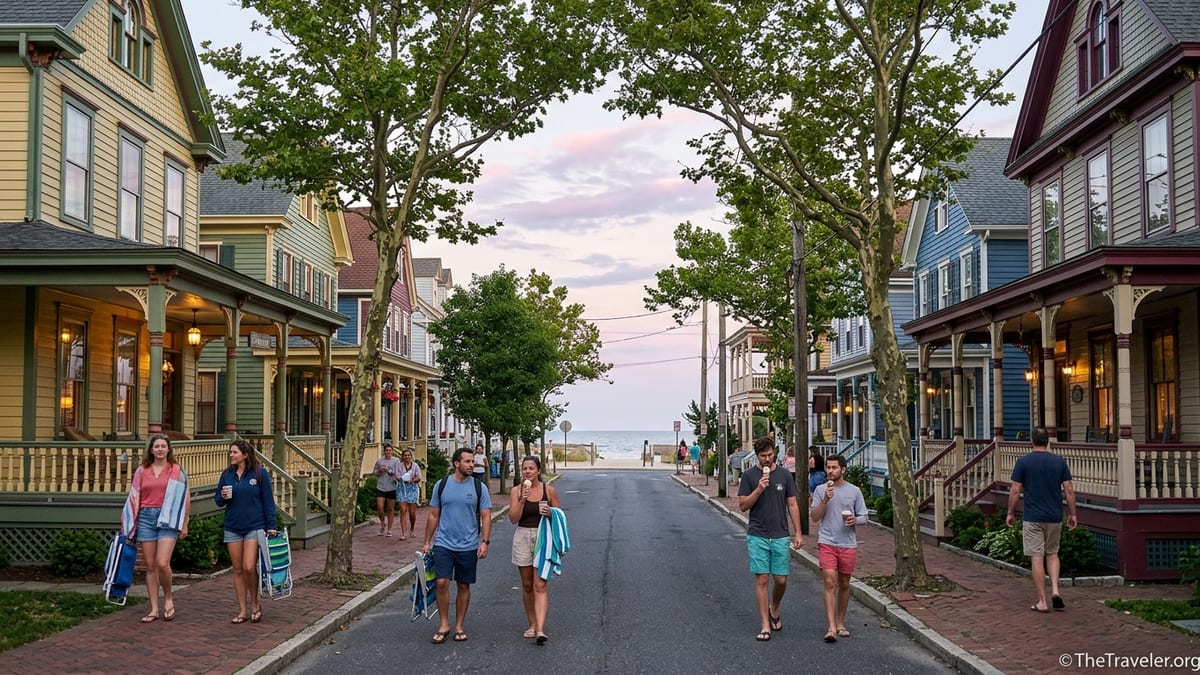
Arriving in Cape May: Forget the Turnpike, Think Storybook Seaside
The shift began almost as soon as I drove past the last big-box store on the Garden State Parkway and the road funneled toward Cape May. Instead of smokestacks, I hit a low-slung town of Victorian gingerbread houses, wraparound porches, and hydrangeas spilling over white picket fences. Cape May looks more like a film set than the industrial New Jersey many visitors imagine, but it is very real, and increasingly open year-round for long weekends.
Washington Street Mall, the pedestrian heart of town, drove that home. I expected souvenir shops and generic beach food. Instead, I found independent bookstores, boutiques selling New Jersey-made ceramics, and restaurants plating locally caught scallops on actual china. A casual dinner with an appetizer, two mains, and a shared dessert at a mid-range spot here might run 90 to 130 dollars before tax and tip, comparable to Philadelphia but with a slower, more coastal pace.
On my first night, I walked past the grand façade of Congress Hall, one of the country’s oldest seaside hotels, and down to the beach. Families were finishing ice cream, couples were still in beach chairs, and surfers were packing up under a sky turning sherbet orange. This was not the loud, neon chaos people associate with some Jersey shore towns. It felt surprisingly grown-up, even a bit refined.
What surprised me most was how easy Cape May is logistically. From Philadelphia, you can reach it in about 90 minutes if traffic cooperates; from New York City, it is closer to three and a half hours by car. Once you park, you can largely forget the vehicle for the weekend. Most of the Victorian district, the beach, and a good selection of restaurants are comfortably walkable or reachable by bike.
Beyond the Beach: South Jersey as Wine Country and Brewery Hub
Ask a random traveler to name American wine regions and they will say Napa, Sonoma, the Willamette Valley. Very few will mention South Jersey, yet the southern counties now host more than 30 wineries in the Outer Coastal Plain AVA, with a sub-region focused around the Cape May Peninsula. Many of these vineyards are within 15 to 30 minutes of Cape May’s beaches, which makes it easy to fold tastings into a weekend built around the ocean.
At Cape May Winery & Vineyard just outside town, my preconceptions took another hit. The tasting room, with its reclaimed-wood beams and big windows, would fit seamlessly in coastal California. Flights often feature a mix of dry whites like chardonnay and sauvignon blanc, along with estate reds and occasional blends. A typical tasting flight might cost in the range of 18 to 24 dollars per person, depending on how many wines you sample, and outdoor seating overlooks neatly trellised vines that remind you this region is more farm than freeway.
Further up the road, Hawk Haven Vineyard & Winery and Willow Creek Winery each put their own stamp on the South Jersey wine story, from pergola-covered patios to seasonal events such as live music evenings and farm-to-table dinners. Many travelers build a relaxed loop between two or three wineries over an afternoon, lingering over cheese boards, buying a bottle or two to bring back to their bed-and-breakfast, and discovering that “New Jersey wine” is no longer a punchline but a serious regional product.
Beer drinkers have just as much to explore. Cape May Brewing Company, set near the small regional airport, has become a destination in itself. Visitors sample IPAs and lagers in a sprawling beer garden, often pairing them with casual tacos or snacks from nearby food vendors. In Wildwood, about a 20-minute drive from Cape May, MudHen Brewing Company offers a full brewpub experience, with house beers, a sizeable menu, and an atmosphere that pulls in both locals and vacationers. In recent seasons, shuttle services have started running between Cape May and Wildwood, stopping at select breweries and wineries. For roughly the cost of a mid-range dinner, around 40 dollars for an all-day pass, you can ride between tasting rooms without touching your car, an appealing option for visitors who want to sample broadly and stay safe.
The Wildwoods and the Boardwalk: A Different Face of the Shore
If Cape May is a Victorian postcard, the Wildwoods are pure boardwalk Americana. Driving north about 20 minutes, I crossed the bridge into a town where the soundscape instantly shifted: arcade bleeps, roller coaster screams, and the constant whoosh of the Atlantic amplified by three long piers of rides and games. Neon signs advertised funnel cakes and Italian ice, and families steered strollers between T-shirt shops and pizza counters.
I had always thought of this kind of boardwalk scene as chaotic, maybe even a little tacky. Seeing it up close, I understood why generations of New Jersey families are fiercely loyal to the Wildwoods. Where Cape May rewards slow strolling and lingering over wine, the boardwalk offers unfiltered nostalgia. Riding a classic wooden coaster, splitting a 20-inch slice of boardwalk pizza for about 6 to 8 dollars, or dropping a few quarters into a claw machine is as much about memory as it is about the moment.
Crucially, even here, my old clichés about New Jersey fell apart. In between the noise and lights, I found stretches of wide, clean beach where you could spread out a towel, rent a beach chair for around 12 to 18 dollars for the day, and forget that thousands of people were only a short walk away. A sunset walk along the water’s edge, with the rides lit up behind you and the sky turning deep pink over the ocean, is far more cinematic than the stereotype of crowded, uninviting Jersey beaches suggests.
For travelers who enjoy craft beer with their seaside nostalgia, Wildwood now hosts several breweries within a short drive, and some visitors plan evenings that combine time on the rides with a relaxed dinner at a brewpub. It is entirely possible to spend a Saturday in Cape May’s wine country and a Sunday on Wildwood’s piers, and feel like you have visited two different states without ever crossing a border.
Into the Pines: Discovering the Quiet Heart of South Jersey
On my second morning, I left the shoreline behind and drove inland, trading ocean breezes for the sandy, pine-scented air of the New Jersey Pinelands. This inland region is one of the most misunderstood landscapes on the East Coast, often dismissed as “just woods” by drivers passing through. In reality, it is a vast, protected biosphere of dwarf pines, cedar swamps, and dark, tannin-stained rivers that feels worlds away from both the shore and the urban centers to the north.
Stopping near a trailhead off one of the smaller county roads, I followed a sandy path through pitch pines no taller than I was, part of the legendary pygmy pine plains that make this region globally unique. The ground, springy with needles, muffled the sound of my footsteps. In less than 10 minutes, I had left all trace of traffic behind. Birds were the only noise, and the humid, resinous air smelled more like the Carolinas than like the Northeast corridor.
Outfitters in several Pinelands towns rent kayaks and canoes for day trips on rivers like the Mullica and Batsto, where paddlers glide past cranberry bogs and low-slung wooden bridges. A typical full-day boat rental might cost 60 to 90 dollars per person, sometimes including shuttle service. Between these waterways and the maze of hiking trails, South Jersey suddenly read less like a commuter belt and more like a national park in miniature, threaded with history from Indigenous communities to early ironworks and glassmaking.
It was here, more than anywhere, that my image of New Jersey cracked. Standing knee-deep in a clear, tea-colored stream, dragonflies hovering above the surface, I could not reconcile this environment with the highway-adjacent rest stops that have come to symbolize the state for so many road-trippers. A weekend that begins with Victorian inns and ends in protected wilderness is not the New Jersey most outsiders imagine.
Collingswood and Haddonfield: Small-Town Streets With Big-City Taste
On my drive back toward Philadelphia, I made one more stop that rewrote my mental map: Collingswood, along with neighboring Haddonfield. These towns sit just across the Delaware River from the city, technically suburbs but with downtowns that feel self-contained and distinctly their own. I had expected strip malls and parking lots. Instead, I found walkable streets lined with independent restaurants, bakeries, and specialty shops.
Haddon Avenue in Collingswood is the spine of this scene, a corridor where you can move from a third-wave coffee shop to a BYO Italian restaurant to a tiny bakery turning out still-warm pastries in the span of a single block. A sit-down dinner here can be noticeably more affordable than in major cities, with many entrees hovering in the 20 to 30 dollar range and the town’s longstanding bring-your-own-wine culture helping keep overall costs down.
In nearby Haddonfield, Kings Highway is similarly lively, dotted with boutiques, historic buildings, and tasting rooms linked to South Jersey wineries. On certain weekends, streets close for festivals like May fairs and seasonal markets, drawing visitors who might never make it all the way to the shore. For someone who thought of New Jersey’s interior as a blur from a car window, these compact, walkable centers were a revelation.
Local beer culture thrives here too, even under New Jersey’s specific rules about taprooms and food service. Breweries in the area often partner informally with nearby pizzerias and sandwich shops, encouraging guests to bring in their own meals while they sample rotating taps. It is common to see families sharing takeout at long tables while neighbors compare notes on their favorite seasonal releases, a reminder that South Jersey’s sense of community is often built pint by pint, block by block.
Practical Tips for Planning Your Own South Jersey Reset
To reproduce a weekend that truly changes how you see New Jersey, it helps to think of South Jersey as a triangle: one point at Cape May and the Wildwoods on the coast, one in the Pinelands, and one in the Collingswood and Haddonfield area. With a car, you can comfortably touch all three in a long weekend, though spending extra time in any one corner only deepens the experience.
Accommodation in Cape May ranges from historic inns to modern motels. In peak summer, a well-located bed-and-breakfast might start around 275 to 400 dollars per night, with more modest motels sometimes dropping under 200 dollars in shoulder seasons like May or late September. Booking weekday nights or early in the season can significantly reduce costs and crowds. Many properties include breakfast, which makes it easier to splurge on dinners in town.
When planning tastings, remember that most South Jersey wineries and breweries keep detailed current hours on their own channels, and many require or strongly recommend reservations on busy weekends. Build in time between stops, not only to drive the scenic back roads but also to stay within safe tasting limits. A good rule of thumb is no more than two winery visits or one winery and one brewery session in a single afternoon, especially if you are pairing flights with cheese plates or small bites.
If you want to include the Pinelands, pack as you would for any light outdoor adventure: closed-toe shoes, sun protection, insect repellent, and plenty of water. Cell service can be spotty on some back roads, so it is wise to download maps in advance and carry a screenshot of your route. Many rivers are gentle enough for beginners, but guided trips from local outfitters are a smart choice if you are new to paddling or unfamiliar with the area’s tides and water levels.
The Takeaway
By the time I crossed back over the Delaware River at the end of my weekend, the clichés that had defined New Jersey in my mind felt flimsy. In their place were vivid, specific memories: a glass of local wine on a shady patio, the clack of a wooden coaster over Wildwood’s piers, the hush of dwarf pines crowding a sandy trail, the buzz of conversation outside a Collingswood café on a warm evening.
What changed everything was not that South Jersey contradicted the rest of the state, but that it completed the picture. Yes, New Jersey still has its highways and industrial stretches, but it is also home to serious vineyards, protected wilderness, and small downtowns where you can park the car and live on foot for a weekend. You do not have to squint or romanticize to see it. You just have to get off the Turnpike.
For travelers who have long treated New Jersey as a place to rush through, South Jersey offers an invitation to slow down and look again. A single weekend here may not change the whole state, but it will almost certainly change the version of it you carry in your head. And that, in travel and in life, is often enough.
FAQ
Q1. Is South Jersey a good weekend destination if I am not a beach person?
Yes. While the shore is a major draw, you can spend an entire weekend inland exploring wineries, breweries, the Pinelands, and walkable downtowns like Collingswood and Haddonfield without setting foot on the sand.
Q2. When is the best time of year to visit South Jersey for a weekend?
Late spring and early fall are ideal, typically from May to mid-June and again from September to early October, when crowds are lighter, lodging prices are more manageable, and temperatures are comfortable for both beach time and inland hikes.
Q3. Do I need a car to enjoy a South Jersey weekend?
A car gives you the most flexibility, especially if you want to visit wineries, the Pinelands, and multiple towns. Some areas have local shuttles and rideshares, but those work best once you are already in a specific town like Cape May or Wildwood.
Q4. How expensive is a typical weekend in South Jersey?
Costs vary widely by season and lodging style. A couple staying in a mid-range inn, eating at sit-down restaurants, and doing a few tastings can expect to spend several hundred dollars over a two- or three-night stay, not including transportation, with budget options available in motels and off-peak dates.
Q5. Can I visit multiple wineries and breweries in one day safely?
It is possible if you plan carefully, limit tastings, and arrange safe transportation such as a designated driver, rideshares, or paid shuttles that run between popular towns. Many visitors cap their day at two or three tasting stops and drink plenty of water between them.
Q6. Are South Jersey beaches family-friendly?
Yes. Towns like Cape May and the Wildwoods offer lifeguard-patrolled beaches in season, public restrooms, and a wide range of food options. Families often split days between the sand and attractions like boardwalk rides, small museums, and mini-golf.
Q7. What should I pack for a mixed beach and Pinelands weekend?
Bring typical beach gear plus comfortable walking shoes or light hiking shoes, a hat, insect repellent, and layers for cooler evenings. If you plan to paddle, quick-drying clothing and a small dry bag for your phone and keys are helpful.
Q8. Is South Jersey walkable, or will I be driving everywhere?
Many individual towns are very walkable once you arrive. Cape May, Collingswood, and Haddonfield all have compact centers where you can park once and explore on foot, though traveling between regions usually means a drive.
Q9. Are there options for travelers who prefer quieter nights over party scenes?
Absolutely. Cape May in particular leans relaxed and low-key, with early morning beach walks, wine tastings, and quiet dinners. Even in livelier areas, you can choose lodging a few blocks away from the busiest stretches to keep nights calm.
Q10. How far in advance should I book for a summer weekend?
For peak summer dates, especially in July and August, it is wise to book lodging several months ahead, particularly in small inns and popular motels. Shoulder-season weekends often have more last-minute availability, but reservations still help secure the best locations and rates.