


Spread across a cluster of low rocky islands at the mouth of Helsinki’s harbor, Suomenlinna looks at first like a peaceful coastal village. Look closer and you begin to see something very different: earthwork ramparts, star-shaped bastions, gun emplacements and stone barracks that tell the story of three empires. Few places in Finland combine layered history, everyday local life and Baltic Sea scenery as memorably as this 18th century sea fortress.
Get the latest updates straight to your inbox!
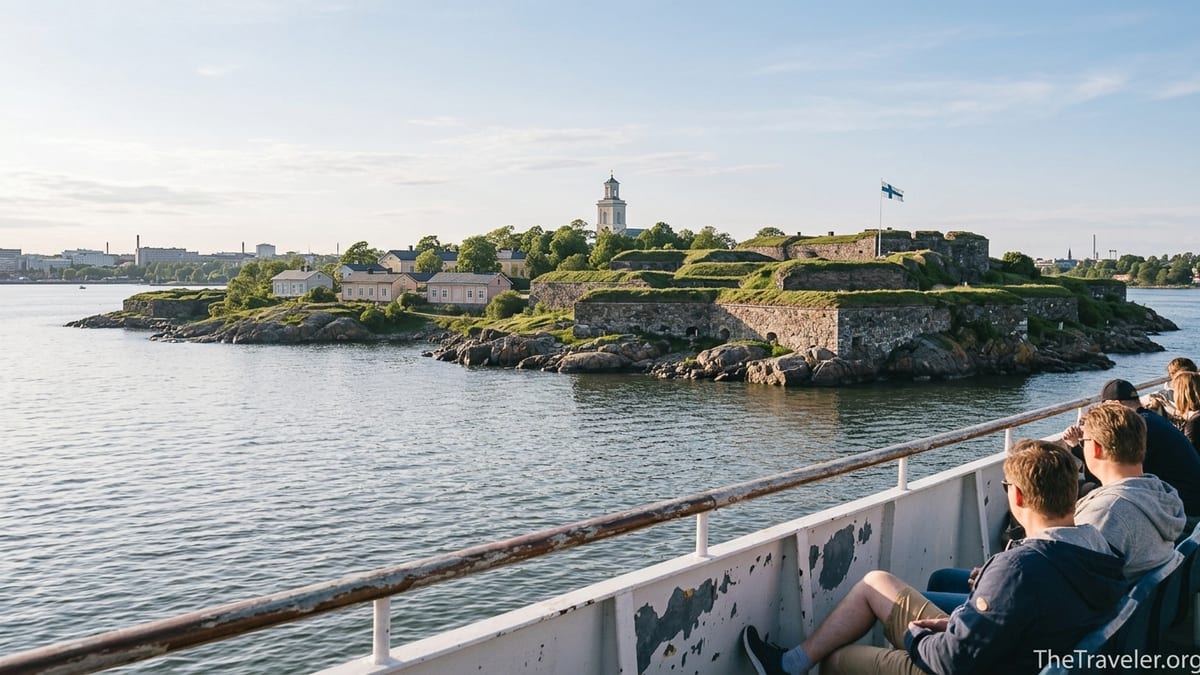
A Fortress That Shaped the Fate of Finland
Suomenlinna’s story begins in 1748, when Sweden started building a massive maritime fortress on the islands guarding what was then a small Helsinki. Designed by military architect Augustin Ehrensvärd, the complex was conceived as a keystone in defending Sweden’s eastern territories after earlier wars with Russia. Walking today along Kustaanmiekka’s grassy ramparts or through the dry docks carved into the bedrock, visitors are literally stepping into the grand strategy debates of 18th century Northern Europe.
The fortress, originally named Sveaborg, later Viapori in Finnish, was one of the most ambitious defense projects in Swedish history. UNESCO highlights it as an especially interesting example of European military architecture from the era, a textbook bastion system adapted to a rocky archipelago. You see this in details as concrete as the low, angular walls that deflect cannon fire or the network of protected firing positions overlooking the narrow sea channels leading into Helsinki.
Suomenlinna also played a quiet but decisive role in the Finnish War of 1808 to 1809. The fortress surrendered to Russia after a relatively short siege, clearing the way for Russian forces to take control of Finland. That capitulation, still debated by historians, helped turn Sweden’s eastern provinces into the autonomous Grand Duchy of Finland under Russian rule. When visitors stand on the King’s Gate terrace looking back toward Helsinki, they are looking across waters that once divided two empires and eventually framed an emerging Finnish identity.
Later conflicts left their mark as well. During the Crimean War in the 1850s, Anglo-French forces bombarded the fortress, exposing how quickly artillery technology had outpaced even the most sophisticated 18th century defenses. Interpretive signs around the ramparts point out where bombardment damage was concentrated and how Russian engineers later modernized certain batteries, giving present-day visitors a layered overview of changing warfare without needing to set foot in a single indoor exhibition.
Living World Heritage: Not Just a Museum Piece
Suomenlinna is a UNESCO World Heritage Site, inscribed in 1991 for its outstanding universal value as a sea fortress, yet it is far from a frozen monument. About 800 people live on the islands year-round, and several hundred more commute to work in schools, workshops, cafés and cultural institutions. Ferries carry residents, schoolchildren and municipal maintenance vehicles alongside visitors, which gives the whole place a lived-in, un-touristy feel even in peak summer.
As you walk from the main pier toward the central village, it becomes clear that this is a functioning neighborhood. There is a small grocery shop for residents, a daycare, artists’ studios and even a naval academy presence. On a weekday morning in May, you might see uniformed naval cadets jogging along the waterfront path while a local parent pushes a stroller past bright wooden houses that date from the Russian era. Historic buildings have been adapted for modern uses, such as former barracks converted into apartments, which makes the layers of time palpable in everyday life.
This blend of living community and preserved heritage is part of what makes Suomenlinna remarkable compared with many European castles or forts. Visitors are constantly reminded that the site is cared for and used, not just looked at. Information panels explain ongoing conservation work, from restoring crumbling stone walls to managing vegetation that would otherwise damage earthworks. A 2030 sustainable tourism strategy guides how many events the islands can reasonably host and how to balance visitor flows with residents’ quality of life, showing that heritage protection here is not theoretical but part of municipal planning.
The result is an atmosphere that shifts with the season and time of day. In July, local families share the grassy slopes with backpackers and cruise passengers on short shore excursions. On a windy October afternoon, the islands feel more like a quiet Helsinki suburb with spectacular sea views. That seasonal personality is something you notice only when a historic attraction is also a real neighborhood.
Architecture and Landscape: A Textbook Sea Fortress in Real Life
From above, Suomenlinna spreads across several islands linked by bridges, its walls and bastions following the contours of the shoreline. On the ground, the scale is immediately impressive yet human. Visitors arriving by ferry usually start at Iso Mustasaari island, then cross to Susisaari and Kustaanmiekka where the most dramatic fortifications rise above the water. Cobblestone lanes thread through stone gateways framed by thick ramparts, creating sudden reveals of open sea or sheltered inner courtyards.
UNESCO notes that Suomenlinna is a particularly interesting example of 18th century European military architecture adapted to an archipelago setting. In practice, this means you see classic bastion shapes softened by natural rock. At Kustaanmiekka’s southern tip, for instance, turf-covered ramparts sink into cliffs where waves crash only a few meters below. Old artillery positions are carved into the bedrock, some still displaying historic cannons, which children inevitably climb on while parents read the interpretive panels nearby.
The dry dock area, once central to Sweden’s archipelago fleet, is another architectural highlight. Massive stone walls encircle the basins where wooden warships were built and repaired, and the system of sluice gates used to flood or empty the dock is still legible in the masonry. In summer, small yachts often moor close by, unintentionally creating a visual comparison between 18th century naval infrastructure and modern recreational boating. Photography enthusiasts often linger here to capture the textures of lichen-covered stone and timber against the reflective surface of still water.
Natural elements are just as important. The islands’ meadows, low cliffs and scrubby trees form a kind of Baltic coastal ecosystem that shifts from snow-covered in winter to flower-strewn in June. Many Helsinki locals treat Suomenlinna as an extended city park, spreading picnic blankets on the grass above the fortress walls or finding a sheltered rock ledge to watch the evening ferries and cargo ships glide past. This combination of serious military architecture and approachable green space is a big reason the site appeals as much to families and casual walkers as to history buffs.
Everyday Visitor Experience: Easy, Affordable and Atmospheric
For all its historical weight, Suomenlinna is one of the easiest major sights to visit from a Nordic capital. The public HSL ferry runs from Helsinki’s Market Square to the main pier on the islands throughout the year. The crossing takes about 15 minutes and offers a harbor sightseeing cruise in miniature, with views of the Presidential Palace, icebreakers in winter and, in summer, restaurant terraces lining the waterfront.
The ferry is part of Helsinki’s regular transport system. Most visitors simply buy an AB zone ticket, which currently costs only a few euros for adults and covers trams, buses, metro and the ferry within the validity period. For many travelers staying centrally in Helsinki, this means they can ride a tram from their hotel to the Market Square, hop straight onto the ferry and then continue on another tram afterward, all on the same ticket. There are also seasonal waterbuses run by private operators to different piers on the islands, but the public ferry is usually the simplest and most economical option.
Once on Suomenlinna, the main sightseeing route is well marked with blue information signs that lead past major points of interest like the church, the Great Courtyard, the King’s Gate and the artillery batteries at Kustaanmiekka. The route is free to follow and can take between one and three hours depending on how often you stop. Many travelers choose to spend half a day by combining a relaxed walk with a café stop, a picnic on the grass or a visit to one of the small museums clustered around the central area.
The islands feel particularly atmospheric in the shoulder seasons. In April, when ice has melted but summer crowds have yet to arrive, the low light and cool wind give the stone walls a dramatic, almost austere beauty. In late August, warm evenings can be remarkably tranquil, with locals bringing thermos flasks and blankets to watch the sunset from the western shore. Because the last ferries run late into the evening, visitors do not need to rush back, which encourages a slower pace than many city-center attractions.
Museums, Stories and Human Voices Behind the Walls
Suomenlinna’s open-air landscape provides the big picture, but its museums and guided tours add depth and human detail. The main Suomenlinna Museum introduces the fortress’s history under Swedish, Russian and Finnish rule with models, period objects and short films. A scale model of the islands lets visitors see how the entire defensive system fits together, making subsequent walks across the site feel more informed and intentional.
Several more specialized museums add layers of interpretation. The Military Museum’s Manege exhibits the history of the Finnish Defence Forces, including equipment and personal stories from the Second World War and later decades. In summer, the submarine Vesikko, preserved on the shoreline, allows visitors to clamber through the cramped interior of a 1930s vessel that once patrolled these same waters. This tangible encounter with metal bunks, control panels and torpedo tubes makes 20th century naval history far more relatable than any display case could.
Guided walking tours, offered seasonally through the visitor center, are another way Suomenlinna stands out among Finnish historic attractions. A guide might point out the grave of Augustin Ehrensvärd in the Great Courtyard and explain how the bronze ornamentation on his tomb was cast from captured Russian cannons. Stories of everyday life also come through: how families of soldiers coped with harsh Baltic winters, or how the islands served as a garrison and later as a prison camp site in the turbulent years around Finnish independence.
For those traveling with children, storytelling is woven into the experience through family-friendly routes and seasonal events. On some summer days, costumed guides representing characters from different eras lead informal tours or short performances, turning the fortress into a kind of open-air stage. This human dimension makes it easier for younger visitors to connect the walls and cannons they see with the people who once built, maintained and lived among them.
Suomenlinna in the Context of Finnish Heritage
Finland has no shortage of historic fortifications and castles, from the lakeside stronghold of Olavinlinna in Savonlinna to the medieval Turku Castle on the southwest coast. What makes Suomenlinna particularly remarkable is the way it condenses several centuries of Finnish history into a landscape just 15 minutes from the nation’s capital. It bridges the Swedish, Russian and independent Finnish periods more clearly than almost any other single site.
Under Swedish rule, the fortress symbolized a strategic commitment to defending the realm’s eastern flank. Under Russian control, when Helsinki grew into the administrative center of the Grand Duchy, the islands became a pillar of imperial defense and naval power in the Baltic. After Finnish independence and the gradual demilitarization of the fortress, Suomenlinna shifted yet again, morphing from active garrison to a mix of residential district, cultural hub and heritage site.
In practice, this layered identity means a day in Suomenlinna can replace multiple separate sightseeing stops. You can stand on Swedish-era ramparts looking toward the modern skyline of Helsinki, walk through Russian-built barracks that now house Finnish families, and visit exhibitions that address the country’s 20th century wars. For time-pressed travelers, especially those on short city breaks or cruise visits, this density of narratives is a strong reason to prioritize Suomenlinna over more distant historic sites that require long travel times.
The fortress also contributes to contemporary Finnish culture in quieter ways. Its open spaces are used for outdoor theater performances in summer, art exhibitions and small-scale festivals. Filmmakers and photographers utilize its atmospheric courtyards and tunnels as locations for both historical dramas and modern stories. For Helsinki residents, suggesting “a picnic in Suomenlinna” is a common way to plan a relaxed afternoon with visiting friends, which says as much about the site’s place in everyday life as any museum label.
The Takeaway
Suomenlinna stands out among Finland’s historic attractions because it is more than a fortress frozen in time. It is a living archipelago neighborhood, a record of shifting European power politics and a beloved recreational escape for Helsinki residents, all layered onto the same small group of islands. Visitors do not just observe history; they walk through it, picnic on it and share ferries and footpaths with people who call the islands home.
From the moment a public ferry pulls away from the Market Square, the experience combines practicality with atmosphere. A single local transport ticket delivers harbor views, a UNESCO World Heritage Site and a half day in a uniquely Finnish coastal landscape. On arrival, cobblestone streets, vaulted tunnels and turf-topped ramparts offer an accessible, self-paced way to understand how a fort built in the 1700s still shapes Helsinki’s identity today.
Whether you are drawn by geopolitics, architecture, photography or simply the appeal of sea air and open skies, Suomenlinna rewards unhurried exploration. Pause at the King’s Gate to watch passing ships, linger in the dry dock area to picture the wooden warships once built there, or sit on a grassy slope listening to the wind in the flagpoles while children play among artillery embankments. In these small moments, it becomes clear why this cluster of rocky islands is regarded as one of Finland’s most remarkable historic places.
FAQ
Q1. How far is Suomenlinna from central Helsinki?
Suomenlinna is about a 15 minute public ferry ride from Helsinki’s Market Square, which itself is a short walk from the central railway station.
Q2. Do I need a separate ticket to visit Suomenlinna?
There is no entrance fee to the islands themselves. You only need a regular Helsinki public transport ticket for the ferry and separate tickets if you choose to visit individual museums.
Q3. Is Suomenlinna suitable to visit in winter?
Yes. Ferries run year round and the fortress can be very atmospheric in snow, though paths may be icy and some smaller museums or cafés operate reduced winter hours.
Q4. How long should I plan to spend on the islands?
A basic visit following the main route typically takes two to three hours, but many travelers allow at least half a day to include a café stop, picnic or museum visit.
Q5. Is Suomenlinna accessible for visitors with limited mobility?
Some main routes and museum entrances are reasonably accessible, but many areas have cobblestones, steep ramps or uneven paths, so planning routes in advance is recommended.
Q6. Can I bring food and have a picnic at Suomenlinna?
Yes. Picnicking is popular, especially on grassy slopes near the ramparts and seafront. Visitors are expected to follow local rules, avoid open fires and pack out all rubbish.
Q7. Are there guided tours available?
Seasonal guided walking tours, usually starting near the main pier or visitor center, provide structured introductions to the fortress’s history and are available in several languages.
Q8. Is it possible to stay overnight on the islands?
There is a small hostel and some guest accommodation on Suomenlinna, but availability is limited and should be booked well in advance, especially for summer dates.
Q9. What should I wear when visiting?
Weather can change quickly on the open sea, so layered clothing, comfortable walking shoes and a windproof jacket are sensible choices even in summer.
Q10. Is Suomenlinna a good place to visit with children?
Yes. Open grassy areas, tunnels and ramparts make it engaging for children, though close supervision is important near steep drops, shorelines and old artillery positions.