


More news on this day
Wildfire smoke drifting over northern Michigan is prompting warnings of potential flight delays and cancellations at Cherry Capital Airport in Traverse City, as reduced visibility and changing wind patterns complicate operations at the busy regional hub.
Get the latest news straight to your inbox!
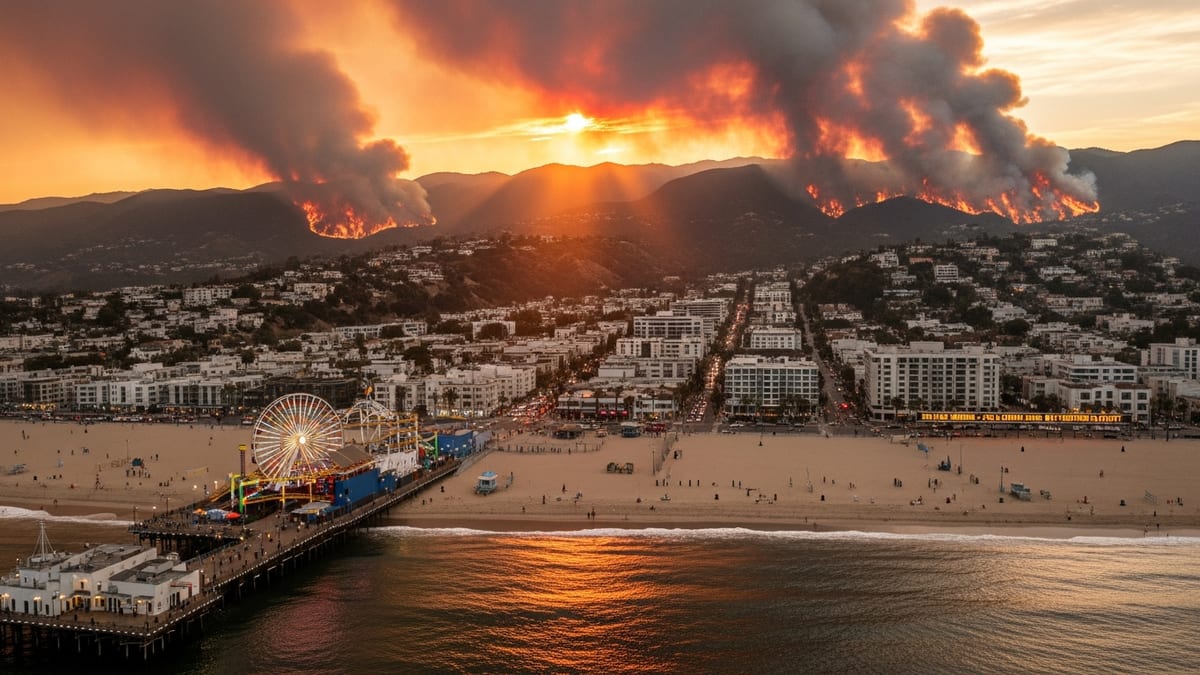
Smoke-Hazed Skies Over a Key Northern Michigan Gateway
Hazy conditions linked to regional wildfire smoke have settled over parts of the Great Lakes, creating episodes of reduced visibility that can interfere with flight schedules at Cherry Capital Airport. Publicly available weather and aviation data indicate that visibility near Traverse City has periodically dropped as fine particulate levels increase, raising the likelihood of schedule disruptions when conditions deteriorate.
Cherry Capital Airport, which serves as a primary gateway to northern Michigan resort communities, typically sees some of its heaviest traffic during summer. Any prolonged period of smoke-induced haze arrives during a peak travel window, increasing the potential impact on visitors heading to lakeside destinations and residents returning home.
Operational data for the broader national airspace system in recent days highlight how quickly smoke and haze can force adjustments. Status pages maintained by federal aviation authorities show that when visibility falls below key thresholds at major airports, ground delay programs and spacing requirements are often introduced, contributing to a ripple effect of late departures and missed connections across the network.
While Traverse City is not among the country’s largest hubs, its role as a connection point for a relatively small number of daily flights means that even a handful of delayed or canceled departures can significantly affect travelers who have limited alternative options.
How Wildfire Smoke Disrupts Flight Operations
Wildfire smoke affects aviation primarily through its impact on visibility and air quality. When smoke concentrates at lower altitudes, it can reduce surface visibility below the minimums required for safe takeoffs and landings, even when skies above are relatively clear. Pilots and air traffic managers may need to transition to more restrictive instrument flight rules, slowing the rate at which aircraft can arrive and depart.
Experience at other U.S. airports during recent smoke intrusions illustrates the pattern. Published coverage from major metropolitan areas shows that thick haze has triggered ground delays, increased separation between aircraft and, in some cases, temporary suspensions of arrivals and departures when visibility dipped too low. These measures are designed to maintain safety, but they translate directly into longer waits at gates and potential cancellations when crews or aircraft reach regulatory limits.
In addition to visibility, particulate-laden air can alter temperature profiles near the surface, subtly changing how air behaves over runways and approaches. While modern jet engines and cabin filtration systems are designed to handle a wide range of conditions, airport operators may still introduce operational pauses or modified procedures to account for rapidly changing local weather when smoke plumes move overhead.
For smaller facilities such as Cherry Capital, which may have fewer parallel runways and more limited ground infrastructure than major hubs, even minor slowdowns in the rate of arrivals and departures can quickly lead to congestion and schedule compression.
Travelers Face Heightened Uncertainty During Peak Season
The timing of the latest smoke episode is particularly sensitive for Traverse City, where midsummer brings festivals, vacation travel and increased demand for limited hotel and rental inventory. When flights into or out of Cherry Capital Airport are delayed, same-day rebooking options can be scarce, especially on routes that are normally served only once or twice daily.
Recent national performance data show that across the United States, airlines have been operating close to capacity during peak travel periods, which can reduce flexibility when weather or smoke disrupts operations at any given airport. When a flight into Traverse City is canceled, the number of spare seats on later flights may be minimal, increasing the chance that travelers will have to wait an extra day or alter their plans.
Travel advisories issued by carriers in other regions during similar smoke events have emphasized the importance of monitoring flight status frequently and enabling alerts in airline mobile applications. Those practices are equally relevant for passengers using Cherry Capital, where last-minute adjustments are more likely when visibility changes quickly with shifting winds.
The combination of seasonal crowds, constrained seat availability and intermittent smoke means that travelers relying on tight connections, late-evening arrivals or early-morning departures may face higher disruption risk until air quality and visibility stabilize.
What Passengers Through Cherry Capital Can Do Now
Travel experts generally recommend that passengers flying during periods of unstable weather or smoke build extra time into their itineraries. For visitors heading to northern Michigan through Cherry Capital Airport, that can mean preferring nonstop flights when available, allowing longer layovers at connecting hubs and avoiding the tightest possible turns between arriving and departing flights.
Publicly available guidance from government transportation agencies stresses the value of checking both airline and airport information channels before leaving for the terminal. Many carriers now issue proactive messages when conditions such as wildfire smoke could affect operations, sometimes offering flexible rebooking when forecasts indicate a high risk of delays.
Passengers who must travel on specific days may benefit from targeting early flights, which typically have a higher chance of departing on time before system-wide delays accumulate. At an airport with a modest number of daily departures like Traverse City, the first outbound flights can be particularly important because they position aircraft and crews for the rest of the day’s schedule.
Travelers with health concerns related to air quality may also wish to monitor regional air quality indexes. Even when flights are operating, outdoor exposure during ground transfers, boarding via stairs or waiting in landside areas can be more uncomfortable when smoke is dense.
Longer-Term Questions for Regional Air Travel
The conditions affecting Cherry Capital Airport are part of a broader pattern of wildfire smoke episodes that have periodically drifted over large portions of the United States in recent summers. Aviation industry reports have increasingly identified smoke-related visibility problems as a growing seasonal challenge, alongside more traditional hazards such as thunderstorms and winter storms.
Studies and corporate climate risk disclosures note that wildfire smoke can contribute to more frequent operational slowdowns, diversion of flights to alternative airports and additional fuel consumption when routes are extended to avoid the worst-affected areas. For regional airports that rely on a tight portfolio of routes to sustain year-round service, repeated disruptions can add financial and logistical strain.
Planning documents for airports of Cherry Capital’s size frequently reference investments in navigation aids, updated approach procedures and improved weather monitoring as tools to preserve reliability under a wider range of conditions. Such measures can help maintain operations when visibility declines, although they cannot eliminate the need for caution during the most intense smoke intrusions.
With wildfire seasons projected to remain active in many parts of North America, travelers to and from Traverse City may find that smoke-related advisories become a recurring feature of summer flying. Awareness of the potential for delays and a willingness to build flexibility into travel plans can help mitigate the inconvenience when smoke once again drifts across northern Michigan skies.