


The Yucatán Peninsula is one of Mexico’s easiest regions to explore by car, with relatively flat roads, manageable distances, and a dense concentration of cenotes, Maya ruins, colonial towns, and Caribbean beaches. A road trip here lets you swim in a new cenote before lunch, wander ancient temples in the afternoon, and eat tacos in a pastel plaza by evening. This guide focuses on practical, real world details for a 7 to 14 day Yucatán loop, including car rental, toll roads, checkpoints, parking, safety, fuel, and route ideas that connect cenotes, ruins, and beach towns without rushed days.
Get the latest updates straight to your inbox!
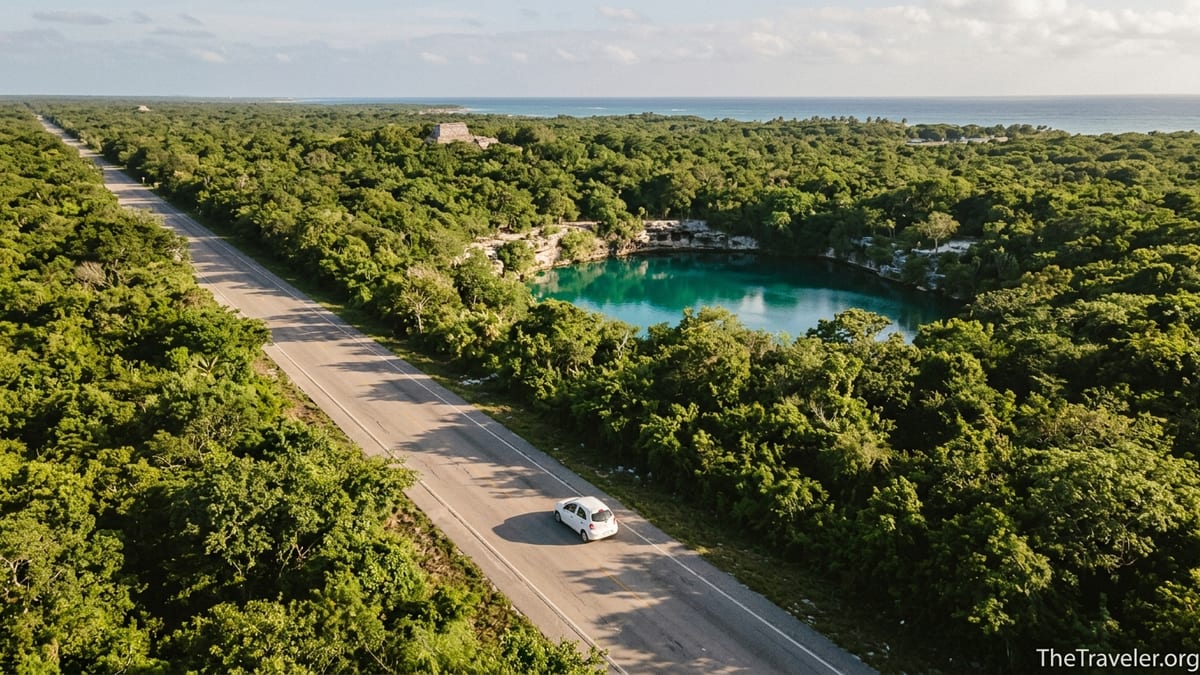
How Driving in the Yucatán Peninsula Really Works
For most travelers the easiest starting point is Cancún International Airport, where major rental brands line the arrivals corridor and local agencies operate just outside the terminal. Daily rental rates fluctuate by season, but compact cars commonly advertise from around 25 to 35 US dollars per day before insurance. At the counter you will be offered several layers of coverage. Mexican third party liability insurance is mandatory and often not fully included in the headline price, so build that into your budget and read the contract carefully before you sign. Many visitors end up paying closer to 40 to 60 US dollars per day once realistic insurance is added.
Driving itself is straightforward. Main highways such as the Mérida to Cancún toll road are modern and well paved, with clear signage and frequent gas stations. In contrast, some smaller roads near cenotes or secondary ruins narrow to single lanes with occasional potholes and unmarked speed bumps known locally as topes. Plan to drive these rural stretches in daylight whenever possible and stick to sensible speeds around villages. Locals often assume through traffic will slow for topes even when there is no warning sign.
Parking is usually simple away from the most popular beaches. Inland towns like Valladolid and Mérida have plentiful street parking and small pay lots that charge a modest hourly rate, often equivalent to a few US dollars for half a day. At major ruin sites such as Chichén Itzá or Uxmal you will find large official parking areas that charge a flat fee per vehicle. These fill later in the morning, so arriving near opening time not only avoids the worst heat but also makes it easier to park near the entrance.
Along the Caribbean coast, parking becomes more complicated and more expensive. In Tulum’s beach zone valet style lots for beach clubs commonly ask for a minimum spend at the bar or restaurant plus a fee for the space. In Playa del Carmen, multi level garages near the pedestrian Fifth Avenue area are the best option if you prefer not to circle side streets. In quieter towns such as Puerto Morelos or Akumal, informal attendants may guide you into marked curbside spots and expect a small tip when you leave. Keeping small bills in pesos makes all of these interactions smoother.
Toll Roads, Checkpoints, Fuel and Realistic Drive Times
The Yucatán Peninsula has a mix of toll roads and free highways. The main corridor for many itineraries is the toll road that connects Cancún with Valladolid and Mérida. It is faster and generally feels calmer than the free alternative that passes through numerous small towns. As of mid 2026, a one way trip in a car from Cancún to Valladolid on this toll road typically costs the equivalent of around 15 to 20 US dollars in pesos, depending on the exact entry and exit points and periodic adjustments to fares. Tolls are paid in cash, so keep enough pesos on hand before you enter.
Elsewhere on the peninsula most roads are free, including the coastal Highway 307 that runs from Cancún down past Playa del Carmen, Tulum, and Bacalar. This route is busy and can feel slow near resort clusters or where long term construction such as rail works narrows traffic to one lane for stretches. It remains passable but you should build extra time into your schedule, especially on travel days when you have hotel check in or tour reservations at the other end.
Fuel is straightforward. You will see Pemex gas stations along major routes and at the entrances to important towns, with additional independent brands operating in busier areas. On a typical loop, stretches where you need to think ahead include the inland section between Mérida and the smaller Puuc Route towns and some of the quieter routes around Bacalar and toward the Campeche border. A general rule is to refuel once you drop below half a tank if you are heading into rural sections in the afternoon. Attendants pump fuel for you and can accept both cash and cards in many places, although having cash avoids surprises if card terminals are offline.
Police and National Guard checkpoints appear on main highways, especially near state borders and around tourist zones. For most drivers these are uneventful. You may be waved through or asked for a quick look at your license and rental contract. Keep documents easily accessible and remain calm and respectful. Stories about unofficial roadside fines do circulate, particularly around certain coastal towns, so one practical tip is to ask for any fine to be issued as an official ticket payable later rather than in cash on the spot. This alone usually deters any questionable requests and most visitors complete road trips without problems.
Planning 7, 10 and 14 Day Yucatán Road Trip Routes
A one week road trip gives you a taste of everything with relatively short days in the car. A common 7 day loop starts and finishes in Cancún. After arriving and collecting your car, many travelers go straight to Valladolid for two nights, using the town as a base for cenotes and nearby ruins. From Valladolid, you can drive on to Mérida for two or three nights, then finish with a couple of days either on the Gulf Coast near Progreso or on the Caribbean side in Playa del Carmen before returning to the airport. Daily drives on this plan are usually around two to three hours.
With 10 days you can add both more ruins and at least one relaxed beach town stop. One practical route is Cancún to Valladolid, then on to Mérida, followed by Bacalar on the lagoon of seven colors, and finally Tulum or Akumal before looping back north. This version typically involves four or five base towns with two to three nights in each, which keeps unpacking and repacking to a minimum. A day that includes both a major ruin visit and a change of base, such as driving from Valladolid to Mérida via Chichén Itzá and a cenote, will be full but still workable if you start early.
With two full weeks, you have room to slow down and explore side roads. A balanced 14 day loop might include Cancún, Isla Mujeres or Puerto Morelos, Valladolid, Mérida, the Puuc Route area near Uxmal, Bacalar, and either Tulum, Akumal, or a quieter beach stretch around Mahahual. This gives you time to add colonial towns like Izamal or coastal wetlands near Río Lagartos without making the trip feel like a sprint. Many recent visitors report that some of their favorite memories came from unscheduled stops, such as a roadside stand selling freshly made panuchos or a small, family run cenote they noticed on a secondary road.
Whichever length you choose, it helps to organize days around themes rather than trying to see everything at once. For example, plan one day focused on a marquee ruin and a single cenote, another on beach time and casual eating, and another on a long scenic drive with a laid back evening in town. This structure avoids the common mistake of trying to combine several major ruins, multiple cenotes, and a multi hour drive into a single day, which often leaves travelers exhausted and underwhelmed by even the most impressive sights.
Cenotes and Ruins: Pairings That Work Well by Car
One of the biggest advantages of having a car in the Yucatán Peninsula is the ability to pair famous ruins with lesser known cenotes nearby. Around Valladolid an easy example is combining a morning visit to Chichén Itzá with a swim at a cenote such as Ik Kil or at one of the quieter options a short drive away. Many travelers arrive at Chichén Itzá near opening time, spend three hours exploring the site, then drive 10 to 20 minutes to a cenote restaurant where they can swim and have a late lunch before returning to town.
Other pairings work in similar ways. From Valladolid, it is a short drive north to Ek Balam, a smaller ruin complex set amid jungle, which can be combined with nearby cenotes on the same access road. To the west of Mérida, the Puuc Route links Uxmal and several secondary Maya sites via a scenic road that winds through low hills. Along the way, hacienda style cenote complexes south of Mérida offer guided swims through underground chambers and natural pools. Many visitors choose to book a half day experience at one of these cenotes, timing it for the afternoon after a morning exploring Uxmal’s pyramids.
On the Caribbean side, Tulum’s seaside ruins can be paired with nearby cenotes along the road toward Cobá. A typical day might start early at Tulum’s archaeological zone before the heat and tour buses arrive, then continue with a short drive inland to swim in cenotes that range from open blue pools to partially covered caverns. Travelers based in Tulum or Akumal often make an additional day trip to Cobá, where a network of sacbe causeways, bike rentals, and thick vegetation gives the ruins a different atmosphere than the more manicured sites.
If you are particularly focused on cenotes, you can design multi day loops that prioritize them almost every day. Recent itineraries shared by travelers have included chains of cenotes around Valladolid, Mérida, and Tulum, with each day featuring two or three sites accessible by short drives. Even on these specialized trips, mixing in at least one or two archaeological zones helps balance the experience, giving context to the sacred role these natural wells played for the Maya.
Choosing Beach Towns: Caribbean vs Gulf Coast
The Yucatán Peninsula offers two very different coastal experiences for drivers. Along the Caribbean side in Quintana Roo, towns such as Playa del Carmen, Tulum, Akumal, and Bacalar line or sit near the Mesoamerican Reef and its blue green waters. These places cater heavily to international visitors, with boutique hotels, beach clubs, yoga studios, and a wide range of dining prices. It is entirely possible to spend most of your budget on a few days in this corridor, particularly in high season, but you also gain easy access to snorkeling, diving, and modern amenities.
Bacalar, while technically on a freshwater lagoon rather than the open sea, has become a popular alternative to crowded beaches. Many travelers now plan two or three nights here, using their car to reach small docks where local boat operators offer half day trips along the lagoon, stopping at shallow sandbars and cenotes that open directly into the water. Lodgings range from simple cabins to design focused hotels, and having your own vehicle makes it much easier to reach places outside the small town center.
On the Gulf Coast, particularly around the city of Mérida, the beach atmosphere is more low key. Towns like Progreso, Chelem, and Chicxulub attract a mix of local families, long term foreign residents, and domestic weekenders. The water is calmer and often shallower than the Caribbean side, with broad sandy stretches, fishing piers, and seafood restaurants selling plates of fried fish and ceviche at prices that are generally lower than equivalent meals on the Caribbean coast. Many visitors park right along the malecón or on side streets and walk to the beach without dealing with beach club minimum spends.
If you are planning a 7 day loop and want some beach time without devoting most of your budget to it, one strategy is to end your trip with a couple of nights on the Gulf Coast after several days inland. With 10 to 14 days you can reasonably include both coasts, perhaps starting on the Caribbean near Puerto Morelos or Akumal, then moving inland to Valladolid and Mérida, and finally finishing on the lagoon at Bacalar or returning to a different beach town than where you started.
Safety, Parking and Dealing With Checkpoints
Yucatán state, where cities such as Mérida and Valladolid lie, is widely considered one of Mexico’s safer regions, and the broader peninsula continues to welcome large numbers of visitors. That said, the usual travel safety principles still apply. Avoid driving long stretches at night, keep valuables out of sight when parking, and choose centrally located lodging with secure parking where possible. Many colonial hotels and guesthouses in Valladolid and Mérida advertise free or paid parking in inner courtyards or gated lots, which can be worth a small premium for peace of mind.
On the Caribbean corridor, perceptions of safety vary more, especially around late night bar areas in bigger resort towns. For road trippers the most practical approach is to treat the car as transport rather than nightlife logistics. Park for the evening near your accommodation, then walk or use taxis or ride hailing apps to go out after dark rather than driving between bars or clubs. Inland, evening walks around main squares in towns like Izamal, Valladolid, and Campeche are a highlight, with families, vendors, and street musicians animating well lit plazas.
Checkpoints deserve a separate note because they are one of the most noticeable aspects of driving in the region. Official checkpoints are typically clearly marked, sometimes with cones that narrow traffic to one lane and uniformed officers from state police or the National Guard. In most cases you will be waved through after a brief look into the car. If you are stopped, expect polite questions about where you are coming from and going to and a quick check of your license. Keep your passport, rental agreement, and insurance details together in an accessible place so you are not fumbling in the glove box or luggage.
Stories of drivers being asked for on the spot cash payments do surface, particularly around some sections of the Caribbean highway and in discussions among frequent visitors. While most travelers never experience this, it is wise to know how to respond calmly. Ask for clarification of any alleged infraction, request a written ticket with the officer’s details, and mention that you are happy to pay any legitimate fine at an office. Doing so reinforces that you understand there is a formal process. Having copies of your documents, driving within speed limits, and avoiding alcohol when you are behind the wheel all reduce the likelihood of issues in the first place.
Practical Budgeting: Car Costs, Fuel and Daily Spending
Building a realistic budget helps keep your road trip enjoyable once you hit the road. For the car itself, combine the advertised base rental rate with mandatory liability insurance, any additional coverage you choose, and fuel. Over a 10 day loop many travelers find that their total car related costs end up in the rough range of a few hundred to around 700 US dollars, depending on vehicle class, season, and insurance decisions. Splitting this among two or more people makes self driving surprisingly competitive with a patchwork of buses and tours, especially when you factor in the value of your time.
Fuel prices fluctuate but are broadly comparable to or slightly lower than those in many parts of North America and Europe. A compact car that is reasonably efficient can complete a classic loop from Cancún through Valladolid, Mérida, Bacalar, and Tulum on the equivalent of perhaps two to three full tanks, with extra fuel needed if you add side trips or longer regional detours. Toll costs along the main east west corridor and occasional minor tolls elsewhere add up, but for most itineraries they remain a modest fraction of overall expenses.
Daily spending varies dramatically with your travel style. Inland, you can find local eateries in Valladolid or Mérida where a plate of regional dishes such as cochinita pibil or panuchos, along with a drink, might cost less than a single cocktail in a high end beach club. Entrance fees to major ruins and well known cenotes are a more fixed cost. Visiting Chichén Itzá, for example, involves both federal and state components to the ticket and a separate parking fee, so plan on a significant but predictable outlay for marquee sites and consider balancing your schedule with some smaller ruins or town walks that are free or low cost.
Where you choose to sleep has the biggest impact on budget. A family run guesthouse with parking in Valladolid or a simple room in Mérida’s historic center can cost far less than a design hotel on Tulum’s beach road. Because you have a car, you can also consider staying one or two blocks off the main squares, where parking may be easier and prices slightly lower, without sacrificing easy access to restaurants and attractions. In beach areas some travelers strategically split nights between a more affordable inland base and a short splurge at a beachfront property at the end of the trip.
The Takeaway
A Yucatán Peninsula road trip rewards travelers who enjoy flexibility, moderate drives, and a balance of nature, history, and food. With sensible planning around car rental, toll roads, and checkpoints, it is a region where independent driving feels manageable even for those new to Mexico. The ability to pair major ruins with nearby cenotes, to dive into quiet colonial streets after a day on the highway, and to choose between lively Caribbean resorts and laid back Gulf Coast towns gives you room to shape the trip to your style.
For a 7 day circuit, focus on one inland base such as Valladolid, one city like Mérida, and a single beach or lagoon town so you are not changing hotels every day. With 10 to 14 days, stretch out into side roads, add the Puuc Route and Izamal, linger in Bacalar or on a quiet beach, and leave space for unplanned detours. Build realistic drive times into your itinerary, aim to be off the road by dusk, and treat your car as a tool to unlock small experiences as much as a way to tick off major sights. The result is a Yucatán journey that feels both grounded and memorable, shaped as much by serendipitous stops as by the headline attractions.
FAQ
Q1. Is it safe to drive a rental car around the Yucatán Peninsula?
Overall the region is considered one of Mexico’s more manageable areas for self driving, especially in Yucatán state. Most visitors complete trips without serious problems. Use common sense, avoid long night drives, keep valuables out of sight, and favor well traveled routes. In busier resort areas, treat the car as transport rather than nightlife logistics and use taxis after dark.
Q2. Do I really need to rent a car, or can I rely on buses and tours?
You can travel the main corridor with buses and day tours, but renting a car offers far more flexibility for cenotes, small ruins, and quiet beaches. A car lets you visit popular sites early, pair them with lesser known stops, and stay in towns that are harder to reach by public transport. If you strongly dislike driving, consider mixing a few rental days with bus segments rather than committing to driving the entire trip.
Q3. How many days do I need for a good Yucatán road trip?
A 7 day loop lets you experience a mix of cenotes, ruins, and at least one beach area without rushing, especially if you limit yourself to three or four bases. Ten days gives you time to add Bacalar or the Puuc Route, while 14 days allows for slower travel, side trips to places like Izamal or Río Lagartos, and more rest days between long drives.
Q4. Which direction should I drive the loop, clockwise or counterclockwise?
Either direction works, but many travelers start inland to adjust to the heat and driving before reaching the busiest beaches. A common pattern is Cancún to Valladolid and Mérida first, then onward to Bacalar or Tulum, and finally back up the coast. Others prefer to begin with a couple of relaxed Caribbean days before heading inland. Choose based on flight times, hotel availability, and whether you want beach time at the beginning or end.
Q5. What is the best time of year for a Yucatán road trip?
The driest, most comfortable months are typically from late autumn through early spring, when temperatures and humidity are lower and road conditions more predictable. This is also high season, so book popular hotels and rental cars early. The warmer, wetter months can still be enjoyable if you plan more cenote time and midday breaks, but allow extra room in your schedule in case of heavy rain or temporary road works.
Q6. How do I handle tolls and payments on the road?
On main toll roads you pay in cash at toll booths, usually in pesos. Keep a stash of small bills and coins accessible in the car. Some stretches may accept cards, but terminals are not always reliable, so do not count on it. If you see signs for an electronic tag lane, stay in the cash lanes unless your rental has a clearly marked tag and the agency has explained how billing will work.
Q7. Are cenotes and ruins better visited independently or with guides?
Many cenotes can easily be visited on your own by following signs, paying the entrance fee, and following on site rules. For major ruins, hiring a licensed guide at the entrance can add context to what you are seeing, especially at sites like Chichén Itzá or Uxmal. A balanced approach is to visit some places independently for flexibility and invest in a guide at one or two key archaeological zones where detailed explanations enrich the experience.
Q8. What should I look for when choosing accommodation with a car?
Prioritize places that clearly mention secure or on site parking, especially in older town centers where streets are narrow. Courtyard or gated parking is common in colonial houses converted to hotels. Being one or two blocks off the main plaza often means easier parking and slightly quieter nights without sacrificing walkability. On the coast, check whether your hotel includes parking, charges extra, or relies on nearby public lots.
Q9. How do I avoid feeling rushed when planning my route?
Limit the number of base towns and avoid stacking multiple long experiences plus a long drive into a single day. For example, dedicate one day to a major ruin and one cenote, another to a long scenic drive with light sightseeing, and another mainly to a beach or town. Build buffer time into at least a couple of days so that if road works or weather slow you down, you can rearrange without skipping key places.
Q10. What documents and items should I keep handy in the car?
Keep your driver’s license, passport copy, rental contract, and proof of insurance together in an easy to reach folder in the glove box. Add small amounts of cash in pesos for tolls, parking, and tips, along with sunscreen, water, and light clothing for cenote and ruin days. Having everything organized makes routine checkpoints and parking interactions quick and stress free.