


More news on this day
A special reserved train service between Budgam and Katra in Jammu and Kashmir is being deployed as a temporary lifeline for hundreds of stranded passengers, offering a direct rail link at a time when road and air travel across the region continue to face intermittent disruption.
Get the latest news straight to your inbox!
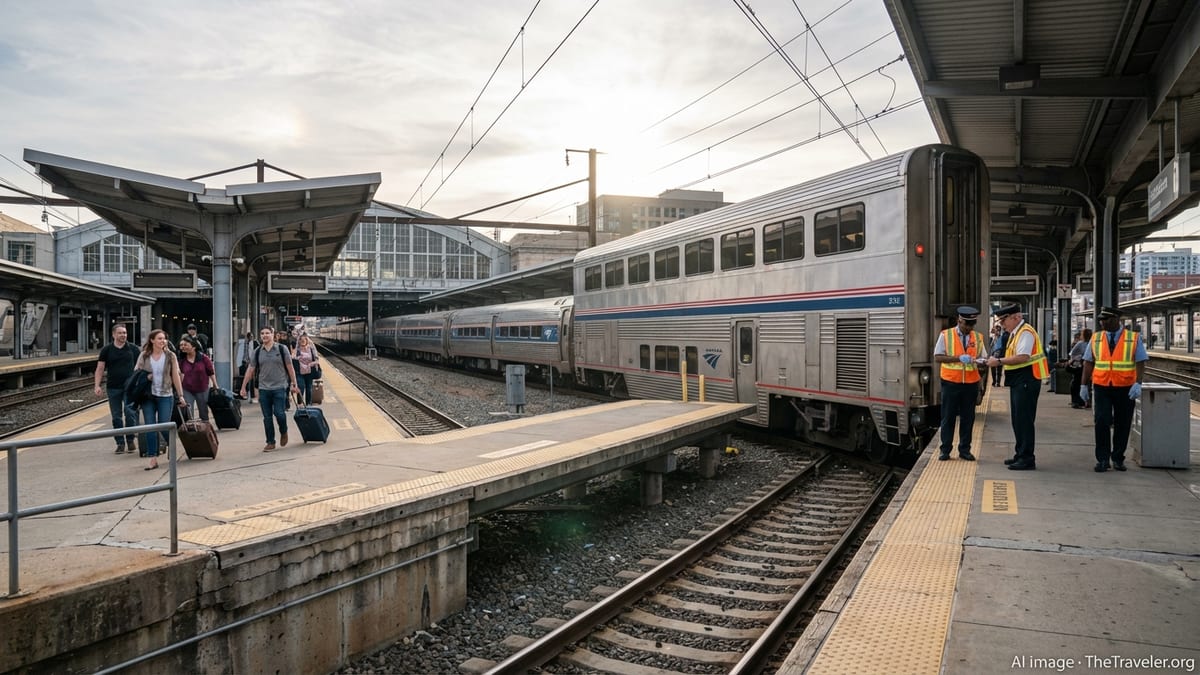
Emergency Rail Link Connects Kashmir Valley With Katra Hub
The Budgam–Katra special train is being operated as an additional service on the Jammu Udhampur Srinagar Baramulla Railway Link, using the newly completed cross-Himalayan alignment that connects the Kashmir Valley with the rest of India. Publicly available information indicates that the service is designed to move passengers directly from Budgam, near Srinagar, to Shri Mata Vaishno Devi Katra, one of the network’s busiest junctions for both pilgrims and long-distance travelers.
The move follows several periods of severe disruption in Jammu and Kashmir when landslides, heavy rainfall, and security-related restrictions have repeatedly affected the Srinagar–Jammu highway. In previous instances, rail operators on this corridor have turned to special trains between Katra and interior valley stations to ferry tourists, migrant workers, and local residents who would otherwise be stuck for days.
By linking Budgam with Katra in a single reserved service, the current special operation allows passengers from the Kashmir Valley to bypass unstable highway sections and avoid complex multimodal transfers. Once in Katra, travelers can connect with long-distance trains to Delhi, Mumbai, the south and west of India, or continue their journeys by road to nearby districts.
Reports indicate that the train is composed of standard reserved coaches, giving stranded passengers access to confirmed seating rather than relying solely on limited unreserved capacity or last-minute bus arrangements during a period of heightened demand.
Stranded Tourists and Residents Gain a Practical Escape Route
The announcement of the Budgam–Katra special service comes at a time when large numbers of visitors and local residents have been seeking a reliable way out of the valley. Weather-related highway closures and the knock-on impact on bus and taxi operations have left many travelers facing long delays, particularly those with onward flight or train bookings from major mainland cities.
According to published coverage, earlier disruption episodes in the region prompted Indian Railways to operate temporary trains from Katra and Jammu to help stranded passengers connect with the national rail grid. The Budgam–Katra special follows this pattern, but goes a step further by originating inside the valley, closer to where travelers are concentrated after their plans are interrupted.
Travel industry observers note that the special train is particularly valuable for families, elderly passengers, and solo travelers who may find it difficult to endure long, uncertain road journeys through mountain passes. Rail evacuation offers a more predictable schedule, controlled boarding environment, and access to basic onboard facilities, all of which can ease pressure on local accommodation and transport in affected districts.
Tour operators based in Srinagar and surrounding areas have been advising clients to treat the Budgam–Katra special as a primary exit option for the duration of the disruption window, especially for those with fixed departure dates from major cities further south.
Operational Details and Connectivity Along the Route
While exact operating days and timings of the Budgam–Katra special may vary depending on conditions, the train is being routed over key new infrastructure that has recently come into full use on the Jammu–Kashmir rail link. This includes long tunnels and high bridges that allow trains to maintain relatively stable running times even when parallel highway sections are affected by landslides or heavy rain.
The service links important intermediate stations in the valley and across the Pir Panjal, providing boarding options for passengers from multiple districts rather than concentrating all demand at a single terminal. Public information suggests that the special train’s stops are being aligned with areas that have seen significant numbers of travelers accumulate after tour cancellations and delayed bus services.
Upon arrival in Katra, passengers can transfer directly to a dense network of express and mail trains serving major metros and smaller cities across India. Katra’s rail terminal, which normally handles millions of pilgrims bound for the Vaishno Devi shrine each year, is equipped with multiple platforms, waiting areas, and ticketing facilities that can be repurposed to manage the surge of stranded travelers.
Railway planners have historically relied on Katra as a high-capacity interchange point during emergencies in Jammu and Kashmir, reflecting its stronger infrastructure and better ability to absorb short-notice special services compared with smaller regional stations.
Tourism and Pilgrimage Sectors Watch Rail Response Closely
The introduction of the Budgam–Katra special train is also being closely watched by tourism stakeholders and pilgrimage organizers, who depend on a perception of basic reliability in the region’s transport network. Repeated highway closures and sporadic flight cancellations have raised concerns among hotel operators, guides, and travel agencies that rely on predictable arrivals and departures.
Rail connectivity has increasingly been framed in public discussions as a stabilizing factor for Jammu and Kashmir’s visitor economy. By providing an alternative when roads or air links are disrupted, special trains can reduce the length of stay for stranded travelers who might otherwise occupy hotel rooms needed for incoming guests, while also minimizing financial losses associated with missed onward connections.
For religious tourism centered on the Vaishno Devi shrine and other regional pilgrimage sites, the Budgam–Katra link underscores Katra’s role as a critical hub connecting the plains of north India with mountain destinations. Observers note that the ability to move pilgrims and tourists quickly between the valley and Katra during crises may help maintain confidence in future travel planning.
Travel trade bodies are expected to monitor passenger volumes and overall reliability of the special service, seeing it as a practical test of how effectively the completed rail corridor can respond to real-world disruptions beyond its regular timetable.
What Passengers Should Know Before Boarding
Public information on recent special services in Jammu and Kashmir suggests that passengers planning to use the Budgam–Katra train should be prepared for evolving operational details. Seat availability, reservation rules, and exact departure times can change at short notice when services are organized as an emergency measure rather than as a permanent timetable feature.
Travel planners recommend that passengers keep flexible schedules where possible and allow generous buffers for onward connections from Katra or beyond. Given the high demand during disruption periods, travelers are also encouraged to arrive at stations well in advance of departure to complete formalities and locate their coaches without added stress.
For visitors unfamiliar with the region, the Budgam–Katra special train offers a relatively straightforward route out of the valley compared with assembling a series of buses, shared taxis, and connecting trains over mountain highways. By consolidating the journey into a single reserved rail leg, the service can help restore a sense of control and predictability for those eager to return home or continue their India itineraries.
As Jammu and Kashmir continues to integrate its new rail infrastructure into regular operations, the Budgam–Katra special stands out as a clear example of how the corridor can be used dynamically to protect travelers from the worst impacts of sudden weather or security-related disruptions.