


More news on this day
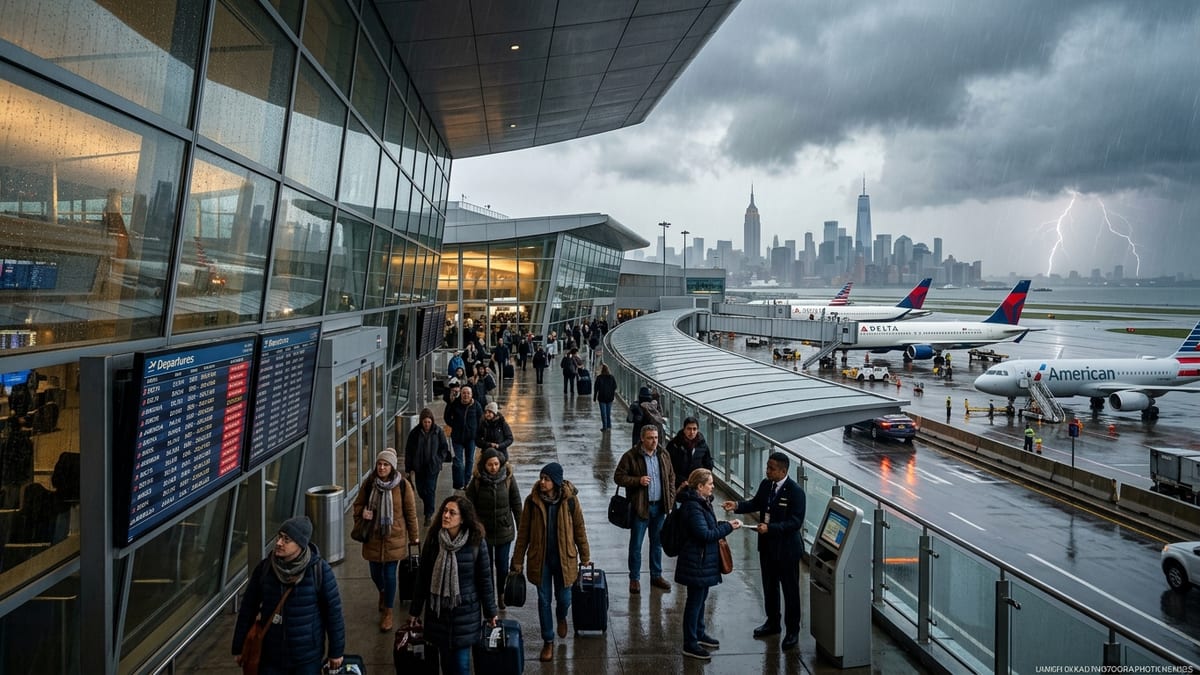
Major U.S. airlines including Delta, American, United and Southwest have introduced limited-time travel waivers for Thanksgiving Day, allowing many passengers booked on Thursday flights through storm‑threatened East Coast airports to change plans without standard fees as forecasters warn of heavy rain, strong winds and possible disruptions.
Get the latest news straight to your inbox!
Storm forecast triggers flexible policies along the East Coast
The waivers now in place are a response to a coastal storm expected to bring heavy rain, strong winds and coastal flooding to parts of the Mid‑Atlantic and Northeast on Thursday 26 November 2026, one of the busiest air travel days of the year. Forecasts from the National Weather Service and regional briefings describe a powerful system moving up the Eastern Seaboard, with some areas bracing for wind gusts that could approach 60 miles per hour. These conditions raise the risk of low‑visibility approaches, crosswinds on runways and potential ground stops at major hubs, especially around New York, Boston and other coastal airports.
While the exact number of flights that will be delayed or canceled remains uncertain, both government and industry forecasts had already highlighted the Thanksgiving period as exceptionally busy before the storm threat emerged. The Federal Aviation Administration has projected more than 417,000 flights across the United States over the broader nine‑day holiday period, and AAA expects about 81.5 million Americans to travel at least 50 miles from home between Tuesday 24 November and Monday 30 November 2026. That backdrop means even localized weather‑related slowdowns in the Northeast could create wider knock‑on effects for travelers passing through the region on connecting itineraries.
The storm arrives shortly after a series of technology glitches and operational disruptions, including a Delta automation system issue and a recent nationwide air traffic control outage, which had already strained airline networks and traveler confidence. While those problems have largely been resolved, the combination of high Thanksgiving volumes and new weather threats has led carriers to emphasize flexibility, encouraging passengers with nonessential Thanksgiving Day travel to move flights away from the peak of the storm.
Which airlines have Thanksgiving waivers in place and where they apply
Delta Air Lines has issued a “Northeast Weather Flexibility” waiver covering travel on Thursday 26 November to, from or through nine major East Coast airports. The affected list includes Boston Logan, New York’s John F. Kennedy and LaGuardia, Newark Liberty, Philadelphia, Baltimore/Washington, and several additional Northeast gateways. Passengers with qualifying tickets for that date may change to alternative flights without a change fee, and in many cases without paying a fare difference if they travel in the same cabin by Saturday 28 November. Delta’s advisory specifies that the policy applies to all fare categories, including basic economy, when booked by the cutoff date noted in the waiver.
American Airlines has introduced a similar Thanksgiving Day travel alert covering many of the same Northeast airports, also focused on itineraries scheduled for Thursday. Under American’s policy, customers who bought tickets by 23 November and are due to travel on 26 November can rebook once without a change fee for travel between 23 and 29 November, provided they keep the same origin and destination and same cabin. Fare differences may still apply in some cases, but the fee waiver removes a significant cost barrier for passengers seeking to avoid the worst of the storm. American’s alert is structured as a weather‑related exception and is separate from the broader travel flexibility it offered around this month’s earlier nationwide air traffic disruption.
United Airlines has posted at least two waivers tied to Thursday’s conditions: one for a Northeast coastal storm affecting several East Coast airports on 26 November, and another for winter weather around St. Louis on the same date. Automated notices summarizing United’s waivers indicate that eligible customers can switch to other United flights departing within a specified window, typically without a change fee and sometimes without a fare difference if they move to nearby dates. United has also recently issued a separate waiver for San Francisco area flooding on 25 November, underlining how multiple regional weather systems could complicate travel during the holiday period.
Southwest Airlines has joined the other major carriers with its own Thanksgiving waiver, focused on roughly half a dozen East Coast airports where the storm could disrupt operations. The airline’s advisories, summarized in regional media reports, state that affected customers scheduled to travel on 26 November may change to other flights within a defined period, in some cases up to 14 days from the original date, without paying a fare difference. Because Southwest does not charge traditional change fees in normal circumstances, the most significant benefit for travelers lies in the temporary waiving of fare differences on alternative flights within the permitted window.
How the waivers work and what passengers can change for free
Although details vary by airline, the Thanksgiving waivers share several common features that determine which passengers benefit. First, most are limited to tickets issued by a specific date, often 23 or 24 November, and apply only to travel on Thursday 26 November. Customers who purchase new tickets after an airline publishes its waiver generally do not receive the same level of flexibility, although they may still be able to change flights under each carrier’s standard, post‑pandemic no‑change‑fee policies for many domestic fares.
Second, nearly all carriers restrict free changes to itineraries that keep the same origin and destination airports. That means a traveler booked from Boston to Orlando on Thanksgiving Day can typically move their trip to an earlier or later date in the waiver window, but not switch instead to a different city such as Tampa without potentially triggering added costs. Many waivers also require that rebooked flights occur within a relatively short period, often between 23 and 29 November or by 28 November, and that travelers remain in the same cabin or fare type to avoid fare differences. These time‑bound restrictions are meant to concentrate flexibility around the days when weather‑related disruption is most likely.
Third, the waivers do not typically create new obligations for airlines to cover incidental costs such as hotel stays, meals or ground transportation when delays or cancellations are caused by weather, which U.S. carriers classify as outside their control. Government guidance and airline customer service dashboards make clear that compensation rules differ sharply between controllable events, such as crew or maintenance issues, and uncontrollable ones like storms. The current Thanksgiving weather waivers are best understood as a way to move passengers away from a high‑risk day rather than as a guarantee of vouchers or reimbursements if operations are affected.
Finally, carriers emphasize that standard refund rules remain in place. If an airline cancels a flight altogether and the passenger chooses not to accept an alternative, U.S. Department of Transportation policy requires that they be offered a refund of the unused portion of their ticket, regardless of whether the disruption stems from weather. By contrast, a voluntary change under a waiver, where the original flight still operates but the traveler opts to move, usually results in a free rebooking rather than a refund. Passengers who want the option to cancel entirely may need to rely on refundable tickets, separate travel insurance or credit card protections.
Interaction with recent system glitches and broader Thanksgiving demand
The Thanksgiving waivers are being layered on top of a system that has already seen heightened stress this month. Earlier in November, a nationwide air traffic control systems issue triggered a temporary ground stop and led several airlines, including United, to publish special waivers so passengers could reschedule disrupted trips. More recently, on Sunday 22 November, Delta experienced an automated weight‑and‑balance system malfunction that delayed more than 1,000 flights, creating backlogs at some of its hubs just as Thanksgiving travel volumes began to ramp up.
Most airlines now report that they have largely recovered from those technology‑driven disruptions, and there is no current nationwide ground stop in effect. However, residual effects such as crew and aircraft being out of position can make networks more vulnerable to fresh problems if a major storm forces widespread rerouting or holding patterns. Aviation analysts and government briefings have pointed out that tightly scheduled holiday operations leave little margin when multiple strains, including weather and earlier system issues, coincide. By allowing passengers with flexible plans to move voluntarily off the peak storm period, carriers hope to create extra slack that could help them manage any necessary day‑of‑travel adjustments.
The broader demand picture for Thanksgiving 2026 also complicates how the waivers will play out. FAA and travel industry forecasts indicate that while overall Thanksgiving air passenger numbers may be slightly below some pre‑pandemic records, they remain very high by historical standards, with dense schedules into major hubs such as New York, Boston, Washington and Chicago. High load factors reduce the number of spare seats available to rebook stranded passengers if weather forces cancellations, especially later on Thanksgiving Day when many travelers aim to arrive by evening. As a result, taking advantage of waiver‑enabled changes earlier in the week may yield more options than waiting to see whether a specific flight is disrupted.
There is also a geographic imbalance in the risks that travelers face. While the current waivers center on the Northeast and selected Midwest and West Coast weather events, large portions of the country are forecast to see relatively benign conditions. Passengers flying entirely within regions expecting calm weather may not see significant disruption, and most airlines have not extended Thanksgiving waivers systemwide. That means some travelers will experience a largely routine holiday, while others passing through storm‑sensitive corridors could encounter lengthy delays despite the waivers being available in advance.
What Thanksgiving travelers should check next
For passengers flying on Thursday 26 November or on adjacent days, the most immediate step is to confirm whether their itinerary touches any airports included in the newly issued waivers. Airline websites and mobile apps maintain dedicated travel alerts pages that list eligible origin and destination cities and spell out cut‑off dates, booking windows and rules on fare differences. Because each waiver is narrowly written, travelers should not assume that all East Coast flights are covered or that every Thursday ticket can be changed without cost. Verifying the exact terms for a specific carrier and route is essential before making changes.
Next, travelers who have some flexibility in their plans may want to consider moving flights away from the expected peak of the storm, especially if they are scheduled to depart late on Thanksgiving Day through the most exposed coastal airports. Rebooking to earlier in the week, to early Thursday morning before conditions deteriorate in some areas, or to Friday once winds and rainfall begin to ease may all reduce the risk of long delays. Passengers using waivers should complete any voluntary changes as soon as possible, because alternative flights during the holiday period are limited and popular departure times can sell out quickly even before disruption hits.
Finally, those who decide to keep their original Thanksgiving flights should prepare for the possibility of slower journeys. That can include allowing extra time to reach the airport in wet and windy conditions, monitoring airline and airport notifications closely, and understanding what their specific carrier will and will not provide if weather forces extended delays. Travelers connecting through multiple hubs should pay particular attention to minimum connection times, as even modest inbound delays can cause missed onward flights when airports are busy. With the waivers now in effect but not universal, the next 24 to 48 hours will be critical for passengers to align their Thanksgiving travel plans with the latest forecasts and airline policies.