


ABBA The Museum is one of Stockholm’s most popular attractions, especially for music lovers planning a trip to Sweden. Because it uses timed tickets and seasonal opening hours, it pays to understand how admission works before you arrive on Djurgården. This guide walks you through current 2026 ticket prices, opening times, how to buy and use your tickets, and practical visitor tips based on recent on-the-ground information.
Get the latest updates straight to your inbox!
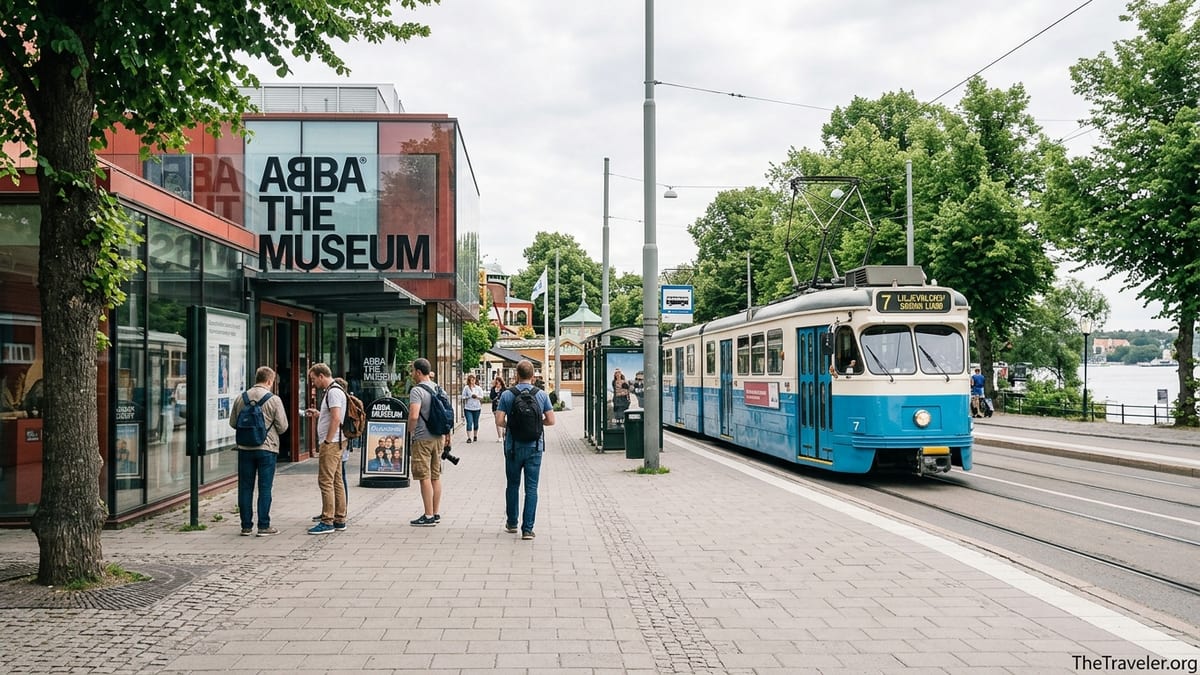
Where ABBA The Museum Is and Why Planning Ahead Matters
ABBA The Museum sits on Djurgårdsvägen 68 on the island of Djurgården, just east of central Stockholm. The island is packed with big-name sights like the Vasa Museum, Skansen open-air museum and Gröna Lund amusement park, so crowds build up quickly on weekends and in summer. For that reason, ABBA The Museum sells nearly all its tickets in timed entry slots, and many of the most popular times sell out in advance, particularly mid-morning and mid-afternoon in June, July and early August.
Travelers who arrive without a ticket on a busy day are often told to book a later time slot or come back another day. That can be frustrating if you only have 24 hours in the city and planned to combine the museum with a walk through Gamla Stan or a visit to the Vasa Museum. Booking ahead gives you a fixed entry time to plan around, making it easier to slot in a Djurgården ferry ride, a stroll along Strandvägen, or dinner back in Södermalm afterward.
The museum itself is fully indoors and largely weather-proof, but because Djurgården is so scenic, many visitors choose to walk along the water or sit in nearby cafés before or after their visit. With a pre-booked ticket and a clear understanding of opening hours, you can time your visit to avoid peak crowds and still enjoy the island at a relaxed pace.
ABBA Museum Ticket Types and 2026 Price Ranges
ABBA The Museum publishes ticket prices in Swedish kronor and uses dynamic pricing, so exact amounts vary by date and time. For 2026, the official price bands show adult tickets ranging roughly from 249 to 329 SEK depending on the period and time slot. Families can book a bundled family ticket, typically priced in the range of about 549 to 749 SEK for two adults and one or two children aged 7 to 15. Children under 7 usually enter free with an adult, while older kids and teenagers have their own reduced child ticket category.
There are also discounted tickets for students and seniors. In 2026 these categories are listed in a similar banded range to adults, roughly around 219 to 279 SEK, which can make a noticeable difference if you are traveling on a budget or visiting with grandparents. Students must present a valid student ID, and this applies regardless of the country the student is from, so a university card from the United States, Germany or Japan is normally accepted if it clearly shows student status.
As with most Stockholm attractions, ticket prices are higher in high season and on popular days. A Friday afternoon in July is likely to sit at the top of the price band, while a Monday morning in late January may be near the bottom. Travelers occasionally find slightly cheaper combination or reseller tickets with audio guides or small group tours included, but these should always be checked carefully to ensure they are for the correct date and a specific time slot. When comparing, remember that prices shown in euros or US dollars are usually based on the day’s exchange rate and might be rounded up.
ABBA The Museum still offers free admission for younger children, which can be a significant saving for families with several kids under 7. If you are a mixed group of adults and teens, it is worth checking whether a family ticket works out cheaper than buying each ticket separately, particularly if you are visiting in summer when individual prices are at their highest.
Opening Hours in 2026 and Best Times to Visit
ABBA The Museum runs seasonal hours that change throughout the year. For the first months of 2026, from January through late April, published hours show the museum typically opening at 10:00 and closing at 18:00 every day of the week. In the high summer period, from early June to mid-August, hours extend, with the museum commonly open from 09:00 to 20:00 daily. In shoulder seasons, such as May and September, hours usually sit somewhere between these extremes, often with a 10:00 opening and slightly earlier closing than in peak summer.
Because these hours can be adjusted for holidays, private events or special evening openings, it is wise to recheck the exact schedule for your visit dates shortly before traveling. For example, some years see extra-long hours around major Swedish holiday weekends, while on a handful of days the museum may close early for a private function. Visitors who turn up late in the day sometimes discover that last entry is set earlier than the posted closing time, so aiming to arrive at least two hours before closing is a good rule of thumb if you like to linger.
The busiest hours are usually late morning and mid-afternoon, especially between 11:00 and 15:00 on Saturdays and Sundays and on weekdays during school holidays. If you want more space at the interactive exhibits, it is worth booking one of the first time slots of the day, or a late afternoon or early evening slot when the museum stays open until 20:00 in summer. Travelers who have visited recently often report that a 09:00 or 10:00 entry time in July feels significantly calmer than noon or 14:00.
Winter visitors benefit from quieter galleries, but the trade-off is shorter natural daylight outside. In January or February, it can be pleasant to plan a late morning visit, grab lunch in the on-site café, and then combine the museum with another indoor attraction on Djurgården. With a clear sense of seasonal hours, you can sequence your day around public transport timetables and still make time for a ferry ride back to the city as the lights come on.
How to Buy Tickets and Manage Your Booking
The simplest way to secure ABBA The Museum tickets is to purchase them online directly before your trip. Online sales let you choose an exact date and a timed entry slot, which then appears on your confirmation. Many travelers buy their tickets a few weeks ahead for high season dates, then use the confirmation to build the rest of their Stockholm itinerary. Because the museum uses timed entry, you are expected to arrive within the window shown on your ticket, although staff are often flexible by a few minutes if you are delayed on the tram.
After booking, your confirmation email includes a booking reference and a link to manage your reservation. If your plans change, the museum allows you to modify the date or time of your visit up to 24 hours before your booked time. The standard process is to cancel your original order through the manage-booking link and then purchase a new ticket for your preferred slot. This process is particularly useful if a rainy forecast suddenly improves and you decide to swap your ABBA visit with a day out in the archipelago instead.
Some travelers prefer to buy tickets as part of a wider sightseeing package, such as a Stockholm pass or a bundled walking tour and museum entry. These options can be useful if you want a guided orientation or already plan to visit multiple paid attractions, but it is important to check whether the ABBA ticket is truly a timed reservation or just a voucher that must be exchanged on arrival. Experiences show that visitors who believe they have a guaranteed entry time through a reseller sometimes still need to wait in a separate queue to scan or swap documentation.
If you leave buying tickets to the last minute, you can try booking on your phone on the same day, as long as time slots remain. On quieter winter weekdays, this can work well, allowing you to pick a time after checking how you feel that morning. In July and early August, however, it is unwise to rely on same-day availability, especially for groups or families who want to enter together. In that period, choosing and paying for your slot several days in advance is the more reliable strategy.
Getting to ABBA The Museum: Trams, Ferries and Walking Routes
ABBA The Museum is easy to reach from central Stockholm using public transport. The most straightforward option for many visitors is tram line 7, which runs from central stops such as Kungsträdgården and Sergels torg out to Djurgården. You get off at the stop called Liljevalchs/Gröna Lund, from which it is just a short walk to the museum entrance. The tram usually runs every few minutes during the day, and the journey from central Stockholm typically takes around 10 to 15 minutes, passing attractive waterfront views along Strandvägen.
Bus 67 is another common choice, connecting areas like Odenplan and Karlaplan with Djurgården. If you are staying in a neighborhood north of the city center, this bus can be more convenient than doubling back to the tram line. For a more scenic route, many visitors opt for the Djurgården ferry from Slussen in the old town. This short boat ride offers expansive views of the city skyline and drops you near Gröna Lund and the Vasa Museum, only a few minutes’ walk from ABBA The Museum. It is a particularly enjoyable way to arrive on a clear summer morning or return to the city in the evening as the sun sets over the harbor.
Public transport in Stockholm is managed by SL, and most visitors today simply tap a contactless bank card on the yellow card readers to pay for tram, bus or ferry rides. You can also buy day or multi-day travelcards if you expect to ride frequently. These tickets are valid on the tram to Djurgården and the main commuter ferries serving central attractions. Because ticket inspections are common, it is important to ensure that everyone in your group has tapped in or holds a valid travelcard. If you prefer to walk, you can reach the museum on foot from the city center in around 30 to 40 minutes, following the waterside promenade along Strandvägen before crossing onto Djurgården.
Taxi or ride-hailing services are widely available, but given Stockholm’s efficient public transport and the museum’s central location, most travelers find trams or ferries simpler and better value. There is only limited parking on Djurgården, and museum staff generally encourage visitors to use public transport instead. For wheelchair users and travelers with reduced mobility, tram 7 and the Djurgården ferries offer step-free options, and the walk from the stop or pier to the museum entrance is short and relatively flat.
What to Expect Inside: Visit Duration and On-site Facilities
ABBA The Museum describes itself as an interactive experience rather than a traditional museum, and most visitors spend between 1.5 and 3 hours inside. Exhibits combine original costumes, instruments and memorabilia with audio-visual installations and hands-on activities. A popular feature is the audio guide, which many recent visitors recommend taking, as it is often narrated by ABBA members themselves and adds context and personal anecdotes to the displays. If you are a dedicated fan, allowing at least two hours is realistic, especially if you plan to try the karaoke booths or virtual performance stage.
The museum is designed to appeal to a broad audience, including visitors who may not be lifelong ABBA fans. Parents often report that children enjoy the interactive elements, from dance floors and mixing desks to costumes and photo opportunities. The narrative also touches on Sweden’s wider music industry, which helps place ABBA in a broader cultural context and may engage travelers who came for a general Stockholm city break rather than solely for the band. If you are visiting in a mixed group, it can help to set expectations in advance, explaining that the experience is closer to a themed attraction than a quiet gallery.
On-site facilities include a café serving light meals, snacks and drinks, which is convenient if you plan to combine your visit with nearby museums and do not want to leave Djurgården for lunch. There is also a museum shop stocked with themed souvenirs ranging from T-shirts and vinyl records to more subtle design items and Swedish music gifts. Some travelers like to stop by the shop even on days when they are not visiting the museum, so it is worth checking locally whether access to the shop is possible without a ticket on the day you visit.
Photography is generally allowed in most areas, but flash and tripods may be restricted. Because many exhibits involve sound, lighting and moving images, sensitive visitors might want to bring earplugs or take short breaks in quieter sections. The museum provides restrooms and seating areas throughout, which can be useful if you are visiting with older relatives or young children.
Accessibility, Families and Practical Tips
ABBA The Museum is housed in a modern building with lifts to all public floors, and recent accessibility reviews describe it as navigable for wheelchair users and visitors with mobility challenges. The entrance area and main pathways are step-free, and the distance from the nearest tram stop is short. For many disabled visitors, tram 7 and bus 67 provide reliable access, and both are part of Stockholm’s broader accessible public transport network. Visitors who require assistance may find it useful to contact the museum in advance to confirm any current policies on companion tickets or specific arrangements.
For families, the museum can be a highlight of a Stockholm trip, but a few practical steps help the day go smoothly. Booking an early time slot usually means fewer crowds, which can make it easier to keep an eye on children at interactive exhibits. Because the museum is largely indoors and climate-controlled, it is a good option for days when the weather is unsettled. Strollers are commonly seen inside, and staff are used to families coming straight from the Vasa Museum, Skansen or the nearby amusement park with children of different ages.
Travelers who are sensitive to crowds may prefer visiting outside Swedish school holidays and major event weekends. Winter and early spring weekdays are typically calmer, and even in high season, a late afternoon entry often feels less busy than midday. If you know you like to take your time, choose a slot that gives you at least two hours before closing, so you do not feel rushed through the final sections or the shop.
A final practical tip is to check local payment norms. In Stockholm, card and contactless payments are standard, and many venues are effectively cashless. It is safe to assume that both the ticket office and the café expect payment by card or digital wallet. This makes things straightforward for overseas visitors, but it is still wise to notify your bank of your travel dates in case of fraud alerts on foreign transactions.
The Takeaway
For many visitors to Stockholm, ABBA The Museum is more than just another attraction on Djurgården. It is a chance to step into a carefully curated world of Swedish pop history, set in a neighborhood that also hosts some of the city’s best-known museums and family activities. With timed tickets, seasonal opening hours and high demand in summer, a little planning can make the difference between a rushed visit and a relaxed, memorable experience.
If you know your travel dates, reserving tickets online for a specific time slot, noting the current 2026 opening hours, and deciding on your preferred way to travel out to Djurgården will let you fit ABBA The Museum neatly into your broader Stockholm itinerary. Whether you arrive by tram 7 past the waterfront, glide in on the Djurgården ferry from Slussen, or walk along Strandvägen under the evening light, the museum rewards visitors who give themselves enough time to explore, listen and, if they wish, sing along.
FAQ
Q1. How much do ABBA The Museum tickets cost in 2026?
Adult tickets in 2026 generally fall in a band of about 249 to 329 SEK depending on the date and time, with discounted rates for children, students and seniors. Family tickets for two adults and one or two children are usually priced in a higher but still bundled range that can be better value than buying individual tickets.
Q2. Do I need to book ABBA The Museum tickets in advance?
Advance booking is strongly recommended, especially from June to August and on weekends. The museum uses timed entry slots that often sell out, so purchasing tickets online before you travel gives you a guaranteed entry time and helps you avoid waiting for a later opening.
Q3. How long should I plan for a visit to ABBA The Museum?
Most visitors spend between 1.5 and 3 hours inside, depending on how many interactive exhibits they try and whether they use the audio guide. Dedicated fans or families who like to linger in each room should allow at least two hours, plus a little extra time for the café and shop.
Q4. What are the opening hours at ABBA The Museum in 2026?
Opening hours vary by season. In early 2026, typical hours are 10:00 to 18:00 daily, while in peak summer from early June to mid-August the museum commonly opens from 09:00 to 20:00. It is important to recheck exact hours for your travel dates in case of special events or holiday adjustments.
Q5. Is the ABBA Museum included in city passes or combo tickets?
ABBA The Museum is sometimes offered through sightseeing passes or third-party tour packages, occasionally combined with city walks or boat trips. However, inclusion and conditions change over time, so you should always verify whether your pass provides a specific time slot reservation or only a general voucher that still requires separate booking.
Q6. What is the best way to get to ABBA The Museum from central Stockholm?
The most direct options are tram line 7 to the Liljevalchs/Gröna Lund stop or the Djurgården ferry from Slussen in the old town. Both drop you a short walk from the museum entrance. Many visitors also enjoy walking along Strandvägen from central Stockholm, which takes around 30 to 40 minutes at a relaxed pace.
Q7. Is ABBA The Museum suitable for children?
Yes, the museum is generally very family-friendly, with interactive exhibits, music, and visual displays that appeal to children as well as adults. Younger kids may move through some sections quickly, while teenagers who know the songs or enjoy music history often stay longer, especially if they try the karaoke and performance areas.
Q8. Is the museum accessible for wheelchair users and visitors with limited mobility?
ABBA The Museum has lifts to all public floors and step-free access from the entrance, and recent visitor reports describe it as wheelchair accessible. The tram and bus services to Djurgården are also part of Stockholm’s accessible public transport network, but it is still sensible to contact the museum ahead of your visit if you have specific accessibility questions.
Q9. Can I change the date or time of my ticket after booking?
If your plans change, you can usually modify your reservation up to 24 hours before your booked time. The common procedure is to cancel the original order using the manage-booking link in your confirmation email and then purchase new tickets for your preferred date and time slot.
Q10. Are photos allowed inside ABBA The Museum?
Photography is allowed in most areas for personal use, although flash and tripods may be restricted in some spaces. Because many exhibits involve screens, lighting and music, it is courteous to be mindful of other visitors when taking pictures and to check any posted signs near individual installations.