


More news on this day
Mexico is poised to deepen its role as a global travel crossroads in 2027, as Aeroméxico prepares a wave of new long haul and regional routes that tighten connections between North America, Europe and the Caribbean while opening fresh gateways into the country’s interior.
Get the latest news straight to your inbox!
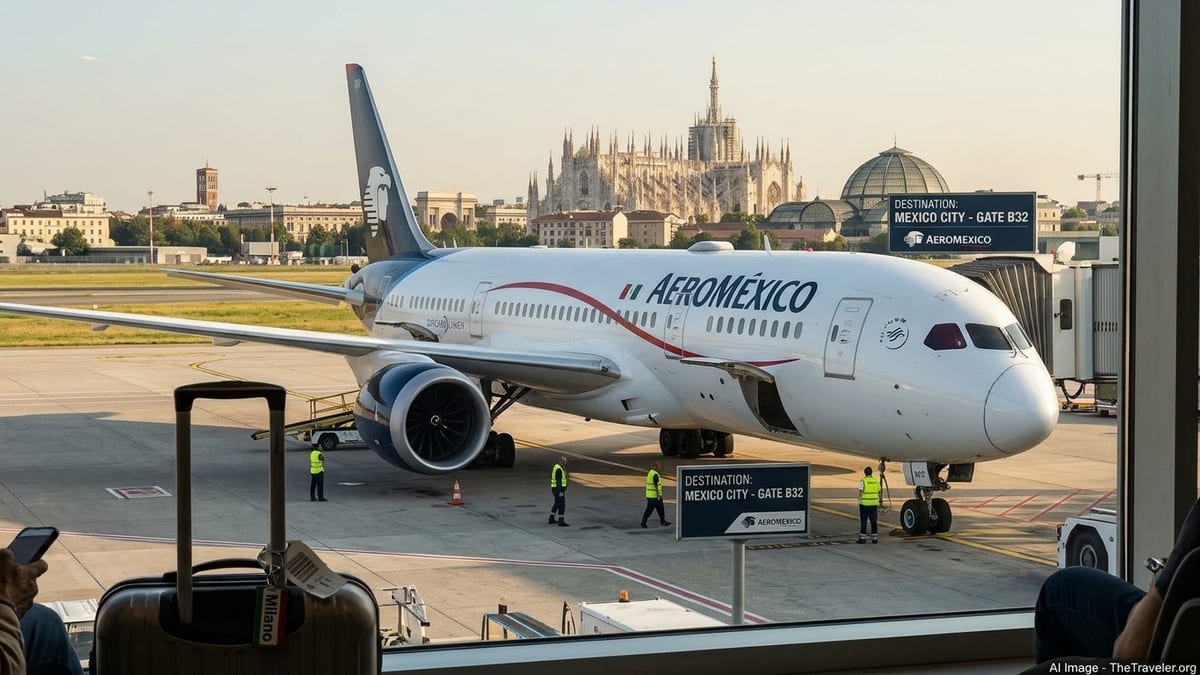
Strategic 2027 Expansion Links Mexico More Closely With Europe
Aeroméxico’s most visible moves for 2027 are in transatlantic markets, where new routes will give European travelers more direct options into Mexico beyond the traditional Mexico City corridor. Publicly available schedules show that a new nonstop service between Mexico City and Milan Malpensa is planned to begin on March 28, 2027, operating four times weekly with Boeing 787 Dreamliner aircraft. Aviation industry coverage indicates that this will be Aeroméxico’s second Italian destination from Mexico City, complementing existing service to Rome and reinforcing Milan’s status as a fashion and business gateway.
At the same time, Guadalajara, Mexico’s second largest metropolitan area, is preparing for its own direct link to continental Europe. Information published on airport and industry platforms shows that Aeroméxico will inaugurate a Guadalajara to Paris Charles de Gaulle route on April 13, 2027, with three weekly flights. This new link is expected to plug western Mexico directly into one of Europe’s primary long haul hubs, facilitating onward connections to regions such as Africa, the Middle East and Asia through SkyTeam partners.
These additions build on a broader trend of international growth highlighted in Aeroméxico’s recent financial and environmental reports, which underline a strategic focus on long haul connectivity and a growing share of capacity deployed on overseas routes. Company filings describe a fleet plan centered on Boeing 787 and 737 MAX aircraft, positioning the airline to add more medium and long haul sectors with improved fuel efficiency.
Caribbean Gateways Showcase Mexico’s Regional Reach
Beyond Europe, Aeroméxico is also using 2027 to deepen its footprint in the Caribbean, a region where tourism flows increasingly move in both directions. According to specialized aviation outlets, the airline intends to launch new routes from Mexico City to Montego Bay in Jamaica on March 18, 2027, followed the next day by a new service to Nassau in the Bahamas. These flights expand Mexico’s role as a regional connector, allowing travelers from Europe, the United States and South America to reach Caribbean islands via a Mexico City transfer.
Industry analysis notes that Aeroméxico has already grown capacity strongly in Central America and the Caribbean in recent years, and these additional routes appear to be a continuation of that strategy. By pairing the Caribbean islands with its expanding European network, the airline is effectively building more multi stop itineraries that pass through Mexican hubs, increasing visitor flows through the country’s airports even when Mexico is not the final destination.
For Caribbean destinations, the new routes also diversify source markets beyond traditional gateways in Florida and the U.S. Northeast. Mexico City’s high number of long haul connections means travelers from cities such as Madrid, Rome or Milan may find it more convenient to connect through Mexico en route to Jamaica or the Bahamas, further embedding Mexican airports in the regional tourism value chain.
New U.S. Routes Highlight Strong Cross Border Demand
The most immediate beneficiaries of Aeroméxico’s 2027 expansion are several U.S. cities gaining or regaining nonstop connectivity to Mexico’s capital. Route filings and airport information show that new flights from Mexico City to Orange County, Fort Lauderdale and Portland are scheduled to enter service in January 2027 using Boeing 737 MAX 8 aircraft, restoring and expanding cross border capacity that was constrained by earlier regulatory limits.
Additional U.S. routes are planned for mid year 2027, underscoring the strength of leisure and visiting friends and relatives demand. According to airport schedules and industry reports, Aeroméxico Connect will begin Mexico City services to Nashville on June 13, 2027 and to New Orleans on June 17, 2027, both operated by Embraer 190 regional jets several times per week. Mexico City to San Juan, Puerto Rico is also listed to start in June 2027, adding a further link between the Mexican capital and the wider U.S. territory network.
These developments follow the lifting of U.S. regulatory restrictions on Mexican carriers and come at a time of robust air travel recovery between the two countries. Coverage in Latin American trade media indicates that Aeroméxico executives have identified the United States as a centerpiece of their growth plan from 2027 onward, with additional destinations under evaluation. The mix of major coastal gateways and secondary hubs such as Nashville reflects a strategy to tap both premium and niche origin markets while increasing feed into Mexico’s domestic and international network.
Fleet Modernization Underpins Growth and Connectivity
Aeroméxico’s ability to open multiple international routes in a single year is closely tied to its evolving fleet and capacity profile. Recent financial disclosures show that as of late 2026 the airline and its affiliates operate around 170 aircraft, primarily Boeing 787 Dreamliners and 737 MAX variants, with an average age just over nine years. Planning documents and annual reports outline expectations to lease several additional aircraft between 2026 and 2027, including new widebody 787s and narrowbody 737 MAX jets.
Industry observers note that this fleet strategy is designed to support both long haul and regional growth while improving fuel efficiency and lowering unit emissions. Environmental and social reporting from the company points to a target of significantly increasing the share of new generation aircraft in the fleet by 2030, aligning expansion with decarbonization objectives. This combination of growth and renewal appears to be enabling Aeroméxico to add thinner long haul routes such as Guadalajara to Paris while maintaining adequate capacity on core transborder and domestic sectors.
Product investments are also part of the equation as Aeroméxico prepares for the next phase of competition on key international corridors. Design and lifestyle media have documented upgrades to the airline’s onboard experience, from redesigned tableware on the Boeing 787 fleet to a refreshed cabin concept and a new business focused economy product expected to roll out from late 2027. These enhancements may help the carrier compete more effectively for high yield passengers on routes like Mexico City to Milan and Guadalajara to Paris, where European and Middle Eastern airlines are active.
Mexico’s Tourism Ambitions Meet Policy Headwinds
The airline’s 2027 route map is unfolding against a complex policy backdrop for Mexican tourism. Government budget proposals for 2027 include an increase in the nonresident visitor fee collected at key destinations in the Mexican Caribbean, a move that hotel associations in the region have warned could dampen spending at a moment when arrival numbers are growing but local economic benefits remain uneven. Economic coverage from Mexican and international media has highlighted industry concerns that higher entry costs may weigh on competitiveness relative to other sun and beach markets.
Despite these debates, demand indicators suggest that Mexico remains among the world’s most visited countries, with international arrivals rebounding strongly in the mid 2020s and airlines steadily rebuilding capacity. Aeroméxico’s new services to Europe, the Caribbean and the United States appear to fit into a broader national objective of using air connectivity to disperse visitors beyond traditional resort zones, drawing more traffic to cities such as Guadalajara and to cultural and business centers reachable via Mexico City.
Analysts tracking the region point out that as long as infrastructure and regulatory conditions remain supportive, airlines can play a central role in smoothing seasonal swings, diversifying source markets and extending travelers’ length of stay. With its 2027 expansion, Aeroméxico is positioning itself as a primary carrier of that growth, turning Mexican hubs into essential waypoints for journeys that increasingly span multiple continents.