


More news on this day
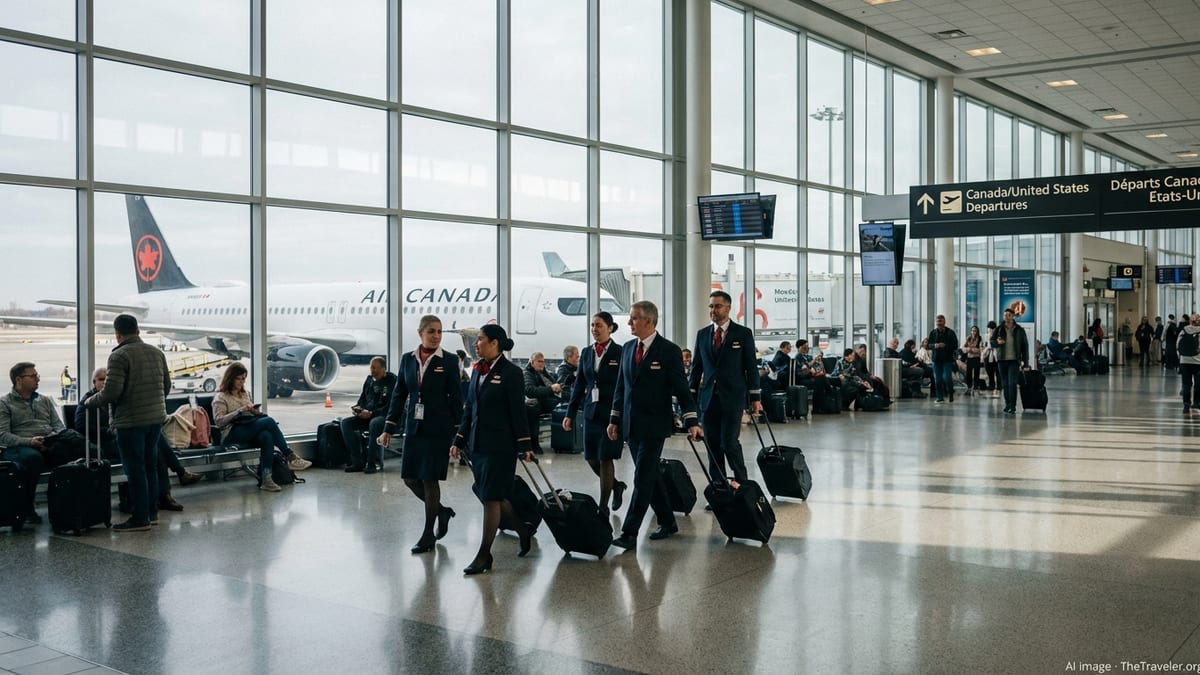
Air Canada is moving quickly to adjust schedules and add seats on key domestic routes as rival WestJet faces the threat of an August 2 walkout by flight attendants, after cabin crew at Canada’s second largest carrier voted 99.4 percent in favour of strike authorization.
Get the latest news straight to your inbox!
Overwhelming Strike Mandate Puts August Travel at Risk
WestJet flight attendants, represented by the Canadian Union of Public Employees, delivered one of the strongest strike mandates in recent Canadian aviation history, with 99.4 percent voting in favour of authorizing a walkout on a turnout of more than 97 percent. Publicly available union updates and industry commentary describe the vote as a clear signal of frustration over wages and unpaid duties performed before and after flights.
The strike authorization allows the union to call job action with 72 hours’ notice once a statutory cooling-off period expires, which places the earliest legal strike date at August 2. That timing coincides with the August long weekend, a peak period for domestic leisure travel across Canada and a critical window for tourism destinations in provinces such as British Columbia, Alberta and Nova Scotia.
Reports indicate that WestJet has already begun trimming parts of its international network and adjusting schedules to avoid having aircraft and crew stranded overseas if a strike proceeds. Online travel forums and social media posts show passengers holding WestJet tickets for the first week of August reviewing their options, including flexible rebooking offers and refunds where available.
Consumer advocates note that under Canada’s Air Passenger Protection Regulations, airlines that cancel flights for reasons within their control must provide rebooking or refunds, but compensation levels vary depending on carrier size and the circumstances of the disruption. The possibility of a large-scale strike has prompted warnings that the practical availability of alternative flights could be limited in peak season, especially on routes with sparse competition.
Air Canada Shifts Capacity to Capture Displaced Demand
Against this backdrop, Air Canada is adjusting its own network, adding seat capacity on select routes where WestJet is a major competitor and where demand is expected to spill over if flights are cancelled or reduced. Airline schedule filings and booking system data show additional frequencies or upgauged aircraft on key city pairs such as Toronto–Calgary, Toronto–Vancouver and Montreal–Calgary over the early August period.
Industry analysis suggests these moves serve a dual purpose. In the short term, they allow Air Canada to capture higher-yield last-minute bookings from WestJet customers forced to switch carriers. In the longer term, they provide an opportunity to reinforce market share on contested routes, at a time when Canada’s domestic market is already undergoing shifts due to expansion by smaller competitors and changes in regional flying.
Analysts note that Air Canada has experience responding to labour disruptions, including its own 2025 flight attendant strike that resulted in widespread cancellations. Since then, the carrier has made repeated references in public filings to building more flexibility into its fleet and crew planning. The current WestJet situation is seen by some observers as a test of how quickly Canada’s flag carrier can pivot capacity in response to external shocks.
However, adding flights or larger aircraft is not without constraints. Pilot and flight attendant availability, airport slot limitations at hubs such as Toronto Pearson and Vancouver, and aircraft maintenance schedules all limit how much extra capacity Air Canada can push into the market on short notice. Travel agents report that while additional seats have appeared on some routes, the most popular departure times are filling rapidly and fares have climbed for early August departures.
Travellers Face Uncertainty Over August Long Weekend Plans
For travellers, the standoff between WestJet and its cabin crew has injected new uncertainty into peak-summer plans. Comments on travel forums and social media indicate that passengers holding WestJet tickets for August 2 and the surrounding days are weighing whether to wait for a possible last-minute settlement or proactively switch carriers while options remain.
Some travel advisers are recommending that passengers with critical trips, such as weddings, cruises or international connections, consider booking fully refundable back-up itineraries on Air Canada or other carriers. In practice, the ability to do so depends on route structure; in Western Canada and some Atlantic markets, WestJet remains a dominant or important player, which can make alternatives scarce and expensive when disruption risk rises.
Package holiday customers face particular complexity. In many cases, packages bundle WestJet flights with hotel stays under a single contract, raising questions about how cancellations or major delays would be handled if a strike occurs. Published guidance from consumer organizations stresses the importance of reading terms and conditions carefully, documenting communication with airlines and tour operators, and understanding the distinction between refunds, credits and rebooked itineraries.
Publicly available coverage also highlights that Canada’s passenger rights framework does not explicitly contemplate large-scale labour disputes in the same way as mechanical issues or weather disruptions. That reality leaves many travellers watching negotiations closely and looking to airlines for voluntary flexibility, such as change-fee waivers or the option to shift travel dates away from the strike window.
Labour Tensions Reflect Wider Industry Pressures
The confrontation at WestJet is unfolding amid a broader reassessment of working conditions in the airline industry, particularly for cabin crew. Flight attendants have increasingly drawn attention to what they describe as unpaid work, including mandatory pre-flight safety checks, boarding, deplaning and turnaround duties that are not always compensated at the same rate as in-flight time.
Commentary in labour publications and aviation industry forums suggests that last year’s Air Canada flight attendant strike, which led to several days of disruption before a settlement was reached, helped set a benchmark for wage and scheduling expectations. The strong strike mandate at WestJet is being interpreted by some analysts as part of a regional trend toward more assertive bargaining by frontline aviation workers after years of pandemic-related upheaval.
At the same time, both major Canadian carriers are operating in an environment of higher costs for fuel, labour and financing, alongside intensified competition from low-cost and regional airlines. Domestic fares remain sensitive for price-conscious travellers, and carriers have limited room to absorb higher wage bills without passing some costs on to customers or adjusting networks.
How WestJet and its flight attendants resolve their dispute may influence future negotiations across the sector, including upcoming talks for other employee groups and at competing airlines. Observers point out that any agreement that substantially improves compensation and work rules could encourage similar demands elsewhere, while a prolonged strike that badly hurts WestJet’s finances might be cited in future as a cautionary example.
What Comes Next for Canada’s Summer Air Travel
As August 2 approaches, attention is focused on whether mediated talks can produce a tentative agreement that averts a walkout or shortens any potential strike. Government-appointed mediators are involved in the process, but the parties remain publicly apart on key issues, and no detailed timetable for further bargaining sessions has been released.
Air Canada’s strategy in the coming days is likely to balance commercial opportunity with operational risk. Adding too much capacity in anticipation of a prolonged WestJet disruption could leave the flag carrier exposed if a last-minute deal restores normal operations, while adding too little could mean missed revenue and frustrated travellers left without alternatives.
For passengers, the advice from travel specialists and consumer advocates is to stay informed through airline notifications, monitor itineraries closely, and prepare contingency plans where feasible. With aircraft loads already high at the height of summer, flexibility on travel dates, departure times and even airports may prove crucial for those seeking to navigate what could be one of the most turbulent holiday weekends for Canadian air travel in recent years.