


More news on this day
Transatlantic travel between Canada and Algeria is entering a new phase as Air Canada withdraws from the Montreal–Algiers market, a move that leaves Algeria’s flag carrier Air Algérie as the sole operator of nonstop flights linking the two capitals.
Get the latest news straight to your inbox!
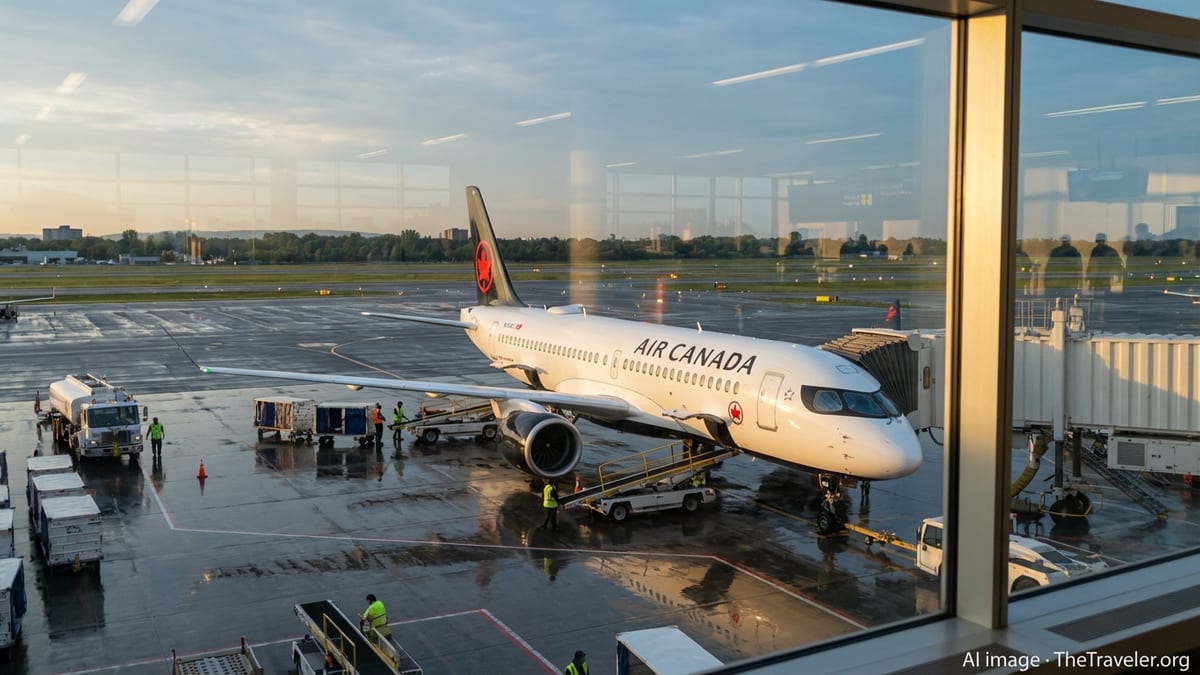
Air Canada Pulls Planned Return to Algiers
Industry schedule data shows that Air Canada has removed its planned relaunch of Montreal–Algiers services, which had been filed as a seasonal summer operation. Route databases indicate that the carrier had previously scheduled flights AC070 and AC071 between Montréal–Trudeau International Airport and Algiers’ Houari Boumediene Airport using Airbus A330-300 aircraft, but those plans have now been withdrawn for upcoming seasons.
Specialist route trackers report that Air Canada had intended to serve Algiers from Montreal several times per week in peak summer, with late evening departures from Quebec and midday arrivals in Algeria. More recent schedule filings no longer show Algiers among Air Canada’s active or forthcoming African destinations, and public destination lists now classify the Algiers route as terminated rather than seasonal.
The exit follows a period of adjustments in Air Canada’s wider long haul network as the airline responds to capacity constraints, aircraft availability and higher operating costs on certain international sectors. While the Montreal–Algiers link had been marketed as a convenient nonstop bridge for Canada’s sizable Algerian diaspora, the airline has opted to redeploy widebody aircraft elsewhere in its transatlantic portfolio.
Air Algérie Emerges as Sole Nonstop Link
With Air Canada’s withdrawal, Air Algérie becomes the only carrier offering nonstop flights between Montreal and Algiers. Publicly available schedules for 2025 and 2026 show multiple weekly Air Algérie services on the route, marketed primarily under flight numbers AH2701 and AH2703 and typically operated by widebody aircraft on a block time of around eight hours.
Route data from several scheduling platforms indicates that Air Algérie now provides daily or near daily coverage on Montreal–Algiers during peak periods, complemented by additional rotations on select days of the week. This pattern marks a significant expansion from the airline’s early years on the route, when service was more limited, and consolidates its position as the primary direct bridge between Algeria and Canada.
For passengers, the dominance of a single nonstop operator changes the competitive dynamics. Travelers seeking direct service now depend on Air Algérie’s timetable and pricing, while those who prefer a Star Alliance itinerary or Air Canada’s frequent flyer benefits must route via European or Middle Eastern hubs rather than flying point to point.
Impact on Fares, Connectivity and Competition
The withdrawal of Air Canada from Montreal–Algiers removes head to head competition in the nonstop segment, a factor that can influence pricing and product offerings. When both airlines were present in schedules, each marketed overnight transatlantic departures tailored to visiting friends and relatives travel as well as leisure demand to North Africa. With only Air Algérie remaining on the nonstop route, analysts expect that price-sensitive travelers will pay close attention to fare movements and promotions.
Indirect options remain available via major hubs such as Paris Charles de Gaulle and Amsterdam Schiphol, where European carriers operate connections between Canada and Algeria. Data compiled by independent fare trackers shows that one stop itineraries on these carriers continue to provide an alternative for passengers prioritizing loyalty programs or specific onboard products, though typically with longer total travel times and additional airport formalities.
The shift also has implications for connectivity within broader alliance networks. Air Canada’s absence means that passengers originating in other Canadian cities who previously could connect through Montreal onto a single carrier for Algiers may now need to combine different airlines or alliances. For some, this may reduce through checked baggage options or complicate rebooking protection in the event of delays on multi segment journeys.
Community and Market Implications in Montreal
Montreal hosts one of the largest Algerian communities outside North Africa, and the Montreal–Algiers corridor has long been viewed as a key link for family visits, student travel and seasonal tourism. Local coverage and traveler commentary highlight how nonstop capacity on this route carries outsized importance for visiting friends and relatives traffic, particularly during summer holiday peaks and major holidays in both countries.
The concentration of nonstop service in the hands of Air Algérie therefore places added attention on the reliability and capacity of the Algerian carrier. Published schedules indicate that the airline has been progressively strengthening its international network, including transatlantic routes, as part of a longer term fleet and expansion plan. Maintaining consistent Montreal operations during peak demand periods will be central to meeting expectations among Canada based travelers of Algerian origin.
For Montréal–Trudeau International Airport, the change slightly reduces the presence of Air Canada branded services to North Africa while preserving overall connectivity through another flag carrier. The airport continues to market its role as a North American gateway to Francophone markets, and the persistence of strong nonstop links to Algiers with Air Algérie supports that positioning, even as the Canadian flag carrier steps back from the route.
What Travelers Between Canada and Algeria Should Expect
For travelers planning trips between Canada and Algeria over the next several seasons, publicly available information points to a market centered on Air Algérie’s nonstop service from Montreal alongside a variety of one stop itineraries on European and other international airlines. Prospective passengers are likely to see Air Algérie flights presented as the primary direct option in booking engines, while Air Canada’s website instead directs customers toward connections via partner hubs rather than a dedicated YUL–ALG flight.
Experts on airline scheduling note that route withdrawals and additions can reflect changing economic conditions, fuel prices and fleet strategies rather than simple demand trends. Air Canada’s exit does not necessarily signal weakening ties between the two countries, but it does underline the volatility of long haul niche routes in a period of elevated operating costs and evolving travel patterns.
In practical terms, travelers may wish to book peak season tickets earlier than before, given that all nonstop capacity is now concentrated with one carrier. At the same time, the presence of multiple one stop alternatives through Europe provides a measure of redundancy for those willing to accept longer journeys in exchange for added choice among airlines, schedules and loyalty programs.
Industry observers will be watching how Air Algérie responds to the new landscape, including whether it adjusts frequencies or equipment on Montreal–Algiers in response to demand formerly carried by Air Canada. Any such changes would further shape the Canada–Algeria aviation corridor at a time when cross border mobility, diaspora links and tourism flows are central to the relationship between the two countries.
AeroRoutes: Air Canada Cancels Montreal – Algiers Service
Air Canada: Montreal to Algiers route information