


More news on this day
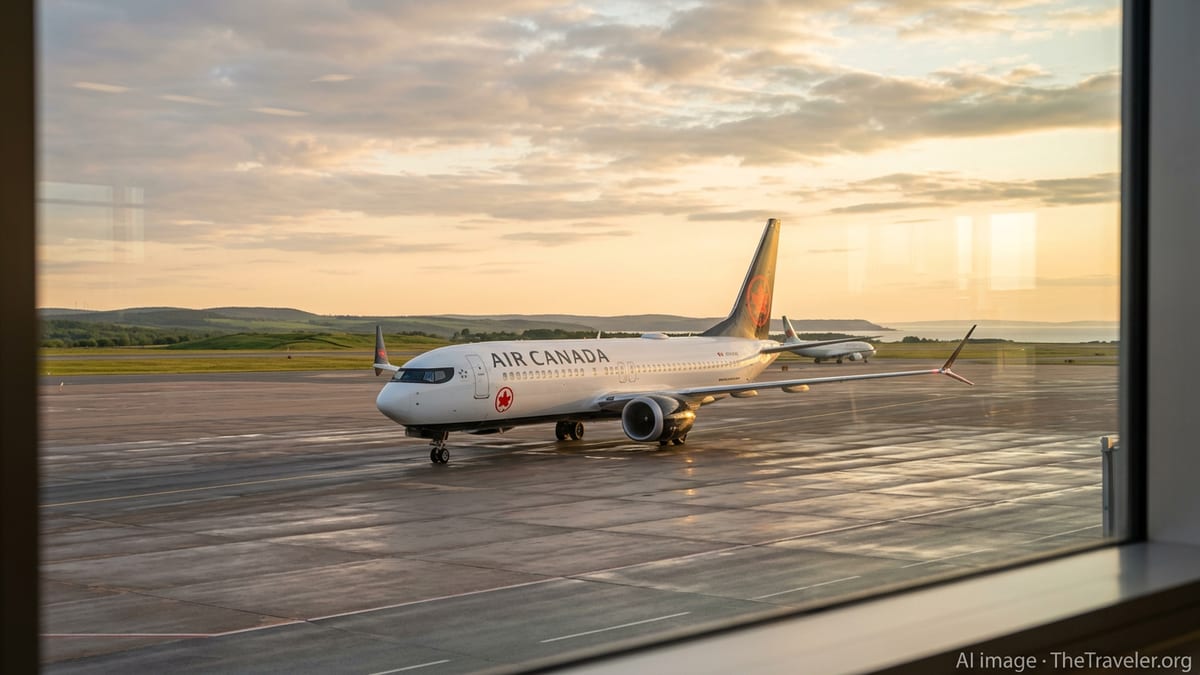
Canada’s transatlantic air network is expanding again as Air Canada relaunches non-stop Boeing 787-9 Dreamliner flights between Toronto and Budapest for the 2026 summer season, restoring a direct link between Canada and one of Central Europe’s fastest-growing city destinations.
Get the latest news straight to your inbox!
Seasonal Route Returns on the 2026 Summer Schedule
Publicly available schedules show that Air Canada resumed its Toronto–Budapest service on June 6, 2026, with flights operating through October 24. The route had been absent from the carrier’s network in recent years and is returning as a seasonal transatlantic option during the peak travel period.
The service operates between Toronto Pearson International Airport and Budapest Ferenc Liszt International Airport, providing the only nonstop link currently available between the two cities. Industry reports indicate that the route is being flown up to five times weekly at peak, giving travelers a regular connection between Canada and Hungary without the need for connections in Western Europe.
Schedule data suggests that flight times are around nine hours westbound and just over eight hours eastbound, typical for transatlantic sectors of this distance. The nonstop operation shortens total journey times compared with one-stop itineraries via European hubs, which can add several hours of layover to the trip.
The relaunched route fits within a broader pattern of Canadian airlines rebuilding and diversifying long-haul capacity into secondary European markets for the summer season, targeting both outbound leisure demand from North America and inbound tourism to Canada.
Dreamliner Aircraft and Onboard Experience
The Toronto–Budapest flights are operated by Air Canada’s Boeing 787-9 Dreamliner, the long-haul flagship of the airline’s widebody fleet. The aircraft is configured with three cabins: Signature Class at the front, followed by Premium Economy and a larger Economy Class cabin.
According to published fleet information, the 787-9 offers modern cabin pressurization and higher humidity levels than many older widebody types, features that are designed to improve passenger comfort on long flights. Large, electronically dimmable windows and quieter engines are also standard on the Dreamliner family, enhancing the overall onboard environment.
Signature Class typically features lie-flat seats arranged in a pod-style configuration, providing direct aisle access for most passengers and positioning the product toward business travelers and premium leisure customers. Premium Economy offers wider seats and increased legroom compared with standard Economy, while Economy cabins are arranged in a high-density layout that balances capacity with individual comfort features such as personal entertainment screens.
Industry commentary notes that Air Canada is in the midst of a broader cabin refresh and fleet renewal program, with incremental improvements to seating, lighting and inflight connectivity gradually rolling out across its long-haul fleet. The use of the 787-9 on the Budapest route places it in line with other key transatlantic and Asia-Pacific services in the carrier’s network.
Strategic Significance for Canada–Central Europe Travel
Aviation and tourism reports describe Budapest as one of Central Europe’s most dynamic destinations, with strong appeal for leisure visitors drawn to its riverfront setting on the Danube, historic architecture and growing cultural scene. For Canadian travelers, the new nonstop option reduces reliance on connections through Frankfurt, London or other European gateways.
Traffic data cited in regional coverage suggests that tens of thousands of passengers travel annually between Canada and Hungary, often using one-stop itineraries offered by European and North American carriers. The reinstated Toronto–Budapest service gives those travelers a direct alternative, which may help Air Canada capture a larger share of origin-and-destination traffic on the city pair.
For Hungary, the link strengthens access not only to the Canadian market but also to onward connections across North America via Toronto Pearson, Air Canada’s primary global hub. Passengers arriving from Budapest can connect to domestic Canadian destinations as well as major U.S. cities, Mexico and the Caribbean on the same itinerary.
Analysts note that the route also aligns with a wider trend of Central European capitals attracting new or restored long-haul services, as airlines seek to diversify beyond traditional Western European hubs and tap into growing regional demand from both tourists and visiting friends and relatives.
Schedules, Frequency and Practical Details for Travelers
Timetables compiled by route-tracking services indicate that Air Canada’s Budapest flights operate several times per week, with frequency rising to as many as five weekly rotations during the busiest summer weeks. The season is scheduled to run from early June until late October, covering school holidays and the popular early autumn travel period.
According to these published schedules, the westbound sector typically departs Budapest around midday, arriving in Toronto in the afternoon or early evening, which facilitates same-day connections across Canada and to parts of the United States. Eastbound departures from Toronto usually leave in the late evening, arriving in Budapest the following morning, a pattern common on overnight transatlantic flights.
For travelers planning itineraries, this timing allows for relatively straightforward same-day onward travel on both ends of the route, while also giving point-to-point passengers a full afternoon arrival in Canada or a morning arrival in Hungary. The frequency pattern means that some days of the week lack nonstop service, so passengers looking for specific travel dates may still need to consider one-stop options.
Fares on the route, as reflected in public booking systems, vary significantly depending on departure date, cabin, and advance purchase. As with most transatlantic services, early booking and flexible travel dates typically provide the widest choice of lower-priced seats, especially during late July and August when demand peaks.
What the New Link Means for Future Canadian Transatlantic Growth
Industry observers view the return of Toronto–Budapest flights as another indicator that Canadian carriers are steadily rebuilding and expanding their transatlantic footprint following several years of network adjustments. Air Canada has been adding or upgauging routes to a range of European destinations, often deploying the 787-9 to balance capacity and fuel efficiency.
The Budapest service reinforces Toronto Pearson’s role as a key connecting hub for eastbound flights from North America, while also providing Budapest with long-haul visibility on airline booking platforms in Canada and the United States. Travel trade publications suggest that the route is expected to attract a mix of Canadian leisure travelers, Hungarian diaspora traffic and inbound visitors to Canada.
If demand holds through the 2026 season, analysts speculate that the route could see further refinements in capacity or schedule, such as extended operating seasons or adjusted frequencies in future years. For now, the return of the 787-9 to Budapest marks a tangible expansion of Canada’s transatlantic network and gives travelers on both sides of the Atlantic a new nonstop option for reaching one of Central Europe’s most popular city breaks.