


More news on this day
Air France has become the latest major carrier to cut back flights across the Middle East as heightened US and Iran tensions reignite airspace fears and trigger a fresh wave of cancellations affecting key hubs from Dubai and Abu Dhabi to Riyadh and Beirut.
Get the latest news straight to your inbox!
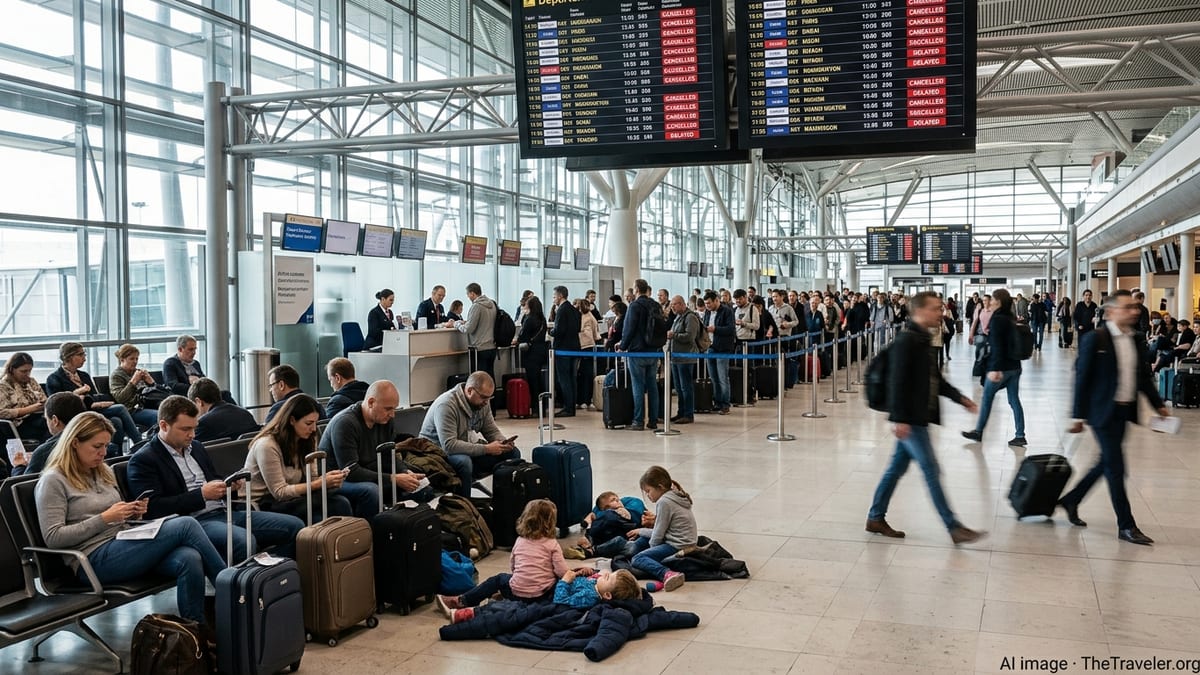
Wave of suspensions widens across major Western airlines
According to publicly available schedule updates, Air France has extended or reintroduced suspensions on several Middle Eastern routes, moving it into line with earlier decisions by United Airlines, Air Canada, ITA Airways and the Lufthansa Group to sharply curtail operations in the region. The moves follow a renewed military escalation between the United States and Iran that has heightened concern about overflight risks and the stability of key Gulf and Levant gateways.
Travel advisories and airline bulletins indicate that carriers are reassessing exposure to airspace over and around the Gulf following recent strikes and counterstrikes linked to the Strait of Hormuz. In practice, that has meant reduced frequencies, outright cancellations or postponed resumptions on routes that were only slowly rebuilding after earlier rounds of disruption this year.
While details vary by airline, the overall trend is toward a more conservative posture on services touching conflict-adjacent countries or transiting nearby airspace corridors. Network planners appear to be prioritizing routes that can be reliably operated via alternative routings, while pausing or scaling back flights that would require more complex diversions.
Dubai, Abu Dhabi and Riyadh schedules heavily trimmed
Gulf hubs that normally function as some of the world’s busiest long haul crossroads are once again feeling the impact. Industry reporting shows that Air Canada, Lufthansa Group airlines and ITA Airways have all cut back or suspended services to Dubai, Abu Dhabi and Riyadh, citing the broader security situation and operational constraints.
In the latest adjustments, Lufthansa Group carriers have extended suspensions on multiple destinations in the region, including Abu Dhabi and Riyadh, through at least October, effectively removing a swath of Middle Eastern capacity from their European networks during the peak northern summer period. ITA Airways has similarly pushed back the restart of its Dubai route and prolonged a pause on Riyadh flights, narrowing options for travelers connecting via Rome.
Air Canada has taken a more measured approach but still plans fewer frequencies than originally scheduled when flights to Dubai and Riyadh resume, trimming capacity and dropping some secondary destinations in Saudi Arabia. These changes build on earlier reductions that were introduced as a stopgap response when tensions first flared, but which are now being extended as conflict risks persist.
The result is a noticeably thinner presence by North American and European carriers at the three major Gulf hubs. Although local airlines based in the United Arab Emirates and Saudi Arabia continue to operate substantial schedules, the loss of foreign widebody capacity is narrowing the range of one stop itineraries available to travelers originating in Europe and North America.
Beirut and wider Levant see prolonged cutbacks
The impact is also acute along the eastern Mediterranean, where Beirut remains one of the hardest hit cities. Air France and Lufthansa Group airlines have previously suspended services to the Lebanese capital, and recent timetable updates suggest those cuts are being prolonged in light of the regional security picture. For travelers, that continues a pattern of on and off access via European flag carriers stretching back months.
Industry coverage notes that Lufthansa, Swiss and Austrian have halted flights to a cluster of Middle Eastern cities, including Beirut and Amman, at least until late October, effectively wiping out direct links from their hubs for most of the year. Air France, which had already been cautious about rebuilding its Beirut operation, is now seen holding off on full restoration as the risk environment deteriorates once more.
The reductions to Beirut come on top of earlier, longer running suspensions to Tel Aviv by many Western airlines, leaving the Levant region disproportionately affected by the latest round of network cuts. Passengers still able to reach Lebanon are often doing so via Gulf hubs or regional carriers, adding complexity and potential exposure to further disruptions along the way.
Qatar, UAE and Saudi Arabia grapple with ongoing disruption
Across Qatar, the United Arab Emirates and Saudi Arabia, the picture is mixed but clearly unsettled. Reports from aviation industry outlets suggest that locally based carriers such as Qatar Airways, Emirates and Etihad have been adjusting routings, schedules and aircraft deployment in response to airspace warnings and temporary restrictions, even as they strive to keep core long haul corridors open.
While some earlier closures and diversions have eased, the renewed US and Iran confrontation has reintroduced uncertainty over critical chokepoints, especially near the Strait of Hormuz and parts of the Gulf. That uncertainty is feeding through into schedule planning, with a heightened risk of last minute changes as airlines react to evolving notices to air missions and changing assessments of overflight risk.
Saudi gateways including Riyadh are also experiencing a ripple effect from the broader regional volatility. Carriers that had been adding capacity into the kingdom in response to tourism and business demand are now moderating growth plans or pulling back frequencies, at least temporarily. The net effect is a more fragile regional network in which relatively small shifts in the security situation can trigger significant operational knock ons.
Passengers face complex rerouting and limited visibility
For travelers, the latest wave of suspensions and frequency cuts means fewer nonstop options, longer travel times and greater reliance on rebooking policies. Publicly available advisories from several airlines outline flexibility waivers, allowing customers to change dates, reroute via alternative hubs or seek refunds when their flights are canceled or significantly altered.
However, the patchwork nature of the disruptions makes planning challenging. Some carriers have issued end dates for suspensions that are framed as provisional and subject to further review, while others are signaling that reduced Middle East capacity could last well into the northern winter 2026 season. That leaves many passengers juggling backup plans and monitoring updates closely in the days leading up to departure.
Travel industry analysts point out that, unlike weather related disruptions, the current situation is tied to geopolitical developments that can shift rapidly and with little warning. As a result, even routes that remain on sale may see late schedule changes if risk assessments change. Industry guidance consistently urges passengers not to head to the airport without checking the latest status of their flights, and to build in additional time for connections when itineraries involve Gulf or Levantine hubs.
For now, Air France’s alignment with United, Air Canada, ITA and Lufthansa in tightening their Middle East schedules underscores how deeply the US and Iran confrontation is reshaping long haul networks. Until there is a sustained easing of tensions and a clearer picture of long term airspace safety, airlines are expected to continue favoring caution, leaving one of the world’s most strategically important aviation regions operating well below its potential capacity.