


More news on this day
Travelers passing through Queen Alia International Airport in Amman on July 19, 2026, faced mounting disruption after publicly available data showed 64 flights delayed or cancelled in a single operational day, triggering a wider wave of schedule changes across regional and long-haul routes.
Get the latest news straight to your inbox!
Operational Strain at Jordan’s Main International Gateway
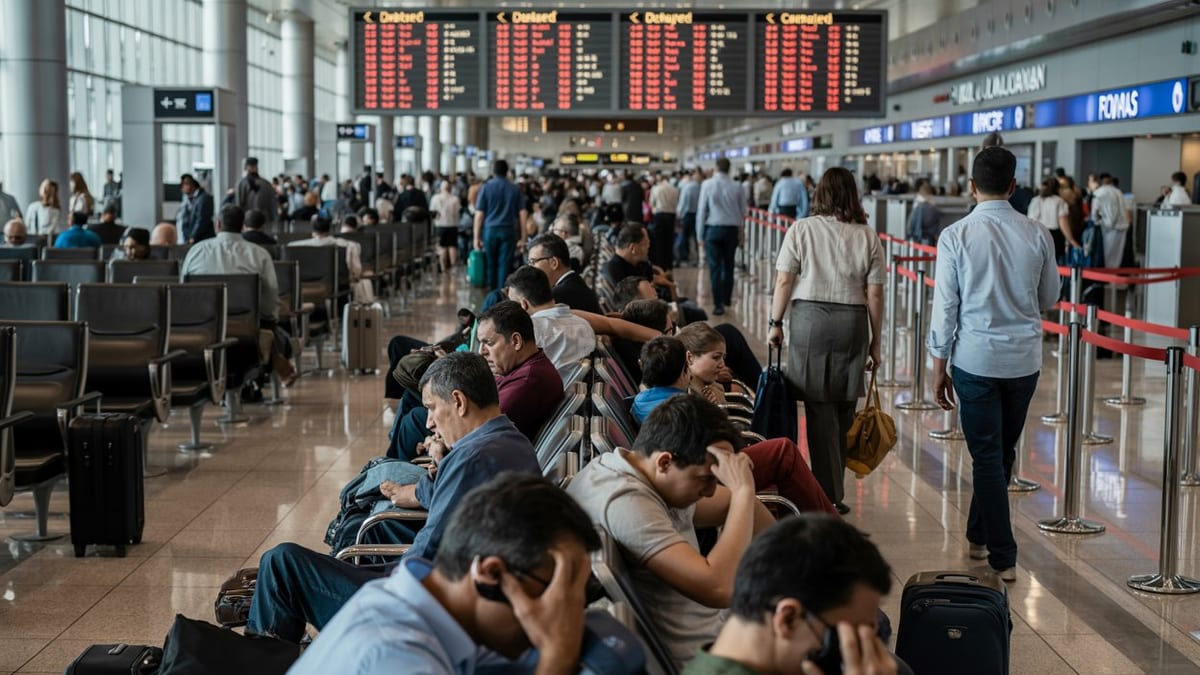
Queen Alia International Airport, Jordan’s primary international hub serving the capital Amman, experienced an unusually high level of disruption as dozens of flights were reported delayed or cancelled within a compressed timeframe. Airport timetables and third-party tracking platforms for July 18 and 19 indicated a cluster of affected services across both arrivals and departures, with 64 flights either significantly delayed or removed from the schedule.
The disruption coincides with the busy midsummer travel period, when the airport typically handles peak volumes of outbound holidaymakers, inbound tourists and regional business travelers. Queen Alia International Airport has been positioned in recent years as a growing transit point for the Levant, with infrastructure upgrades designed to accommodate up to 12 million passengers annually. Any large-scale schedule irregularities therefore have immediate ripple effects across connecting flights and downstream airports.
While core airport infrastructure remains operational and runways open, the volume of off-schedule operations places additional pressure on ground handling, check-in and security screening, as aircraft rotations and crew availability are forced to adjust in real time. Passengers arriving for evening and overnight waves of flights on July 18 reported crowded departure halls and longer waits at information counters as airlines rebooked disrupted itineraries.
Published operational summaries from regional travel and logistics bulletins in recent weeks had already flagged a more fragile environment for air services across parts of the Middle East, with some carriers operating cautiously on select routes and others suspending services to Amman altogether. Against that backdrop, a single day featuring more than sixty flight irregularities at Queen Alia marks a notable escalation for Jordan’s flagship airport.
Routes, Airlines and Knock-on Effects Across the Region
The latest disruptions at Queen Alia International Airport have affected a broad mix of routes, from short regional links to Gulf and Levant destinations to long-haul connections operated by or in partnership with Royal Jordanian and other international carriers. Flight-tracking records for services linking Amman with hubs such as Doha, Kuwait City, Beirut and Sharjah showed a pattern of late departures, late arrivals and scattered cancellations over the July 18 to 19 period.
Travel discussion forums and traveler reports, which have closely monitored Amman operations in recent months, indicate that irregularities at Queen Alia are not isolated to a single airline or alliance. While Royal Jordanian continues to anchor much of the airport’s schedule, regional carriers from the Gulf, North Africa and Europe have periodically adjusted frequencies, introduced rolling schedule changes or, in some cases, temporarily suspended operations to Amman. Package-tour and group operators have similarly flagged the risk of last-minute retimings on certain routes.
The immediate impact for travelers has been a surge in missed connections and overnight disruptions for those using Amman as a transfer point. Passengers routing through Queen Alia to destinations in North America, Europe and the Gulf reported being rebooked onto later flights or rerouted through alternative hubs. For some, schedule changes materialized only shortly before departure, complicating ground arrangements and hotel bookings at both origin and destination.
Regional aviation analysts note that Amman’s position as a connector between Gulf hubs, Levant cities and long-haul markets makes it particularly sensitive to upstream disruptions. When a high number of flights at Queen Alia are delayed or cancelled in a short span, the effect can quickly propagate along multi-leg itineraries, impacting travelers who may never have planned to visit Jordan beyond a brief transit.
Context of a Volatile Summer for Middle East Air Travel
The spike in delays and cancellations at Queen Alia International Airport arrives during a summer in which air travel across parts of the Middle East has already been complicated by a mix of regional tensions, selective airspace restrictions and fluctuating fuel and operating conditions. Airline advisories and civil aviation updates over the past two months have documented phased route suspensions and cautious capacity management by several carriers serving Amman.
Operational bulletins issued to travel agents and corporate clients earlier in the season outlined how a number of European and regional airlines had paused or reduced flights to Queen Alia, citing a need to review routings, crew logistics and risk assessments. At the same time, Jordan’s own transport and aviation planning documents highlight the strategic importance of Queen Alia as the country’s primary gateway, emphasizing the need to keep the airport open even during periods of broader regional volatility.
Travelers with upcoming bookings to or through Amman have therefore been operating in an environment where schedules remain broadly active but subject to sudden adjustment. While many days in recent months have seen largely normal operations, reports from frequent visitors, tour operators and online travel communities point to a persistent pattern of day-to-day variability, with certain flights operating on time while others encounter multi-hour delays or last-minute cancellation.
The concentration of 64 delays and cancellations in a single operating window underscores how quickly conditions can tighten for passengers, even in the absence of a full airport closure. It also illustrates the delicate balance airlines are attempting to maintain between preserving connectivity to Amman and building in contingency for rapidly shifting regional dynamics.
What Travelers Passing Through Amman Should Expect
For travelers with imminent plans involving Queen Alia International Airport, the latest wave of disruption serves as a signal to prepare for a more fluid travel experience than usual. Published coverage and traveler accounts suggest that itineraries using Amman purely as a transit point may be especially vulnerable, due to tightly timed connections that leave little margin when inbound flights arrive late or outbound flights are rescheduled.
Passengers flying in the coming days can expect busier check-in areas and potentially longer lines at airline service counters, particularly during peak evening and night-time departure banks. When successive flights fall off schedule, rebooking queues can grow quickly as travelers compete for limited seats on alternative services. Those with fixed onward commitments in Europe, the Gulf or North America may wish to build additional buffer time into their plans where possible.
Travel news outlets and online forums are advising passengers to monitor their booking status directly with airlines on the day of travel, rather than relying solely on printed or previously downloaded itineraries. Same-day checks of departure boards, airline apps and airport information channels can help travelers react more quickly if a flight is delayed or cancelled, especially when a missed connection in Amman would have knock-on effects further down the journey.
In addition, passengers connecting through Queen Alia during the current period of disruption are being urged in public advisories and community travel guides to review ticket conditions related to schedule changes. Flexible fares, bundled travel insurance or credit-card coverage for delays and cancellations may provide more options for hotel, rebooking or rerouting support if travel plans are significantly affected by irregular operations in Amman.
Planning Ahead as Queen Alia Works Through Disruptions
As Queen Alia International Airport works through the backlog created by the 64 delayed and cancelled flights, aviation observers expect operations to stabilize gradually, though elevated risk of day-to-day schedule changes is likely to persist in the near term. Airlines will need time to reposition aircraft and crews, while passengers already en route to or from Amman continue to filter through altered itineraries.
For travelers still at the planning stage, publicly available travel advice suggests considering slightly longer connection windows in Amman, particularly on itineraries that mix different airline alliances or involve separate tickets. Where feasible, scheduling arrivals into Queen Alia earlier in the day may provide more fallback options in case of disruption, including same-day alternative flights or surface transport within Jordan.
Tourism businesses in Jordan are closely watching the situation, mindful that consistent air access through Queen Alia underpins visitor arrivals to Amman, Petra, the Dead Sea and other key destinations. While hotel and ground operators continue to welcome guests as normal, the short-term challenge lies in helping visitors navigate shifting arrival and departure times and in reassuring those considering trips later in the season.
With midsummer demand for travel still strong and broader regional dynamics evolving rapidly, Queen Alia International Airport remains operational but under obvious pressure. The latest tally of 64 disrupted flights is a reminder that even well-established hubs can experience sudden spikes in irregular operations, and that travelers bound for Amman or beyond should stay informed, flexible and prepared for potential changes to their plans.