


More news on this day
Latvian carrier airBaltic will remove 11 direct routes from Tallinn next summer, reshaping Estonia’s air links just as Lennart Meri Tallinn Airport advances plans for new routes and expanded passenger capacity.
Get the latest news straight to your inbox!
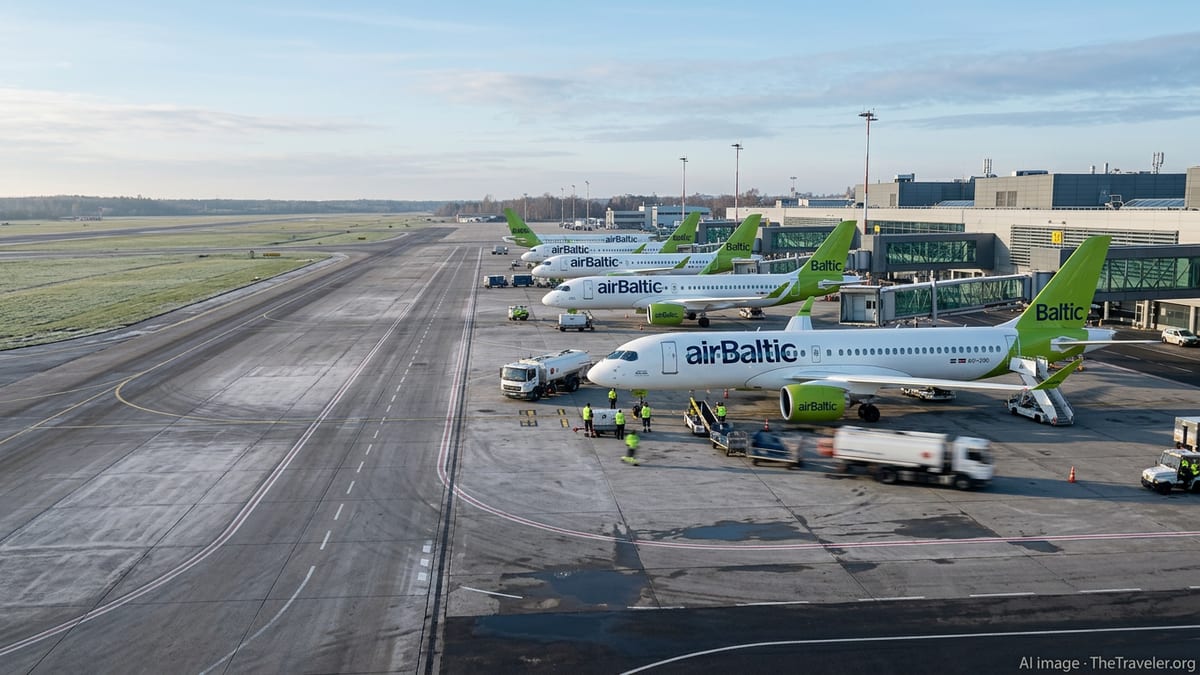
airBaltic Pullback Hits Key Leisure and Regional Links
Publicly available schedules and local media reports show that airBaltic plans to drop 11 routes from Tallinn in the 2027 northern summer season, affecting a mix of leisure and regional destinations that have helped underpin Estonia’s outbound travel market. The decision follows a broader network adjustment in which the Riga-based airline is streamlining point-to-point flying outside its main Latvian hub.
Route filing analysis compiled by industry database AeroRoutes indicates that services such as Tallinn to Burgas on Bulgaria’s Black Sea coast are among those removed in the latest update, alongside other seasonal links that had catered primarily to summer holiday traffic.
Coverage from Estonian public broadcaster ERR highlights that the changes will significantly reduce airBaltic’s direct offering from Estonia next summer, even though the airline will retain core connections and continue to route many Estonian travelers via Riga for onward connections across Europe and the Middle East.
Tallinn Airport Accelerates Route Development Strategy
The capacity cuts arrive at a time when Tallinn Airport is actively pursuing new airlines and destinations as part of a multi-year route development strategy. Airport presentations and investor materials describe a shift to a phased expansion plan focused on improving terminal capacity, baggage systems and passenger experience to support more traffic in the coming years.
Figures published by Tallinn Airport show that the gateway handled around 3.5 million passengers in 2024, with further growth in 2025 driven by additional leisure traffic and returning carriers. The airport reports that it now offers flights to more than 50 direct destinations in peak seasons, with plans to add at least 10 more new routes in 2026.
Management documents emphasize that attracting new airlines and opening fresh city pairs are central to Estonia’s wider connectivity goals, particularly as the country relies heavily on air links for both business and tourism due to its geographic position on the Baltic Sea.
New Carriers and Routes Step Into the Gap
While airBaltic scales back, other airlines have been expanding at Lennart Meri Tallinn Airport. According to the airport’s own news releases, low-cost operator Wizz Air has been adding capacity on existing routes and announcing new ones, including Warsaw and Rome, which are due to operate with multiple weekly frequencies in upcoming seasons.
Recent quarterly reports from the airport note that airlines such as Eurowings and Transavia France have also returned to Tallinn in recent years, restoring links to Prague and Paris Orly. Additional seasonal services to destinations like Reykjavik and Tirana have further diversified the network, spreading risk across multiple carriers instead of relying on a small group of operators.
Industry route-development summaries suggest that more airlines are eyeing Tallinn for new services, with several prospective links under discussion for the winter seasons of 2025 and 2026. These efforts are intended to ensure that travelers retain a wide choice of destinations even as one major player adjusts its schedule.
Implications for Estonian Travelers and Tourism
The withdrawal of 11 airBaltic routes is expected to narrow the range of nonstop options available from Tallinn, especially for price-sensitive leisure travelers accustomed to seasonal flights to southern Europe. Analysts point out, however, that the airport’s growth in other segments and the continued importance of transfer traffic via hubs such as Riga, Helsinki and major European cities mean Estonia will remain well connected.
Publicly available airport statistics show that many Estonian passengers already use indirect routings, connecting through larger hubs to reach long-haul destinations or more niche European cities. As new carriers launch services and existing airlines add frequencies, these alternatives could cushion the impact of the airBaltic cuts.
Tourism bodies have highlighted in past assessments that strong air connectivity is crucial for attracting city-break visitors, conference delegates and cruise passengers. The current round of route changes is therefore being closely watched by hotels and travel companies that rely on predictable, year-round seat capacity.
Airport Expansion Aims to Future-Proof Connectivity
Beyond immediate schedule changes, Tallinn Airport is moving ahead with infrastructure projects designed to support a larger and more resilient route network. Planning documents and public briefings describe a staged development program running through the late 2020s, including a new arrivals area and an upgraded automated baggage system.
The airport has also invested in improvements to its passenger facilities, sustainability measures and digital services, positioning itself as a competitive regional hub for short- and medium-haul flights. These enhancements are intended to make Tallinn more attractive to both incumbent airlines and newcomers considering new routes.
As airlines across Europe adjust networks in response to demand patterns, costs and fleet changes, Estonia’s main airport is betting that a mix of infrastructure investment and proactive route development will help secure long-term connectivity, even as individual carriers such as airBaltic recalibrate their presence in the market.
https://news.err.ee/1610126035/airbaltic-to-cut-11-routes-from-tallinn-airport-next-summer
https://www.aeroroutes.com/eng/260902-btns27cxl
https://airport.ee/en/nearly-3-5-million-passengers-at-tallinn-in-2025/
https://airport.ee/en/new-direct-flights-from-tallinn-in-the-winter-flight-schedule/