


Finding parking at Fort Lauderdale Beach Park can make or break a beach day. Between cruise-day crowds, big weekend events and a maze of meters and garages, a little planning goes a long way. This guide pulls together the latest information on official city lots, the PayByPhone system, peak traffic patterns and real-world strategies locals use to score a space within walking distance of the sand.
Get the latest updates straight to your inbox!
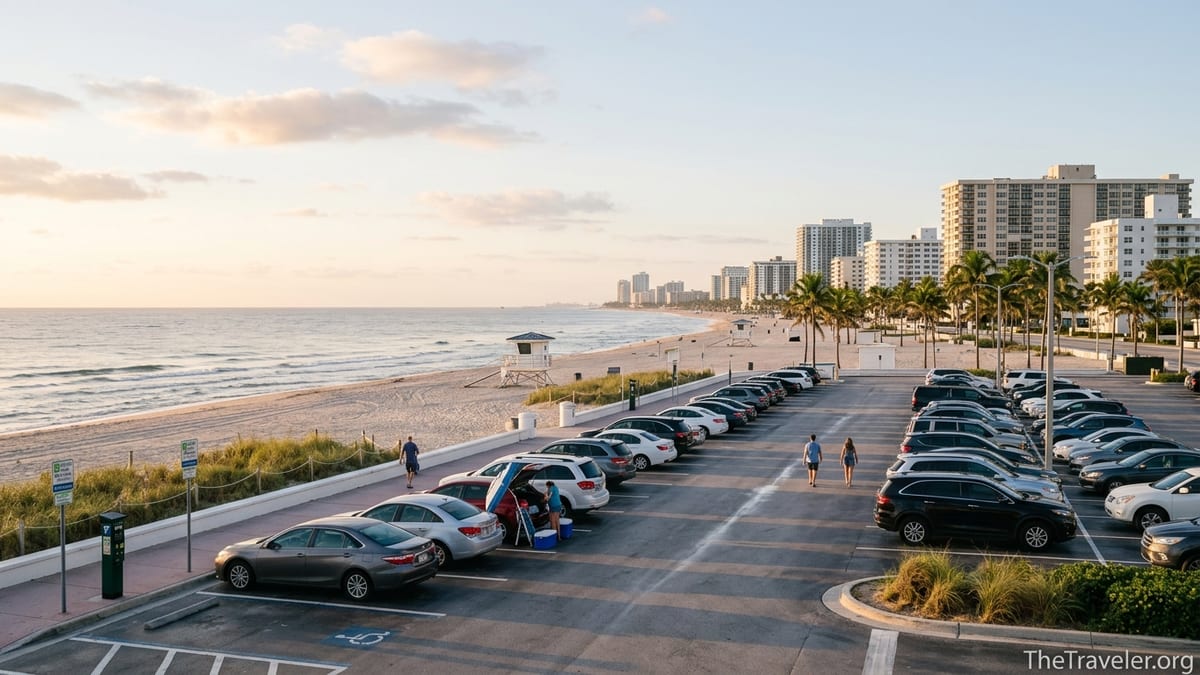
Understanding the Fort Lauderdale Beach Park Layout
Fort Lauderdale Beach Park sits at the southern end of the main beachfront strip, near the curve of Seabreeze Boulevard and the entrance to the Bahia Mar resort area. The park’s main draw is how close you can park to the sand. The long surface lot here typically runs parallel to the beach, with rows of angled spaces that start filling soon after sunrise on busy days. If you simply tap “Fort Lauderdale Beach Park” into your maps app, you will usually be guided toward this central lot.
Compared with the more urban feel of the central strip along A1A and Las Olas, the Beach Park area has a slightly more relaxed, family vibe. You are close to playgrounds, volleyball courts and picnic tables, which makes it a prime choice for families to set up for the day. That also means minivans and SUVs roll in early, particularly on Saturdays from late December through April and again in March when spring break and cruise season overlap.
Parking here is city operated, so signage is fairly consistent. You will see standard blue-and-white “Public Parking” signs and numbered PayByPhone zone codes at the pay stations. If you arrive and see traffic cones or temporary signs, it usually indicates an event day such as the Great American Beach Party, the Fourth of July Spectacular or a beach sports tournament that uses parts of the lot for staging. In those cases, some rows may be blocked and you will be directed either to the remaining spaces or to overflow areas farther north.
Because this is as close as you can routinely park to the southern stretch of beach, any small change in capacity has an outsized impact. On normal weekdays outside of holidays, you might still find a spot here after 10 a.m. On a sunny winter Saturday or during a big air or sea show weekend, the lot can be functionally full by 8:30 or 9 a.m., and cars begin circulating slowly behind pedestrians, hoping to follow someone back to their vehicle.
Rates, Time Limits and Resident Discounts
City-operated beach parking along this stretch generally uses an hourly pay structure, with rates that in recent years have hovered around a few dollars per hour at the Beach Park surface lot and along adjacent metered streets. Drivers frequently report paying about 4 dollars per hour at Fort Lauderdale Beach Park and similar lots, with no strict minimum stay. That means a two-hour morning visit can be relatively affordable, but an all-day stay from 9 a.m. to 5 p.m. can feel expensive once you add taxes and fees.
Las Olas Garage, just north of the park near the intersection of Las Olas Boulevard and A1A, operates with a separate rate structure. Visitors often treat it as the default backup if the Beach Park lot is full. Public comments and city documents suggest that standard nonresident rates have typically been higher there than at a surface lot, while Fort Lauderdale residents with the proper permit can see a sharply discounted hourly rate. Some locals mention paying around 1.50 dollars per hour with a resident permit in city beach garages compared with roughly double that for visitors, though exact numbers can change as the city updates its rate tables.
Fort Lauderdale also offers a residential beach parking permit that discounts or simplifies access in certain garages and curbside zones. Over the past few years, the annual price of that permit has risen significantly from its earlier bargain level, which reflects how valuable beach parking has become as demand grows faster than supply. For frequent local beachgoers who park at Las Olas Garage or city lots several times a month, the permit can still pay for itself over a season, while visitors staying in hotels or arriving via rideshare will not see the same benefit.
Time limits vary by zone. Some streets near hotels along A1A may cap stays at three or four hours, while the main Fort Lauderdale Beach Park lot is typically configured to allow longer stays that match a full beach day. Always check the time limit printed on the PayByPhone sign or at the meter. Overstaying by “just a few minutes” is a common way to turn a 25 dollar outing into a 100 dollar day once parking fines are added, and city parking officers routinely patrol the beachfront corridor, especially on weekends.
How to Use PayByPhone and Other Helpful Apps
Fort Lauderdale’s official system for most city-operated beach parking is PayByPhone, a cashless parking platform the city actively promotes. After downloading the app, you create an account, enter your license plate number and add a payment method such as a credit card or digital wallet. At Fort Lauderdale Beach Park you will find signs and decals with a unique location or zone number; you enter that code, choose how long you plan to stay and confirm the payment. The entire process usually takes under a minute once your profile is set up.
The main advantage is that you can extend your time remotely. If you walked north along the beach to a café or are sitting at a bar on Las Olas when your session is about to expire, the app sends a notification and lets you add another hour or two without hiking back to the meter. For families with kids or anyone setting up a full beach camp, this is a stress reducer. There is generally no separate fee to download or access the app, though some locations may add a small convenience fee per transaction on top of the posted hourly rate.
Visitors sometimes confuse PayByPhone with other parking apps because different South Florida cities use different vendors. Around Fort Lauderdale Beach and Las Olas, PayByPhone is the standard for city meters and lots, so it is the one app you should install before you arrive. Private garages associated with hotels or shopping centers may run their own systems or use traditional ticket machines. In those cases, you usually pull a paper ticket at the entrance, then pay with a card at a kiosk before exiting instead of using PayByPhone.
There are also peer-to-peer parking apps that match drivers with private driveways or small lots in residential neighborhoods. Travelers to Fort Lauderdale sometimes use these for big event days when beachfront garages sell out. While they can offer competitive all-day rates and guaranteed reservations, they do not replace the city’s official system. If you plan to use one, read recent reviews carefully, look for spaces with security cameras and consider how far you will need to walk or rideshare from a residential street to Fort Lauderdale Beach Park itself.
Las Olas Garage and Smart Alternatives on Busy Days
Las Olas Garage is the workhorse of the central Fort Lauderdale beach parking scene. Built as part of a larger beachfront improvement project, it adds roughly 650 structured spaces just behind Las Olas Oceanside Park at the eastern end of Las Olas Boulevard. On a regular Saturday when the Beach Park surface lot fills before 10 a.m., this garage becomes the default overflow option for many locals who do not mind a 10 to 15 minute walk south along the beachfront promenade.
On peak weekends, arriving at Las Olas Garage between 9 and 10 a.m. often strikes a balance between availability and convenience. Earlier than that, you are almost guaranteed a space; later, you may still get in but could find yourself circling up several levels, especially if a hotel conference, festival or farmers market is happening nearby. For travelers who care about shade, parking on higher levels can leave your car more exposed to midday heat, so some drivers intentionally arrive early enough to secure a spot on a covered or lower level.
If the garage is posted as full, do not assume your beach day is finished. One common alternative is to park west of the Intracoastal Waterway in a downtown or Las Olas Riverfront garage and then use a rideshare, scooter or sun trolley–style shuttle to reach the beach. For example, if you are staying near the New River or Broward Boulevard, parking in a downtown garage for a flat daily rate can be cheaper than paying hourly beach prices, even after adding a short rideshare trip over the bridge.
Another practical option is the Galleria Mall area to the north, near Sunrise Boulevard. During large events like the Fort Lauderdale Air Show, the city and private operators have occasionally offered pre-paid event parking at the mall garages with shuttle or walking access to the sand. On normal days, parking at the mall and walking or taking a short rideshare down A1A can be an effective strategy if you prefer to avoid the congestion around Las Olas and the southern beach.
Peak Weekends, Event Days and Cruise-Day Crowds
Fort Lauderdale’s beach parking demand spikes in predictable waves. In winter, when snowbirds and cruise passengers converge, Saturdays and Sundays become the most competitive. Many cruise itineraries end at Port Everglades on Saturday or Sunday mornings, which sends thousands of travelers into nearby hotels and cafes often before noon. Some cruise passengers with late flights will spend a half-day at the beach, arriving at Fort Lauderdale Beach Park or Las Olas Garage around 10 or 11 a.m. after disembarking. On those days, expect the last reasonably easy parking to disappear earlier than usual.
Special events dramatically amplify these weekend patterns. The Fort Lauderdale Air & Sea Show, for example, traditionally draws crowds of spectators who line the entire beachfront. During such weekends, the city publishes detailed traffic and parking advisories, often closing sections of A1A, narrowing access to some beach lots and promoting park-and-ride from inland garages or the Galleria area. Drivers who insist on trying to reach Fort Lauderdale Beach Park by mid-morning during a major air show or similar event should be prepared for heavy stop-and-go traffic across the causeways and limited last-minute parking options.
Other annual events, such as the Great American Beach Party over Memorial Day weekend or the Fourth of July Spectacular, also rely heavily on the Beach Park area for staging, vendor booths and concert stages. Portions of the main surface lot may be reserved or closed altogether on event days, with visitors diverted to Las Olas Garage, North Beach lots or inland parking. The city maintains an online calendar of special event road closures and parking impacts; checking it a week before your trip can help you avoid being surprised by barricades and detours when you arrive.
Even without a headline event, weather can create its own mini “event day.” A sunny, low-humidity Saturday in January or February often draws not only tourists but also local residents who might otherwise avoid the beach in hotter months. When the forecast looks perfect and local news outlets highlight the beach as a weekend pick, assume demand will resemble a holiday and plan your arrival and parking strategy accordingly.
Best Arrival Times and Real-World Strategies
If you want to park at Fort Lauderdale Beach Park itself and stay close to the sand, the most reliable strategy is to aim earlier than you think. On a typical non-holiday winter Saturday, arriving between 7:30 and 8:30 a.m. almost always yields a choice of spaces, lets you set up your umbrella and cooler at a leisurely pace and gets you in and out of the area before afternoon congestion peaks. By contrast, rolling up at 11 a.m. on the same day often means circling the lot behind other hopeful drivers while watching beachgoers unload chairs out of already-parked cars.
On shoulder-season weekdays, such as late September or early May outside of major festivals, you can usually push that window later. Locals working flexible schedules often report finding surface-lot spaces at Fort Lauderdale Beach Park as late as 10:30 a.m. on Tuesdays or Wednesdays when schools are in session and business travel is lighter. Mid-afternoon on weekdays, especially between 2 and 4 p.m., can also be a sweet spot for those just seeking a couple of hours in the water before dinner, as some morning visitors have begun to leave.
Another practical tactic is to split your group’s tasks. One person can drop passengers, umbrellas and coolers at the curb near the park entrance, then continue to search for a spot at Las Olas Garage or a secondary lot. This keeps kids and gear off the hot pavement while the driver navigates garages. For example, a family might unload at Beach Park, then the driver heads north to Las Olas Garage, parks on level 4 under shade, and walks or takes a scooter back along A1A to rejoin the group.
If your plans are flexible, consider timing your beach visit opposite peak cruise turnover and big event schedules. For instance, if you are in town for a week and know a large air show or festival runs on Saturday and Sunday, target Monday or Tuesday morning for your main beach day instead. You will still find all the amenities at Fort Lauderdale Beach Park but with a fraction of the parking stress and a better chance of landing an easy PayByPhone session without rushing.
Safety, Enforcement and Accessibility Considerations
Parking enforcement along Fort Lauderdale Beach is active, particularly on weekends and holidays. City parking officers and contracted attendants drive through lots, scan license plates and verify that each vehicle has an active PayByPhone session or properly displayed permit. Failing to start a session or entering the wrong zone code can lead to a mailed citation, often in the 50 to 75 dollar range, several weeks after your visit. If you realize you forgot to pay within a few minutes of parking, starting a session immediately is still better than doing nothing at all.
When using garages such as Las Olas or inland structures, security tends to be typical of urban parking facilities. Look for garages with good lighting, visible cameras and regular foot traffic. Many drivers prefer spaces on mid-levels away from elevators and stairwells for an added sense of safety. Do not leave visible bags or electronics in the car, especially when parking for a full day during a crowded event, as opportunistic theft can be an issue in any busy tourist area.
For travelers with mobility challenges, Fort Lauderdale Beach Park offers designated disabled parking spaces close to the sand and accessible paths leading toward restrooms and picnic areas. These spaces often fill quickly on good-weather days, so arriving early is particularly important. If you hold a disabled parking placard, check whether local rules require payment at meters when using designated disabled spaces; policies can differ from one Florida city to another, and staff at nearby lifeguard stations or information booths can often clarify current practice.
Accessibility is also tied to how far you park from the park itself. While it might be tempting to choose a cheaper inland garage, factor in the length and grade of the walk, bridge inclines over the Intracoastal and the heat and humidity levels. For some visitors, especially older travelers or those with respiratory conditions, paying a few extra dollars per hour to remain within a short, flat walk of the beach at Fort Lauderdale Beach Park is a worthwhile tradeoff.
Frequently Asked Questions (FAQ)
Q1. What is the easiest place to park for Fort Lauderdale Beach Park on a normal weekend?
The main Fort Lauderdale Beach Park surface lot is the closest and most convenient, but it fills early; Las Olas Garage is the next most reliable option within walking distance.
Q2. How early should I arrive to find parking at Fort Lauderdale Beach Park?
On busy winter and spring Saturdays, aim to arrive between 7:30 and 8:30 a.m. On weekdays outside holidays, you may still find spaces closer to 10 a.m.
Q3. Which parking app do I need for meters and city lots by the beach?
Fort Lauderdale uses the PayByPhone app for most city-operated meters and beach lots, including zones around Fort Lauderdale Beach Park and the central A1A corridor.
Q4. How much should I budget for parking near Fort Lauderdale Beach Park?
Expect to pay on the order of a few dollars per hour in city lots, so a full-day stay can easily reach several dozen dollars, especially for nonresidents without permits.
Q5. Is Las Olas Garage cheaper than parking directly at the beach?
For nonresidents, total costs can be similar or slightly higher than surface lots, but Fort Lauderdale residents with permits often get discounted rates that make the garage attractive.
Q6. What are the worst times to arrive for parking on event or cruise days?
Late morning to early afternoon, roughly 10 a.m. to 1 p.m., is the toughest window during big events and weekend cruise turnarounds, when lots and garages are often at capacity.
Q7. Can I extend my parking time without returning to the car?
Yes. With PayByPhone, you receive alerts before your session ends and can add more time from your phone, as long as you stay within any posted maximum time limit.
Q8. Are there good alternatives if the beachfront lots and Las Olas Garage are full?
You can park in downtown or inland garages west of the Intracoastal or near the Galleria Mall area, then walk, shuttle or rideshare to Fort Lauderdale Beach Park.
Q9. How strict is parking enforcement around Fort Lauderdale Beach?
Enforcement is active, especially on weekends and holidays, with officers checking plates and app sessions. Expect to be ticketed if you do not pay or overstay by a wide margin.
Q10. Is beach parking accessible for travelers with mobility issues?
Yes. Fort Lauderdale Beach Park has designated disabled spaces and accessible paths, but they fill quickly, so early arrival and parking as close as possible are important.