


More news on this day
Latvian carrier AirBaltic is preparing a broader European network from its home market for Summer 2027, unveiling plans that build on recent capacity growth and new route announcements across the Baltics.
Get the latest news straight to your inbox!
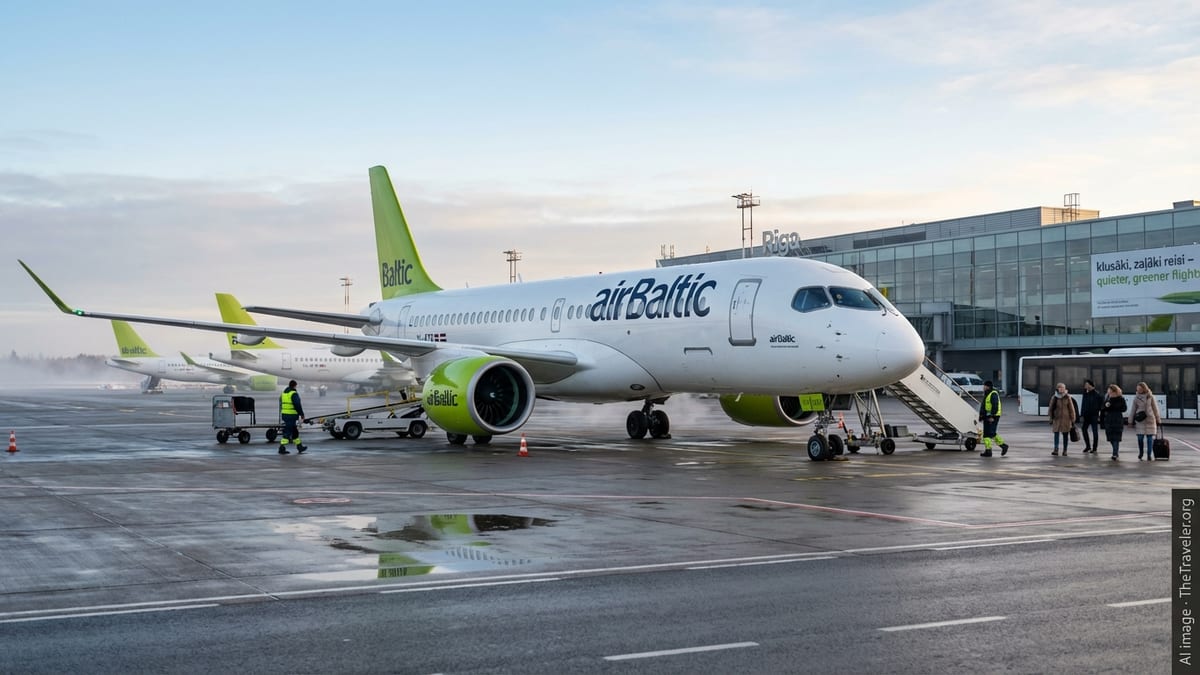
New Summer 2027 schedule builds on recent expansion
According to recent coverage from Baltic media, AirBaltic has outlined its Summer 2027 plans with a focus on strengthening Latvia’s role as a gateway between Northern and Southern Europe. Publicly available information indicates that the airline intends to deepen its network around Riga while maintaining growth at secondary Baltic bases that feed traffic through Latvia’s capital.
The blueprint for 2027 comes on the heels of a busy expansion phase. AirBaltic’s 2024 annual report notes that the airline operated a record 143 routes that year, including 85 from Riga, and launched 26 new services across its bases, underscoring a long-term strategy of incremental growth in Europe and nearby regions.
Industry analyses of the airline’s Summer 2026 schedule show that AirBaltic has already committed to additional routes and higher frequencies in the Baltics, with Riga at the core of the network. Published route data for 2026 highlight new links from Riga and restored destinations designed to rebuild connectivity following earlier capacity constraints related to engine maintenance on the Airbus A220 fleet.
These successive schedule updates for 2025, 2026 and the 2026–2027 winter season provide a foundation for the larger network Latvia-bound travelers can expect once the Summer 2027 timetable comes into effect.
Riga consolidates its hub role for European travelers
Riga International Airport remains central to AirBaltic’s strategy, serving as the main transfer hub that connects Latvia with more than 80 destinations across Europe, the Middle East and North Africa, according to recent industry summaries of the airline’s performance. Route statistics published for Riga indicate that major Western European cities, such as London, continue to rank among the busiest links from the Latvian capital.
Earlier management reports show that leisure destinations in Southern Europe have been a particular focus. In recent seasons AirBaltic has added services from Riga to sun destinations such as Faro and expanded operations via partner airports like Amsterdam, creating more one-stop options for travelers from Latvia heading to Spain, Portugal and beyond.
The upcoming Summer 2027 schedule is expected to follow this pattern by combining strong business routes with seasonal holiday links. Recent network plans for Summer 2026 detail new services and resumed cities from Riga, as well as additional weekly flights on popular existing routes, signaling how the carrier may structure its Latvia network in 2027: a mix of primary hubs, regional capitals and coastal resorts that can sustain both point-to-point and connecting traffic.
As the fleet grows toward the second half of the decade, AirBaltic’s earlier fleet planning documents anticipate more Airbus A220-300 aircraft entering service, enabling denser schedules from Riga without sacrificing coverage at smaller Baltic airports that depend on connections through Latvia.
Stronger links from Lithuania and Estonia feed traffic through Latvia
The Latvian network for 2027 will also be supported by increased activity in neighboring Lithuania and Estonia. Recent reports from Lithuanian media state that AirBaltic plans to station additional aircraft in Vilnius and expand the number of direct routes offered from Lithuania’s three main airports, while retaining onward connectivity to more than 80 cities via Riga.
Coverage of the airline’s Summer 2026 schedule confirms that capacity growth is not limited to Riga. New routes from Tallinn and Vilnius, together with more flights on established connections, are intended to strengthen AirBaltic’s position as the leading carrier in the region and to make transfers via Latvia more attractive compared with alternative routings through larger European hubs.
By Summer 2027, this pattern of growth suggests that passengers originating in cities such as Vilnius, Kaunas, Palanga and Tallinn will have a denser timetable of flights that either serve European destinations directly or connect smoothly via Riga. For Latvia-bound travelers, this broader regional network provides additional itinerary choices, particularly for multi-city trips that combine stays in Riga with visits to neighboring Baltic cities.
Industry commentary on AirBaltic’s 2025 and 2026 schedules also notes that secondary routes within the region can be adjusted quickly when demand shifts, allowing capacity to be redeployed to Latvia’s main hub or to seasonal leisure markets during peak months.
Winter 2026/27 developments point to future leisure options
AirBaltic’s published plans for the Winter 2026/27 season offer further clues about how the Summer 2027 program may evolve for Latvian travelers. Airport operator Finavia and independent aviation trackers report that the airline intends to introduce several new winter routes to the Finnish resort region of Kuusamo, including a direct connection from Latvia, and base an aircraft there during the busiest winter months.
Separate analyses of the airline’s winter schedule indicate that a broader set of 12 new routes is planned across the network for 2026/27, reinforcing AirBaltic’s strategy of pairing its Baltic hubs with niche seasonal destinations. These moves suggest that by Summer 2027, the carrier will be in a position to rebalance capacity from winter-only markets toward Mediterranean and Central European cities favored by Latvian holidaymakers.
For travelers in Latvia planning ahead, these developments mean a growing selection of year-round and seasonal options, with winter ski and nature destinations complemented by summer beach, city-break and regional routes. The gradual ramp-up of frequencies gives tour operators and independent travelers more flexibility for weekend trips and longer itineraries alike.
As the airline refines its fleet allocation between winter and summer peaks, Latvia’s connectivity is likely to benefit from both new point-to-point routes and denser schedules on core European corridors.
What the expanded network means for Latvia-bound travelers
From a passenger perspective, the progression from the 2025 and 2026 schedules toward a more robust Summer 2027 offering points to shorter connection times, more departure choices and broader fare competition on key European markets. Aviation analysts note that earlier engine-related capacity limits led to some route cuts and constrained growth, but recent filings suggest that these pressures are easing, opening space for the next phase of expansion.
For visitors heading to Latvia, Riga’s growing role as a transfer hub enhances the country’s profile as an accessible starting point for exploring the wider Baltic region. Travelers can increasingly combine direct flights from major European cities with short connections to regional destinations, using AirBaltic’s timetable to build multi-stop journeys.
Latvian outbound passengers, meanwhile, gain a wider range of options for both business and leisure trips. With more European flight choices expected in Summer 2027, including additional frequencies on high-demand routes and a deeper mix of seasonal links, the network is evolving to support weekend city breaks, longer holidays and improved access to conferences and trade hubs.
Publicly available planning documents and media reports together indicate that by the time the Summer 2027 schedule is fully implemented, AirBaltic aims to consolidate its position as a key connector between Latvia and the rest of Europe, building on several years of gradual but consistent route development.
LRT coverage of AirBaltic’s Summer 2027 schedule
Aviation24 analysis of Summer 2026 expansion