


More news on this day
Major international and regional airlines are suspending or scaling back flights to Dubai, Riyadh and Beirut, as renewed conflict between the United States and Iran triggers fresh security concerns and airspace restrictions across the Middle East.
Get the latest news straight to your inbox!
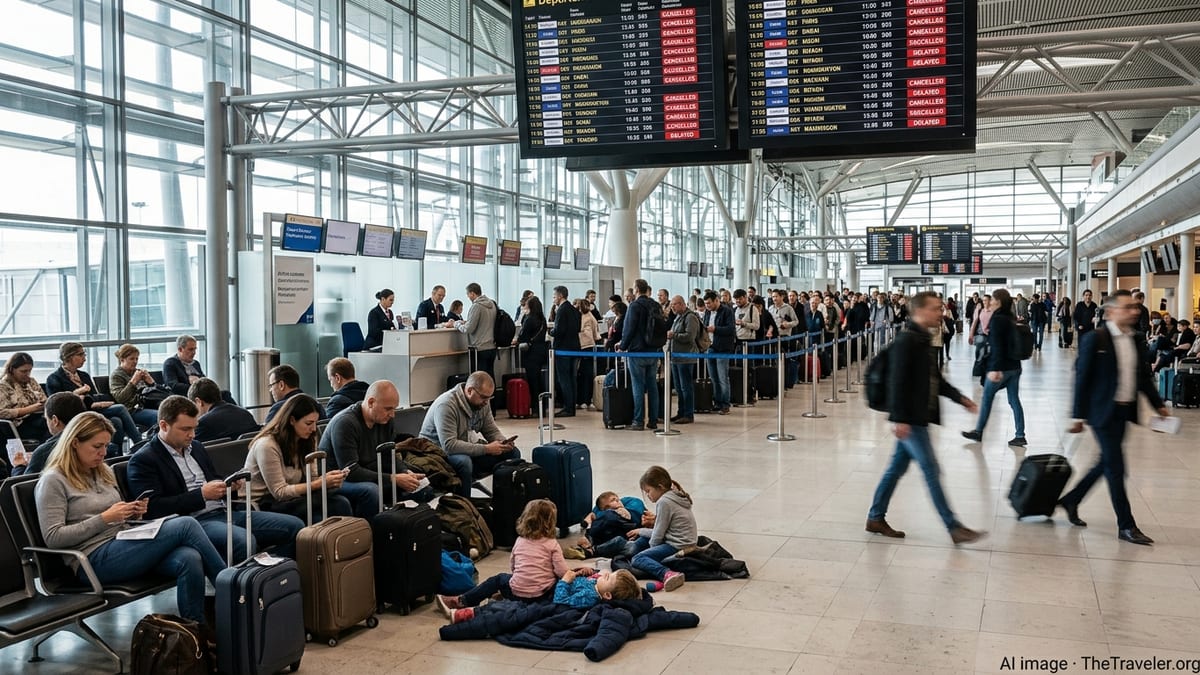
New Wave of Suspensions Hits Key Gulf and Levant Hubs
Publicly available information from airline statements and regional media indicates that a new round of route suspensions has hit some of the Middle East’s busiest gateways. Services to Dubai in the United Arab Emirates, Riyadh in Saudi Arabia and Beirut in Lebanon are among the most affected as carriers react to the evolving security picture and shifting conflict lines.
Recent coverage from aviation-focused outlets in the Gulf describes how Air France has temporarily halted flights to Dubai and Riyadh while prolonging an existing suspension of its Beirut services, citing the broader operational situation in the region and associated risk assessments. The move comes on top of earlier cuts by several European and Asian carriers that had already reduced exposure to contested airspace after US and Israeli strikes on Iran earlier in the year.
Factbox-style summaries produced by international news agencies show that these latest decisions build on a pattern established since the first phase of the Iran war, when many non-Gulf airlines either suspended Middle East destinations outright or diverted away from traditional hubs. Some of those reductions had gradually been eased as a ceasefire took hold, but the renewed hostilities in July have prompted a partial reversal of that trend for select cities.
While specific timelines vary by carrier, publicly available schedules suggest that some suspensions into Dubai and Riyadh are currently slated to run into late July and, in certain cases, beyond the summer season. Services to Beirut, which lies closer to several identified conflict zones, appear likely to remain more heavily constrained for longer, according to European travel industry reporting.
Operational Risk, Airspace Limits and Rerouted Traffic
The immediate trigger for many of the changes is a reassessment of overflight and approach risks along corridors that cross or skirt Iranian, Iraqi and Lebanese airspace. An updated set of conflict-zone advisories issued by European aviation safety authorities in mid-July highlights a continued high-risk environment over Iran, Iraq and Lebanon, even as broader regional tensions are described as having eased slightly compared with earlier peaks.
Aviation briefings produced by international consultancies in recent weeks describe how closures and restrictions in several Middle East flight information regions have forced carriers to rethink routings between Europe and Asia. The result is a patchwork of detours that increase flight times and fuel consumption, complicate crew scheduling and narrow the margin for maintaining previously published timetables into hubs such as Dubai and Riyadh.
Regional travel coverage from the United Arab Emirates notes that Gulf-based airlines have so far been more inclined to maintain service, often by using alternative southern corridors and carefully managed approach paths that remain clear of active military activity. At the same time, those reports document targeted cancellations to specific Saudi and Kuwaiti airports on days when missile or drone threats have prompted short-notice operational pauses.
For non-Gulf airlines, the combination of longer routings, insurance considerations and heightened security reviews has tipped the balance in favour of suspending flights altogether on certain routes. Industry analyses compiled in late June and July point out that this pattern is particularly visible on services into Beirut, where intermittent disruptions and the proximity of higher-risk airspace make schedule reliability harder to guarantee.
Patchy Recovery After Earlier Disruptions Now Under Pressure
The renewed US-Iran confrontation has arrived just as the regional aviation market was working through a fragile recovery from earlier conflict-related shocks. Travel features published in June tracked a gradual return to more normal patterns, with Gulf carriers such as Emirates and Etihad restoring capacity and some European airlines committing to phased resumptions of Middle East routes after an April ceasefire.
Those same reports made clear, however, that caution remained the guiding principle. Several large airline groups had already pushed back full reinstatement of Dubai and Riyadh flights to the autumn, while keeping Beirut off their networks until at least 2027 in some cases. By mid-July, fact-based overviews from global wire services were still describing a landscape in which many European carriers continued to avoid the most exposed city pairs even before the latest escalation.
The fresh outbreak of hostilities in early July has therefore tested that tentative progress. Airlines that had only recently resumed or announced returns to Dubai, Riyadh or onward connections through those hubs are now re-evaluating the pace of their comeback. Updated timetables and travel advisories show new layers of complexity, with selective route cuts, reduced frequencies and extended suspension dates appearing alongside continued growth by Gulf-based operators on safer corridors.
Analysts quoted in sector-specific commentary suggest that the stop-start pattern may persist as long as political and military conditions remain fluid. Carriers are expected to keep adjusting capacity in relatively small increments, returning flights when risk assessments permit and withdrawing again quickly if threats intensify.
Impact on Travellers and Regional Connectivity
For travellers, the most immediate effect of the suspensions is a reduction in non-stop options to three cities that normally function as major gateways between Europe, Asia and the wider Middle East. Passengers who would typically fly directly to Dubai, Riyadh or Beirut with European or Asian carriers may now find themselves rebooked via Gulf hubs, asked to connect through alternative cities, or facing longer total journey times as flights detour around restricted airspace.
Consumer-facing travel updates from publications in the Gulf highlight that many flights to and from the United Arab Emirates are still operating, particularly on local carriers, but they also urge passengers to monitor bookings closely. The same reports list multiple same-day cancellations for certain Saudi and Kuwaiti routes and note that connection patterns for onward travel into the wider region may change at short notice.
The partial withdrawal of some European and Asian airlines also has implications for competition and pricing. With fewer foreign carriers serving Dubai and Riyadh for parts of the summer, Gulf-based airlines could capture a larger share of connecting traffic, even as they confront their own cost and scheduling challenges. Industry observers writing in recent weeks have pointed out that this may reinforce the long-term trend toward regional consolidation of long-haul capacity at a handful of large hubs.
In Lebanon, where Beirut’s Rafic Hariri International Airport has historically depended heavily on foreign carriers, the continuation and extension of suspensions risk further isolating the country’s aviation market. Travel industry analyses compiled this summer warn that persistent uncertainty over flights can weigh on tourism and complicate the mobility of expatriate communities that rely on predictable air links.
What Travellers Should Watch in the Coming Weeks
As the situation continues to evolve, publicly available guidance from airlines and aviation authorities points to several key factors that will shape the outlook for flights to Dubai, Riyadh and Beirut. The first is the trajectory of the conflict itself, including whether recent US and Iranian military actions give way once more to a ceasefire or escalate into broader regional involvement that might trigger additional airspace closures.
The second factor is regulatory and insurance-related risk tolerance. Any tightening of conflict-zone bulletins or changes in how underwriters assess overflight and destination exposure could encourage more airlines to maintain suspensions for longer, even if day-to-day security incidents diminish. Conversely, a shift toward more permissive advisories, combined with proven operational workarounds, might support a gradual return of services on some routes.
Travellers are being encouraged, in publicly available travel advisories and airline notices, to check flight status frequently, allow extra time for connections and remain flexible about routing alternatives. While many journeys to and through the Gulf are still proceeding as planned, the renewed US-Iran conflict has introduced an additional layer of unpredictability, particularly for itineraries involving Dubai, Riyadh and Beirut, where schedule changes can materialise quickly as airlines continue to reassess the risks.