


More news on this day
Croatia has signed a new contract with domestic manufacturer Končar for six battery electric multiple units and the country’s first hybrid railway charging station, marking a new phase in the country’s shift toward cleaner regional rail services.
Get the latest news straight to your inbox!
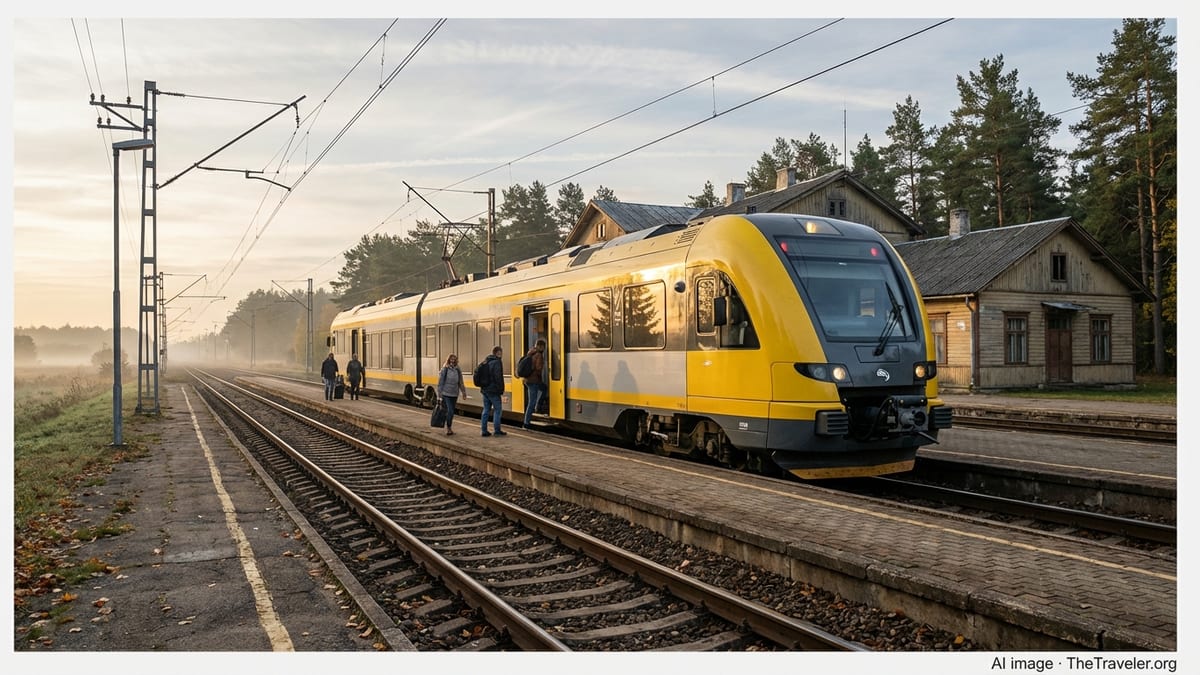
New contract anchors Croatia’s battery train rollout
According to publicly available information from Croatian government releases and Končar’s corporate announcements, the latest contract was signed on 16 July 2026 in Zagreb between national operator HŽ Passenger Transport and Končar – Electric Vehicles. The agreement covers the purchase and sale of six battery electric multiple units, often referred to as BEMUs, along with the commissioning of one hybrid stationary power connection for charging traction batteries on the national rail network.
Reports indicate that the new units build on earlier prototype and series vehicles already delivered by Končar, including Croatia’s first domestically produced battery train that entered regular service in 2025 on the Zagreb to Bjelovar route. The new contract extends that concept into a small fleet, intended for deployment on non-electrified or partially electrified regional lines where conventional electric trains cannot operate continuously.
Available summaries of the deal describe it as part of a wider national railway investment cycle supported by European Union funds under the National Recovery and Resilience Plan 2021–2026. That framework has already financed earlier battery units and charging points, and the latest order is presented as a logical next step, aligning rolling stock procurement with green transport objectives at both national and EU level.
Financial details of the six-unit contract have not been fully itemized in public documents, but previous Končar battery train projects with HŽ Passenger Transport have been associated with multi-million euro investments co-financed by European lenders and EU grant mechanisms. The pattern indicates similar blended funding is likely to underpin this latest expansion of the battery fleet.
Hybrid charging station planned for Kotoriba hub
The same package that secures new BEMUs also includes what Končar describes in its news releases as the first hybrid charging station on the Croatian rail network, to be built at Kotoriba railway station in the country’s north. Unlike earlier charging points that rely solely on the grid, the Kotoriba facility is planned as a combined system featuring a photovoltaic power plant integrated with an energy storage unit.
Publicly available technical descriptions suggest that the hybrid station will be able to store solar-generated electricity on site and then feed it to the trains’ traction batteries during scheduled stops. This is expected to reduce draw from the wider grid at peak moments and to demonstrate how local renewable generation can be paired with rail charging infrastructure in smaller regional hubs.
Kotoriba’s location on non-electrified and partially electrified routes makes it a strategic choice for the first hybrid installation. By situating the station at a junction for regional services, planners aim to support multiple battery services with a single piece of infrastructure, linking it to both existing diesel-operated routes and future electric sections that may be upgraded in coming years.
Reports from rail sector observers note that Croatia has already installed or planned several conventional charging points for earlier battery units in cities such as Split, Osijek and Varaždin. The Kotoriba project adds a new technological layer by combining charging with distributed renewable generation and on-site storage, turning the small border-region station into a test case for future hybrid nodes on the network.
Končar’s BEMUs and Croatia’s green rail transition
Končar’s battery electric multiple units are presented in company materials as three-car regional trains capable of operating under overhead catenary where available and switching to battery power on unelectrified stretches. This dual capability is designed to replace diesel multiple units on secondary lines without requiring immediate, full-length electrification of every route.
Previous projects involving Končar and HŽ Passenger Transport have outlined ranges on battery sufficient for typical regional distances between major hubs and branch-line termini. By using overhead power to charge batteries while operating on electrified sections, the BEMUs can then continue under battery power beyond the end of the wires, an approach increasingly used in several European countries seeking to cut diesel use on residual non-electrified corridors.
Croatia’s national rail investment plans, as summarized in public government presentations, envisage more than 6 billion euros in rail infrastructure and rolling stock spending by 2035. Within that framework, hybrid and battery trains are highlighted as tools to improve service quality on regional lines while limiting emissions and noise, and to connect medium-sized cities and rural areas more reliably to major urban centers.
The new BEMU contract and the Kotoriba hybrid charging station fit into this strategy by targeting routes where passenger demand justifies better service but full conventional electrification would be slow or cost intensive. For travelers, the expected benefits include quieter journeys, fewer local pollutants and more consistent timetables on lines that have historically relied on older diesel units.
Integration with earlier hybrid and battery fleet orders
The July 2026 agreement follows an earlier multi-year programme in which HŽ Passenger Transport ordered a mixed fleet of electro-diesel, battery electric and battery-only trains from Končar, alongside multiple standard charging stations. That package, reported at a value of nearly 118 million euros and financed through a loan from the European Investment Bank, included two charging sites at Lupoglav and Velika and signaled a shift toward alternative propulsion technologies in the national fleet.
Končar’s own investor and project documentation shows a sequence of contracts starting with prototypes and pilot charging points, leading to a first battery electric unit in regular service, then a broader fleet of hybrid and battery trains, and now an additional set of six BEMUs coupled with a more advanced hybrid charging solution at Kotoriba. This progression suggests that both manufacturer and operator are moving from experimental deployments to a more standardized battery fleet concept.
For the Croatian rolling stock industry, the contracts support local manufacturing capacity and engineering expertise, with Končar positioning its BEMUs and associated charging technology as exportable products. Trade fair appearances and promotional materials in recent years have highlighted the trains as examples of Croatian-developed green technology that could be adapted to other small and medium-sized networks across Europe.
Travel and rail analysts observing the region describe Croatia’s approach as a blend of incremental fleet renewal and targeted innovation. Rather than waiting for network-wide electrification, the country is using domestically built battery units and hybrid charging to improve service quality in stages, potentially influencing how other mid-sized European rail systems plan their own decarbonization paths.
Implications for passengers and regional tourism
While the latest Končar BEMUs are primarily a transport and industrial investment, the project carries potential implications for tourism across northern and central Croatia. More reliable and sustainable regional rail connections can make smaller towns and cross-border gateways more attractive to visitors who prefer to travel without a car.
Kotoriba, positioned near the Hungarian border, could gain new visibility as a node on low-emission regional services, particularly if future timetables integrate the battery trains with cross-border or long-distance connections. Travelers may experience smoother transfers and shorter journey times on routes that currently depend on slower diesel stock.
The broader rollout of battery and hybrid trains also dovetails with Croatia’s image as a destination that pairs coastal tourism with inland cultural and nature attractions. Improved, quieter rail links to interior regions can support excursions to lesser-known towns, wine areas and river landscapes, complementing heavily trafficked coastal corridors and helping to spread visitor flows more evenly through the year.
As additional details emerge on delivery schedules and route deployment for the six new BEMUs, the combination of domestic manufacturing, EU-backed investment and innovative charging infrastructure at Kotoriba will be closely watched by both rail professionals and travelers interested in lower-impact ways to move around Croatia.