


More news on this day
Airlines serving Johannesburg’s OR Tambo International Airport are reviewing contingency plans, including carrying additional jet fuel on certain routes, as new supply concerns emerge following a technical setback at South Africa’s main inland refinery.
Get the latest news straight to your inbox!
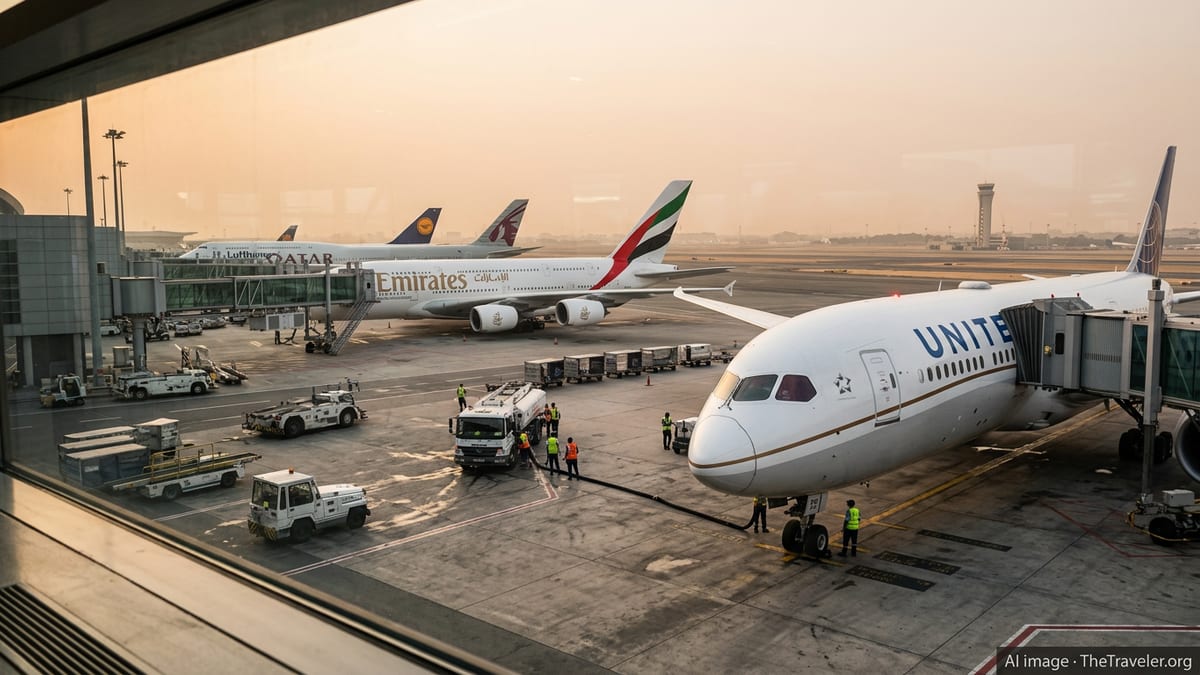
Refinery setback revives concern over OR Tambo fuel security
Publicly available information indicates that operations at the National Petroleum Refiners of South Africa (Natref) facility, which supplies the majority of jet fuel consumed at OR Tambo, have been affected by an unexpected unit shutdown. Airports Company South Africa (ACSA) and government communications describe Natref as providing between 70% and 80% of the airport’s demand, with the balance met via the multiproduct pipeline from the coast and by rail deliveries.
Official notices explain that repair work at the refinery is expected to constrain production and jet fuel availability from early September to early October 2026, raising the prospect of tighter on-site stocks during a period that normally sees solid business and leisure traffic through Johannesburg. Previous incidents, including a fire at Natref in early 2025 and infrastructure failures at the airport’s own bulk storage facility, have already highlighted the vulnerability of the hub to disruptions in a relatively concentrated supply chain.
Energy company statements this week describe new mitigation measures designed to minimize the impact of the latest refinery setback on airlines, including alternative sourcing and logistics adjustments. However, airlines operating long-haul and regional networks through Johannesburg are again reassessing their own contingency playbooks, which commonly include “tankering” strategies that involve departing with more fuel than is strictly needed for a single sector.
Tankering emerges as a practical hedge for international carriers
In the context of OR Tambo, tankering typically involves widebody aircraft arriving from fuel-secure hubs such as Europe or the Middle East uplifting additional fuel before proceeding on multi-stop African rotations or returning to long-haul bases. Industry guidance notes that carrying extra fuel can reduce exposure to possible limitations on uplift at vulnerable airports, particularly where local storage covers only a few days of average demand and where single refineries or aging infrastructure are key chokepoints.
Johannesburg has experienced several such chokepoints in recent years, from refinery outages to constraints on the dedicated pipeline that feeds Jet A1 into the airport. Past communications from ACSA highlight that OR Tambo normally holds around a week of jet fuel cover under stable conditions, which can be eroded quickly if there are disruptions to inland refinery output or to rail and pipeline deliveries. In those circumstances, airlines have historically been asked to moderate uplift or follow allocation protocols, adding operational complexity.
By bringing in additional fuel on inbound flights, carriers can reduce their reliance on local uplift for the outbound leg, easing pressure on constrained storage and allowing more flexibility in scheduling. While this approach comes with trade-offs in payload and fuel burn due to extra weight, network planners often view it as preferable to the risk of delays, diversions or forced cancellations when on-airport reserves tighten.
Operational and environmental trade-offs of carrying extra fuel
Carrying more fuel than is necessary for a single segment is not without cost. Aviation fuel itself is expensive, and additional weight increases consumption and emissions on each flight. Industry analyses referenced in recent jet fuel resilience discussions show that tankering can add several percentage points to fuel burn on long-haul sectors, depending on aircraft type and the volume of extra fuel carried. For airlines already managing thin margins and increasingly stringent sustainability commitments, this is a significant consideration.
Nevertheless, the operational risks tied to potential interruptions at a high-altitude, high-traffic hub like OR Tambo are also substantial. Travel industry coverage of earlier episodes of fuel stress at the airport documented cases in which some flights were diverted to coastal airports for refuelling, while others faced delays as ground handlers coordinated limited supplies among multiple carriers. Those events prompted calls from airline groups and fuel industry bodies for better forecasting, more diversified sourcing, and clearer communication on stock levels.
Current business continuity guidance circulated in the global aviation sector frames tankering as one of several tools available to manage disruption risk, alongside measures such as using alternative fuel grades where permitted, diversifying suppliers and storage locations, and pre-negotiating refuelling options at nearby airports. As long as supply from Natref remains less than fully stable, airlines operating through Johannesburg are likely to keep tankering in their risk management toolkit, even if only as a temporary hedge.
ACSA and fuel industry outline mitigation plans
ACSA and the fuels industry have emphasized in recent public updates that all major South African hubs, including Johannesburg, currently have sufficient jet fuel to support normal operations, even as they acknowledge ongoing structural vulnerabilities. Earlier this year, the Fuels Industry Association of South Africa and airline bodies reported that OR Tambo and Cape Town International were well stocked thanks to a mix of refinery output, imports and improved logistics, following several years marked by intermittent supply concerns.
Documents from the fuels industry describe how jet fuel for OR Tambo is supplied via a dedicated line from Natref and by rail transports from Durban, reflecting a system that depends heavily on a single inland refinery and a limited number of transport corridors. To manage this risk, the industry secured a competition-law exemption through mid-2026 that enabled closer coordination between competing fuel suppliers on logistics planning and stock management. This arrangement has supported the development of joint contingency plans for periods when refinery output drops or infrastructure maintenance is required.
ACSA’s own corporate planning material indicates that the company has prioritized fuel security as part of broader infrastructure upgrades at its main airports. These plans build on previous responses that included securing large volumes of imported jet fuel and arranging alternative delivery routes when equipment failures or Natref maintenance affected normal flows. Although the current situation has not triggered broad-based flight cancellations, the recurrence of supply alerts has kept the issue high on the agenda for airlines, fuel suppliers and tourism stakeholders.
Implications for travelers and the wider aviation market
For passengers, the most immediate concern is the possibility of schedule disruptions. At present, public reassurances from ACSA and industry bodies stress that flights are operating normally and that contingency measures are in place to protect the peak travel calendar. However, experience from previous disruptions shows that even localized constraints can cascade through airline networks, especially for carriers that run tight aircraft rotations and rely on Johannesburg as a connecting hub.
Airlines that choose to carry extra fuel on certain legs may be able to reduce the likelihood of last-minute diversions or delays linked specifically to fuel availability at OR Tambo. From a passenger perspective, such measures are largely invisible, but they can help maintain confidence in the reliability of the Johannesburg hub, which remains the primary international gateway to South Africa and a key link between Europe, the Middle East and the wider African continent.
In the medium term, repeated fuel supply scares could influence how airlines structure their regional networks, how much capacity they deploy into Johannesburg compared with alternative airports, and how investors view the resilience of South Africa’s aviation infrastructure. The combination of infrastructure upgrades, regulatory flexibility for coordinated fuel logistics, and pragmatic airline responses such as tankering will shape how effectively the country manages these risks during the upcoming refinery repair window and beyond.
https://www.sanews.gov.za/south-africa/acsa-reassures-passengers-over-jet-fuel-supply
https://www.businessday.co.za/news/2026-08-27-sasol-oil-acts-to-limit-or-tambo-jet-fuel-supply-woes/
https://fuelsindustry.org.za/wp-content/uploads/2025/05/Annual-Report-2024.pdf
https://www.travelnews.co.za/article/jet-fuel-supply-secure-until-june