


More news on this day
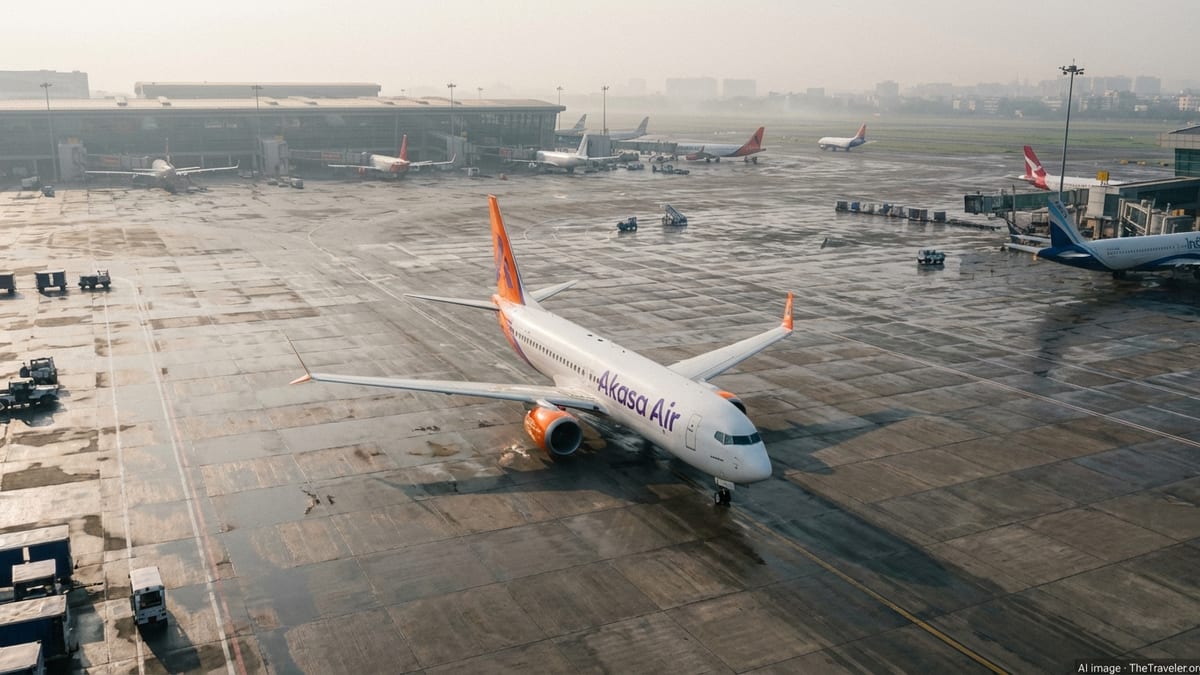
Akasa Air has quietly reached another fleet milestone as its 42nd Boeing 737 MAX aircraft enters service, reinforcing the Indian carrier’s rapid build-up and highlighting the broader expansion of India’s domestic and international air travel market.
Get the latest news straight to your inbox!
New 737 MAX Joins One of India’s Youngest Fleets
Tracking data and enthusiast reports indicate that Akasa Air’s latest Boeing 737 MAX 8, identified as VT-YBT, has been inducted as the airline’s 42nd aircraft, following a steady stream of deliveries through 2026. The new jet continues Akasa’s strategy of operating an all‑MAX, single‑aisle fleet tailored to India’s high‑density, short‑ and medium‑haul routes.
The 42nd aircraft follows closely on the heels of the airline’s 40th jet, which was celebrated in early July 2026 and highlighted in company disclosures as a key waypoint in its expansion plans. Publicly available information shows that Akasa has committed to a large orderbook of Boeing 737 MAX variants, giving it one of the most ambitious growth pipelines among India’s airlines over the next several years.
Registry databases and flight‑tracking platforms show that Akasa’s recent aircraft are predominantly high‑capacity MAX 8 and 8‑200 variants, optimised for dense seating and lower unit costs. The 42nd aircraft is understood to fit this profile, allowing the carrier to add capacity quickly on busy domestic trunk routes while freeing earlier deliveries for new city pairs and international expansion.
Orderbook Signals Long‑Term Bet on Boeing 737 MAX
Akasa Air’s reliance on the 737 MAX is not new, but the addition of the 42nd jet underscores the scale of its long‑term bet on the type. Public filings and manufacturer statements show that the airline has a firm order for 226 Boeing 737 MAX aircraft, spanning both MAX 8 and high‑density MAX 8‑200 versions, scheduled to arrive over the next several years.
Separate disclosures from Boeing in 2024 detailed a follow‑on order of 150 additional MAX jets for Akasa, designed to support the carrier’s dual focus on dense domestic routes and longer‑range international flying into the Gulf and Southeast Asia. The combination of these commitments positions Akasa among the largest MAX operators in Asia once all aircraft are delivered.
The MAX family offers fuel savings and lower emissions compared with older 737 variants, attributes that have become central to fleet planning in India’s cost‑sensitive, environmentally scrutinised aviation market. Industry analysis suggests that these operating efficiencies, combined with higher seating density in the 8‑200 sub‑type, are key to Akasa’s efforts to keep fares competitive while absorbing rising airport and fuel charges.
Fleet Growth Tracks India’s Surging Passenger Demand
The timing of Akasa Air’s 42nd aircraft aligns with a broader surge in Indian passenger traffic. Official traffic data and industry forecasts point to India as one of the world’s fastest‑growing aviation markets, with domestic volumes already surpassing pre‑pandemic levels and international flows climbing as new bilateral rights and airport capacity come online.
Reports from India’s aviation authorities show that low‑cost carriers remain the primary drivers of capacity growth, particularly on metro‑to‑metro and tier‑2 city pairs. Akasa, which launched commercial operations in August 2022, has consistently expanded its network footprint to more than 30 destinations, using each new MAX delivery to thicken frequencies on core routes and open new spokes.
The 42nd aircraft gives Akasa further flexibility to add rotations at congested hubs such as Delhi, Mumbai, Bengaluru and Hyderabad, while also supporting newer sectors connecting emerging business and leisure markets. Analysts following India’s aviation sector note that sustained fleet additions of this kind are crucial if carriers are to keep pace with rising demand and avoid the kind of chronic capacity constraints seen in earlier growth cycles.
Financing Deals Highlight Confidence in Expansion Plan
Recent sale‑and‑leaseback activity around Akasa’s 737 MAX fleet provides further insight into how the airline is funding its rapid build‑up. In mid‑August 2026, global lessor Avolon announced an agreement to place up to seven Boeing 737‑8‑200 aircraft with Akasa through a structured leasing arrangement, adding to earlier transactions between the two companies.
According to published coverage of the deal, the aircraft covered by the agreement are the higher‑capacity 737‑8‑200 variant, which combines a denser seating layout with the next‑generation MAX airframe. Aviation finance analysts point out that such transactions allow younger airlines like Akasa to expand quickly while limiting upfront capital expenditure, even as they commit to sizeable long‑term fleets.
The addition of the 42nd aircraft fits into this broader pattern of delivery financing and asset management. As more MAX aircraft arrive through a mix of purchase and lease agreements, Akasa can incrementally deploy capacity where yields are strongest, while maintaining the operational consistency that comes from operating a single aircraft family.
Safety Focus and Regulatory Oversight Remain in View
The Boeing 737 MAX program has operated under heightened scrutiny worldwide since its grounding in 2019, and ongoing regulatory oversight remains a central consideration as India’s MAX operators expand their fleets. Recent directives from the US Federal Aviation Administration relating to specific structural inspection checks on certain MAX variants have prompted clarifications from Indian airlines about the status of their fleets.
Public statements and media coverage in August 2026 indicated that Akasa Air’s 737 MAX aircraft, including its newest deliveries, have not been directly affected by the latest FAA airworthiness directive targeting a subset of 737‑8, 737‑9 and 737‑8200 jets. India’s Directorate General of Civil Aviation has previously mandated precautionary inspections on MAX fleets in the country, and reports indicate that these checks were completed satisfactorily by local operators.
For passengers, Akasa’s expanding roster of MAX aircraft, now including its 42nd jet, further normalises the type’s presence on Indian routes. Aviation observers note that continued transparent communication on safety oversight, coupled with the operational reliability of the MAX in day‑to‑day service, will remain important as India’s airlines deepen their reliance on the aircraft to meet fast‑rising demand.
Akasa Air welcomes 40th aircraft – PublicNow disclosure