


Landing at Cairo International Airport after a long flight, most travelers have the same question: what is the safest, most efficient and fairly priced way to reach downtown Cairo and popular hotel areas such as Tahrir Square, Zamalek or Garden City? With traffic that can swing from gridlock to surprisingly smooth and a mix of taxis, ride‑hailing apps, private transfers and public buses, making the right choice matters for both your budget and your stress level.
Get the latest updates straight to your inbox!
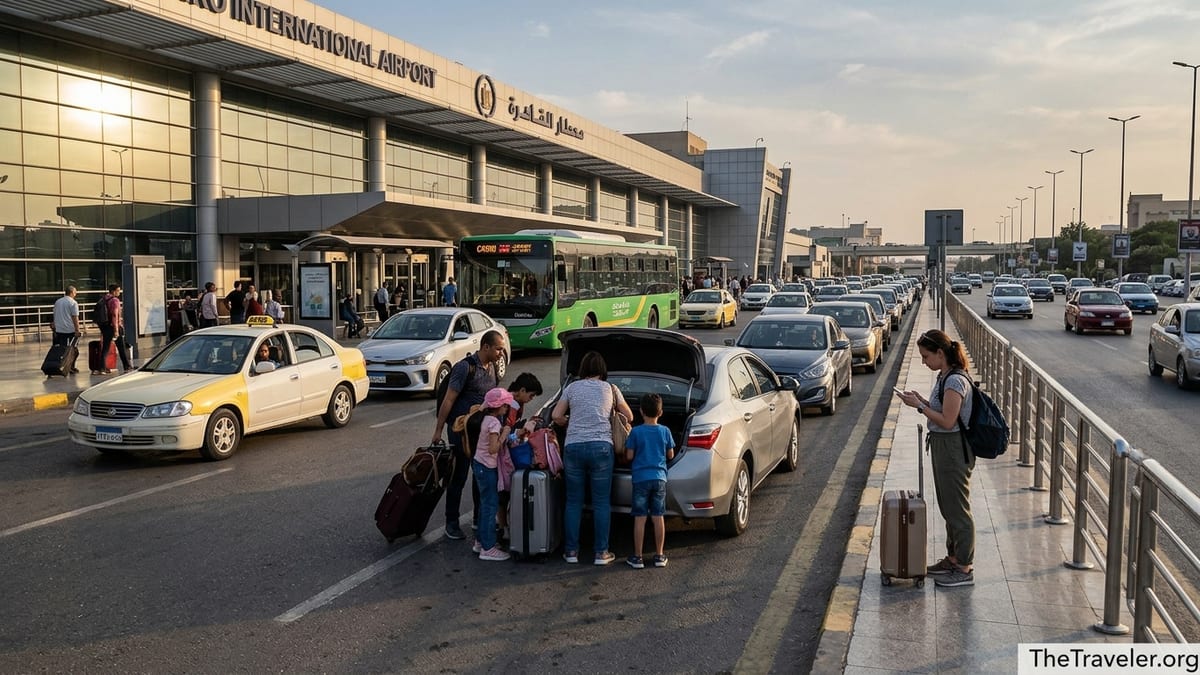
Understanding the Journey from Cairo Airport to Downtown
Cairo International Airport sits around 18 to 22 kilometers from central downtown Cairo, depending on where exactly you are headed. Many first‑time visitors aim for the area around Tahrir Square, home to the Egyptian Museum and several major hotels and guesthouses, or for the island of Zamalek on the Nile, where upscale boutique hotels and embassies cluster. In light traffic, the drive can take as little as 30 minutes. At peak times in the late afternoon or early evening, it can stretch closer to 60 or even 75 minutes, especially if you are crossing into Zamalek or continuing on to Giza.
The main road link is the Airport Road connecting to Salah Salem Street, one of Cairo’s major arteries, before filtering into downtown streets. This is a multilane route that flows relatively well outside rush hour but can back up near major intersections and flyovers. If you land in the middle of the night, for example at 02:00, you may be pleasantly surprised to find the drive into town almost traffic‑free. If you land between 16:00 and 19:30, you should mentally budget extra time and accept that slow‑moving traffic is part of the Cairo experience.
All ground transport options from Cairo International ultimately contend with the same roads and traffic lights, so while some are marginally faster door to door, the bigger differences come from comfort, predictability of price and how well they cope with luggage, language barriers and late‑night arrivals.
For most travelers, the practical decision is between three broad choices: hailing a regular taxi or airport limousine, using a ride‑hailing app such as Uber, or booking a private transfer in advance. A small but growing number of visitors also experiment with the public bus into downtown, which is by far the cheapest but requires more confidence and flexibility.
Classic Taxis and Airport Limousines: What to Expect
Traditional taxis and official airport limousine services remain a visible presence at all terminals, and many visitors still end up in one simply because it is the first option offered as they walk out of customs. Fares to downtown Cairo typically fall in a broad range. As of mid‑2026, a realistic expectation for a standard airport taxi or limousine from the airport to central downtown is roughly in the band of 250 to 600 Egyptian pounds, depending on your negotiation skills, time of day, vehicle type and whether you accept a hotel or driver’s suggestion without questioning it.
At Terminal 3 and Terminal 2, after exiting customs you will see counters and drivers advertising limousine services. These are usually newer sedans with air conditioning, sometimes run by companies that have long‑term concessions at the airport. Prices are often posted on boards or available at a fixed‑fare desk. Typical quotes for a private sedan to a well‑known downtown hotel, such as the Steigenberger Hotel El Tahrir near Tahrir Square or one of the chains along the Corniche, often fall somewhere in the 300 to 450 Egyptian pound range for up to three passengers with standard luggage. You pay at the counter or directly to the driver once you reach your destination.
Outside the terminal doors, you will likely be approached by freelance taxi drivers. Many operate white metered taxis, while others rely on negotiation. If you choose this route, it is wise to agree on a price before you get into the car. For a ride to Tahrir Square, Zamalek or Garden City, you might start by countering high initial quotes with a figure closer to the mid‑range of what you know to be reasonable. Some travelers report airport taxis initially quoting amounts that are several times the going rate and then quickly dropping when politely challenged. Having a rough idea of what an app‑based ride would cost for the same distance can help anchor the conversation.
The main advantages of classic taxis and limousines are simplicity and immediate availability. You walk out, find a car, and go. This can be a relief if you land late at night, are exhausted, or cannot get your phone or eSIM working right away. On the downside, you give up the security of a tracked trip and a clearly itemized fare. First‑time visitors sometimes feel pressured into paying more than they intended, especially if they did not research typical fares in advance.
Uber and Other Ride‑Hailing Apps: Convenience with Caveats
For many travelers, ride‑hailing apps such as Uber have become the preferred way to leave Cairo International Airport. Uber operates extensively in Cairo and can usually be used 24 hours a day, including for airport pickups. Prices vary with demand, but under normal conditions, rides from the airport to central downtown areas such as Tahrir Square or Garden City often fall somewhere in a competitive range compared with airport limousines and negotiated taxis, frequently on the lower end of what you might pay at the taxi queue.
Using an app has clear advantages. You see a fare estimate before you confirm, your route is tracked via GPS, and you can share trip details with a friend or family member. For example, a traveler arriving on a late‑evening flight might step out of Terminal 3, order an UberX to a mid‑range hotel near the Egyptian Museum, see an estimated fare displayed in the app and be on the road within 10 to 15 minutes. The driver’s name, car model and license plate appear on your screen, which helps you identify the vehicle in the sometimes busy pickup zones outside arrivals.
Finding the correct pickup point is important. At Cairo International, ride‑hailing drivers often wait in nearby parking areas, then move toward an agreed spot once your request is accepted. Many travelers report that the pickup area is on the curb directly outside the arrivals doors or across a short stretch of parking, depending on the terminal and any current airport rules. Because arrangements can change, it is wise to follow the in‑app directions carefully and, if needed, send the driver a short message naming your terminal and door number. Give yourself a few minutes after landing to connect to Wi‑Fi, purchase a local SIM or activate an eSIM, and request your ride once you are fully outside customs and ready to meet the car.
There are, however, some caveats. Peak‑time surge pricing can push app fares higher than expected, particularly in the early evening or during busy conference or holiday periods. Some drivers may suggest canceling the in‑app fare and continuing in cash at a higher price; this undermines the protections of the platform and is best avoided. If a driver insists on changing the agreed terms, you can politely decline, cancel the trip and request another car. For travelers landing very late at night or early in the morning, availability is usually still good, but it can take slightly longer for a driver to accept your request compared with daytime hours.
Private Transfers and Hotel Pickups: Low‑Stress but Higher Cost
For visitors who value predictability and minimal hassle above all else, pre‑arranged private transfers remain a strong option from Cairo International Airport to downtown. Many mid‑range and upscale hotels in areas such as Garden City, Zamalek and Downtown offer their own airport pickup services. When you reserve a room, particularly at international chains or well‑established local properties, you are often offered a sedan or minivan transfer at a fixed price, quoted in Egyptian pounds or occasionally in euros or US dollars.
Prices vary widely depending on the level of service and the type of vehicle. For a standard private sedan suitable for one or two travelers with luggage, rates to central Cairo commonly fall somewhere in the mid‑to‑upper range compared with taxis and ride‑hailing, while luxury hotels may charge a premium. For example, a traveler staying at a five‑star property on the Nile Corniche might pay more than they would for an UberX or standard airport limousine, but in return they get a driver waiting in the arrivals hall holding a sign with their name, help with bags and a direct walk to the car without needing to negotiate or navigate the curbside crowds.
Third‑party transfer companies also operate widely in Cairo, serving visitors who book via online travel agencies or specialist airport transfer services. These companies typically offer tiers of vehicles, from compact sedans to larger vans for families or small groups. One practical example would be a family of four arriving with large suitcases and a stroller and heading to a hotel in Zamalek. Booking a pre‑arranged van means avoiding the uncertainty of whether a single sedan can handle all the luggage and offers the comfort of knowing child seats or extra luggage space can be requested in advance.
The main advantages of private transfers are reliability and a clear, prepaid price. Drivers usually monitor flight status and adjust pickup times if your flight is delayed. This can be especially reassuring if you land close to midnight or in the early hours and want the comfort of knowing someone is waiting specifically for you. The principal drawbacks are cost and the need to organize everything before departure. If your plans change at the last minute or your flight is rerouted, you may need to work with the transfer company to adjust or cancel, sometimes with fees.
Public Buses: The Budget‑Friendly but Challenging Option
Public buses from Cairo International Airport to downtown appeal to budget‑minded and more adventurous travelers. The official Cairo Transport Authority runs routes linking the airport area with key city hubs, including the central bus and metro areas near Tahrir Square and Abd El Moneim Riad. These routes, such as buses labeled with numbers like 356 or 400, can provide a direct or near‑direct run to central Cairo, often at a fraction of the cost of any private vehicle.
Fares on these buses are very low by international standards, usually just a handful of Egyptian pounds paid in cash to the conductor or driver once you board. For example, a traveler might pay roughly the cost of a small snack to ride from the airport area to a central downtown bus stop within walking distance of the Egyptian Museum. Travel time is variable, typically around 60 to 90 minutes depending on traffic, the exact route and how many intermediate stops the bus makes along the way.
The biggest challenge is navigating the system itself. The main airport bus terminal is reached either on foot from certain terminals or by using an internal airport shuttle to move between terminals and parking zones. Bus signage may not always be clear in English, and while some drivers and passengers speak basic English, many do not. Large suitcases can be awkward to store on crowded buses, especially during commuter peaks. For example, a solo backpacker landing during the daytime with only a small pack may find the bus manageable and rewarding, while a couple arriving with two large checked bags each might feel they are taking up too much space and prefer a taxi or ride‑hailing car.
For travelers arriving late at night, public bus frequencies drop, and depending on the exact hour, routes may be limited or feel less comfortable. In addition, a bus will drop you at a central hub, after which you still have to walk or take a short taxi ride to your hotel on streets that may be unfamiliar. For this reason, the airport bus is better suited to experienced urban travelers comfortable with crowds, heat and a certain amount of improvisation, rather than to families with young children or visitors arriving after midnight.
Traffic Patterns, Luggage and Late‑Night Arrivals
Cairo’s traffic has a reputation for being intense, but understanding basic patterns can help you choose the right transfer at the right time. Morning rush hours between roughly 07:30 and 09:30 and evening peaks from around 16:00 to 19:30 are generally the slowest periods to leave the airport. During these windows, any road‑based option will likely take longer, and you should allow at least an hour to reach central areas such as Tahrir Square or Zamalek. In contrast, mid‑day and late‑night journeys are often smoother, with some travelers reporting airport‑to‑hotel runs as quick as 25 to 30 minutes in the early afternoon or after midnight.
Luggage is another key factor. A solo traveler or couple with two medium suitcases and hand luggage should fit comfortably in a standard sedan, whether it is a taxi, Uber or hotel car. If you arrive with bulky sports equipment, multiple large checked bags or items like musical instruments, it is worth considering a larger vehicle category where available or booking a private transfer van. For instance, a small group arriving with camera equipment for filming or photography work might find it much easier to pre‑book a minivan than to hope for an Uber driver with sufficient trunk space at the last minute.
Late‑night arrivals present a special set of considerations. Cairo International Airport is active around the clock, and it is common to see flights landing after midnight. At these hours, ride‑hailing services usually still operate, and airport limousines continue to serve passengers. However, public transport options become less frequent. Streets are generally quieter, which feels less chaotic but can also feel more isolated to some travelers. If you are arriving alone, especially if you are unfamiliar with the region or feel nervous about navigating a new city at night, booking a hotel car or trusted private transfer in advance can offer peace of mind.
In all scenarios, keeping your valuables in a small bag that stays with you, rather than in the trunk, is a sensible precaution. This applies equally to taxis, ride‑hailing cars, private transfers and buses. Cairo is a generally welcoming city, but like any major metropolis, basic travel security habits will help you start your visit smoothly.
Choosing the Best Option for Your Hotel Drop‑Off
Your final destination in Cairo plays a large role in which transfer option makes the most sense. If you are staying at a well‑known hotel in downtown, Garden City or on the Nile Corniche, both ride‑hailing apps and private transfers have no trouble navigating directly to the entrance. For example, hotels such as those clustered around Tahrir Square sit on wide, well‑known streets where drivers frequently drop off visitors. In these cases, a pre‑arranged hotel car or an Uber from the airport is usually straightforward and efficient.
If your accommodation is on the island of Zamalek, you should factor in the extra time needed to cross the Nile bridges and sometimes negotiate narrow, one‑way streets. Ride‑hailing drivers are generally familiar with popular hotels and guesthouses on the island, but it can still help to have the full address, including nearby landmarks, ready in Arabic and English. Smaller boutique hotels tucked into side streets may require the driver to stop nearby, after which you walk the final short distance. In such neighborhoods, agreeing on a clear drop‑off point in advance, such as a larger hotel on the main road, can reduce confusion.
For stays in older downtown buildings or guesthouses on upper floors with small or no elevators, think about how comfortable you are carrying luggage from the curb into the property. A private transfer or hotel car often includes proactive help with bags right up to the reception desk. App drivers and taxi drivers may or may not assist to the same extent. If you arrive with multiple pieces of luggage or mobility constraints, it can be worth paying slightly more for a service that explicitly includes luggage assistance and door‑to‑reception support.
Travelers continuing directly to Giza or the pyramids area face a longer journey, with typical drive times of 60 to 90 minutes depending on traffic. In such cases, the incremental cost of a private transfer can feel more justified, particularly after an overnight flight, as it removes the need to negotiate a high fare for a long taxi trip or worry about app coverage in districts further from central Cairo. Regardless of your destination, having the hotel name and address written out clearly, along with a pinned map location available offline, is one of the simplest ways to prevent miscommunication.
The Takeaway
Traveling from Cairo International Airport to downtown is straightforward once you understand the trade‑offs between comfort, cost, predictability and your own appetite for navigating a new system. Regular taxis and airport limousines offer the most immediate, familiar option, particularly if your phone is not yet connected, with prices that can be reasonable if you negotiate and confirm the fare in advance. Ride‑hailing apps bring transparent pricing and route tracking, making them a favorite for many tech‑savvy visitors, provided you are prepared for occasional surge pricing and are firm about keeping the trip within the app.
Pre‑booked private transfers and hotel pickups sit at the premium end of the spectrum, delivering maximum convenience and minimal stress, especially for late‑night arrivals, families, or travelers carrying lots of luggage. Public buses, on the other hand, are best for experienced, budget‑conscious travelers who are comfortable with basic Arabic signage, crowds and a slower, less predictable journey. No single option is perfect for every traveler or every time of day, but by matching your priorities with the strengths of each choice, you can start your time in Cairo in a way that feels safe, efficient and aligned with your comfort level.
Before you fly, consider your arrival time, how much luggage you will have and exactly where you are staying. With those details in mind, decide whether you want the simplicity of an airport limousine, the transparency of an app‑based ride, the low cost of a bus or the personal welcome of a hotel driver waiting just beyond customs. Investing a few minutes of planning now can transform your first hour in Cairo from stressful uncertainty into a smooth introduction to one of the world’s most fascinating cities.
FAQ
Q1. How long does it usually take to get from Cairo Airport to downtown?
In normal traffic, the drive typically takes about 30 to 45 minutes; during rush hour or when heading onward to Giza it can extend to around 60 to 75 minutes.
Q2. What is a reasonable price for a taxi from the airport to central Cairo?
Prices vary, but many travelers pay an amount in the mid‑range between budget public transport and premium hotel cars, with higher charges late at night or for larger vehicles.
Q3. Is it safe to use Uber or similar apps from Cairo International Airport?
Most visitors find app‑based rides reliable and safe when booked through the official app, following the driver and vehicle details and avoiding off‑app cash deals suggested by some drivers.
Q4. Can I pay for my airport transfer by card, or do I need cash?
Ride‑hailing apps generally allow card payment through the app, while many taxis and some private transfers prefer or require cash in Egyptian pounds, so carrying some local currency is helpful.
Q5. Are public buses from the airport to downtown suitable for first‑time visitors?
They are best suited to budget travelers comfortable with crowded local transport and basic Arabic signage; most first‑time visitors prefer taxis, ride‑hailing or hotel transfers.
Q6. What is the safest option if I arrive in Cairo late at night?
If you land after midnight, the safest and least stressful options are usually a pre‑booked hotel transfer or a ride‑hailing car arranged from inside the terminal once you are ready to leave.
Q7. How should I handle my luggage on Cairo airport transfers?
Keep valuables and documents in a small bag that stays with you, ensure your suitcase fits safely in the trunk, and consider booking a larger vehicle or van if you have multiple large bags.
Q8. Do drivers know smaller guesthouses and apartments, or only big hotels?
Drivers are very familiar with major hotels and landmarks; for smaller guesthouses or apartments, it helps to have the full address and a nearby well‑known landmark ready to show them.
Q9. Will my hotel arrange an airport pickup if I ask?
Many mid‑range and higher‑end hotels in downtown, Garden City and Zamalek offer pre‑arranged airport pickups for an extra fee, which you can usually request when booking your room.
Q10. Should I tip my driver for an airport to downtown transfer?
Tipping is customary but modest; many travelers round up the fare or add a small percentage if the driver helped with luggage or navigated heavy traffic patiently.