


Mykonos Town, or Chora, tends to conjure images of international DJs, champagne showers, and crowds pouring out of beach clubs long after sunrise. Yet step away from the stereotype, and a different town begins to emerge: a compact Cycladic capital where fishermen still unload their catch at dawn, cats curl up in sunlit doorways, and grandmothers quietly sweep whitewashed stoops. On a recent visit, I found that Mykonos Town felt more charming than I expected, precisely in the spaces and hours the party crowd often skips.
Get the latest updates straight to your inbox!
First Impressions: Arriving With Low Expectations
I arrived in Mykonos with my guard up. The island’s reputation in 2026 remains unabashedly hedonistic, with glossy marketing promising bottomless brunches at Paradise Beach, big-name DJs at Cavo Paradiso, and bottle-service tables that can cost more than a flight to Greece. Even online forums are divided between those who adore the party scene and those who dismiss Mykonos as overpriced and overrated. I expected a kind of Greek Las Vegas on the sea.
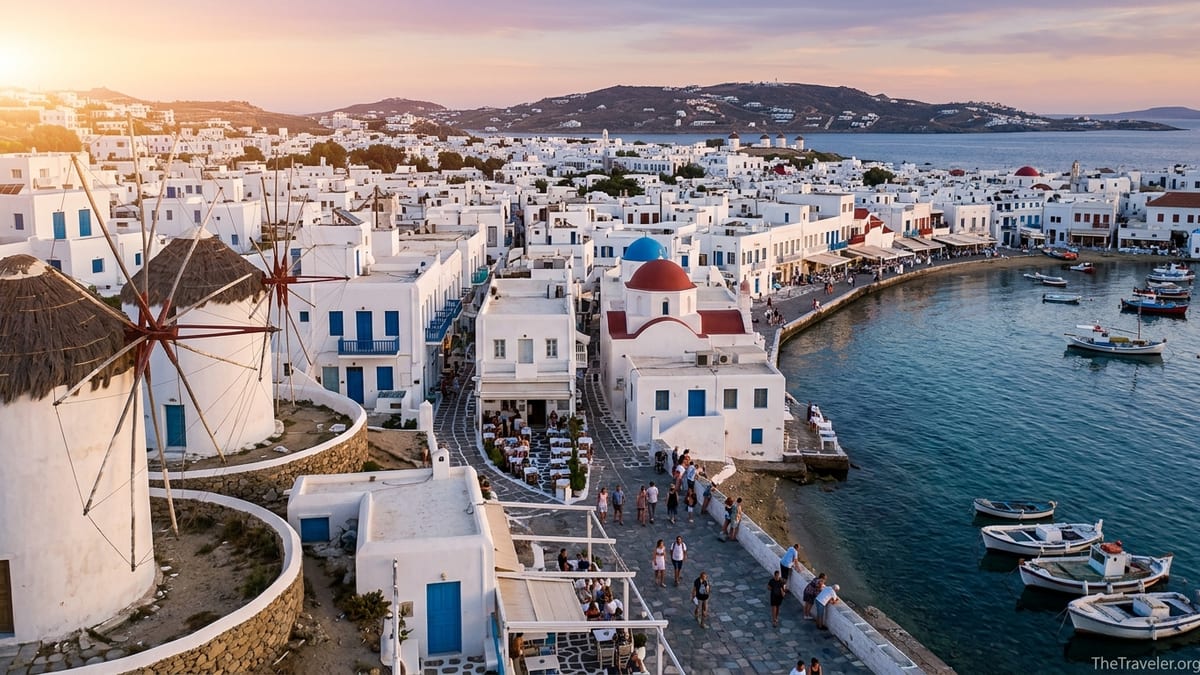
Yet my first steps into Mykonos Town from the Old Port told a different story. Tender boats from cruise ships still unload steady streams of visitors in high season, but the waterfront itself feels surprisingly small-scale: bobbing fishing boats, a curve of low, whitewashed buildings, and the red-domed roof of a small church breaking the skyline instead of looming hotel towers. The first morning, around 8 a.m., I walked from the quay up toward Manto Mavrogenous Square and found the streets almost empty except for delivery workers, a handful of locals, and the smell of fresh bread drifting from a bakery.
That quiet walk set the tone for my stay. I realized that timing is everything in Chora. At noon in July, the same alleys can feel packed and performative, but before 9 a.m. or after the dinner rush, the town shrinks back down to a village: modest, human-scale, and unexpectedly gentle. If you arrive expecting only EDM and excess, this softer side can feel like discovering a secret island hidden inside a famous one.
Even the famous windmills above Little Venice, so often photographed that they risk becoming a cliché, take on a different character in these off-hours. Instead of selfie sticks and thumping bass, the soundtrack is the wind moving through the blades and the soft clatter of dishes from nearby homes preparing breakfast. That is the Mykonos Town I had not been told about.
Wandering the Labyrinth: How Getting Lost Became the Point
There is a practical reason Mykonos Town feels like a maze. Its narrow, winding lanes were deliberately designed centuries ago to confuse invading pirates, a defensive strategy that today confounds tourists instead. One afternoon, I left Matogianni, the main commercial spine packed with designer boutiques and jewelry stores, and decided not to check the map for an hour. Within minutes, the branded storefronts had given way to tiny grocery shops, hidden chapels, and laundry hanging above my head between balconies.
The shift was not dramatic in distance, but it was profound in mood. On a lane barely wide enough for two people to pass, I stumbled on a micro-square where three whitewashed houses formed a rough triangle around a single tree. A cat slept on the cool marble threshold of a doorway; someone had left a plastic chair outside with a half-finished coffee. It felt like I had trespassed onto a private stage set, until a woman nodded and simply continued sweeping. This was not the Mykonos that sells reserved sunbeds for the price of a hotel room; this was a lived-in town.
That pattern repeated throughout Chora. Turn one way and you are back amid shop windows filled with high-end sandals and resort wear, a reminder that Mykonos aims at a global luxury crowd. Turn the other, and you end up at a dead-end alley fronting a simple church painted so white it almost glows in the afternoon sun. In the Kastro neighborhood, near the remains of a Venetian-era castle, some streets were so quiet I could hear only the sea in the distance and the murmur of a TV from an upstairs living room.
One of the unexpected pleasures of this labyrinth is that it slows you down. Without the ability to walk in a straight line for more than a few meters, you are forced into a wandering rhythm. I ducked into a small family-run bakery for a cheese pie that cost a fraction of what a cocktail in Little Venice would later in the evening. A few turns after that, I found an art gallery displaying local photography focused entirely on the island in winter, when the clubs shut down and Mykonos reverts to a community of a few thousand residents. The message was clear: Chora is more than its peak-season persona.
Little Venice and the Old Port: Beyond the Instagram Shot
Little Venice, the compact waterfront quarter where old sea captains once built their homes directly over the water, has become one of the defining images of Mykonos. In photos, its wooden balconies seem made for sunsets and champagne. On the ground, reality is close to the image, but layered. By day, the seafront is lined with cafes and small galleries; in early evening, the bars bring out cocktail menus with prices that can easily climb to 18 or 20 euros for a drink, a premium you are paying largely for the view.
Walk just five minutes inland, though, and the pricing softens. I took a table at a back-street taverna where a plate of grilled sardines, a Greek salad, and a glass of house white came to roughly the same price as a single waterfront cocktail. The owner chatted about how Little Venice had changed, noting that some of the fanciest bars had opened and closed again over the last few years, but that the basic rhythm of the quarter remained the same: quiet in the heat of the day, then dense with sunset watchers pressed shoulder to shoulder along the low seawall.
Standing on that seawall around 7:30 p.m., facing west toward the island of Delos, I understood the appeal. The stone houses flush with the sea cast reflections on the water, and the row of windmills above takes on a silhouette that feels almost theatrical. Yet even here, away from the loudest clubs, there is a hint of the party reputation in the air. Servers carry trays of Aperol spritzes and champagne flutes; a DJ eases the music volume up as the sky turns orange. It is festive, but not yet frantic, and if you choose one of the simpler cafes closer to the Old Port, you can enjoy the same sunset with a glass of local wine for a fraction of the price.
The Old Port itself was perhaps the biggest surprise. Very early in the morning, between about 5 and 7 a.m., small fishing boats still come in, and on some days you can watch as the catch is unloaded directly onto the quay. On one dawn walk, I passed a fisherman hosing down the deck of his boat while a restaurant buyer inspected plastic crates of squid and small fish. A cruise tender was idling a short distance away, waiting for its first passengers, but in that moment the harbor felt like any working Greek port, grounded and practical rather than glamorous.
Cafes, Courtyards, and Quiet Corners
If the clubs of Paradise and Super Paradise Beaches define the loud side of Mykonos, the cafes and courtyards of Chora define its quieter charm. One of my favorite routines became a mid-morning coffee stop in a side-street kafenio just above the harbor. Inside, the decor was unapologetically simple: plastic chairs, a TV set tuned to local news, yellowed photos of the town before tourism exploded. A Greek coffee here cost roughly 3 euros, and while tourists occasionally drifted in, most of the customers were local men playing backgammon or chatting about the day’s wind conditions.
In another shady courtyard tucked off a lane between the port and Matogianni, a more polished cafe served iced coffee and freshly squeezed orange juice to a mix of remote workers, couples, and off-duty hotel staff. I sat there one afternoon listening to a server explain bus routes to two visitors who wanted to see the beaches without paying for a taxi. The advice was pragmatic: buses from Fabrika to Ornos, Platis Gialos, and Paradise Beach, and from the northern depot near the Old Port to Agios Stefanos and other northern coves. It was a small reminder that Chora is still the functional hub of the island, more than just a photo backdrop.
Prices in these quieter corners are not cheap by Greek standards, but they are noticeably more reasonable than the marquee addresses on the waterfront. A light lunch of stuffed tomatoes and a soft drink in a back-street taverna cost around 15 euros, compared to 25 or more for a main course in a heavily advertised harbor-view restaurant. For travelers willing to trade a little glamour for authenticity, these tucked-away spots can dramatically change the feel of a stay.
The ultimate antidote to the island’s party image, though, may be the residential lanes just above the commercial core. Here, potted plants spill onto steps, children play with scooters, and older residents sit in doorways catching the evening breeze. Walk these streets around 6 p.m., when the heat begins to ease and the pre-party crowd has not yet hit the bars, and you may hear only the sound of church bells and clinking plates from open kitchen windows.
Experiencing Mykonos Town on a Softer Budget
Mykonos is objectively more expensive than many other Greek islands, especially in peak season, but it is still possible to experience the charm of Chora without constantly watching receipts climb. One of the most effective strategies is to plan your main meals away from marquee sunset spots. A sit-down dinner in Little Venice with a couple of drinks can easily reach 50 to 70 euros per person, while a family-run taverna a few lanes inland might serve you grilled fish, a shared starter, and house wine for 25 to 35 euros.
Street food is another budget-friendly way to lean into the town’s everyday side. A generous gyro or souvlaki wrap typically costs around 5 to 7 euros, and you can eat it on a bench near the harbor or in a small square watching local life unfold. For breakfast, many bakeries sell spanakopita or tiropita pastries for a few euros each, along with take-away coffee. Grab one and walk to the waterfront to watch early ferries and fishing boats instead of paying for a sit-down brunch somewhere designed for social media.
When it comes to activities, the most memorable experiences in Mykonos Town are often free or low cost. Wandering the alleys, visiting small churches like Panagia Paraportiani near the Kastro quarter, or watching the sunset from the hill of the Kato Myli windmills costs nothing. If you want a structured experience, short guided walking tours of the Old Town typically start from around 30 to 40 euros per person, and can offer context on the town’s maritime past, architecture, and shifting tourism trends.
Accommodation in Chora itself tends to command a premium, but there are mid-range guesthouses and simple rooms within walking distance of the center. Staying in town has a hidden financial benefit: you can walk almost everywhere, reducing or eliminating taxi use, which on an island with high-season demand can be costly. For visitors who are not focused on clubbing into the early hours, a central base makes it easy to enjoy quiet early mornings and late-night strolls when the alleyways empty out again.
Choosing Your Moments: When Mykonos Town Feels Most Charming
Mykonos Town’s dual identity is largely a question of timing. The same street that feels like a runway for designer outfits at 11 p.m. can feel like a village lane at 7 a.m. On my second day, I set an alarm for dawn and was rewarded with scenes that completely contradicted the island’s party caricature: a priest unlocking a small church door; a woman hanging laundry across a lane; cafe owners dragging out tables and chairs, pausing to greet neighbors wandering by with dogs.
By mid-morning, the cruise-day trippers and shoppers begin to fill Matogianni and the lanes around the waterfront. This window, roughly from late morning to late afternoon in peak months, is when Chora most resembles the popular image of Mykonos: crowded, glossy, and occasionally overwhelming. If you want to experience the town at its most photogenic but least stressful, it can be wise to retreat to a cafe in a back street or even take a bus to a nearby beach for a few hours, returning to town as the worst of the afternoon heat subsides.
Evenings are split into two distinct phases. Around 8 to 10 p.m., couples and families stroll, restaurants fill with dinner reservations, and street musicians position themselves where the foot traffic is thickest. The mood is festive but generally relaxed. After midnight, however, the energy shifts; music from bars in areas like Barkia grows louder, crowds thicken, and the town edges closer to the nightlife persona that made it famous. If clubbing is not your priority, the earlier evening hours allow you to soak in the lights, sounds, and occasional glimpses of luxury without feeling squeezed by it.
In shoulder seasons such as late May or early October, the contrast is softer. Some of the biggest clubs reduce their schedule, but Chora remains lively, with enough visitors to keep restaurants open while leaving the lanes easier to navigate. For travelers whose idea of charm includes some buzz but not a constant party soundtrack, these months can be ideal.
The Takeaway
Mykonos Town’s reputation as a party capital is deserved, but incomplete. The same labyrinth of whitewashed alleys that leads revelers from bar to bar also shelters tiny chapels, family-run bakeries, and courtyards where life ticks along with little interest in DJ lineups. The Old Port still functions as a working harbor at dawn; the residential lanes above Matogianni still host conversations between neighbors leaning over balconies, unconcerned with who has just ordered a magnum of champagne in Little Venice.
Whether Mykonos Town feels charming or chaotic depends on how, and when, you meet it. Arrive expecting only neon and noise, and you may miss the quiet rituals that unfold in the margins. Give yourself early mornings, back streets, and the freedom to get lost, and the town reveals a softer character, rooted in Cycladic architecture and everyday routines. In the end, the surprise is not that Mykonos can host world-famous parties, but that beneath the volume and the sparkle, it still manages to feel, at the right moments, like a village by the sea.
FAQ
Q1. Is Mykonos Town worth visiting if I am not into nightlife?
Yes. Even if you skip the clubs entirely, Mykonos Town offers atmospheric alleys, small churches, harborside walks, and a strong sense of Cycladic architecture that make it rewarding in its own right.
Q2. When is the best time of day to experience the town’s quieter charm?
Early mornings between about 7 and 9 a.m. are ideal, with empty lanes, soft light, and locals opening shops. Early evenings before the late-night bar rush are also pleasantly relaxed.
Q3. Are prices in Mykonos Town as high as its reputation suggests?
Prices in headline spots like Little Venice can be very high, especially for cocktails and waterfront dining, but back-street tavernas, bakeries, and simpler cafes offer more moderate, though still not cheap, options.
Q4. Can I explore Mykonos Town on foot, or do I need transport?
You can easily explore the entire town on foot. Chora is mostly pedestrian, and its main sights, from the Old Port to the windmills above Little Venice, are within a short walk of each other.
Q5. Is Mykonos Town suitable for families or older travelers?
Yes, especially if you choose central accommodation and focus on daytime exploring and early evening strolls. Families and older travelers often find the town’s compact size and walkability convenient.
Q6. How can I avoid the biggest crowds in Mykonos Town?
Visit in shoulder months like late May or early October, explore early in the morning, and step just a street or two away from Matogianni and the main waterfront to find quieter corners.
Q7. Are there authentic local experiences in such a touristy town?
Yes. Watching fishermen at the Old Port at dawn, having coffee in simple kafenia, and visiting small neighborhood churches all offer glimpses of local life beneath the tourist layer.
Q8. What should I budget for meals in the town?
As a rough guide, a simple bakery breakfast might cost under 10 euros, a casual taverna lunch around 15 to 25 euros, and a more polished dinner in a popular area upwards of 30 to 50 euros per person, excluding premium cocktails.
Q9. Is it better to stay in Mykonos Town or at a beach if I want a calmer trip?
Staying in or just above town lets you enjoy quiet early mornings and convenient evenings without relying heavily on taxis. For a very tranquil base, some travelers prefer nearby beaches and visit Chora primarily for dinner and sunset.
Q10. How long should I plan to spend in Mykonos Town?
Even a single full day allows you to see the major sights, but two or three nights give you time to experience Chora at different hours and discover its more subtle, village-like charm.