


More news on this day
More than two years after local timelines pointed to an August 2024 debut, Haryana’s long-awaited Ambala domestic airport remains grounded, with published coverage attributing the continuing delay primarily to pending aviation security clearance for the civil enclave at the Indian Air Force station.
Get the latest news straight to your inbox!
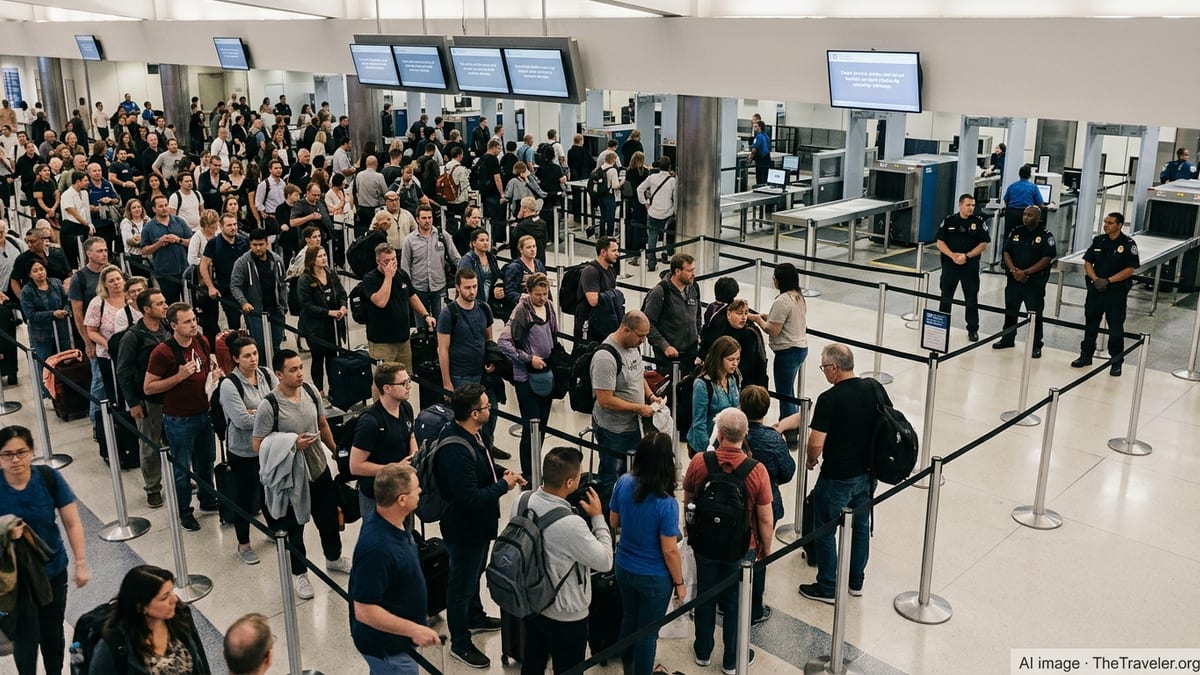
From August 2024 promise to September 2026 reality
Ambala’s civil enclave has been in the public eye since mid-2024, when local and industry coverage pointed to August 2024 as the likely start for scheduled passenger flights. Those projections included specific dates around India’s Independence Day period, reflecting the expectation that terminal work and approvals would align in time for an inaugural service.
That target came and went, and additional projected start windows surfaced in 2025 and 2026. As of mid-September 2026, however, commercial flights still have not begun. Recent local reporting continues to describe construction and fit-out as nearing completion, while pointing to final approvals and readiness steps that must be completed before ticketed operations can start.
The gap between announced timelines and operational reality has become a local travel issue because Ambala Cantonment sits in a dense regional catchment. Travelers in parts of Haryana, Punjab, Himachal Pradesh, and western Uttar Pradesh currently rely heavily on road and rail links to reach larger airports in the region.
What “security clearance” means for a civil enclave
The Ambala project is a civil enclave, meaning passenger processing facilities are being developed for civilian use while the airfield itself remains a defence installation. In such setups, aviation security approvals and operating procedures need to be aligned with both civil aviation requirements and the constraints of a military base environment.
Published coverage in 2026 has linked the current hold-up to pending clearance from the Bureau of Civil Aviation Security, with reports indicating that observations were raised and rectifications have been undertaken at the site. In practical terms, this stage is typically tied to matters such as access control, perimeter and terminal security design, screening arrangements, and standard operating procedures required before scheduled passenger services can be authorized.
Separately from security, Ambala’s position within controlled airspace adds another layer of operational coordination. Publicly available aeronautical information for the area reflects controlled and restricted zones governed by procedures between the Indian Air Force and the civil aviation system, reinforcing that clearances and documentation are not mere formalities but central to day-to-day flight permissions and routings.
Infrastructure is largely in place, but small gaps still matter
Government responses in Parliament in late 2024 described the civil enclave as developed, with security clearances and documentation being processed at the state level, and flight commencement dependent on overall readiness. Those statements also noted that Ambala is an Indian Air Force-owned airport identified under the Regional Connectivity Scheme framework, with funding sanctioned for development.
More recent reporting in 2026 has portrayed a site that is broadly ready but still working through finishing elements and compliance requirements. Even relatively modest procurement and systems work can be critical at this phase, because terminal operations depend on reliable power, security systems uptime, and tested passenger-flow processes from curbside to boarding.
A 2026 retender for additional works related to commencement of flight operations has also appeared in publicly accessible tender information, underscoring that “last-mile” tasks may still be underway alongside regulatory steps. For travelers, that can translate into continued uncertainty about when flights will actually be bookable and operated on a published schedule.
Routes, airlines, and the UDAN connectivity question
Ambala has been associated with India’s Regional Connectivity Scheme, commonly referred to as UDAN, which uses route awards and viability support to encourage flights on regional sectors. Published coverage has linked Ambala to at least one proposed regional route, with operator and readiness factors still playing out alongside airport clearances.
In early 2026 coverage tied to parliamentary queries, the Ambala Srinagar route under UDAN 4.2 was described as awarded to FlyBig for 19-seat operations and later novated to another operator, with regulatory and operational requirements still being fulfilled. That kind of operator transition can affect timelines because airline approvals, aircraft availability, ground handling arrangements, and slot and schedule coordination all have to be synchronized with airport commissioning.
Separately, local reporting has periodically suggested additional intended links such as Ayodhya and Jammu in earlier planning narratives, reflecting the political and passenger interest in routes with strong religious, leisure, and visiting-friends-and-relatives demand. But until security clearance and operational readiness are completed, these remain prospective rather than confirmable services for trip planning.
What travelers should watch for next
For would-be passengers, the clearest signal of an imminent launch will be the appearance of a formal flight schedule that can be purchased through airline channels, supported by an airport readiness status that allows routine passenger screening and boarding within a defence-operated airfield environment.
In the near term, coverage suggests the decisive step is the pending security clearance and completion of any remaining compliance actions noted during inspections. Once that is in place, the next milestones typically include trial runs of terminal processes, final coordination for security manpower and procedures, and publication of the first operating schedules.
Until those milestones are visible in publicly available information, travelers planning from Ambala should continue to treat the airport as not yet operational for commercial departures, and keep itineraries flexible. The project’s repeated timeline shifts since the August 2024 expectation make confirmed schedules, not projected inauguration dates, the most practical benchmark for planning.