


More news on this day
Flames and thick black smoke were reported near King Khalid International Airport in Riyadh on Saturday, September 19, 2026, as flight-tracking data showed widespread delays and cancellations at Saudi Arabia’s busiest air hub following overnight aerial-threat alerts sent to residents.
Get the latest news straight to your inbox!
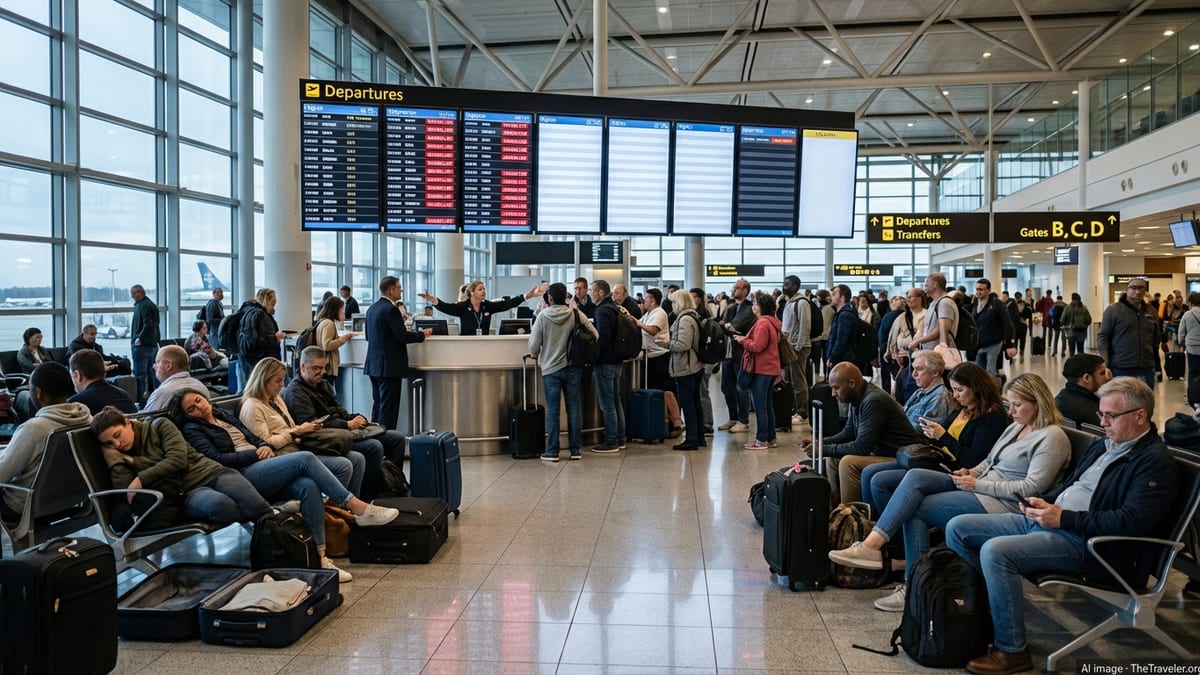
What travelers saw near King Khalid International Airport
Images and video circulated widely on September 19 showing a tall, dark column of smoke rising in the vicinity of the airport complex, with roadways and airport-side buildings visible in the foreground. Published coverage described visible flames and smoke coming from an area near the airport.
Several reports described the fire as linked to a fuel storage area near the airport, with some coverage referencing firefighting activity around a burning fuel tank bearing Aramco branding. Public reporting did not consistently identify a single confirmed cause for the blaze by late Saturday, and travelers were advised to rely on airline and airport channels for operational updates.
The smoke sighting followed overnight emergency phone alerts that warned residents about potential danger around the capital. Reports also described loud booms heard in parts of Riyadh around the time the alerts were active, adding to uncertainty for passengers heading to or from the airport.
How severe the flight disruption was
Flight-tracking platform FlightRadar24 flagged “major problems” at Riyadh’s King Khalid International Airport during the disruption window, placing the airport at the top level of its disruption index. That designation typically reflects long delays alongside multiple cancellations, and it is frequently used by passengers and airlines to gauge network stress in real time.
While individual airlines’ impacts varied by route and aircraft position, the disruption was visible across both arrivals and departures. Travelers reported extended waits for gate assignments and revised departure times, consistent with the knock-on effects that occur when ramp operations, airspace management, or airport-access roads are constrained.
Because flight schedules can normalize quickly once constraints clear, passengers were urged to check the status of their specific flight number rather than relying on general airport-level disruption indicators. For connecting travelers, the bigger risk often comes from misaligned onward flights once a first segment departs late, especially on international itineraries with limited same-day alternatives.
What was happening in the wider region that day
The incident unfolded amid heightened regional tension tied to renewed Houthi-linked threats and claims of attacks targeting “sensitive sites” in and around the Saudi capital, alongside separate claims related to sites in other parts of the kingdom. Published coverage described the airport smoke and flight disruption in the same time frame as those developments.
Separately, overnight alerts were also reported for other locations beyond Riyadh, underscoring that traveler disruption risks were not limited to a single metro area. Even when an incident does not directly strike airport infrastructure, aviation can be affected by precautionary measures, temporary restrictions, or the operational consequences of nearby fires and emergency response activity.
For travelers, the practical takeaway is that aviation disruptions can be triggered by a mix of factors: visible hazards such as smoke and fire, as well as less visible constraints such as temporary routing changes or heightened security protocols that slow the movement of aircraft, crews, and ground services.
What to do if your Riyadh flight is delayed or cancelled
Passengers with upcoming travel through Riyadh were advised to monitor airline apps and text alerts closely, as rebooking options can change by the minute during irregular operations. Travelers should also confirm whether their departure terminal, check-in area, or airport access routes have changed, since disruptions can lead to last-minute operational reassignments.
For those already at the airport, practical steps include keeping boarding passes and baggage receipts accessible, photographing any updated gate or flight-status screens for reference, and asking the airline to clarify whether the disruption is expected to cascade into crew-duty limits that can cause further delays later in the day.
International travelers transiting Riyadh should review visa and entry rules before deciding to exit the airport during long delays, and confirm whether checked bags can be retrieved if the onward flight is postponed overnight. If a journey involves separate tickets, travelers may also need to proactively notify the second carrier, since missed connections on separate reservations are often treated differently than protected connections on a single itinerary.
Finally, passengers were encouraged to keep contingency plans ready: alternative flight times, nearby hotels, and flexible ground transport options. Even after operations begin stabilizing, airports can experience rolling congestion as backed-up flights depart in clusters and arrival banks compress into shorter windows.