


More news on this day
American Airlines is set to broaden its transatlantic footprint in 2026, introducing six new nonstop routes from major United States hubs to key European destinations as it positions for another record summer of international travel.
Get the latest news straight to your inbox!
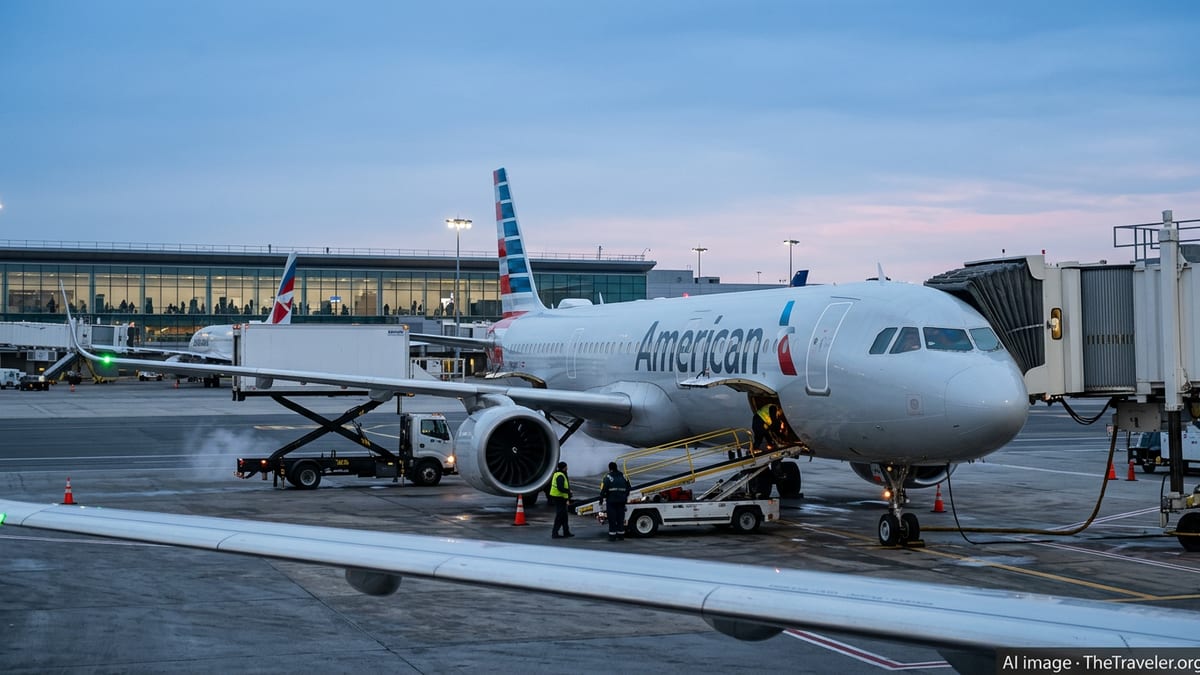
Six new nonstop links between U.S. hubs and Europe
According to recently published route announcements and schedule filings, American Airlines plans to add six new nonstop transatlantic routes for the 2026 summer season, centered on its largest hubs. The expansion combines brand new city pairs with the return of previously served destinations, reflecting rising demand for leisure and connecting traffic between North America and Europe.
Network information released by the airline indicates that Dallas Fort Worth will gain new nonstop service to Athens and Zurich, while Miami will see a new link to Milan. From Philadelphia, American is scheduled to launch routes to Budapest and Prague, alongside at least one additional European market as it rebuilds its role as a transatlantic gateway. Collectively, these services are planned as a mix of summer seasonal and year round operations.
Industry coverage notes that the new routes will be supported by Boeing 787 and Boeing 777 aircraft on the longest sectors, reinforcing American’s focus on widebody utilization across the Atlantic during peak months. The airline is also continuing to emphasize banked schedules at Dallas Fort Worth, Miami and Philadelphia, designed to maximize one stop connectivity from dozens of secondary U.S. cities into its new European points.
Timetables for the 2026 season show most of the new flights clustered between late March and late May start dates, in time for early summer demand. American has framed its broader 2026 schedule as offering record transatlantic capacity, with the six added routes forming a core part of that strategy.
Dallas Fort Worth and Miami anchor long haul growth
Dallas Fort Worth, already American’s largest hub by daily departures, is central to the 2026 transatlantic plan. Publicly available documents outline new nonstop flights from Dallas Fort Worth to Athens and Zurich, supplementing existing service to major European hubs such as London and Madrid. The Athens route is positioned to capture strong summer demand to Greece, while Zurich adds another continental European financial and leisure market to the portfolio.
Scheduling data shows that the Dallas Fort Worth to Athens sector is expected to operate as a summer seasonal service, timed to connect with inbound traffic from across the central and western United States. The Zurich route similarly appears in summer timetables, providing additional options for travelers heading to Switzerland and neighboring markets in southern Germany and western Austria.
Miami, American’s primary gateway to Latin America, also plays a growing role in its transatlantic network. For 2026, the carrier is preparing to introduce a year round Miami to Milan service, based on recent route announcements. The new flight will complement Miami’s existing links to Rome and fortify the airline’s presence in northern Italy, a region with strong business travel, tourism and diaspora ties to the United States.
Industry analyses highlight that the Miami to Milan route is designed both for local traffic between South Florida and northern Italy and for connections from the Caribbean and Latin America via Miami. This structure allows American to funnel two way demand onto a single widebody flight, improving aircraft utilization while adding another nonstop option into continental Europe.
Philadelphia reasserts its role as a transatlantic gateway
Philadelphia has long served as a key transatlantic hub within the American Airlines network, and the 2026 schedule marks a renewed emphasis on that role. Route filings and corporate communications point to new daily nonstop services from Philadelphia to Budapest and Prague, introducing two Central European capitals that the airline last served several years ago.
The Philadelphia to Budapest and Philadelphia to Prague routes are planned as summer seasonal operations, using Boeing 787 aircraft. They are structured to connect with inbound traffic from across the eastern United States, including medium sized cities that do not have direct service to Europe. This approach allows American to offer one stop journeys to Central Europe for a broad catchment area while making use of mid sized widebody jets tailored to leisure heavy markets.
By restoring links to Budapest and Prague, American is also signaling confidence in demand for so called “second tier” European destinations, which have gained popularity among travelers seeking alternatives to Western Europe’s most visited cities. Travel industry reporting suggests that these markets benefit from a combination of cultural tourism, river cruising and regional connectivity onward into neighboring countries.
In addition to the new Central European routes, published schedules indicate that Philadelphia will continue to host a dense network of transatlantic flights to the United Kingdom, Ireland and western Europe. The six route expansion for 2026 therefore strengthens Philadelphia’s position as a primary connecting point between smaller U.S. cities and continental Europe within the American network.
Competitive pressures and fleet utilization drive expansion
American’s decision to introduce six new nonstop transatlantic routes in 2026 comes amid intensifying competition across the North Atlantic. United Airlines and Delta Air Lines have both announced broader European growth for the mid 2020s, including new destinations in southern and eastern Europe, as well as increased frequencies on core trunk routes. American’s 2026 moves appear calibrated to protect market share from its main U.S. rivals while targeting specific leisure and visiting friends and relatives flows.
Fleet dynamics are another central factor. Public fleet plans show that American is gradually increasing the deployment of its Boeing 787 and 777 fleets on long haul flying as new aircraft are delivered and cabin refurbishments progress. New transatlantic routes from Dallas Fort Worth, Miami and Philadelphia provide opportunities to schedule these widebodies on high demand seasonal markets where yields can be supported by a mix of premium and economy traffic.
At the same time, industry observers note that North Atlantic joint ventures continue to influence route planning decisions. American’s coordination with its transatlantic partners allows for a division of capacity on certain city pairs and the opening of others that complement alliance coverage. In that context, adding Athens, Zurich, Milan, Budapest and Prague helps fill gaps in the combined network from key American hubs.
While some of the 2026 routes revive destinations previously served by the airline, their reintroduction reflects changed conditions compared with the late 2010s, including stronger demand recovery, different competitive line ups at European airports and a renewed focus on connecting traffic flows. The six new routes are therefore part of a broader recalibration of where American deploys capacity across the Atlantic.
What travelers can expect in 2026
For travelers, the 2026 expansion translates into a wider range of one stop itineraries to Europe, particularly from interior and southern U.S. markets that feed into Dallas Fort Worth, Miami and Philadelphia. Passengers in cities without direct transatlantic service will have additional options to reach Central and Southern Europe with a single connection on American operated flights.
Schedule information suggests that most of the new services will operate with daily frequencies during the peak summer period, with timings designed to facilitate same day onward connections. Travelers booking early are likely to see a range of fare products across cabins, including premium economy, which has become an increasingly important part of American’s long haul offering on 787 and 777 aircraft.
Airport facility investments also intersect with the new routes. Philadelphia has recently seen lounge upgrades at key international concourses, while Dallas Fort Worth and Miami continue to expand and renovate terminal areas used by American. These improvements are intended to enhance the connecting experience for passengers using the new transatlantic flights as part of longer itineraries.
As airlines finalize their schedules for the 2026 peak season, observers expect further refinements to frequencies and exact operating dates. For now, American’s six new nonstop transatlantic services stand out as a significant step in the carrier’s efforts to compete more aggressively across the Atlantic and to capitalize on sustained demand for travel between the United States and Europe.