


More news on this day
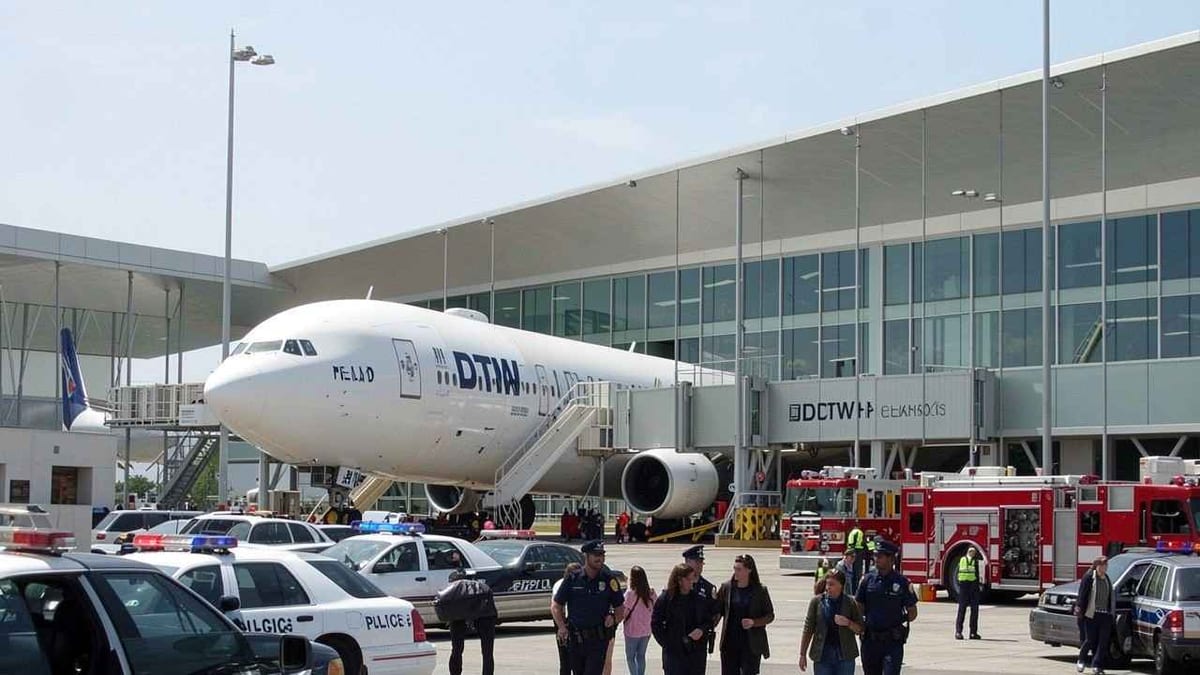
An American Airlines Airbus A320 operating as Flight AAL519 from Charlotte Douglas International Airport to Nashville on 7 August diverted to Louisville Muhammad Ali International Airport in Kentucky, according to publicly available flight tracking information and local media coverage.
Get the latest news straight to your inbox!
Unscheduled Landing Interrupts Short Regional Hop
Flight AAL519 was scheduled to operate the evening sector between Charlotte, North Carolina, and Nashville, Tennessee, a route that typically takes around one hour of flying time. Data from flight-tracking platforms shows the Airbus A320 departed Charlotte, climbed to cruising altitude and proceeded toward middle Tennessee before altering course away from Nashville.
Tracking information indicates that instead of commencing a standard approach into Nashville International Airport, the flight turned north and then northeast, setting up for a descent into Louisville Muhammad Ali International Airport. The aircraft landed there on the evening of 7 August, concluding what should have been a relatively short intra regional service with an unscheduled stop nearly 175 miles from its intended destination.
Available operational data suggests the aircraft taxied to a gate at Louisville, where passengers disembarked. Subsequent records show that a later American Airlines service carried affected travelers onward to Nashville after the diversion.
Operational Factors Cited in Reports
As of this writing, no single definitive cause has been publicly detailed, but aviation outlets and flight status summaries typically link diversions on this corridor to a combination of weather, air traffic flow constraints and aircraft performance considerations. On 7 August, storm activity around central Tennessee and the broader Ohio Valley region was reported by meteorological services, a pattern that has periodically disrupted approach and departure flows at Nashville.
When convective weather or low visibility reduces available arrival capacity, aircraft approaching a busy airport may be placed into holding patterns. If an aircraft reaches a predetermined minimum fuel level while holding, flight crews are required to divert to an alternate airport where a safe landing can be assured. Industry guidance notes that this fuel management threshold, often referred to informally as a “bingo fuel” point, is a frequent trigger for precautionary diversions on short domestic routes during active summer weather.
Operational summaries regarding AAL519 on 7 August reference a routine diversion scenario rather than an onboard medical emergency or security event. Publicly accessible information indicates the aircraft remained structurally sound, with no reports of smoke, fire or loss of pressurization, and there are no indications of injuries among passengers and crew.
Why Louisville Was Selected as the Alternate
Louisville Muhammad Ali International Airport functions as a significant cargo and regional passenger hub in the mid South, offering long runways, extensive ground services and established facilities for handling diversions from across the eastern United States. Its proximity to both Nashville and major east coast airways makes it a frequent alternate for flights encountering constraints further south.
From a flight planning perspective, Louisville provides multiple advantages for an aircraft arriving from the east or southeast. Runway length and instrument approach options allow Airbus A320 operations in a range of weather conditions, while the airport’s location outside the most congested southeast corridors can help minimize additional holding. For carriers such as American Airlines, access to ground support, fuel availability and the ability to rebook passengers onto connecting services are critical considerations when dispatching a diversion.
On the evening of 7 August, flight status logs suggest that once AAL519 was committed to the diversion, controllers vectored the aircraft into Louisville’s arrival stream, where it landed and proceeded to a terminal stand. The decision would have balanced the remaining fuel on board, evolving weather around Nashville, and the network options for moving passengers to their final destination.
Passenger Experience and Disruption Management
For those on board, the diversion added significant time and uncertainty to what is normally a straightforward sector between two southeastern business and leisure markets. Accounts shared on social media from travelers on the route describe extended ground time in Louisville while new departure arrangements were organized, a familiar scenario for regular flyers during the active summer thunderstorm season.
In typical practice, passengers on a diverted flight are kept informed via cabin announcements and mobile app updates about their revised itinerary. Once at the alternate airport, the operating carrier coordinates with airport ground teams to refuel the aircraft or to arrange substitute transport, depending on crew duty limits and overall network conditions. Publicly visible booking and schedule data for 7 and 8 August indicate that American Airlines reprotected affected customers onto later services between Louisville and Nashville or onto alternate routings through other hubs.
Travel industry observers note that while diversions are disruptive, they are an established safety measure built into commercial aviation. When flights operating into weather affected airports such as Nashville are rerouted to a facility like Louisville, the priority remains a stable landing environment and sufficient fuel reserves, with passenger inconvenience addressed subsequently through rebooking and compensation policies that follow the airline’s contract of carriage and federal consumer protection rules.
Context: Summer Weather and U.S. Flight Diversions
The diversion of AAL519 fits within a broader seasonal pattern across the U.S. aviation system. Studies of historical flight data show that the summer months bring elevated rates of delays and diversions, particularly in regions prone to fast developing thunderstorms. The corridor linking Charlotte, Nashville and neighboring airports often sees rapidly changing convective cells that can temporarily close arrival corridors or reduce landing rates.
Analyses of domestic flight operations highlight that most diversions do not involve mechanical failures but are instead driven by environmental and air traffic management factors. These can include thunderstorm lines near an airport, low level wind shear alerts, runway contamination from heavy rain and volume related holding that exhausts planned fuel margins. In such cases, flight crews, airline operations centers and air traffic controllers coordinate to identify alternates that provide the safest and most operationally efficient outcome.
For travelers, the incident underscores the value of real time flight tracking tools, flexible itineraries and awareness of airline policies around disruptions. While American Airlines Flight AAL519 ultimately reached the ground safely in Louisville on 7 August and passengers were later transported to Nashville, the episode illustrates how even short segments between major southeastern cities can be significantly affected by the complex interplay of weather, fuel planning and network logistics.