


More news on this day
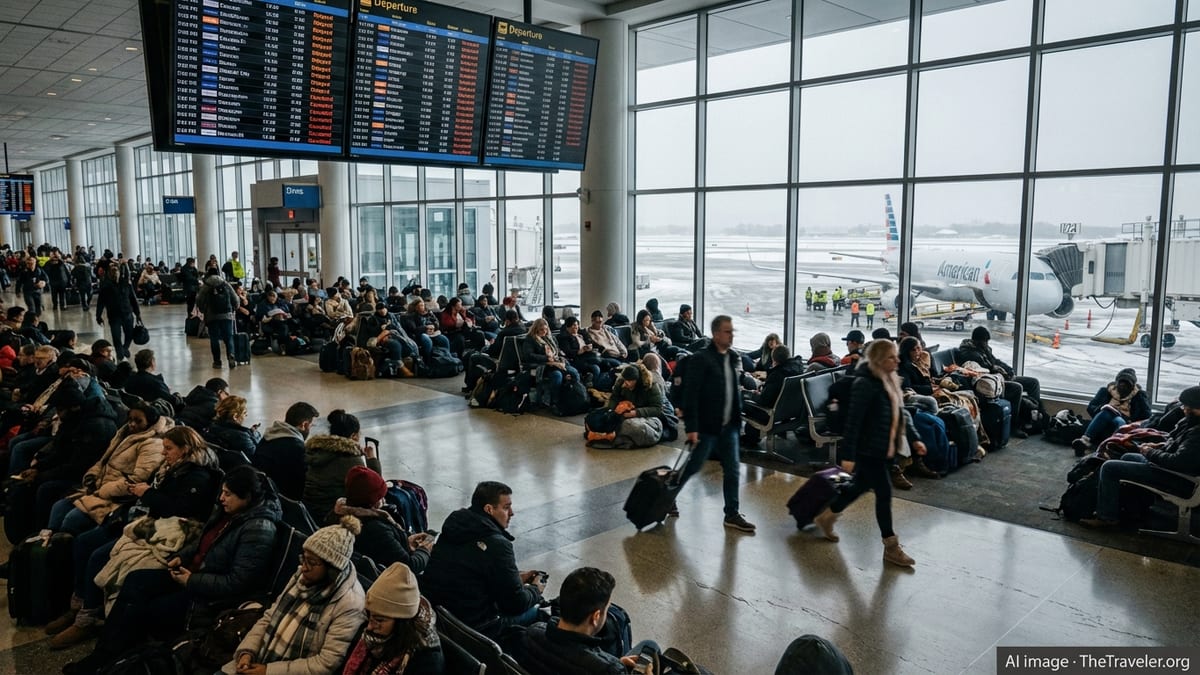
Travelers at Frederick Douglass Airport faced cascading disruptions after an American Airlines information-technology outage led to 13 flight cancellations and six significant delays, snarling connections at the height of the busy summer travel period.
Get the latest news straight to your inbox!
Regional hub hit by nationwide technology failure
The disruption at Frederick Douglass Airport formed part of a wider operational breakdown tied to an American Airlines technology failure affecting flights across the carrier’s network. Publicly available outage trackers and social media reports on July 28 and July 29 indicated system problems severe enough to halt departures for aircraft that were still on the ground, while flights already airborne continued to their destinations.
At Frederick Douglass, a small but strategically important regional airport, the consequences were magnified by its limited daily schedule. With relatively few American Airlines departures compared with larger hubs, the loss of 13 flights in a single operational window represented a sizable share of the day’s activity, leaving many passengers without same-day alternatives.
According to published coverage and live flight-status boards, the cancellations included both morning and evening services, disrupting feeder routes that connect the airport to major hubs. Six additional flights operated but departed significantly behind schedule, creating a knock-on effect for travelers with onward international and domestic connections.
Travel forums and traveler reports described long lines at check-in counters and gate podiums as passengers sought rebookings and vouchers. Many travelers expressed concern about missed connections at large hubs where hotel availability was already tight due to peak-season demand.
How one outage ripples across the network
The American Airlines disruption at Frederick Douglass illustrates how a single technology failure can quickly cascade through a highly synchronized route network. Large carriers rely on centralized systems to manage everything from crew assignments and aircraft routing to passenger check-in and baggage handling. When those systems fail, even briefly, flights can be forced into ground stops while schedules are rebuilt.
Recent history shows that airline technology incidents can reverberate far beyond the original outage window. Previous industrywide and single-carrier IT problems have resulted in thousands of cancellations spread over several days as aircraft and crews ended up in the wrong locations. Analysts note that while major hubs tend to recover first due to higher frequencies and more flexible routing options, smaller airports such as Frederick Douglass often see longer-lasting disruption because there are fewer backup flights.
Reports from aviation data services tracking American’s operation on July 28 and July 29 showed elevated cancellation and delay levels across multiple airports, consistent with a systemwide technology issue. Frederick Douglass, with its modest schedule, became particularly vulnerable once a critical number of feeder flights were removed from the board.
Industry observers say that as airlines push to maximize aircraft utilization and operate near full capacity, any large-scale IT disruption leaves less slack in the system to absorb cancellations. That dynamic can translate into longer waits for rebooking and a higher likelihood that passengers at smaller airports will face overnight delays.
Passenger options and evolving compensation rules
For affected travelers at Frederick Douglass Airport, rebooking and compensation depended on a combination of American Airlines policies and evolving federal requirements around controllable delays. Publicly available information from consumer-rights resources notes that outages attributed to an airline’s own systems are generally categorized as controllable events, which can trigger specific obligations for meals, hotel accommodations and refunds when delays or cancellations reach certain thresholds.
In recent years, U.S. transportation regulators have pressed major carriers to clearly spell out their customer-service commitments during disruptions. Guidance documents summarizing 2026-era rules indicate that when a controllable IT outage forces a cancellation or lengthy delay, airlines are expected to provide free rebooking on the next available flight, meal vouchers after several hours of waiting, and hotel and ground transport when an overnight stay becomes necessary.
Travel advocates recommend that passengers caught in technology-related disruptions document their delay, save boarding passes and receipts, and use airline apps or web portals to request compensation once operations stabilize. At Frederick Douglass, where staffing levels are leaner than at large hubs, many passengers turned to digital channels for rebooking as airport customer-service desks became crowded.
Travel-insurance policies can also play a role. Some plans specifically list carrier IT outages as covered events, potentially reimbursing additional expenses such as missed tours, pre-paid hotel nights at the destination, or alternative transportation costs. Policy details vary widely, so travelers are urged to review coverage before departure rather than during a disruption.
Impact on summer travel confidence
The American Airlines outage arrived in the middle of what the carrier has forecast as a record summer, with more flights and passengers than in previous years. Analyst commentary in recent months has highlighted both the industry’s strong demand recovery and the mounting pressure on technology, staffing and air-traffic systems required to keep schedules running smoothly.
For Frederick Douglass Airport and similar regional facilities, the incident underscores the dependence on a few large network carriers for connectivity. When a technology failure at a distant operations center forces widespread cancellations, local airports can see much of a day’s schedule wiped out despite clear weather and normal conditions on the ground.
Travelers using secondary airports may now weigh redundancy more heavily when planning trips, considering factors such as the number of daily flights to major hubs, alternative airlines on the same route, and the feasibility of reaching larger airports by ground transport if flights are canceled. Some passengers impacted by the outage at Frederick Douglass reportedly elected to reroute themselves via nearby metropolitan airports to salvage long-haul itineraries.
Aviation analysts suggest that while such IT failures remain relatively rare compared with weather-related disruption, the combination of tightly packed schedules and high load factors can amplify their effects. The experience at Frederick Douglass adds to a growing record of incidents that may influence how travelers balance convenience, price and operational resilience when selecting flights.
What travelers can do before the next outage
The events at Frederick Douglass Airport highlight several practical steps passengers can take to reduce risk from future technology outages. Consumer advocates recommend booking the first flight of the day when possible, as early departures are statistically less exposed to rolling delays and cancellations that accumulate later in the schedule.
Specialists also emphasize the importance of installing airline apps, enabling proactive alerts and monitoring flight status beginning at least 24 hours before departure. During the recent American Airlines outage, many travelers across the network first learned of cancellations or gate changes through digital notifications, which allowed quicker rebooking via mobile tools rather than waiting in long airport lines.
Booking longer connection windows, especially for international trips, can give travelers more options when earlier segments are delayed. In cases like the Frederick Douglass disruption, an extra hour or two between flights at a hub can mean the difference between making a connection and facing an unplanned overnight stay.
Finally, keeping essential items such as medications, a change of clothes and key electronics in carry-on luggage rather than checked bags can ease the strain of unexpected overnight disruptions. While IT outages and other operational surprises cannot be eliminated, the experience at Frederick Douglass Airport shows that preparation and flexible planning can help travelers navigate turbulence in the modern airline system.