


More news on this day
An American Airlines flight from Miami landed safely at Chicago O’Hare International Airport with two blown tires on its main landing gear, halting the aircraft on the taxiway and prompting a precautionary response on the airfield.
Get the latest news straight to your inbox!
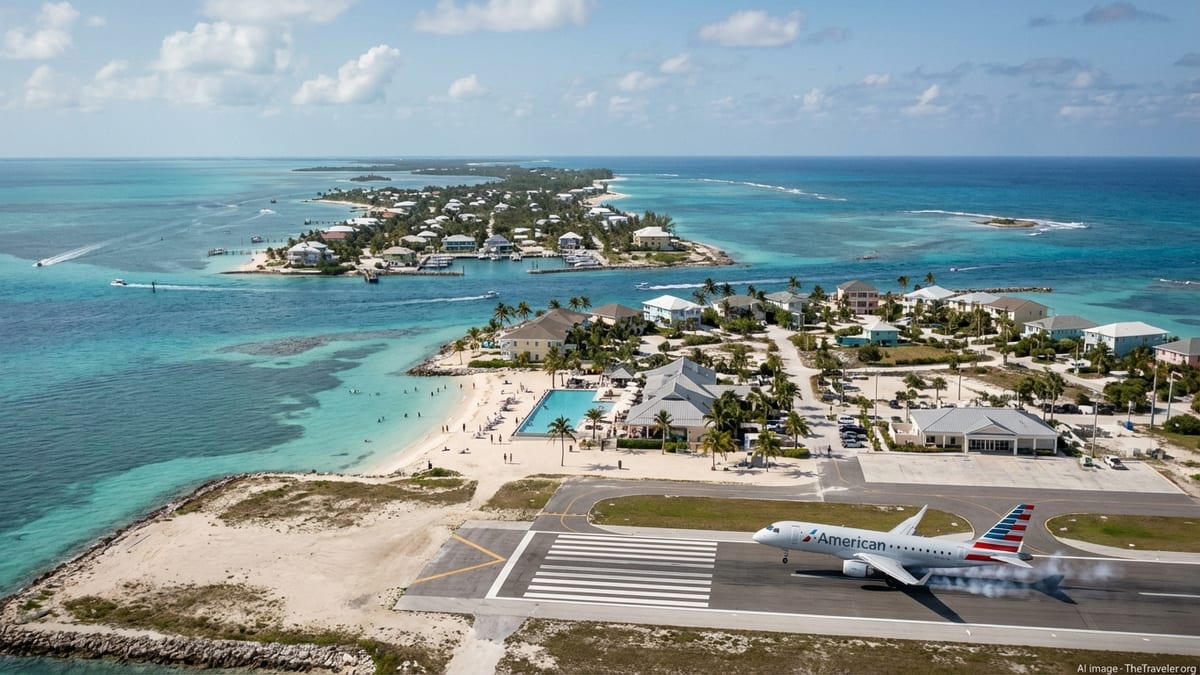
Evening arrival from Miami ends with disabled aircraft
Publicly available information indicates the incident involved American Airlines Flight 791, operating a Boeing 737 on a scheduled service from Miami to Chicago. The aircraft touched down at O’Hare late in the evening and rolled out normally before the crew reported problems with the landing gear tires during the taxi phase.
Reports from local news coverage note that the jet came to a stop on a taxiway after what has been described as a tire issue affecting two main-gear wheels. The aircraft was unable to continue to the terminal under its own power, and ground teams moved in to secure the area and assess the damage.
There were no reports of injuries among passengers or crew. Travelers remained on board while airport and airline personnel arranged for buses and equipment to transfer them safely to the terminal, contributing to a significant delay for those on the evening arrival.
Runway and taxiway inspections are a routine step in such events, ensuring that rubber debris or wheel fragments are cleared before normal airfield operations resume. Early indications suggest that any disruption at O’Hare was localized and relatively short-lived.
Response on the ground and impact on passengers
According to published coverage from Chicago-based outlets, emergency vehicles and maintenance crews were dispatched to the disabled aircraft as a precaution. This type of response is standard procedure whenever an aircraft reports landing-gear or tire problems on the runway or taxiway.
Passengers described an extended wait on board as crews coordinated the next steps, including positioning mobile stairs or buses on the taxiway. With the aircraft stopped away from the gate, the usual bridge-equipped parking positions were not available, adding complexity to the deplaning process.
While the interruption added unexpected time to the journey, reports indicate that customers were eventually taken by ground transport to the terminal for onward connections or baggage claim. The aircraft itself was towed away for a more detailed inspection by maintenance specialists once the immediate safety checks were completed.
Flight-tracking data and local media accounts suggest that the incident did not trigger a broader ground stop at O’Hare. Other arrivals and departures continued, although some aircraft were rerouted around the affected taxiway until the jet and any debris could be cleared.
Investigating what leads to blown aircraft tires
Blown or flattened tires on landing are not unheard of at large hub airports, particularly at facilities such as O’Hare that handle thousands of daily operations. Aviation safety records show that tire failures can arise from a variety of causes, including wear, foreign object damage, heavy landings or issues related to braking systems.
Initial reports surrounding the O’Hare event do not point to a specific cause, and in cases of this type, any detailed assessment typically takes place later in a technical review rather than immediately on the airfield. Maintenance teams examine the damaged wheels, brake assemblies and tire condition, and review flight data to understand the loads involved in the landing and rollout.
In commercial service, aircraft tires are subject to regular inspection and replacement schedules. Operators rely on those programs, combined with real-time cockpit indications during landing, to detect and manage any irregularities. When a problem arises during or after touchdown, the standard response is to bring the aircraft to a controlled stop, keep it stationary, and await ground assistance rather than attempt to taxi to the gate.
Events such as the O’Hare incident typically do not pose a wider risk to airport visitors or nearby communities, but they can highlight the operational challenges of managing a large jet that becomes immobilized on a key taxi route during peak periods.
Context within broader American Airlines safety record
The tire problem in Chicago follows several high-visibility technical events involving American Airlines aircraft at United States airports in recent months, including cases where flights were forced to abort takeoff or return to the gate due to mechanical issues. Industry data still show that such problems remain rare compared with the overall volume of flights the carrier operates each day.
Aviation analysts often note that high-profile incidents can skew public perception of risk. A modern narrowbody jet like the Boeing 737 completes many thousands of cycles between major overhauls, and most tire-related events end with an uneventful stop on the runway or taxiway and no injuries.
Regulators in the United States maintain oversight of airline maintenance and operations through required reporting of certain incidents, including those that involve damage to landing gear or tires. Public summaries of these events provide insight into patterns and help guide adjustments to inspection intervals or operating procedures where needed.
As information about the O’Hare episode circulates, consumer attention often focuses on whether a particular aircraft type or route is affected. Current public reporting around Flight 791 frames the occurrence as a localized mechanical issue rather than a sign of systemic concern with the airline’s fleet.
What travelers can expect after mechanical disruptions
For passengers caught up in tire or landing-gear incidents, the immediate priority is usually clear communication regarding safety and onward travel. Airline customer service policies typically provide for rebooking assistance, overnight accommodation in some circumstances, and help with missed connections, although the exact support can vary by ticket type and cause of delay.
Travel experts advise that travelers affected by such events document timing, communications and any additional expenses, as this information can be useful when pursuing refunds, vouchers or reimbursements later. In situations like the O’Hare tire failure, where the aircraft was disabled but no injuries were reported, the primary impact tends to be schedule disruption rather than long-term safety implications.
Observers note that the rapid spread of images and descriptions from the airfield through social media and local outlets has become a normal feature of aviation events. While this can raise anxiety among travelers, it can also provide visibility into the robust emergency and maintenance procedures that airports and airlines apply in these situations.
For O’Hare, one of the world’s busiest hubs, the American Airlines incident adds another line to a long operational log of mechanical irregularities managed each year. For the passengers on Flight 791 from Miami, it turned an otherwise routine evening arrival into a delayed and memorable end to the journey.