


More news on this day
Austria’s tourism industry is entering a new phase of rapid expansion, as record visitor numbers in alpine regions and cities converge with ambitious sustainability plans and rising climate pressures across the country.
Get the latest news straight to your inbox!
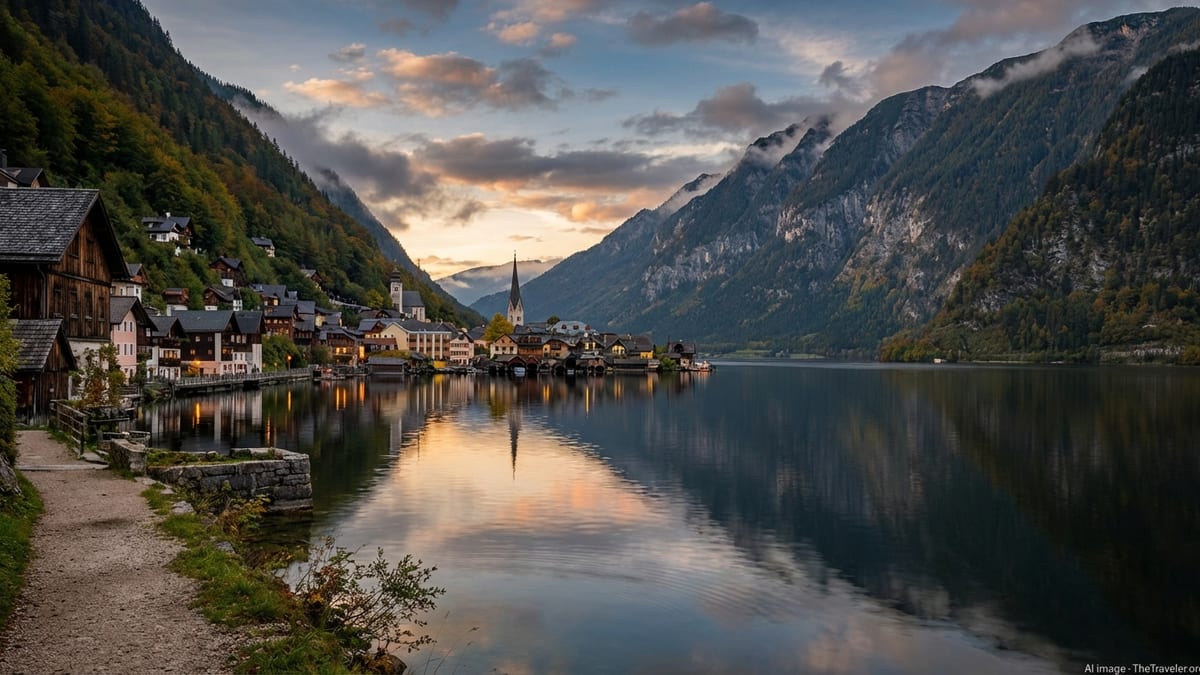
Record Visitor Growth Fuels a New Travel Empire
Recent statistics and industry analyses indicate that Austria is consolidating its status as one of Europe’s most tourism-intensive destinations, with visitor numbers in 2024 and 2025 building on a strong rebound that began after the pandemic. National data for 2023 already showed more than 113 million overnight stays by August of that year, only slightly below the previous pre‑pandemic record, and subsequent seasons have kept demand on an upward trajectory.
City destinations are a major engine of this expansion. Vienna reported 20 million overnight stays in 2025, the best result in its tourism history and an illustration of how urban culture has become a pillar of Austria’s visitor economy. According to published coverage, the capital’s accommodation sector not only exceeded pre‑2019 levels in volume but also reached record turnover as travelers spent more on higher‑end stays, dining and cultural experiences.
National tourism reviews for 2025 describe “stable growth” supported by strong demand from Central and Eastern European markets and long‑haul visitors. Industry reports note that average spending per overnight stay has risen notably since 2019, as inflation, higher service quality and a shift toward premium and experiential travel all push receipts upward. This combination of volume and value is driving what observers are now describing as Austria’s “travel empire.”
Majestic Alps at the Core of the Boom
The Austrian Alps remain the country’s defining tourism asset, concentrating some of the highest densities of guest beds and overnight stays in Europe. Publicly available information from regional tourism boards shows that Tyrol, Salzburg and Vorarlberg continue to attract millions of visitors each year for skiing in winter and hiking, cycling and lake tourism in summer. Panoramic peaks, glacier landscapes and extensive trail networks keep the Alps central to Austria’s global image.
Research institutions tracking alpine tourism underline that mountain regions are also where climate and environmental pressures are most visible. Studies on climate change and tourism‑intensive alpine areas highlight shorter and less predictable snow seasons, prompting large ski domains to expand artificial snowmaking and diversify into non‑snow activities. Scientists warn that such adaptations can carry risks of “maladaptation” if they lock destinations into energy‑ and water‑intensive infrastructure just as warming accelerates.
At the same time, environmental monitoring has documented the scale of physical change at high altitude. Glaciology reports released in early 2026 note that nearly all of Austria’s monitored glaciers have retreated over the past two years, with experts describing the trend as a dramatic confirmation of accelerated warming in the Alpine arc. These findings are feeding directly into debates over how Austria’s travel boom can continue without undermining the very alpine landscapes that attract visitors.
Hidden Valleys and Slow Travel Gain Ground
Beyond the flagship ski resorts and well‑known lakes, a growing share of Austria’s tourism growth is occurring in lesser‑known valleys and rural regions that are positioning themselves as tranquil alternatives to crowded hotspots. Regional strategies highlight “hidden valleys,” small farming communities and nature parks offering hiking, cycling and local gastronomy under labels such as “gentle tourism” and “slow travel.”
Publicly available campaigns emphasize year‑round experiences in these areas, from wildflower meadows and family‑friendly trails in summer to snowshoeing and small‑scale ski lifts in winter. Several regions are using protected‑area status and traditional land‑use practices as selling points, presenting themselves as refuges from mass tourism. This approach is intended both to distribute visitor flows more evenly and to provide new income streams for rural communities facing demographic change.
Industry analyses note, however, that even in these emerging destinations, the line between discovery and overexposure is thin. Some alpine communities report increasing pressure on housing markets and local infrastructure as visitor numbers grow, while social media visibility accelerates the popularity of once‑remote locations. Planners are responding with caps on new bed capacity, stricter rules on secondary residences and efforts to channel hikers and skiers onto designated routes to protect sensitive habitats.
Cultural Capitals and Regional Heritage Drive Urban Demand
The current travel surge is not limited to mountains. Austria’s cultural destinations are experiencing their own high‑intensity cycle, led by Vienna, Salzburg, Graz, Innsbruck and Linz. Tourism reports show that Vienna in particular is shifting toward what city officials describe as “optimum tourism,” prioritizing visitors who stay longer, attend cultural events and engage with local neighborhoods rather than focusing solely on overnight counts.
According to published coverage, the capital’s strategy leans on its dense calendar of music, design and film festivals, along with major exhibits at museums and palaces that draw both international travelers and domestic visitors. Salzburg continues to benefit from its reputation as a baroque city of music, while Graz and Linz promote contemporary art, design and digital culture to distinguish themselves from more traditional city‑break destinations.
Smaller towns and regions are also looking to culture as a lever for sustainable growth. Heritage railways, historic spa towns and industrial heritage sites are being repositioned as anchors for multi‑day itineraries that combine museums, local cuisine and nearby nature reserves. Tourism development documents emphasize that this integrated approach can encourage off‑season travel and reduce pressure on peak‑season alpine resorts.
Balancing Overtourism, Mobility and Sustainability
The rapid expansion of Austria’s travel economy is intensifying long‑running debates about overtourism, transport emissions and environmental limits, particularly in the Alps. Studies commissioned by national agencies and universities describe mountain areas as both highly dependent on tourism and especially vulnerable to climate change and land‑use pressures. Researchers point to risks such as habitat fragmentation, water stress from snowmaking, and congestion on mountain roads and in valley corridors.
Policy documents and conference agendas show that national and regional authorities are increasingly aligning tourism with broader sustainability and climate goals. Austria is an active party to the Alpine Convention, an international framework dedicated to the sustainable development of the Alps, and uses this platform to coordinate on issues such as mobility, biodiversity and climate adaptation. Events focused on “sustainable tourism mobility” in the Alpine region have highlighted solutions ranging from integrated rail‑and‑bus offers to car‑free resort concepts.
Tourism strategies released over the past two years put stronger emphasis on encouraging arrivals by rail, expanding electric bus networks in alpine valleys and supporting initiatives that package accommodation, ski passes and public transport into a single product. Parallel sustainability roadmaps promote energy‑efficient accommodation, circular economy measures for hospitality businesses and certifications for climate‑friendly tourism providers.
Analysts note that the challenge for Austria will be to maintain its lucrative travel empire while containing environmental impacts and social tensions in high‑pressure destinations. With visitor numbers, spending and international visibility all rising, the country’s response in the coming years is likely to shape not only the future of the Alps, but also broader debates over how Europe’s most iconic landscapes can accommodate global tourism in a warming world.