


More news on this day
As Athens heads into another record-breaking tourism season, the tiny hillside hamlet of Anafiotika, tucked under the Acropolis, is emerging as a sought-after “island” refuge within the Greek capital.
Get the latest news straight to your inbox!
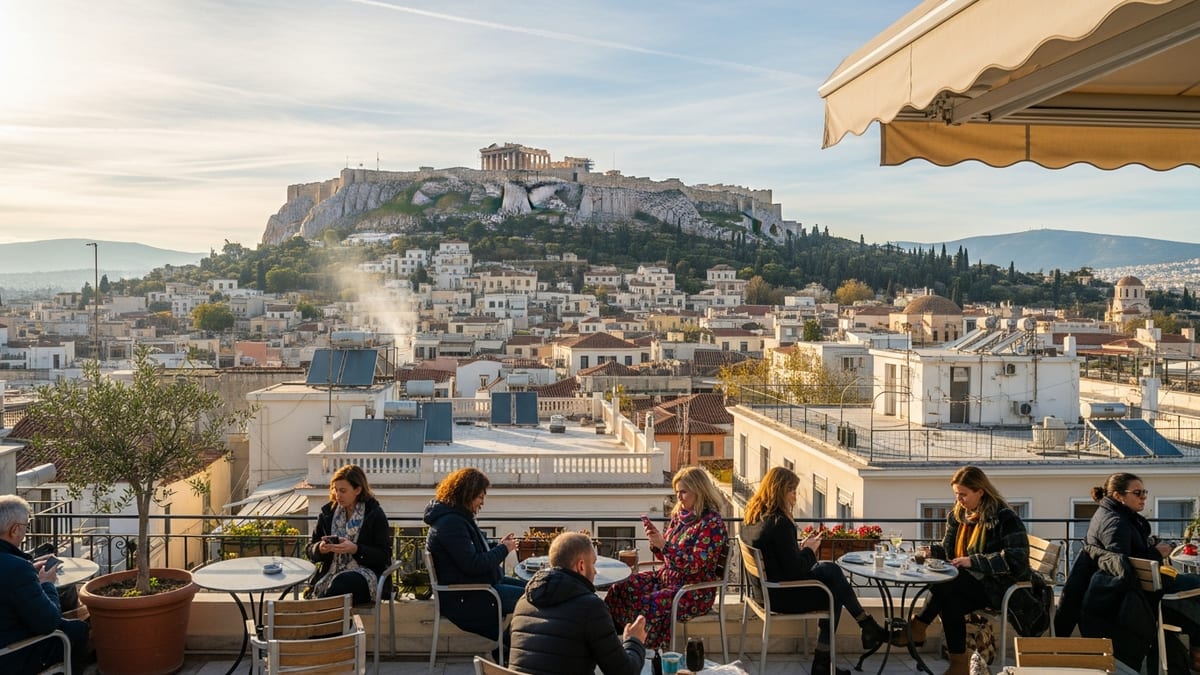
A Cycladic Village Suspended Above the City
Anafiotika occupies a steep flank of the Acropolis rock, technically part of the wider Plaka district yet visually and atmospherically closer to a Cycladic island village. Whitewashed cube houses, blue shutters and flowering bougainvillea line alleys so narrow that many are effectively staircases. From the upper terraces, visitors look directly across to the Parthenon above and the tiled rooftops of central Athens below, creating a double panorama that has helped fuel its new prominence on travel itineraries.
The neighborhood was originally built in the 19th century by skilled builders from the island of Anafi who came to Athens for royal construction projects. They recreated familiar island architecture at the foot of the Acropolis, producing a rare pocket of Cycladic style inside a major European capital. Contemporary mapping platforms, travel guides and social media posts increasingly single out Anafiotika for this fusion of insular aesthetics and archaeological proximity.
In recent seasons, as Athens’ overall visitor numbers have surged, the area’s distinctive look and central location have made it a frequent “must-see” recommendation alongside the Acropolis and Plaka. Travel forums and city guides describe it as a place where travelers can briefly feel transported to the islands without leaving the mainland, a promise that resonates with short-stay city break visitors.
The neighborhood’s small physical footprint, however, means that what would count as moderate footfall in other parts of Athens can quickly translate into crowded stairs and busy corners. This contrast between its tranquil image and its increasing popularity is now a defining feature of tourism coverage of Anafiotika.
Anafiotika’s Rise Amid Athens’ Tourism Boom
Publicly available figures for Athens show that the capital has moved from recovery to sustained expansion in visitor arrivals over the past three years, with 2024 described in multiple reports as a record year for international tourism to the city. Market insight briefings and airport traffic data indicate double-digit growth in arrivals compared with pre-pandemic benchmarks, while industry forecasts for 2025 and 2026 point to continued upward momentum.
This expansion is most visible in the historic center that surrounds the Acropolis. Studies assessing the city’s tourism carrying capacity identify central districts such as Plaka, Monastiraki and adjacent slopes of the Acropolis as among the most heavily pressured areas for visitor-related waste, energy use and crowding. As the Plaka streets below become busier, Anafiotika’s perched lanes have increasingly been framed as a quieter alternative that still delivers the emblematic Acropolis views sought by many travelers.
At the same time, research commissioned by local tourism bodies reports that visitor satisfaction in Athens remains high, with the vast majority of travelers indicating they would recommend the city and plan to return. Analysts note that this combination of strong demand and positive reviews encourages repeat urban trips in addition to island holidays. In this context, neighborhoods that offer a sense of discovery within walking distance of headline monuments, such as Anafiotika, are drawing more attention from both first-time and returning visitors.
Destination marketing content has begun to reflect this shift. While Plaka and the Acropolis remain the lead images in most Athens promotions, supporting photography and editorial increasingly feature Anafiotika’s white stairways, pastel doors and cats sunning themselves on stone steps, positioning the area as a visual shorthand for a slower, more intimate side of the capital.
Balancing “Hidden Gem” Status With Preservation Pressures
The very features that make Anafiotika appealing to visitors also heighten concerns around preservation. Its houses hug the Acropolis slope, bounded by archaeological zones and subject to strict planning rules intended to protect both the built fabric and the visual relationship between the neighborhood and the monument above. Academic and policy papers on the historic center of Athens frequently cite Anafiotika as an example of a fragile urban enclave whose character depends on careful management of tourism activity.
Recent European heritage reviews and Greek-language planning studies describe broader tensions in the historic districts around the Acropolis, including pressure from short-term rentals, rising living costs and the conversion of traditional homes into visitor accommodation. While these analyses often focus primarily on Plaka, they include Anafiotika within the same conservation framework and warn that uncontrolled commercialization could undermine the qualities that attract visitors in the first place.
Urban policy documents highlight the need to enforce existing building and zoning regulations, manage vehicle access on surrounding streets and coordinate tourism flows with ongoing conservation works on the Acropolis and adjacent archaeological sites. Anafiotika’s labyrinthine stairways, lack of car access and limited public space leave little margin for additional infrastructure, placing priority on soft measures such as information campaigns and wayfinding to disperse crowds.
Heritage specialists argue in published material that the neighborhood’s value lies not only in its picturesque appearance but also in its living community and its role as a historical link between the city and the sacred rock. They point to the risk that, if local residents were priced out or if every house shifted to visitor use, Anafiotika could lose the everyday rhythms that distinguish it from a museum set.
Visitor Trends: From Photo Stops to Slow Exploration
As interest grows, travel reporting suggests that visitor behavior in Anafiotika is gradually evolving. Earlier accounts often referred to it as a quick detour from a standard Acropolis and Plaka walking route, visited primarily for a handful of scenic viewpoints. More recent itineraries describe spending longer stretches wandering the alleys, seeking side chapels, pocket squares and elevated corners where the city noise drops away.
Destination surveys show that a significant share of Athens visitors feel they have not yet exhausted what the city offers and express interest in exploring additional neighborhoods on future trips. This appetite for more nuanced experiences appears to align with Anafiotika’s appeal as a place to slow down, observe daily life and photograph views that frame the Acropolis within an intimate urban setting.
Travel forums and social media posts over the past year highlight a growing preference for early morning and late afternoon visits to avoid the strongest heat and heaviest crowds on the Acropolis plateau. In this pattern, Anafiotika often serves as a transition space before or after a timed visit to the archaeological site, especially since new capacity limits at the Acropolis have encouraged more careful planning of visiting hours.
There is also increased interest in connecting Anafiotika with nearby districts such as Koukaki and Makrygianni, creating circular walks that combine the hamlet’s island-like feel with café culture and contemporary galleries a few blocks away. This form of dispersed exploration is being cited in sustainable tourism discussions as one way to reduce congestion on any single street while extending economic benefits across a wider part of the center.
Sustainability and the Future of an “Island” in Athens
Broader debates about overtourism in Athens form the backdrop to Anafiotika’s new visibility. Reports from Greek tourism research institutes, municipal strategy papers and European-level studies all note that the historic core of the capital is approaching or exceeding comfortable carrying capacity during peak summer weeks. Issues such as water use, waste management and the protection of archaeological landscapes are central to these assessments.
Within this discussion, Anafiotika is increasingly framed as a test case for how micro-neighborhoods can remain welcoming to visitors while retaining residential life and architectural integrity. Proposed approaches in policy and academic literature include reinforcing restrictions on large-scale commercial signage, limiting intrusive renovations and encouraging tourism products that emphasize walking, cultural interpretation and respect for quiet hours.
Sustainable travel advice now frequently urges visitors to treat Anafiotika as a residential area first and a backdrop for photography second. Guidance circulating in travel media suggests keeping group sizes small, sticking to marked paths, avoiding climbing on vulnerable walls and supporting local businesses in the wider Plaka and Koukaki districts rather than expecting extensive services within the hamlet itself.
As Athens consolidates its status as a year-round city-break destination, the balance struck in places like Anafiotika will help determine how the capital manages growth around its most famous monument. For now, the whitewashed lanes under the Acropolis continue to offer one of the city’s most evocative combinations of island ambiance and ancient views, even as debate intensifies over how to keep this hillside enclave a genuine escape for residents and travelers alike.