


The United Arab Emirates is one of the world’s most remittance-intensive markets, with a resident population that is majority expatriate and highly dependent on international money transfers. Choosing the right bank is therefore a core practical decision for anyone considering relocation to the UAE. This briefing evaluates how major local and international banks in the UAE serve expatriates who need reliable day-to-day banking and efficient cross-border transfers.
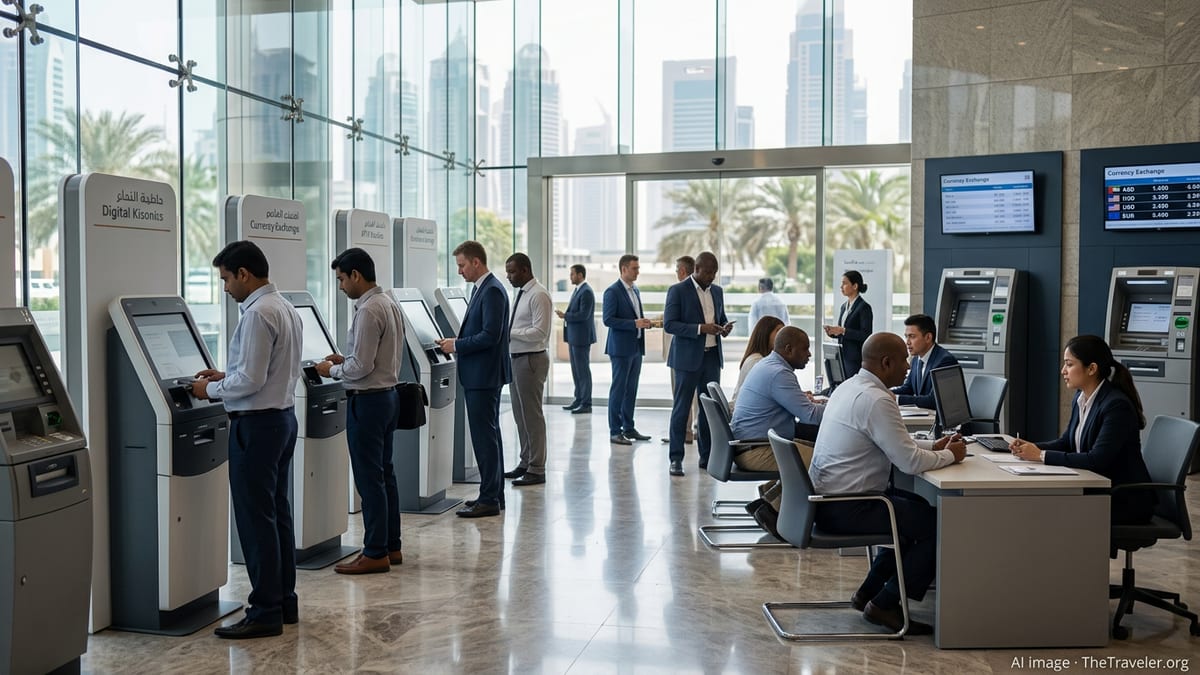
Banking Environment in the UAE for Expats and Cross-Border Transfers
The UAE has a mature, tightly regulated banking system overseen by the Central Bank of the UAE. Dozens of local and international banks operate retail franchises, and most offer products targeted at expatriate professionals and international families. For relocation decisions, the relevant question is not whether banking services exist but how well they serve frequent international payments and multi-currency needs.
Regulation requires robust anti-money-laundering and know-your-customer controls, which can translate into strict documentation requirements and occasional compliance reviews, especially on large or unusual cross-border movements. Expats should expect banks to ask for employment contracts, salary certificates, Emirates ID, and residence visas before providing full account functionality, including outward remittances.
Outbound remittances from the UAE are very large relative to population size and are dominated by expatriates sending salary home. Typical bank transfer fees for international remittances run from approximately zero to around AED 100 per transaction through digital channels, excluding the exchange rate margin, which often adds another 1 to 3 percent to the cost of a cross-currency transfer.
The presence of strong non-bank money transfer operators and digital providers has pushed local banks to improve their remittance offerings, adding instant corridors, multi-currency accounts and relationship-based fee waivers. For expats who remit regularly, bank selection can materially affect total transfer cost and convenience over time.
Key Evaluation Criteria: What Matters for Expats
For relocation planning, it is helpful to evaluate banks against a consistent set of criteria linked to international transfers. The main decision factors include account access for non-nationals, foreign currency capabilities, fees and FX spreads, digital experience and limits, and service stability for high-volume remitters or remote workers.
Account access covers eligibility for residents, non-residents in transition, and those between jobs. Some banks require salary transfer arrangements or minimum monthly income, while others focus more on minimum balance maintenance. Falling below minimum balances often triggers monthly fees in the range of roughly AED 25 to AED 100, which can be material for new arrivals.
Foreign currency capabilities encompass whether the bank offers foreign currency current or savings accounts, multi-currency wallets, and convenient internal FX conversion between AED and major currencies such as USD, EUR and GBP. This matters for expats paid in foreign currencies, those with overseas mortgages, or those managing investments abroad.
Transfer economics combine the explicit transfer fee and the implicit cost of exchange rate markups. A nominal fee of AED 50 to AED 100 can be offset or compounded by a 1 to 3 percent exchange rate margin, particularly on high-value transfers. Some banks offer discounted fees or better FX rates for premium or salary-transfer customers, or for transfers through their own digital platforms instead of branches.
Emirates NBD: Broad Network and Advanced Remittance Platforms
Emirates NBD is one of the largest banks in the UAE by assets and has a strong retail presence across all emirates. It is widely used by employers for salary transfers, which makes it a default option for many new expatriates. From a relocation standpoint, its extensive ATM and branch network simplifies initial settlement, while its digital channels support more sophisticated cross-border needs over time.
The bank offers current accounts in UAE dirhams and a range of foreign currency current accounts, allowing expats to hold balances in major currencies and transfer between them. For regular remitters, the bank’s international transfer service through online and mobile banking is typically processed within about two to three working days, with zero-fee options available when using its own digital channels to send funds to certain countries or to accounts within the same banking group. Underlying FX margins still apply, but the headline transfer fee can be kept low for common corridors.
Emirates NBD has developed dedicated remittance products aimed at expatriates, including fast-transfer corridors to a large number of countries designed for salary remittances and overseas expenses such as tuition or mortgage payments. Recent enhancements have expanded coverage to over 40 destination countries using an instant or near-instant model for qualifying routes, which is highly relevant for expats needing predictable settlement times.
On the downside, standard accounts carry minimum balance requirements, and international transfer costs can be higher when using branch channels or when sending to less common destination banks outside preferred networks. Additionally, expats relying on transfers in AED rather than in the destination currency should verify current policies, as some banks periodically restrict direct AED transfers to certain jurisdictions or may route them via correspondent banks with additional receiving charges.
Mashreq and Digital-First Options: Mashreq Neo and Others
Mashreq is another major UAE bank with a strong emphasis on digital innovation. Its digital-only proposition, Mashreq Neo, targets tech-savvy residents who prefer app-based onboarding and day-to-day management. For expatriates, the appeal lies in fast account opening, low day-to-day fees, and competitive digital features, including online international transfers, bill payments and budgeting tools.
International transfers from Mashreq accounts are handled through the traditional SWIFT network, and fees for outgoing transfers are typically in a similar band to peer banks, often in the tens of dollars equivalent per transaction before FX costs. For certain inbound transfers, particularly from North America and Europe, correspondent banks may levy their own charges, which reduces the net amount received by the customer. The bank’s documentation highlights standard SWIFT-based remittance flows, which means settlement times of two to five working days are common.
Expats report that fully digital accounts can occasionally attract additional compliance scrutiny for large or unusual cross-border payments, which is not unique to Mashreq but worth factoring into relocation planning. It is prudent for remote workers and freelancers to maintain clear documentation of income sources and to expect periodic requests for supporting information when volumes rise.
Digital-first banks and fintechs in the UAE continue to evolve, but as of early 2026 they mostly operate in partnership with traditional banks under the Central Bank’s licensing framework. For an expatriate, this means that while onboarding may be frictionless and interfaces modern, the underlying rails and regulatory expectations for international transfers are broadly similar to those of conventional banks.
International Banks in the UAE: HSBC and Citi
Large global institutions with a UAE retail footprint, such as HSBC and Citibank (through international or offshore-style accounts), can be attractive to expats who already bank with these brands in their home country. The main advantages are integrated global relationships, more consistent multi-currency offerings, and sometimes preferential charges for transfers between in-group accounts across borders.
HSBC in the UAE operates a tiered proposition in which premium account holders benefit from lower or waived international transfer fees, plus improved FX pricing and access to global view services that allow customers to see and move money between HSBC accounts in multiple countries. Transfers between the customer’s own accounts within the network are often processed faster and with reduced charges compared with transfers to third-party banks.
Citibank’s international account offerings available to UAE residents typically include multi-currency accounts, global debit cards, and free transfers between Citibank accounts in selected countries. This can be beneficial for expatriates with ongoing financial commitments in North America, Europe or Asia, who may wish to fund offshore savings or investment accounts from UAE-sourced income with minimal friction.
The trade-off is that international banks sometimes enforce higher minimum balance requirements or relationship thresholds for their more globally integrated products. Falling below these thresholds can trigger relatively high monthly service fees, so these options tend to suit mid- to high-income expatriates planning to maintain significant onshore or offshore balances rather than short-term residents with modest savings.
Islamic Banks and Sharia-Compliant Remittance Options
The UAE hosts several large Islamic banks, including Emirates Islamic and others, which operate under Sharia-compliant structures. For Muslim expatriates or those who prefer non-interest-based products, these institutions provide current and savings account equivalents, cards and international transfer services that adhere to Islamic financial principles.
From a functional standpoint, Sharia-compliant current and savings accounts work similarly to conventional accounts for day-to-day banking and remittances. International transfers are routed through the same SWIFT and correspondent networks, and fee levels for outbound transfers are generally comparable to those of conventional banks, often around tens of dirhams to low hundreds per transaction, depending on channel and destination.
Some Islamic banks position themselves strongly in specific remittance corridors aligned with their customer base, offering promotional rates or discounted transfer fees to certain countries in South Asia, Southeast Asia or the wider Middle East. These offers can be attractive for expatriates remitting frequently to particular destinations and may occasionally compete directly with specialist exchange houses.
As with conventional banks, Sharia-compliant banks also segment customers by relationship value. Premium or priority banking tiers often include bundled benefits such as one or more free international transfers per month or preferential FX pricing. Expatriates with higher incomes or substantial savings may therefore find that Islamic banks can match or improve on the cross-border value of mainstream conventional institutions while aligning with religious or ethical preferences.
Costs, Limits and Practical Considerations for International Transfers
Across banks in the UAE, the total cost of sending money abroad consists of three main components: an explicit transfer fee charged by the sending bank, the exchange rate spread relative to the mid-market rate, and any charges levied by intermediary or recipient banks. For expats moving substantial sums, such as relocation savings or property purchase funds, it is important to evaluate all three before choosing a provider.
Typical digital international transfer fees from UAE banks to overseas accounts, when initiated through online or mobile banking, commonly range from around AED 0 on promotional or same-bank corridors up to roughly AED 100 on standard SWIFT transfers. Branch-initiated transfers may incur higher fees. FX margins around 1 to 3 percent are reported for common currencies, and can be wider for exotic currencies or less liquid routes.
Daily and monthly transfer limits also vary by bank, account tier and channel. For many retail customers, daily international transfer limits through online banking fall somewhere in the low six-figure range in dirhams (for example, AED 100,000 to AED 500,000), with the possibility of temporary limit increases on request. Higher net-worth or private banking clients often have significantly higher limits. New arrivals may find that transfer limits are initially conservative until a salary pattern or account history develops.
Processing times depend on both the sending and receiving banks. Commonly, international transfers from the UAE settle in two to three working days, although instant or same-day options are increasingly available on selected routes. Expats should allow extra time for first-time transfers to new beneficiaries, as some banks perform additional checks on initial transactions or on large-value payments.
The Takeaway
For expatriates considering relocation to the UAE, local banking infrastructure is well developed and broadly expat-friendly, but the choice of bank can materially affect the cost and convenience of international transfers. Large domestic players such as Emirates NBD and Mashreq offer wide networks, digital platforms and targeted remittance products, while international banks like HSBC and Citibank provide integrated cross-border solutions that may suit globally mobile professionals with existing relationships.
Islamic banks provide fully functional Sharia-compliant accounts with remittance capabilities comparable to conventional banks, which may be crucial for some relocating families. Across all institutions, transfer fees and FX margins vary by segment, channel and corridor, so expats should compare not only published tariffs but also relationship benefits such as free monthly transfers or preferential FX for salary-transfer customers.
In practical terms, most relocating professionals will find that opening an account with a large local bank used by their employer, combined with a clear understanding of digital transfer options and limits, will meet day-to-day needs. Those with more complex cross-border financial lives may benefit from maintaining relationships with both a UAE bank for local transactions and an international or offshore bank for optimized multi-currency holdings and transfers.
Careful selection at the outset, documented understanding of transfer fees and FX spreads, and proactive use of digital channels will enable expatriates in the UAE to manage international money flows efficiently and reduce friction in their overall relocation experience.
FAQ
Q1: Can a new expat open a UAE bank account before receiving a residence visa?
In most cases, full current accounts with international transfer capabilities require a valid residence visa and Emirates ID, although some banks may offer limited non-resident or savings accounts that can be upgraded after residency is granted.
Q2: How long do international bank transfers from the UAE usually take?
Standard SWIFT-based transfers typically take about two to three working days to reach the beneficiary, although instant or same-day transfers are available on some popular corridors when using specific digital products or partner networks.
Q3: What are typical bank fees for sending money abroad from the UAE?
For digital transfers, explicit bank fees often range from zero on promotional or same-bank routes up to around AED 100 per transfer on standard international payments, with additional costs arising from exchange rate margins of roughly 1 to 3 percent.
Q4: Is it cheaper to use a UAE bank or an exchange house for remittances?
Exchange houses in the UAE frequently offer competitive FX rates and low transfer fees for popular remittance corridors, while banks offer convenience and integration with salary accounts. The cheaper option depends on corridor, amount and promotional offers, so comparing both for the same transaction value is advisable.
Q5: Do UAE banks allow expats to hold foreign currency accounts?
Many major UAE banks provide foreign currency current or savings accounts in currencies such as USD, EUR and GBP, enabling expats to hold and transfer funds without repeated currency conversion, although minimum balance requirements may apply.
Q6: Are international transfers from UAE banks subject to capital controls?
The UAE does not impose capital controls on typical personal remittances, but all transfers are subject to anti-money-laundering checks. Large or unusual transfers may trigger additional documentation requests from the bank or temporary delays.
Q7: What documentation is usually required to activate international transfer services?
Banks generally require a passport, valid residence visa, Emirates ID, proof of address and evidence of income such as an employment contract or salary certificate. Additional documents may be requested for high-value or business-related transfers.
Q8: Can expats use UAE digital-only banks for regular international transfers?
Yes, licensed digital-only propositions and app-based accounts in the UAE typically support international transfers over the SWIFT network, with processes similar to traditional banks. Users should review fee tables, limits and customer support responsiveness before relying on them for high-volume remittances.
Q9: How do premium or priority accounts change international transfer costs?
Premium banking tiers at many UAE institutions include benefits such as one or more free international transfers per month, higher transaction limits, and better FX pricing. These can significantly reduce overall costs for frequent or high-value remitters, but usually require higher minimum balances or incomes.
Q10: What risks should expats be aware of when transferring large sums into or out of the UAE?
Key risks include delays due to compliance checks, unexpected correspondent bank fees deducted by intermediary institutions, and adverse FX rates on the day of conversion. Planning ahead, confirming recipient bank details, and splitting very large transfers into tranches where appropriate can help manage these risks.