


Anse La Raye on Saint Lucia’s west coast is a working fishing village first and a tourist stop second, which is exactly why its food is so compelling. Here, the catch that goes out on small wooden boats in the morning comes back to sizzling grills by sunset, fueling one of the Caribbean’s liveliest fish fries and a clutch of casual spots serving honest Creole cooking. This guide explains how and where to eat in Anse La Raye, from Friday night fish fry vendors to low-key lunch joints and nearby beach grills, with real examples of what to order and what you are likely to pay.
Get the latest updates straight to your inbox!
Understanding Anse La Raye’s Food Scene
Anse La Raye is a compact crescent bay village about 25 minutes south of Castries, known across Saint Lucia for its weekly waterfront fish fry and its long tradition of small-boat fishing. The main strip runs parallel to the beach, and many of the town’s most atmospheric food options cluster along this front street, where smoke from charcoal drums and the sound of soca and reggae set the tone on busy nights. Even outside the famous Friday event, visitors will find fish shacks, bars that double as informal restaurants, and a few nearby beach grills that make the area worth a detour at lunch or sunset.
Saint Lucian cuisine blends African, French and island influences, so expect seasoning that leans on thyme, chives, garlic and Scotch bonnet, plenty of allspice and nutmeg, and side dishes built around root vegetables, plantain and green banana. In Anse La Raye this plays out in plates of grilled mahi-mahi or snapper with breadfruit, green fig salad or rice and peas, and hearty fish stews ladled over provisions such as dasheen and yam. Menus are rarely printed and often depend on the morning’s catch, which means visitors need to arrive with a flexible mindset and a willingness to ask, “What is fresh today?”
Because Anse La Raye is still primarily local rather than resort oriented, prices tend to be lower than in the north of the island or at upscale Soufrière hotels. A filling plate of grilled fish with two sides from a simple stall may start around 20 to 30 Eastern Caribbean dollars (about 7 to 11 US dollars), while a drinkable local rum punch can be under 10 EC at a basic bar. At beach grills linked to boutique hotels in the wider Anse La Raye district, expect higher prices, often 60 to 100 EC (roughly 22 to 37 US dollars) for mains at lunch or dinner, particularly when lobster is in season.
For most travelers, the main decision is whether to focus on the Friday fish fry or to seek out quieter, more low-key meals the rest of the week. The reality is that both offer different perspectives on local life. Friday night delivers the party energy and the widest variety of seafood in one place, while weekday lunches and early evenings give space to talk with cooks, watch fishermen mend nets on the beach, and taste everyday Creole dishes without a crowd.
Waterfront Seafood & Grilled Fish
The waterfront in Anse La Raye centers on Front Street, which runs along the bay and doubles as the main stage for the village’s food culture. During the day, you will see fishing boats pulled up on the sand and men gutting or descaling the morning catch at simple tables. By late afternoon, a handful of permanent or semi-permanent shacks and bars start to come alive, especially on days when tour boats stop in or when locals gather after work. It is here that you are most likely to find straightforward grilled fish plates, often cooked on open charcoal pits set just behind the road.
Visitors can generally expect common Caribbean species such as mahi-mahi (often called dorado), kingfish, snapper and occasionally tuna, depending on the season. Fish is usually seasoned with a wet green marinade of herbs, garlic and oil, then grilled whole or as steaks and served with hot sauce. A typical plate from a small waterfront vendor might include a generous portion of grilled fish, a scoop of rice and peas, a piece of roasted breadfruit or plantain, and a simple salad of grated carrot and cabbage, with prices in the 25 to 35 EC range. Portions are rarely small, and many travelers share one plate with extra sides if they plan to sample several stalls.
Beyond the village center, the broader Anse La Raye district includes secluded beach coves with casual grills attached to small hotels or beach bars. At places like the beach grill in Anse Cochon, just north of the village, day visitors and hotel guests sit under sea-almond trees or simple thatch roofs and order from a short menu of grilled fish, burgers and salads. Here, a grilled fish fillet or catch-of-the-day sandwich with fries can run around 45 to 70 EC, reflecting the higher operating costs and more polished service. These spots are especially appealing at lunch, when the water is calm and clear and you can alternate between swimming and eating.
Ordering seafood in Anse La Raye often involves a bit of conversation. Instead of asking for a specific fish by name, it is common to start by saying, “What did you catch today?” Then the cook might list two or three options and suggest whether they are better grilled, stewed or fried. If you are unsure, grilled is usually the safest bet for firm fish like mahi-mahi and kingfish, while stews bring out the best in smaller or bonier species. Do not be shy about saying how hungry you are or asking for extra gravy on your rice, which many locals consider essential.
Lobster, Conch & Seasonal Specials
One of the standout experiences in Anse La Raye, especially during the main lobster season that typically runs from late summer into early spring, is ordering Caribbean spiny lobster straight from a grill. At the Friday fish fry and on some busy weekends, vendors will display lobsters on ice in coolers or on trays and quote prices according to weight. For a medium grilled lobster split in half and served with garlic butter, expect to pay in the region of 80 to 120 EC per plate, particularly if it comes with sides like breadfruit, salad and a local starch. Prices can vary widely according to supply and the vendor’s popularity, so it is always acceptable to confirm the cost before they start cooking.
Conch, known locally as lambi, is another prized catch that appears at stalls and small restaurants when available. Lambi is often turned into a spicy creole stew or lightly grilled and sliced into a sort of warm ceviche. At the Anse La Raye fish fry, lambi dishes might be slightly more expensive than standard fish plates, sometimes 35 to 45 EC, reflecting its status as a specialty item. Because conch stocks are sensitive, availability can be patchy, and some seasons see more emphasis on octopus, squid or local crayfish instead.
The village’s seafood scene is also defined by smaller, less heralded specialties that change with what the sea and weather allow. On certain nights, a vendor may offer skewers of shrimp, smoky octopus cooked low over the coals, or small whole fish fried crisp and eaten with fingers. When the sea is rough and boats cannot go out far, menus may shift to more stewed preparations and to chicken or pork dishes. Travelers who return to Anse La Raye on multiple evenings often comment that no two meals are exactly alike, which is part of the charm.
If you have your heart set on lobster, lambi or a particular seafood, it is wise to arrive earlier in the evening, ideally before 8 p.m., when stalls are fully stocked and the grills are not yet overwhelmed. On quieter non-Friday nights when lobster is available at a beach grill or small restaurant, it might be listed as a supplement or a “catch of the day” special priced on request. These off-peak meals can feel more relaxed, with more time for the cook to chat about how they prepare and season the shellfish.
Local Dishes & Classic Side Plates
No guide to eating in Anse La Raye is complete without touching on the local dishes that sit alongside grilled fish on most plates. Saint Lucia’s national dish is green fig and saltfish, where “green fig” refers to boiled unripe bananas rather than figs. In practice, this often appears as a kind of potato salad made with chopped green banana, salted cod, onions, peppers and herbs bound with a light dressing. In Anse La Raye you might find it prepped in large metal bowls at a stall, ready to be spooned onto plates as a side, or occasionally served on its own at lunchtime for around 15 to 20 EC.
Breadfruit, a starchy tropical fruit that behaves like a cross between potato and bread, is another staple side. Vendors roast whole breadfruit over charcoal until the skin is charred, then peel and slice it, sometimes finishing it in a pan with butter or coconut oil. Visitors are often surprised by how satisfying grilled breadfruit is next to fish, especially when doused with a thin Creole sauce. Other frequent sides in Anse La Raye include rice and peas cooked with coconut milk, fried plantain slices, and mixed salads of cabbage, cucumber and tomato. Most seaside plates will include at least two of these, giving a good cross-section of island flavors.
Snack-style specialties also appear around the village and at the fish fry. Look out for accra, small fritters made from a batter of flour, herbs and salted fish, deep fried until crisp. A paper cone or small plate of accra might cost 5 to 10 EC and makes an ideal drink snack while you decide which grill to commit to for a full meal. Fried “bakes” or “floats,” which are rounds of slightly sweet dough fried in oil, sometimes filled with saltfish or sausage, are also common during daytime and early evening. These are popular with taxi drivers and school children alike and can cost as little as 3 to 5 EC from a simple stand.
Vegetarians and those looking for lighter plates will find options too, especially at beach grills and more established eateries in the wider district. Typical vegetarian sides such as rice and peas, green salad, plantain, breadfruit, macaroni pie and stewed vegetables can be brought together into a hearty plate even without fish or meat. Prices for such combination plates often mirror fish dishes, starting around 20 to 30 EC, although portions of any one side ordered alone can be cheaper. It helps to explain clearly that you prefer no meat or fish so the cook can suggest the best mix of sides available that day.
Friday Night Fish Fry: What To Expect
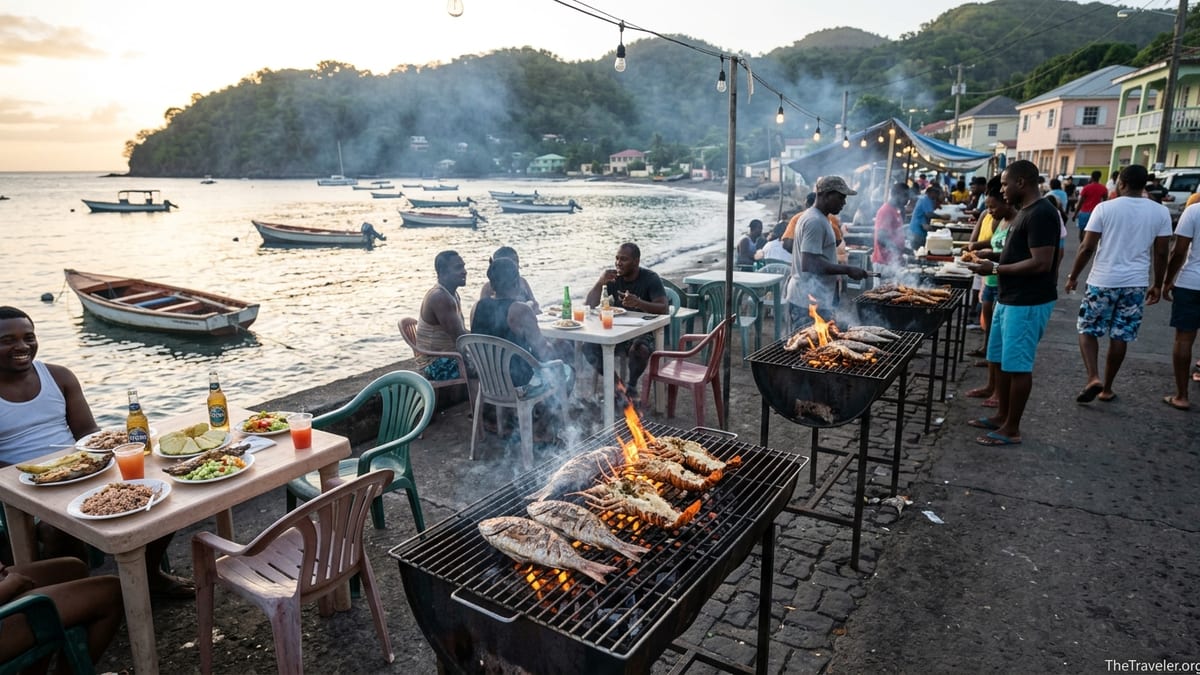
The Friday fish fry in Anse La Raye is one of Saint Lucia’s signature street food events, turning the usually quiet waterfront into a smoky, music-filled party. From around 7 p.m. every Friday, stalls set up along Front Street and near the jetty, each with their own grill or fryer and stacks of coolers filled with fish and seafood. The smell of charcoal, wet coconut husk and seasoning hangs in the air, while sound systems or small bands play soca, dancehall and vintage calypso. Locals come out from nearby communities, tour buses arrive from hotels in the north and south, and visitors mingle with residents at shared tables or stand to eat along the seawall.
Food-wise, you can expect a wide range of grilled and fried fish, lobster when in season, lambi, shrimp, octopus and sometimes crab. Each vendor typically offers plates with a choice of main item plus sides such as breadfruit, green fig salad, rice and peas and salad. Standard fish plates often fall in the 25 to 40 EC range, with lobster or mixed seafood plates running higher, usually 60 EC and up depending on portion size and the night’s demand. Smaller snack portions of fish or accra can be cheaper and are a good way to sample more than one stall. It is entirely acceptable to share plates among a group so everyone gets to taste different grills and sauces.
Drinks are a central part of the Friday experience. Several stalls and small bars along the route sell cold local beers such as Piton, bottled soft drinks, water and simple rum punches mixed in jugs. Beer typically runs around 5 to 8 EC from street vendors, with rum punches in the 8 to 12 EC range. Some stands also sell homemade ginger beer, sorrel drink or fresh coconut water, which are refreshing alternatives for those avoiding alcohol. Since payment is almost always in cash and change can be limited on busy nights, it is wise to arrive with small bills.
The fish fry is generally considered safe and friendly, but as with any crowded night event, basic travel common sense applies. Keep valuables close, avoid flashing large amounts of cash, and arrange in advance how you will get back to your accommodation, whether by pre-booked taxi or a driver who waits nearby. Families with children often attend early in the evening when the atmosphere is more relaxed and the lines shorter, then head out before the music peaks later at night. Those who prefer quieter food experiences might still visit briefly for a plate and a drink shortly after the grills fire up, then retreat to a calmer bar or back to their base elsewhere on the island.
Where To Eat Outside Friday Night
Although the Friday fish fry gets most of the attention, eating in and around Anse La Raye outside that weekly event can be just as rewarding, especially if you want to see the village in its everyday rhythm. During the week and on Sundays, smaller local restaurants, rum shops and family-run kitchens open for lunch and early dinner, offering plates of stewed chicken, pork, fish, and classic sides at prices that are often lower than on Friday. These spots may not always have signs or menus in English, but a friendly greeting and a question about “today’s lunch” usually leads to a generous plate.
In the center of the village, several bars double as informal eateries, serving Creole lunches to locals who work in fishing, construction or the nearby farms. Travelers can typically get a plate of fish or chicken with rice and peas, salad and plantain for roughly 15 to 25 EC at midday, sometimes including a small juice. These meals are simple and hearty rather than polished, but they offer a real sense of local flavor and routine, particularly if you sit at the counter and chat with the bartender about the week’s news or football scores.
For those staying at hotels or guesthouses along the west coast between Marigot Bay and Soufrière, the Anse La Raye district is a good lunch stop on the way to or from sights like the Pitons or the drive-in volcano. Beachfront grills at coves such as Anse Cochon often open daily from late morning until mid-afternoon, serving grilled fish sandwiches, burgers, salads and a few daily specials. Prices here are higher than in the village itself, but the trade-off is sandy feet, clear snorkeling water just steps away, and more consistent opening hours. A casual grilled fish sandwich with fries and a soft drink may run 55 to 70 EC, while a burger or pizza might be similar.
If you are keen to avoid the Friday night crowds altogether, consider targeting a Thursday or Saturday evening in or near Anse La Raye. On these nights some stalls or village bars will still grill fish for locals gathering after work, especially when there is a sports game on television. The scene is much quieter, with more time to talk with cooks and fewer tour coaches on the road. Ask your guesthouse host or taxi driver which spots tend to open most reliably on non-Friday nights, as opening patterns can change with seasons, festivals and fishing conditions.
Drinks, Atmosphere & Practical Tips
Part of what makes eating in Anse La Raye memorable is the setting. The village hugs a natural bay, with coconut palms at the water’s edge and wooden fishing boats anchored just offshore. At sunset the light softens, the Pitons glow faintly in the distance down the coast, and music starts to spill from small bars along the front street. Even a humble plate of fried fish feels special when eaten perched on a low wall with waves curling up the sand and children still playing football on the beach.
Local drinks are straightforward but satisfying. Piton beer is widely available and is the standard order for many Saint Lucians, usually served cold in bottles. Rum is often mixed in simple punches with fruit juice or in straight measures with a chaser. Some vendors prepare big jugs of house punch with local rum, passion fruit, lime and a dash of bitters, which they sell by the plastic cup. Non-alcoholic choices range from bottled sodas to locally made fruit juices and malt drinks. Prices vary with the venue, but as a rule village bars are cheaper than hotel beach bars, sometimes by half.
Because there is little in the way of formal dress codes in Anse La Raye, casual, beach-friendly clothing is the norm, though it is respectful to throw on a shirt or cover-up when eating in village settings rather than walking through the streets in swimwear. The coastal location can attract mosquitoes at dusk, so a small bottle of repellent is useful if you plan to linger over a long meal or late drinks. Bringing reusable cutlery or a collapsible cup is not necessary but can help cut down on single-use plastic, as many stalls serve food in foam boxes or on disposable plates.
Cash is another practical consideration. While some beach grills linked to hotels may accept cards, many of the most authentic spots in the village are cash only, and the nearest ATMs are not always convenient or functional. Carrying a mix of small EC notes and a few US bills makes transactions smoother and reduces stress when a popular stall runs low on change during a busy evening. Finally, remember that service is often informal; tipping a few extra EC or rounding up the bill for friendly, efficient service is appreciated but not compulsory.
The Takeaway
Eating in Anse La Raye is less about polished restaurant interiors and more about what is sizzling on the grill and who is standing next to you while you eat it. From the smoke and music of the Friday fish fry to quiet weekday lunches in rum shops and lazy afternoons at nearby beach grills, the village offers a spectrum of experiences that feel grounded in everyday Saint Lucian life. Seafood is the star, with grilled fish, lobster in season and lambi when available, backed up by deeply satisfying sides like breadfruit, green fig salad and rice and peas.
Travelers who arrive with realistic expectations about infrastructure but an open mind about food will be rewarded. Menus change depending on what the sea provides, prices are generally fair and clearly stated, and the atmosphere is welcoming to visitors who show curiosity and respect. Whether you come for a single Friday night plate of grilled snapper at a waterfront stall or build several lunch and dinner stops into a wider west-coast itinerary, Anse La Raye has the potential to deliver some of the most memorable meals of a Saint Lucia trip.
Plan your visit around how you like to eat. If you thrive on music and crowds, prioritize the Friday fish fry and arrive hungry and early. If you prefer conversations with cooks and quiet sea views, look instead to midweek village lunches or to beach grills in the surrounding district. In every case, the guiding principle is the same: follow the smoke, listen for the laughter, and let the day’s catch decide your menu.
FAQ
Q1. What time does the Anse La Raye Friday fish fry start and end?
The fish fry usually gets going around 7 p.m., with grills heating up a little earlier, and continues until around 11 p.m. or midnight depending on crowds and how quickly vendors sell out.
Q2. How much should I expect to pay for a plate of grilled fish at the fish fry?
A typical plate of grilled fish with two or three sides generally costs between 25 and 40 Eastern Caribbean dollars, depending on the vendor and portion size.
Q3. Is lobster always available at the Anse La Raye fish fry?
No, lobster is seasonal and availability depends on local regulations and the catch. When offered, it is usually more expensive and can sell out early in the evening.
Q4. Can I find good food in Anse La Raye outside of Friday night?
Yes. Small local restaurants, rum shops and nearby beach grills serve fish, Creole lunches and snacks on most days, especially at lunchtime and early evening.
Q5. Are there vegetarian or vegan options in Anse La Raye?
While fully vegetarian menus are rare, many stalls and small restaurants can offer plates built around sides like rice and peas, breadfruit, salads and stewed vegetables. It helps to explain your needs clearly.
Q6. Do I need to book a table for the Friday fish fry?
No reservations are required because the fish fry is a street event with stalls and communal seating. On busy nights it can help to arrive early to find a spot to sit, but you do not book in advance.
Q7. Is it safe to attend the fish fry with children?
Many families visit with children, especially earlier in the evening when it is less crowded. Standard precautions apply, but the atmosphere is generally friendly and relaxed.
Q8. What is the best way to get to and from Anse La Raye at night?
Most visitors arrange a taxi through their hotel or guesthouse, often with a pickup time agreed in advance. Self-driving is possible but parking can be tight on busy nights.
Q9. Can I pay by card at food stalls and small restaurants?
Most village stalls and basic eateries are cash only. Some beach grills attached to hotels may accept cards, but you should bring enough cash for food and drinks.
Q10. What should I wear to eat out in Anse La Raye?
Casual, comfortable clothing is fine. Beachwear is acceptable at seaside grills, but it is respectful to put on a shirt or cover-up when walking through the village or eating at local bars and restaurants.