


Paris Charles de Gaulle Airport can feel intimidating even for frequent flyers. Built in stages, spread across multiple terminals and serving more than 60 million passengers a year, it is a major European hub and a common transit point between North America, Europe, Africa and Asia. With a bit of advance knowledge, however, CDG becomes manageable. This guide explains how the airport is laid out, how to move between terminals, what to expect at security and passport control, and how to reach central Paris smoothly, with concrete, real-world examples for 2026 travelers.
Get the latest updates straight to your inbox!
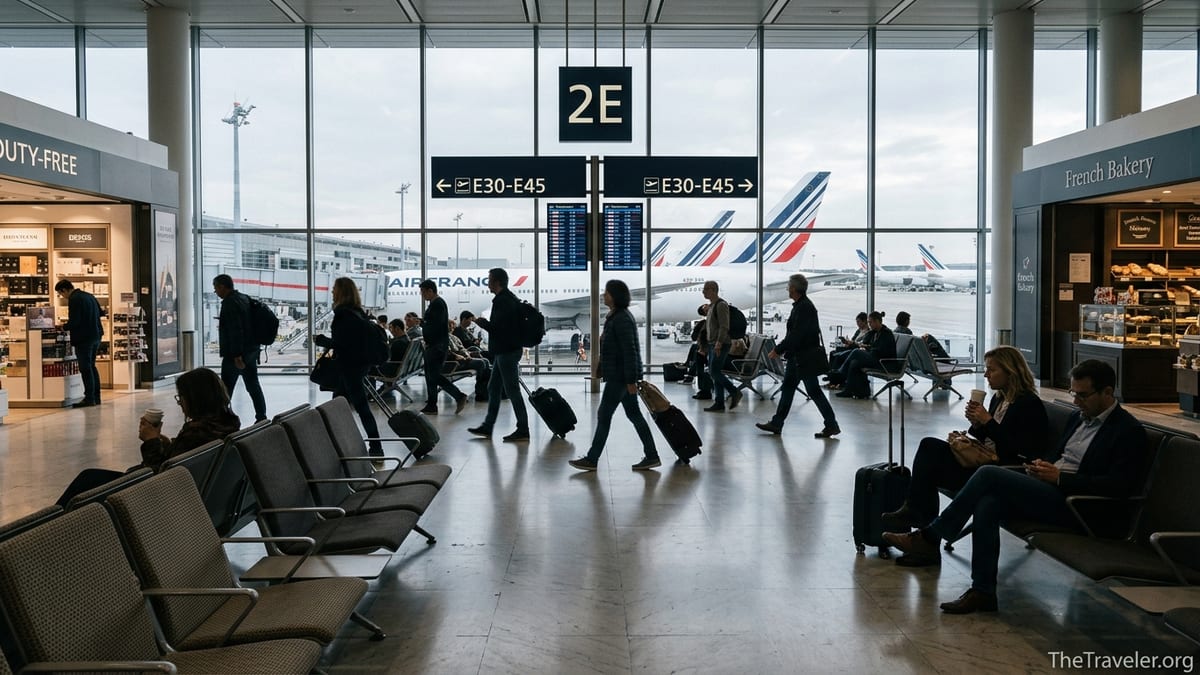
How Paris Charles de Gaulle Airport Is Organized
Paris Charles de Gaulle Airport, also known as Roissy and coded CDG, is about 25 kilometers northeast of central Paris. The airport is arranged into three main passenger terminals: Terminal 1, Terminal 2 and Terminal 3. In practice, Terminal 2 is a cluster of separate buildings, which is why the airport can feel confusing at first. Knowing roughly where your airline operates will save you time and stress as soon as you land.
Terminal 1 handles a mix of international airlines, including some Star Alliance carriers such as United Airlines and Lufthansa on many routes. The building is circular with a central core and satellite boarding piers, and in recent years has undergone significant renovation, including refreshed check-in, security and retail areas. If you fly from cities like Newark or Washington Dulles to Paris on United, for example, you will usually arrive and depart in Terminal 1.
Terminal 2 was originally built for Air France and is now by far the largest part of CDG. It is split into seven sub-terminals: 2A, 2B, 2C, 2D, 2E, 2F and 2G, plus three boarding halls in 2E labeled K, L and M. Long-haul Air France and most SkyTeam partner flights use 2E and 2F, while many other legacy and leisure carriers use 2A through 2D. A Canadian traveler flying Air France from Montreal to Paris and then on to Rome, for instance, might arrive at 2E Hall L and connect through 2F for a Schengen flight.
Terminal 3 is smaller and located near the Roissypôle complex. It mostly handles low-cost and charter airlines, including some flights by carriers like Ryanair and easyJet that do not operate from Orly. If you are flying to a holiday destination with a tour operator or on a budget airline that is not in the major alliances, always double-check whether it uses CDG Terminal 3.
Finding Your Airline and Terminal in Practice
Before traveling, the easiest way to avoid terminal confusion is to check your booking and boarding pass carefully. Airlines and online travel agencies usually specify both the terminal and the sub-terminal: for example, "CDG Terminal 2E" or "CDG Terminal 2F." If the document only says "Terminal 2," look it up again about 24 hours before departure, when most airlines finalize gate and terminal allocations.
Air France and its SkyTeam partners such as Delta Air Lines, KLM and Korean Air are concentrated in Terminals 2E and 2F for most flights. A traveler flying Delta from Atlanta to Paris, connecting to an Air France flight to Marseille, will typically arrive in 2E and leave from 2F, remaining within the same complex. On the other hand, a WestJet passenger from Calgary to Paris might arrive at Terminal 2C and then connect by shuttle to 2F for a separate Air France ticket to Nice.
Many non-alliance and leisure carriers use 2A, 2B, 2C or 2D. British visitors flying with Jet2 or holiday charter airlines, for example, commonly use these older sub-terminals. Because the layout of each building is slightly different, it is worth checking the airport’s own terminal pages on the day of travel for any temporary moves during construction or busy events such as the Paris 2024–2025 sporting season.
If you turn up at the wrong terminal, do not panic. CDG provides a free automated train called CDGVAL plus shuttle buses that link all terminals. In practice, though, changing terminals can add 20 to 40 minutes to your journey, particularly during peak times. A US family with heavy luggage mistakenly dropped at Terminal 1 for an Air France flight in 2E, for example, would need to take CDGVAL to the Terminal 2 station, then follow signs and possibly use an additional shuttle to reach 2E check-in, so building in extra time is essential.
Moving Between Terminals and Making Connections
CDGVAL is the backbone of movement between the main terminal areas. This free automated light-rail shuttle stops at Terminal 1, the parking areas, the Roissypôle / Terminal 3 zone, and the large Aéroport Charles de Gaulle 2 TGV / RER station that serves Terminal 2. Trains usually run every few minutes, and the ride between Terminal 1 and the Terminal 2 station typically takes around 8 to 10 minutes including stops, not counting walking and waiting times.
Within Terminal 2 itself, you will often move on foot between 2A, 2B, 2C, 2D, 2E and 2F using enclosed walkways at the land-side level. However, some transfers require a dedicated shuttle. For instance, passengers arriving at 2E Hall M, which is a satellite building for long-haul flights, must take the internal LISA shuttle train to reach the main 2E concourse before following signs to 2F or baggage claim. Real-world traveler reports suggest that going from 2E Hall M to 2G (where many regional flights depart) can take 40 to 60 minutes once you include walking, border control and the bus ride to 2G.
CDG’s size means connection times can feel tight even when they look generous on paper. A common itinerary for North American travelers is an Air France or Delta flight arriving at 2E from New York or Toronto, with a 1 hour 20 minute layover before a Schengen flight from 2F. In practice, this can be sufficient if your inbound flight is on time, but you will need to walk briskly, follow transfer signs immediately and avoid stopping at shops until after you reach your departure gate. During peak early-morning arrival banks, queues at passport control can add 20 to 30 minutes.
For separate tickets or self-transfers, it is safer to allow at least 3 to 4 hours between flights, especially if you must change terminal and re-check bags. A traveler arriving on an independent low-cost flight at Terminal 3 and then flying long haul from 2E on a different ticket, for instance, must collect luggage, clear customs, navigate to CDGVAL, ride to the Terminal 2 station, then locate the correct check-in area. On busy summer Saturdays or during major events, taxi and shuttle traffic near the terminals can further lengthen the journey between arrivals and departures.
Security, Passport Control and Customs: What to Expect
Security and border control at CDG are divided between Schengen and non-Schengen areas. Flights within the Schengen zone, such as Paris to Barcelona or Rome, generally involve security screening without passport control for EU and Schengen nationals, while long-haul flights or those to the United Kingdom, North America, Asia, Africa and most of the Middle East include exit passport checks. Transfer passengers arriving from outside Schengen and connecting to a Schengen destination will usually clear passport control at CDG, then go through security again before reaching their onward gate.
Procedures are broadly similar to other major European hubs. At security, you place liquids in containers of 100 milliliters or less inside a clear 1-liter bag, remove laptops and large electronics from your bag unless instructed otherwise, and remove belts or metal items if requested. Some checkpoints now have newer scanners that occasionally allow liquids to remain inside bags, but this is not yet consistent, so prepare for the standard rules. During morning rush hours between about 7 and 10 a.m., security queues in Terminals 2E and 2F can be 20 to 30 minutes long; premium lanes for business and elite-status passengers are available but can also be busy.
Passport control is handled by French border police. EU / EEA / Swiss citizens may be able to use automated e-gates, while other nationalities join manned booths. For example, an American traveler arriving from Chicago into 2E and connecting to Florence can expect to wait anywhere from 10 to 40 minutes at passport control, depending on the arrival bank and staffing, before entering the Schengen zone and walking onward to the 2F departure area. Families with young children, elderly passengers and travelers with reduced mobility can normally use dedicated lanes; if in doubt, ask an officer.
Customs checks for arriving passengers are usually light. After baggage claim, you will choose the green exit if you have nothing to declare or the red channel if you are carrying goods above duty-free allowances or large amounts of cash. Spot checks do occur, especially on flights from certain regions, so keep receipts for high-value purchases such as designer handbags or electronics. For instance, if you bought luxury goods in Paris and plan to claim a VAT refund at the airport, you must validate the electronic refund form at a kiosk and be prepared to show the goods in your luggage if customs officers request it.
Transport From CDG to Central Paris and Beyond
The main public transport spine between CDG and central Paris is the RER B commuter train. Trains run from two airport stations: Aéroport Charles de Gaulle 1 near Terminal 3 / Roissypôle, and Aéroport Charles de Gaulle 2 TGV beneath Terminal 2 between 2C/2D and 2E/2F. In 2026, a standard one-way ticket to central Paris costs around 11 to 12 euros per adult, and the journey to major stations such as Gare du Nord or Châtelet–Les Halles typically takes about 35 minutes.
For many visitors, the RER B is the best combination of speed and price, especially if you are staying near a station on the line. A couple arriving on an early afternoon flight, for instance, can follow the train icons in Terminal 2 to the RER station, buy tickets from the Île-de-France ticket machines with a chip-and-PIN card, and be in central Paris in under an hour from the time they leave customs. During rush hour, however, RER trains can be crowded, and strike days sometimes disrupt service, in which case buses, taxis and ride-hailing prices tend to rise.
Dedicated airport buses connect CDG with different parts of the city and region. Examples include coach-style services between the airport and central Paris, hotel shuttles serving clusters of chain hotels near Roissypôle, and the Magical Shuttle operating to Disneyland Paris with stops at Terminal 1 and Terminals 2E/2F. A family heading directly to Disneyland with young children and several suitcases may prefer the Magical Shuttle or a pre-booked private transfer at a fixed price rather than navigating the RER B and an onward RER A connection.
Taxis and private transfers are widely available at official ranks outside each terminal. Official Paris taxis have fixed regulated fares from CDG to central Paris, which are typically a flat rate in the 55 to 65 euro range depending on whether you are going to the Left Bank or Right Bank, plus small surcharges for luggage or extra passengers. In normal traffic, the ride into central Paris takes 35 to 60 minutes. Ride-hailing services also operate, but fares fluctuate based on demand; during major events or strikes, visitors have reported prices spiking well above the official taxi flat rates. As always, ignore unofficial drivers who approach you inside the terminal and follow signs to the official taxi lines.
Practical Tips Inside the Terminals: Services, Food and Lounges
CDG’s terminals offer a full range of services including ATMs, currency exchange booths, pharmacies, baby-care rooms and showers in certain lounges. While euro cash is useful for smaller purchases, most cafes, boutiques and transport ticket machines accept international credit cards. For example, you can pay for an RER B ticket or a coffee at a Paul bakery stand using a standard Visa or Mastercard without any issue.
Food options vary by terminal and time of day but generally include a mix of French chains and international brands. In Terminals 2E and 2F, travelers will find typical French bakery counters selling croissants and baguette sandwiches, bistro-style restaurants serving steak-frites and salads, and familiar brands such as Starbucks and McDonald’s in some land-side areas. A jet-lagged passenger arriving in the early morning can grab an espresso and pain au chocolat near their gate, while those with longer layovers might sit down for a hot meal in a brasserie overlooking the runway.
Shopping is a significant part of the CDG experience, particularly in 2E and 2F, where the Extime retail concept has clustered duty-free and luxury boutiques. Travelers transiting to long-haul destinations will see stores for brands such as Chanel, Dior, Hermès and Louis Vuitton alongside beauty, electronics and French gourmet shops selling macarons, chocolates and wine. For many international visitors, buying French beauty products duty-free at the airport is part of the trip, though prices are not always lower than in city centers, so it can be worth comparing.
Airport lounges are available across the terminals. Air France operates several lounges in Terminal 2, notably in 2E and 2F, which offer showers, hot food, workspaces and quieter seating for eligible passengers and paid-access guests. Independent lounges also exist in some areas, which can be accessed with lounge passes or membership programs. For example, a business traveler flying economy on a long-haul route might purchase single-visit access to a shared lounge in 2A or 2C to shower and work between meetings, rather than waiting in the main departure hall.
Real-World Connection Scenarios
Understanding how typical itineraries unfold can make CDG easier to picture. Consider a traveler from Boston arriving on an Air France overnight flight into Terminal 2E Hall K with a 1 hour 45 minute connection to a flight to Lisbon from 2F. After disembarking, they follow the purple "Connections" signs, pass through passport control into the Schengen zone, go through a security checkpoint, then walk through the 2F shopping and gate area to reach their flight. If the inbound flight lands on time, this connection is usually comfortable, leaving enough time for a quick coffee near the gate.
Another common situation is a self-transfer between low-cost and full-service airlines. Imagine a traveler flying from Dublin to Paris with a budget carrier that uses Terminal 3, then onward to Johannesburg on Air France from 2E on a separate ticket. They must clear immigration and customs, ride CDGVAL from the Terminal 3 / Roissypôle station to the Terminal 2 station, find the Air France check-in zone in 2E, drop bags, go through security and passport control, and reach the long-haul gate. In this case, booking at least a 4-hour gap, or even more during busy summer weekends, is prudent.
Transfers between satellite areas also take time. A Canadian traveler arriving at 2E Hall M from Vancouver and connecting to a regional Hop! flight from 2G to Lyon might spend 10 to 15 minutes riding and walking within 2E, another 15 to 20 minutes at passport control and security, then 10 to 15 minutes on the shuttle bus out to 2G. If their inbound flight is delayed by 45 minutes, the connection could become stressful, highlighting why many frequent travelers prefer at least 90 minutes for intra-Terminal 2 transfers and longer when changing between distant halls like M and 2G.
Finally, some passengers underestimate the walking distances even within a single sub-terminal. In 2E and 2F, for example, gates can be spread along long concourses, and a walk from one end to the other may take 10 to 15 minutes. Travelers with limited mobility, heavy luggage or young children should consider requesting wheelchair assistance in advance or allowing extra buffer time, particularly during events such as the Paris 2024–2025 sporting season when terminals may be more crowded than usual.
The Takeaway
Paris Charles de Gaulle Airport has a reputation for being complex, but it becomes far more approachable once you understand its basic structure. Three main terminals, a sprawling Terminal 2 with multiple sub-buildings, and a free CDGVAL shuttle form the skeleton of the airport. Most North American and long-haul travelers will encounter Terminals 1, 2E or 2F, while low-cost and charter flights often use Terminal 3 or the older sections of Terminal 2.
For a smoother experience, verify your exact terminal and sub-terminal in advance, allow generous connection times, and follow "Connections" or train icons immediately on arrival rather than stopping to shop or eat until you are near your next gate or the RER station. Use the RER B for a cost-effective link into central Paris, taxis or private cars when you prioritize comfort or are traveling with a group, and consider dedicated shuttles for destinations like Disneyland Paris.
CDG will likely remain busy and occasionally confusing, especially during peak periods and major events, but most of its challenges are predictable. With realistic expectations about walking distances, potential queues at security and border control, and transfer times between halls, you can treat it as what it is: a major European hub that, once decoded, reliably connects you to Paris and beyond.
FAQ
Q1. How much time should I allow for a connection at Paris Charles de Gaulle?
For a single-ticket connection within Terminal 2, many airlines schedule layovers of 1 hour 15 minutes to 2 hours, which usually works if flights are on time. For separate tickets or terminal changes, especially involving Terminal 1 or 3, it is safer to allow 3 to 4 hours to cover walking, shuttles, security, passport control and any delays.
Q2. What is the cheapest way to get from CDG to central Paris?
In 2026, the RER B commuter train is typically the cheapest practical option, with a one-way ticket to central Paris costing around 11 to 12 euros. The train runs from the airport’s two stations and reaches major central hubs such as Gare du Nord and Châtelet–Les Halles in about 35 minutes.
Q3. Are taxis from CDG to Paris fixed price and how long does it take?
Official Paris taxis from CDG operate on regulated flat fares to central Paris, generally in the 55 to 65 euro range depending on your destination side of the city. In normal traffic, the trip usually takes 35 to 60 minutes, but during rush hours or major events journey times can be longer.
Q4. How do I move between terminals at CDG?
The main connection is CDGVAL, a free automated train that links Terminal 1, the Roissypôle / Terminal 3 area and the Terminal 2 rail station. Within Terminal 2, you may walk between sub-terminals via enclosed walkways or use additional shuttle buses and internal trains, particularly when moving to or from satellite areas like 2E Hall M or Terminal 2G.
Q5. Is Paris Charles de Gaulle airport difficult to navigate for first-time visitors?
CDG can feel confusing because of its multiple buildings and long walking distances, but signage is generally clear and color-coded. If you know your exact terminal and follow the icons for "Connections," "Exit" or the train, most routes are straightforward. Allowing extra time and avoiding last-minute terminal changes reduces stress.
Q6. Where do Air France and Delta flights usually arrive and depart at CDG?
Air France and most of its SkyTeam partners, including Delta and KLM, primarily use Terminals 2E and 2F. Long-haul flights often arrive at 2E, including its K, L or M halls, while many European and domestic flights depart from 2F. Always check your booking or boarding pass for the latest terminal allocation.
Q7. Do I need to go through passport control when connecting at CDG?
If you are arriving from a non-Schengen country and connecting to a Schengen destination, you will pass through French passport control at CDG. If you are connecting between two non-Schengen flights, procedures can vary depending on the route and airline, but many passengers remain in the international transit area without formally entering France. For Schengen-to-Schengen flights, you normally do not go through passport control.
Q8. Are there good food and shopping options inside the terminals?
Yes. Terminals 2E and 2F in particular offer a wide range of food options from quick bakery counters and coffee shops to sit-down bistros. Shopping includes duty-free stores and luxury boutiques carrying French and international brands. Other terminals also have cafes, newsstands and essential services, though the selection may be more limited.
Q9. What should I do if my flight arrives at one terminal and my bags are checked to another?
If you are on a single ticket with through-checked luggage, you usually do not handle your bags during a connection, even if your arriving and departing flights use different terminals. Simply follow the "Connections" signs. If you bought separate tickets and must collect and re-check your luggage, follow signs to baggage claim and customs, then use CDGVAL or the appropriate shuttle to reach your departure terminal’s check-in area.
Q10. Is CDG suitable for travelers with reduced mobility or families with small children?
CDG provides elevators, ramps, accessible restrooms and assistance services, but distances can be long, and crowds are common at peak times. Travelers with reduced mobility or families with young children should request assistance from their airline in advance and allow extra time between arrival, connections and departure, particularly when moving between different halls or terminals.