


More news on this day
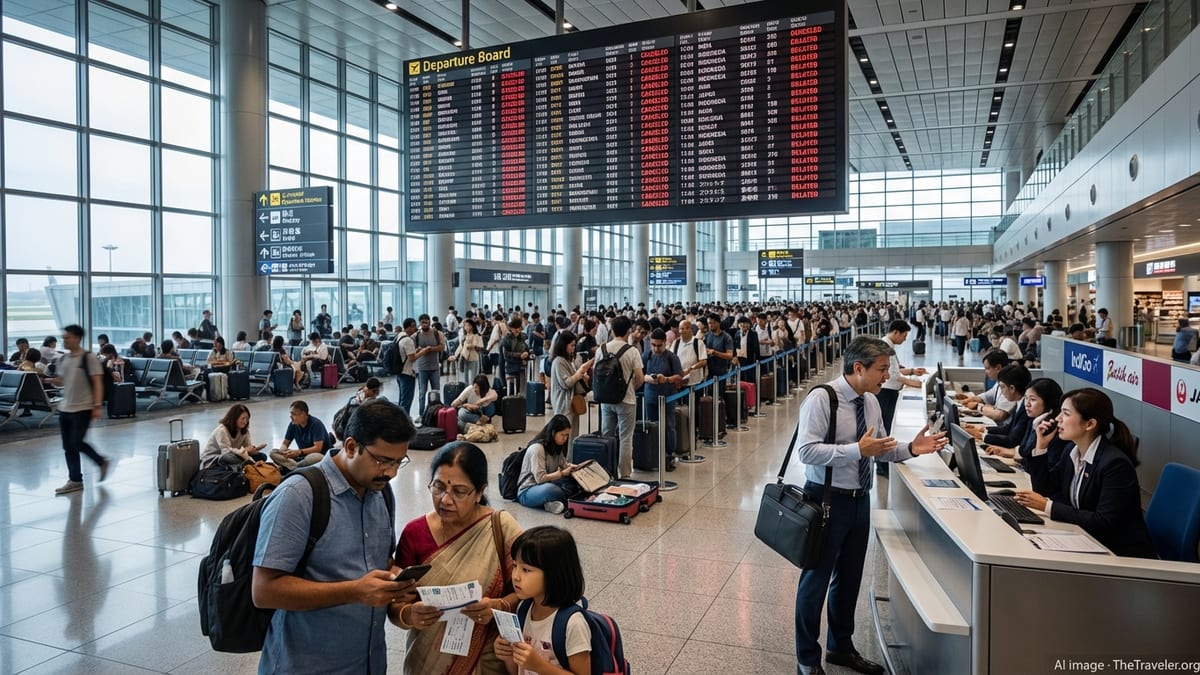
A widespread wave of flight disruptions hit major airports across Asia and adjacent long-haul gateways on September 14, 2026, with aggregated flight-tracking data pointing to 165 cancellations and 3,258 delays across a multi-country network that included Japan, China, Southeast Asia, India, Saudi Arabia, and the United Arab Emirates.
Get the latest news straight to your inbox!
What the numbers show across key hubs
The single-day snapshot, dated September 14, 2026, reflects a region-wide pattern rather than a shutdown at one airport. Published coverage that compiled flight-tracking dashboards shows delay-heavy disruption across multiple countries, with Tokyo Haneda among the most affected airports by total delays, alongside major mainland China and Southeast Asia hubs that anchor dense short-haul schedules.
In the same published roundups, Tokyo Haneda was cited with 561 delays on the day, illustrating how congestion at a high-frequency airport can ripple across domestic and international banks. Guangzhou Baiyun was also listed among the hardest-hit airports, with published tallies indicating hundreds of delays and a smaller number of cancellations.
Unlike disruptions caused by a single closure, the pattern described in coverage mixes a wide spread of moderate impacts and several acute hotspots. That matters for travelers because it raises the odds of missed onward connections even when the first flight still operates, especially on itineraries that rely on tight minimum connection times.
Why delays cascaded instead of turning into mass cancellations
Publicly available explainers and compiled tracking reports point to a combination of constraints that can stack up quickly: aircraft rotations that run behind schedule, crew duty-time limits, scheduled maintenance, airport congestion, and air traffic flow restrictions. When those factors occur across multiple airports on the same day, airlines often keep flights operating with delays rather than canceling outright, because a cancellation can strand aircraft and crews out of position for the next day’s schedule.
Weather also appears in the broader context, not necessarily as a singular storm system, but as localized conditions that reduce arrival rates and create ground stops. For example, weather data posted for Tokyo Haneda on September 14 shows periods of gusty winds, a detail that can contribute to spacing requirements and runway throughput even when visibility remains good.
It is also important to separate “delay counts” from official cause codes. Flight-tracking platforms are strong at showing what is happening to a flight’s timing, but published platform guidance notes that they may not receive granular operational details that pinpoint the specific reason for every delay or cancellation.
Airlines and routes most exposed to knock-on effects
Published coverage that summarized carrier-level disruption on September 14 highlighted multiple airlines with high delay totals, including China Eastern, Air China, Vietnam Airlines, Saudia, and Batik Air. The common thread is network density: airlines running many daily departures through the same hubs are more exposed to compounding delays as aircraft and crews cycle through multiple legs in one day.
For travelers, the most vulnerable itineraries are those built on short-haul feeders into long-haul departures, such as domestic connections into Tokyo, Guangzhou, Shanghai, Delhi, Kuala Lumpur, or Jakarta before an onward international flight. A one- to two-hour delay on the feeder can be the difference between making the last long-haul bank of the night or being rebooked the next day, depending on seat availability.
Even when a long-haul segment departs, late departures can compress transfer times at the destination. Travelers headed onward to ferries, late-night trains, or time-sensitive hotel check-ins may feel the impact well beyond the airport where the delay first appeared.
What travelers can do right now if they are flying in the region
During multi-airport disruption days, the most practical step is to treat your airline’s app and the airport’s departure board as the primary reference for gate changes, boarding times, and re-accommodation instructions, while using third-party trackers for situational awareness across your route. Travelers should also re-check their departure terminal, because some large airports split operations across multiple terminals and last-minute changes can occur when schedules are under pressure.
Travelers with connections can reduce risk by confirming the minimum connection time for their specific transfer, then building buffer where possible. If rebooking becomes necessary, travelers often have more flexibility if they know in advance which alternative airports in the same metro area are viable, and whether their ticket and baggage rules allow a change of destination airport.
For those already at the airport during rolling delays, travelers can also benefit from tracking their inbound aircraft. If the aircraft operating your flight is arriving late from another city, that can signal a likely departure slip even before your own flight posts a new time, helping you plan meals, lounge access, or a quick terminal change without missing boarding.
Why 2026 disruption spikes are becoming a recurring theme
The September 14 snapshot fits into a broader 2026 pattern described in multiple published tracking roundups: repeated days where delays, not cancellations, dominate, suggesting stretched capacity and limited recovery margin in peak banks. When airports, airspace, and airline operations are all running near their upper bounds, a small degradation in throughput can push delays into the schedule faster than airlines can absorb them.
For travelers planning trips across Asia in late 2026, the key takeaway is that resilience matters as much as price. Choosing itineraries with longer connection windows, earlier departures, and backup routing options can reduce the chance that a regional ripple becomes an overnight disruption.
The situation can also change quickly. Because disruption levels depend on real-time airspace constraints, weather, and operational recovery, travelers flying today or tomorrow should check live status close to departure, even if their flight looked normal the night before.