


More news on this day
Nepal Airlines’ only operational widebody Airbus A330 has been stuck at Tokyo Narita after a reported engine issue, disrupting the carrier’s Kathmandu–Narita service and rippling into other long-haul schedules as travelers move through mid-September 2026.
Get the latest news straight to your inbox!
What happened at Narita and why it matters for the network
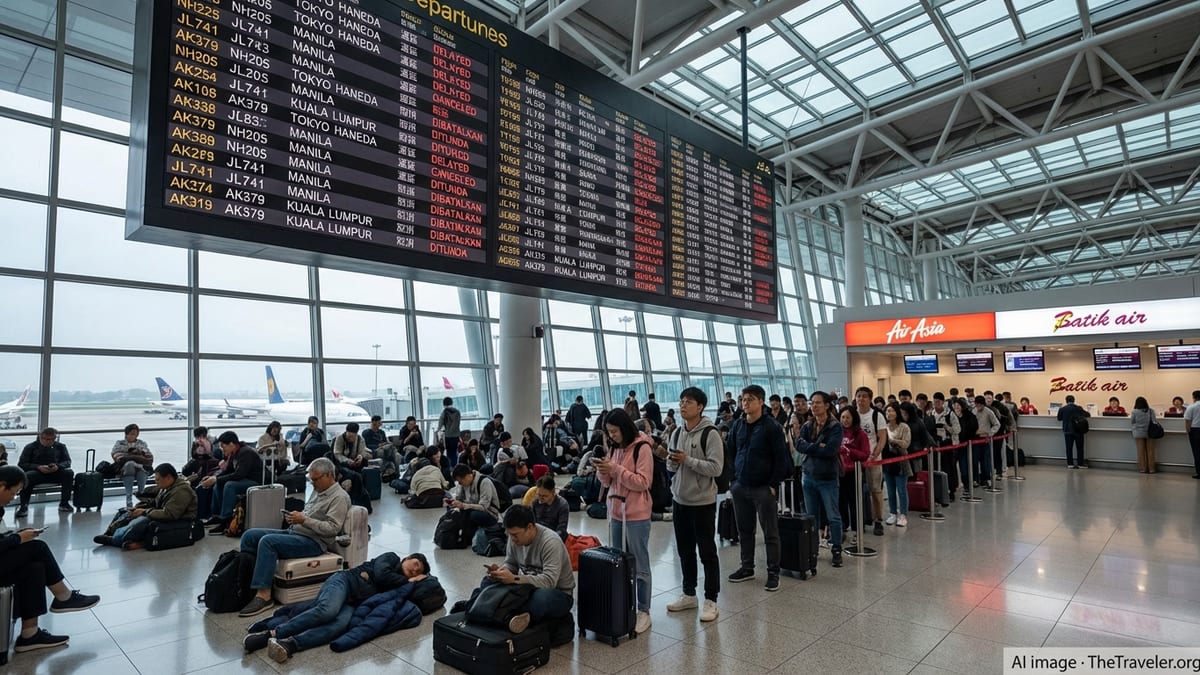
Published coverage in Nepal this week indicates the Narita-based disruption began after a Kathmandu–Tokyo service arrived and the aircraft was later unable to depart on its return rotation due to an engine-related problem that required parts and clearance before the jet could fly again. Reports describe passenger impacts at Narita as the airline worked through re-accommodation and a revised operating plan.
The disruption is outsized because Nepal Airlines’ widebody capacity is limited. Publicly available reporting describes one widebody aircraft undergoing extended maintenance overseas, leaving a single A330 to cover key international routes. When that remaining A330 is grounded, the airline has fewer options to protect the schedule with substitute aircraft, particularly on longer sectors such as Tokyo and Doha.
For travelers, that means irregular operations can cascade quickly: a Narita delay can force knock-on changes to Kathmandu departures on subsequent days, disrupt onward connections from Kathmandu, and constrain the carrier’s ability to add recovery flights at short notice.
Which Kathmandu–Narita flights were rescheduled (and the new dates)
Nepal Airlines posted a notice dated September 14, 2026 outlining changes to its Tokyo Narita rotation. The airline listed flight RA-433 (Kathmandu to Narita) originally scheduled for September 15, 2026, and flight RA-434 (Narita to Kathmandu) originally scheduled for September 16, 2026, as being rescheduled due to technical issues.
According to the same notice, RA-433 (KTM–NRT) moved to September 17, 2026 with a revised departure time of 22:30 local time, and RA-434 (NRT–KTM) moved to September 18, 2026 with a revised departure time of 10:30 local time.
Travelers should treat these as operational targets rather than guarantees during a recovery period. If you are booked within a few days of these dates, it is worth monitoring your flight status frequently and verifying any changes to your itinerary before heading to Narita or Kathmandu airport.
How to rebook or reroute: practical options from Tokyo and Kathmandu
Passengers ticketed on Nepal Airlines for the affected dates generally have two immediate decision paths: accept the revised Nepal Airlines departure, or request an alternative routing that gets you home sooner. Which makes more sense depends on visa status, accommodation budget, and whether you have fixed commitments in Kathmandu or Japan.
From Tokyo, the fastest “get moving” strategy is often to reroute via major hubs with many daily departures. Narita and nearby Haneda have deep schedules to the Gulf and Southeast Asia, where onward flights to Kathmandu are commonly available. Availability can tighten quickly when a single widebody cancellation displaces hundreds of travelers, so checking options as early as possible matters.
From Kathmandu, travelers heading to Japan should anticipate possible seat constraints if the airline is operating a recovery flight or consolidating loads. If your trip timing is inflexible, consider a rebook via a connecting city with multiple daily frequencies to Japan, then continue onward to Tokyo. Keep in mind that a self-arranged reroute can introduce missed-connection risk if you split tickets.
When comparing options, confirm airport pairs carefully. Tokyo has two major airports, and some routings can require changing airports between Narita and Haneda, which adds time, cost, and baggage complexity.
At the airport: documents, costs, and what to do if you are stranded
If you are already at Narita or Kathmandu and your flight is delayed or moved, keep every travel document accessible: passport, boarding pass or e-ticket receipt, baggage receipts, and any proof of original schedule. During irregular operations, those documents speed up re-accommodation and can be important later if you need to pursue reimbursement through card benefits or travel insurance.
Do not assume you will receive a boarding pass for a rescheduled flight automatically. In disruption periods, airlines may need passengers to revalidate bookings or accept an itinerary change before boarding documents are issued. If you have checked baggage, confirm whether your bag remains tagged to the original flight number or has been retagged to the new one, and ask for the updated baggage record if it changes.
Expect longer processing times at service desks. If you have roaming service, attempt to handle changes remotely while also keeping a place in line. For travelers without data service, Narita’s public Wi-Fi and local SIM or eSIM options can help you access booking references and email confirmations.
If you face unexpected hotel nights due to the delay, keep itemized receipts. Some travelers rely on travel insurance or card trip-delay coverage; those programs typically require proof of delay and proof of expenses. Policies vary, so only submit what your specific coverage documents allow.
What to watch next: status checks and the risk of further knock-on delays
The Narita disruption is occurring alongside broader schedule sensitivity. Recent reporting has suggested that other long-haul services may be exposed when the widebody fleet has limited redundancy, especially if the grounded aircraft remains out of service longer than planned or if additional technical checks are required before return to Kathmandu.
For the most reliable day-to-day guidance, travelers should follow three parallel checks: the airline’s latest notices for reschedules, real-time flight status from airport systems, and confirmation that your ticket coupon status still shows you as confirmed on the revised departure. Any mismatch between those three can signal that you need a manual reissue or revalidation.
If you are planning a trip on the Kathmandu–Tokyo nonstop in late September 2026, build buffer into hotel bookings and tours, and consider refundable or changeable rates where possible. During recovery periods, even flights not directly listed in a notice can shift as aircraft rotations and crew schedules are rebuilt.