


More news on this day
Continental aviation across Asia is facing another bruising spell of disruption as operational strains at AirAsia and Air China combine with wider network bottlenecks, generating an estimated 1,440 flight delays and cancellations that are rippling through Tokyo, Beijing and a string of regional hubs.
Get the latest news straight to your inbox!
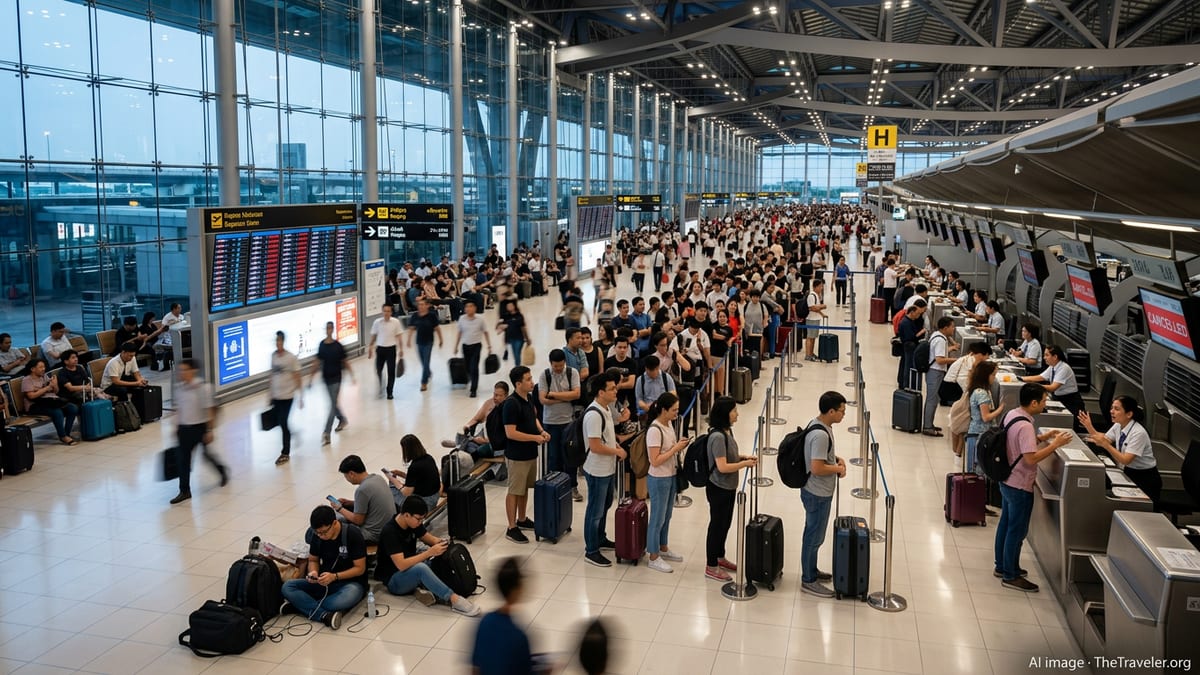
Disruptions Concentrated at Key Asian Hubs
Reports from airline trackers and regional aviation outlets indicate that the current wave of irregular operations is concentrated at major gateways including Tokyo’s Narita and Haneda airports, Beijing Capital and Beijing Daxing, as well as Shanghai Pudong, Guangzhou, Kuala Lumpur and Bangkok. These hubs act as central transfer points for both AirAsia and Air China, so relatively small schedule changes or weather issues can quickly cascade into hundreds of affected flights.
Publicly available disruption tallies compiled over several peak travel days this season show Asia Pacific hubs suffering more than a thousand delays and scores of cancellations, with AirAsia and Air China among the carriers recording the highest disruption volumes. Aggregating those figures with additional schedule cuts and rolling cancellations announced in recent weeks points to roughly 1,440 individual flight disruptions involving the two carriers across their regional networks.
Operational data suggests that delays have often stretched beyond three hours on the busiest days, a threshold that typically triggers rebooking obligations under many airline policies. The knock-on effects include overnight misconnects, missed long haul departures and temporary gridlock in arrival halls, particularly at Tokyo and Beijing, where aircraft rotations link domestic, regional and intercontinental services.
AirAsia Schedule Cuts Hit Tokyo and Regional Links
Low cost group AirAsia is at the center of a growing cluster of schedule changes as it recalibrates its Asia wide network. Public notices and traveler reports show repeated cancellations and suspensions on routes linking Southeast Asia with North Asia, including services from Manila and Bangkok to Tokyo Narita, as well as selected domestic and regional links within Thailand and the Philippines.
Recent customer advisories from AirAsia units in Southeast Asia describe the changes as part of a broader effort to “streamline” flight schedules. In practice, this has meant that certain routes to Japan, particularly Manila to Tokyo Narita, are temporarily suspended across the summer and early autumn travel peaks, with some flights shifted to connect via alternative hubs rather than operate nonstop.
While the official notices emphasize alternative travel options, passenger accounts shared on travel forums point to repeat cancellations, last minute schedule changes and limited same day rebooking choices. For travelers aiming to connect through Tokyo onward to North America or Europe, these short haul adjustments are translating into missed long haul departures, extended airport stays and, in some cases, the need to purchase replacement tickets on rival carriers at significantly higher prices.
The strain is amplified at airports such as Kuala Lumpur and Bangkok, where AirAsia operates dense, high frequency schedules. Aviation analysts note that when an airline runs tight turnarounds with minimal spare aircraft and crew, a single cancelled rotation can create a chain reaction of late or canceled departures for the rest of the day.
Air China Confronts Route Pressures and Capacity Shifts
Air China, meanwhile, is contending with its own set of scheduling and capacity challenges, particularly on routes linking mainland China with Japan and other Northeast Asian markets. According to published coverage and passenger experiences posted in public forums, flights between Beijing and Tokyo remain under pressure, with recurring cancellations or timetable adjustments affecting both Narita and Haneda services at various points this year.
Broader traffic statistics released for Air China’s network in recent months indicate mixed performance, with overall capacity and passenger volumes softening in some sectors even as international demand grows elsewhere. Industry commentary suggests that this has prompted tactical cuts and consolidations on weaker routes, including some services between China and Japan, leaving fewer daily frequencies and reducing the airline’s ability to absorb disruption when weather or air traffic control constraints arise.
Travelers transiting Beijing report cases in which one leg of a multi segment itinerary, often the Tokyo bound or Japan originating sector, is canceled while the rest of the ticket remains intact. In such circumstances, passengers may find themselves able to fly to Beijing but lacking a guaranteed onward seat to Japan on the original booking date, creating confusion at check in counters and call centers.
These capacity shifts coincide with a wider pattern of irregular operations across Chinese airports. Weather related flow restrictions and airspace management measures have triggered hundreds of delays and cancellations in several recent episodes, leaving airlines like Air China with limited flexibility to reposition aircraft and crews fast enough to protect scheduled departures.
Network Wide Ripple Effects Across Asia
The combined disruption from AirAsia and Air China is feeding into a broader pattern of instability in Asia’s air travel network. Data snapshots from flight compensation and air travel analytics firms show that, on multiple days this season, several thousand flights across Asia have been delayed or canceled, with particularly heavy concentrations in China, Japan, Singapore, Malaysia and Indonesia.
These network wide disturbances are not driven by a single cause. Reports describe a mix of torrential rain and severe storms in parts of China, ongoing air traffic control congestion at busy hubs, temporary airspace restrictions linked to geopolitical tensions, and lingering aircraft rotation difficulties as airlines continue to rebuild schedules after the pandemic era. In such an environment, high frequency operators like AirAsia and major flag carriers such as Air China are highly exposed to knock on effects.
When large hubs like Beijing Capital, Shanghai Pudong or Tokyo’s airports become saturated, even flights that technically depart can do so after long ground holds or with missed connection risks. This affects not only point to point passengers but also travelers bound for Europe, the Middle East and North America who rely on Beijing, Tokyo, Bangkok or Kuala Lumpur as stepping stones.
Industry observers note that the present wave of irregular operations follows earlier episodes this year in which Asia Pacific carriers collectively logged more than a thousand cancellations and well over a thousand significant delays across a matter of days. The latest figures involving AirAsia and Air China suggest that underlying structural pressures in the region’s aviation system remain unresolved.
What Travelers Are Experiencing on the Ground
Accounts from affected passengers paint a picture of crowded gates, long rebooking queues and inconsistent information across airline apps, websites and airport display screens. Travelers booked with AirAsia describe receiving email notifications of cancellations well after online schedules had already been updated, while others only learned of major changes when attempting online check in.
Air China customers have reported receiving itinerary change notices for one segment of a multi leg trip, such as a Tokyo to Beijing return flight, with limited clarity on how to realign the rest of their journey. In some cases, passengers have turned to online travel agencies or alternative airlines to salvage complex itineraries, often at significant personal expense.
Consumer advocates point out that navigating compensation or refund options can be particularly challenging on Asia regional routes, where legal protection frameworks vary widely between departure and arrival points. Public guidance from passenger rights groups stresses the importance of retaining boarding passes, confirmation emails and written records of any cancellation or delay, since documentation is often required to support later claims with airlines or travel insurers.
Travel planning experts suggest that, for the duration of this disruption cycle, passengers flying with AirAsia, Air China or through heavily impacted hubs in Tokyo and Beijing should build additional buffer time into connections, monitor flight status closely through multiple channels and consider flexible tickets or travel insurance that explicitly covers missed connections and schedule changes.