


More news on this day
Travelers across the United States and Canada faced mounting frustration as widespread disruptions involving Southwest Airlines and regional carrier SkyWest triggered a wave of cancellations at Nashville International Airport, with knock-on delays reported at major hubs including Chicago, Las Vegas and several Canadian gateways.
Get the latest news straight to your inbox!
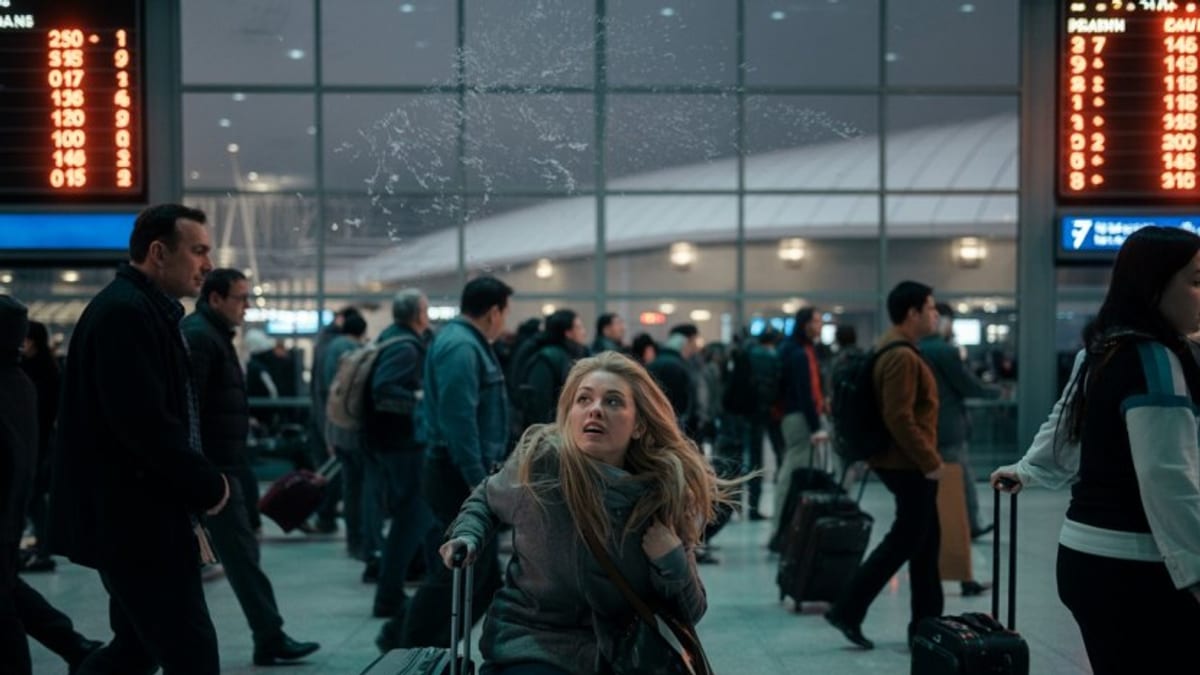
Nashville Gridlock Exposes Fragility in U.S. Flight Networks
Publicly available flight-tracking data and airport status boards show Nashville International Airport struggling under a sharp spike in same-day cancellations and rolling delays affecting a large share of departures operated by Southwest and SkyWest. The pattern, which intensified over the course of the day, left passengers facing hours-long queues at check in and customer-service desks, as aircraft and crews fell out of position.
The disruption underscores how quickly operations can unravel at a fast-growing midcontinent airport that functions as a key connection point for multiple carriers. Nashville has seen record passenger volumes in recent years, with Southwest already accounting for a significant share of local traffic. Even a modest percentage of cancelled flights in such a concentrated operation can translate into thousands of disrupted journeys in a matter of hours.
Reports from travelers indicate that some Southwest flights into and out of Nashville were scrubbed or significantly delayed with limited advance notice, forcing rebookings across already busy weekend and early-week schedules. Regional services operated by SkyWest under major-airline brands also saw interruptions, compounding the difficulty for passengers attempting to connect onward to smaller markets across the Midwest and South.
While individual causes varied by flight, publicly accessible aviation data pointed to a combination of adverse weather in key corridors, crew-availability challenges and knock-on congestion as contributing factors. Once cancellations began clustering around the same time window, the resulting backlog led to cascading impacts on later services.
Southwest Disruptions Spread to Chicago and Las Vegas
As operations at Nashville faltered, ripple effects were quickly felt at other large Southwest stations, particularly Chicago and Las Vegas. Schedules show that both cities rely heavily on point-to-point connections that link through midcountry airports like Nashville, so cancellations there can strand aircraft and crews far from where they are needed later in the day.
In Chicago, travelers reported growing boards of delayed and cancelled flights on Southwest, with some services either originating or terminating in Nashville removed from the schedule altogether. This created additional pressure at gate areas and rebooking counters, as passengers bound for other destinations competed for the remaining open seats across the network.
Las Vegas, another major leisure and connecting market for Southwest, also experienced schedule irregularities tied to the Nashville disruption. As planes failed to arrive on time from the Southeast and Midwest, departures from Nevada were pushed back or consolidated, in some cases forcing late-night or next-day departures for those heading back toward the central and eastern United States.
According to recent federal data on airline performance, Southwest has generally maintained a relatively low cancellation rate in 2026 compared with some rivals, yet the Nashville episode illustrates how concentrated exposure at a handful of busy airports can translate into an outsized impact when disruptions occur. Travelers caught in the middle often see little distinction between systemic reliability and isolated operational shocks when they are facing an unexpected night away from home.
SkyWest Regional Cancellations Amplify the Shock
SkyWest, one of North America’s largest regional operators, plays a behind-the-scenes role for several major airlines, operating flights under their branding and flight numbers. When SkyWest experiences a spike in cancellations at a station like Nashville, the effect can appear as widespread disruption across multiple mainline carriers even though the flying is handled by a single regional partner.
Recent operational summaries and investor disclosures for SkyWest highlight both strong completion factors and ongoing sensitivity to crew availability and aircraft utilization, particularly during periods of unsettled weather and tight turnaround times. When one part of the regional network seizes up, aircraft rotations that touch a string of cities across several states can quickly fall out of alignment.
On the day of the Nashville disruption, regional jets that would typically feed larger hubs such as Chicago, Detroit and other Midwestern airports experienced schedule breaks, according to route and fleet information published by the company. Passengers who had counted on short hops from Nashville to connect with transcontinental or transborder services sometimes found themselves without a viable same-day alternative.
The regional nature of many SkyWest routes also made recovery more complicated. With smaller aircraft and fewer daily frequencies on some city pairs, a single cancelled flight can mean a 24-hour wait for the next departure. For business travelers and those with cruise, tour or event commitments, these gaps can translate into missed plans and additional out-of-pocket costs for hotels and ground transport.
Canadian Gateways Feel the Knock-On Impact
The reverberations from Nashville were not confined to the United States. Published schedules and airport updates in Canada indicated that transborder services linked, directly or indirectly, to disrupted U.S. feeder flights were affected as well. Toronto, already among Nashville’s leading international connections, saw fluctuating loads and timing as passengers misconnected or were rebooked from canceled U.S. domestic legs.
Because many itineraries between secondary American cities and Canadian gateways rely on a combination of regional flights and mainline services, the loss of a single domestic segment can sever the link to an entire long-haul journey. In several cases, travelers attempting to reach Canadian cities reported that missed connections out of hubs like Chicago or Detroit forced overnight stays and rerouting through alternative airports.
Canadian carriers and their U.S. partners frequently depend on tight transfer windows to keep aircraft productive and minimize ground time. When irregular operations in a midcontinent node like Nashville shift arrival times by even an hour or two, those delicate schedules can become unworkable, forcing airlines to cancel or significantly delay onward departures.
The latest episode therefore highlights how disruptions in a single U.S. city can have outsized implications for cross-border travel. For Canadian tourism operators, convention planners and business travelers who depend on dependable access from American markets, such chain reactions can complicate forecasts and undermine confidence in just-in-time itineraries.
Travelers Confront Long Lines and Limited Options
As cancellations mounted, passengers at Nashville, Chicago and Las Vegas described protracted waits at ticket counters and self-service kiosks while attempting to secure new itineraries. With summer demand already high across much of the airline system, many later flights were close to full, leaving fewer open seats to accommodate those displaced by the disruption.
Travel forums and social media posts from recent weeks show simmering frustration with airline communication and recovery options when irregular operations occur. Some customers reported receiving notifications only after arriving at the airport, while others saw their flights vanish from carrier apps and departure boards with limited explanation beyond generic references to weather or operational challenges.
Consumer advocates typically recommend that travelers in such situations explore multiple paths to recovery, including requesting rebooking on alternative routings, asking about interline options where available, and checking whether overnight accommodation or meal vouchers are being offered for disruptions that are not weather related. For those holding flexible tickets or travel insurance, reimbursement for extra costs may also be possible, depending on policy terms.
The Nashville-related disruption offers another reminder that, even in a year when overall cancellation rates have shown some improvement in federal statistics, individual travel days can still be upended by the complex interplay of weather, staffing and network design. For passengers, the practical takeaway is that building extra time into connections and monitoring flight status closely remain essential strategies when flying through busy hubs.