


More news on this day
Thousands of passengers across Asia and the Middle East are facing severe disruption as hundreds of flights are cancelled and thousands more delayed at key hubs including Beijing, Dubai, Jakarta, New Delhi and Istanbul, with carriers such as Saudia, Emirates, SCAT Airlines and Cathay Pacific adjusting schedules and suspending selected routes.
Get the latest news straight to your inbox!
Widespread Operational Turbulence Across Key Asian Hubs
Publicly available aviation data and media coverage indicate that at least 454 flights have been cancelled and more than 5,300 delayed in recent days across major Asian and Middle Eastern gateways, amplifying long queues, missed connections and overnight airport stays for travelers. The disruption is concentrated at large transfer hubs, notably Beijing, Dubai, Jakarta, New Delhi and Istanbul, but the knock-on effects are being felt across wider regional networks.
Reports suggest that the pattern of disruption reflects a mix of factors, including airspace constraints in parts of the Middle East, weather related congestion in sections of East and South Asia, and capacity adjustments by airlines responding to changing demand and route suspensions. As carriers trim or reroute services, flights that do operate are often running close to full, leaving limited options for same day rebooking.
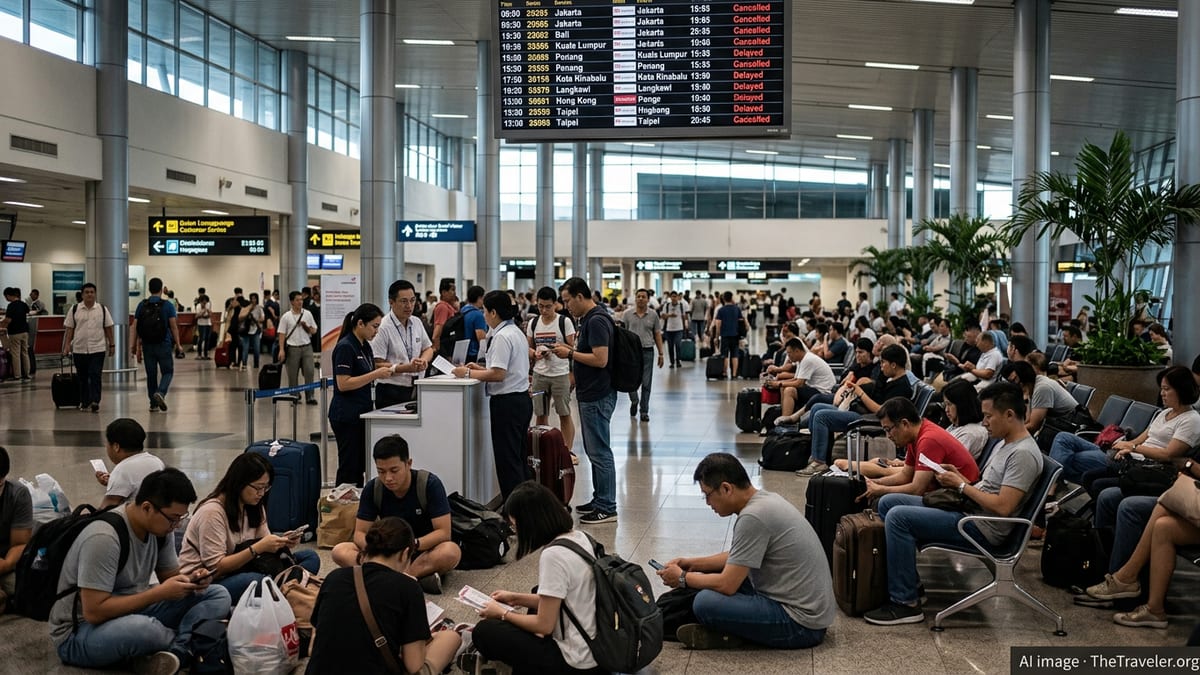
Travel monitoring shows that passengers on multi leg itineraries through these hubs are particularly vulnerable, with missed onward connections translating into long waits for replacement flights. At some airports, images and social media posts describe crowded departure halls and lengthy lines at airline transfer and ticket desks as travelers seek new routings or refunds.
Dubai and Gulf Corridors Hit by Route Suspensions
Dubai, one of the world’s busiest international hubs, has emerged as a focal point of the latest disruptions as carriers continue to adjust networks around regional geopolitical tensions and intermittent airspace restrictions. Published coverage from Gulf based outlets describes a series of cancellations and schedule changes affecting services between the United Arab Emirates and destinations in Kuwait and Saudi Arabia, with some flights scrubbed on short notice and others consolidated into fewer daily frequencies.
Emirates, Etihad and low cost operators from the UAE have all made tactical cuts or timing changes on selected routes, particularly to Kuwait and Abha, according to recent regional reporting. Passengers transiting Dubai on journeys between Asia and Europe have reported cancellations or extended layovers where their planned Gulf sector was removed from the schedule and alternative routings via other hubs were not immediately available.
Cathay Pacific has also maintained a suspension of its Dubai passenger services as part of a broader halt to certain Middle East routes, which has reduced one of the traditional options for travelers connecting between North Asia and the Gulf. With Dubai functioning as a critical bridge between Asia, Europe and Africa, each cancellation or aircraft downgrade in the region can ripple quickly through booking systems, limiting rebooking options not just for Gulf bound passengers but also for those connecting onward to India, Southeast Asia or the wider Asia Pacific.
Beijing, Jakarta, New Delhi and Istanbul Strain Under Knock-On Delays
On the Asian side of the network, Beijing, Jakarta and New Delhi have seen elevated levels of delays as airlines and air traffic control work around constrained routings and congested peak periods. Flight status boards at these airports in recent days have shown growing clusters of late departures and arrivals, particularly on heavily trafficked regional corridors linking China, Southeast Asia and the Indian subcontinent.
Indonesia’s main international gateway at Jakarta has reported schedule pressures as both local and foreign carriers rebalance regional capacity. Indonesia’s role as a leisure and labor travel hub means that disruptions there can affect not only point to point flyers but also migrant workers and long haul passengers connecting onward to the Middle East and beyond.
In Turkey, Istanbul’s large dual hub operations continue to face intermittent strains tied to wider international schedule changes. Travel forums and public discussion highlight cases of passengers whose itineraries between Europe and Asia via Istanbul and Dubai were reshuffled or partially cancelled, requiring last minute rerouting through alternative hubs. Each missed or late arriving long haul service increases the risk that feeder flights are held or rescheduled, adding further delays across already busy timetables.
Saudia, Emirates, SCAT and Cathay Among Carriers Adjusting
Network adjustments by a range of airlines are feeding into the current wave of disruption. Saudia has been rebuilding services to key cities such as Dubai, Mumbai, Delhi and Istanbul, but recent commentary from regional outlets notes that intermittent airspace closures and congestion can still trigger delays and tactical cancellations, particularly on routes crossing sensitive areas.
Emirates continues to operate an extensive global network but has issued repeated advisories urging passengers to check flight status before departure and to monitor for last minute timing changes. Schedule documents and customer communications referenced in public forums show that flights serving Beijing, Delhi, Istanbul and Jakarta can be subject to retiming or consolidation when network conditions tighten, complicating journeys for travelers relying on tight connections in Dubai.
In Central Asia, Kazakhstan headquartered SCAT Airlines features among carriers affected by route suspensions and diversions around closed or restricted airspace. Changes on these secondary but strategically important corridors can force passengers to detour through alternative hubs, adding hours to journeys and raising the risk of missed onward flights with partner or interline airlines.
Cathay Pacific, meanwhile, has extended the suspension of its Dubai and Riyadh services and published updated guidance on handling disrupted itineraries, including options for rebooking and refunds. The loss or reduction of these Middle East links narrows choices for passengers in Hong Kong, mainland China and Southeast Asia seeking one stop connections to the Gulf, pressing more traffic onto already busy rival hubs.
Passengers Confront Cancellations, Compensation Rules and Limited Alternatives
For travelers caught in the middle of the disruption, the practical challenges are mounting. Airline policy pages and consumer advisories emphasize that passengers should monitor official flight status tools and mobile apps closely on the day of travel, as departure times and even routings can change with limited notice when airspace or operational constraints intensify.
Rebooking conditions vary by airline and ticket type, but many carriers are offering free date changes or rerouting within specified time windows where flights have been cancelled or significantly delayed. In some cases, travelers are being moved onto partner airlines or alternate hubs, though high summer load factors mean that seats on popular routes can be scarce, leading to multi day waits in certain markets.
Regulatory compensation regimes differ between jurisdictions, and several consumer advocacy groups are reminding passengers to familiarize themselves with the rules applicable to their point of departure and the airline’s home country. In practice, travelers report that securing hotel accommodation, meal vouchers or cash compensation can require persistence at crowded service desks or through overloaded call centers, particularly when disruptions are driven by complex external factors rather than internal airline issues.
With further schedule adjustments possible as the busy travel season progresses, industry observers recommend that passengers build longer connection buffers, consider flexible tickets where feasible and keep digital copies of all travel documents and receipts. As airlines across China, the UAE, Indonesia, Turkey and neighboring states continue to adapt to shifting operational conditions, those precautions may help mitigate the impact of any future rounds of cancellations and delays.